
Rome at Sunset: Aventine, Pincio or Janiculum?

Choose one viewpoint for a Rome evening: the Orange Garden on the Aventine, the Pincio terrace or the Janiculum belvedere. The garden offers trees, the Tiber and a gradual opening towards the skyline. Pincio combines the square below with a broad city view. Janiculum suits an evening spent watching light change across the historic centre.
There is a useful distinction between enjoying evening light and watching the sun itself disappear behind a landmark. The main Janiculum panorama faces broadly east, so the setting sun is behind you as you look towards central Rome. The Orange Garden has another important condition: seasonal gates. Arriving at sunset does not establish that the garden will remain open.
Choose the view that fits the day you have had
Start with the location of your last daytime activity and the energy left in the group. Pincio can fit a day around the northern historic centre. The Orange Garden makes sense after an Aventine visit, if its hours allow. Janiculum deserves a deliberate choice with an uphill approach and an onward journey planned separately. A short distance on a map does not remove the climb.
RoadMe makes it much more convenient to work out a personal plan for the whole trip around your interests, dates, pace and budget. Let the app connect daytime visits, an evening walk and time to rest, so the panorama becomes an enjoyable part of the day rather than one more obligation after exhaustion.
These are public spaces with free access, rather than ticketed observation towers. A fine view does not include a reserved position at the railing, guaranteed quiet or an available bench. Agree on how long you want to stay before setting out. For companions with different energy levels, a single considered stop works better than negotiating another hill after every photograph.
| Place | Main appeal | First planning check |
|---|---|---|
| Orange Garden | A garden avenue, the Tiber and distant St Peter’s dome | Seasonal gate hours and enough time to leave |
| Pincio | Piazza del Popolo below and the city beyond | The actual uphill approach and later descent |
| Janiculum | A broad panorama of the historic centre | Access to the hill; sunset is behind the main city-facing view |
The Aventine: let the garden introduce the panorama
The Orange Garden is the familiar name for Parco Savello. Raffaele De Vico designed the present public garden in 1932 within the surviving medieval walls of the Savelli property. That small piece of history helps explain the experience: an older enclosed site acquired a twentieth-century arrangement intended to make the view publicly accessible.
Enter from Piazza Pietro d’Illiria and look along the central avenue before heading straight to the terrace. Nearby trunks and canopies organise the scene, then the path opens towards the distant city. Compare the scale of the trees with the skyline beyond. There is already something to notice before finding a place beside the parapet.
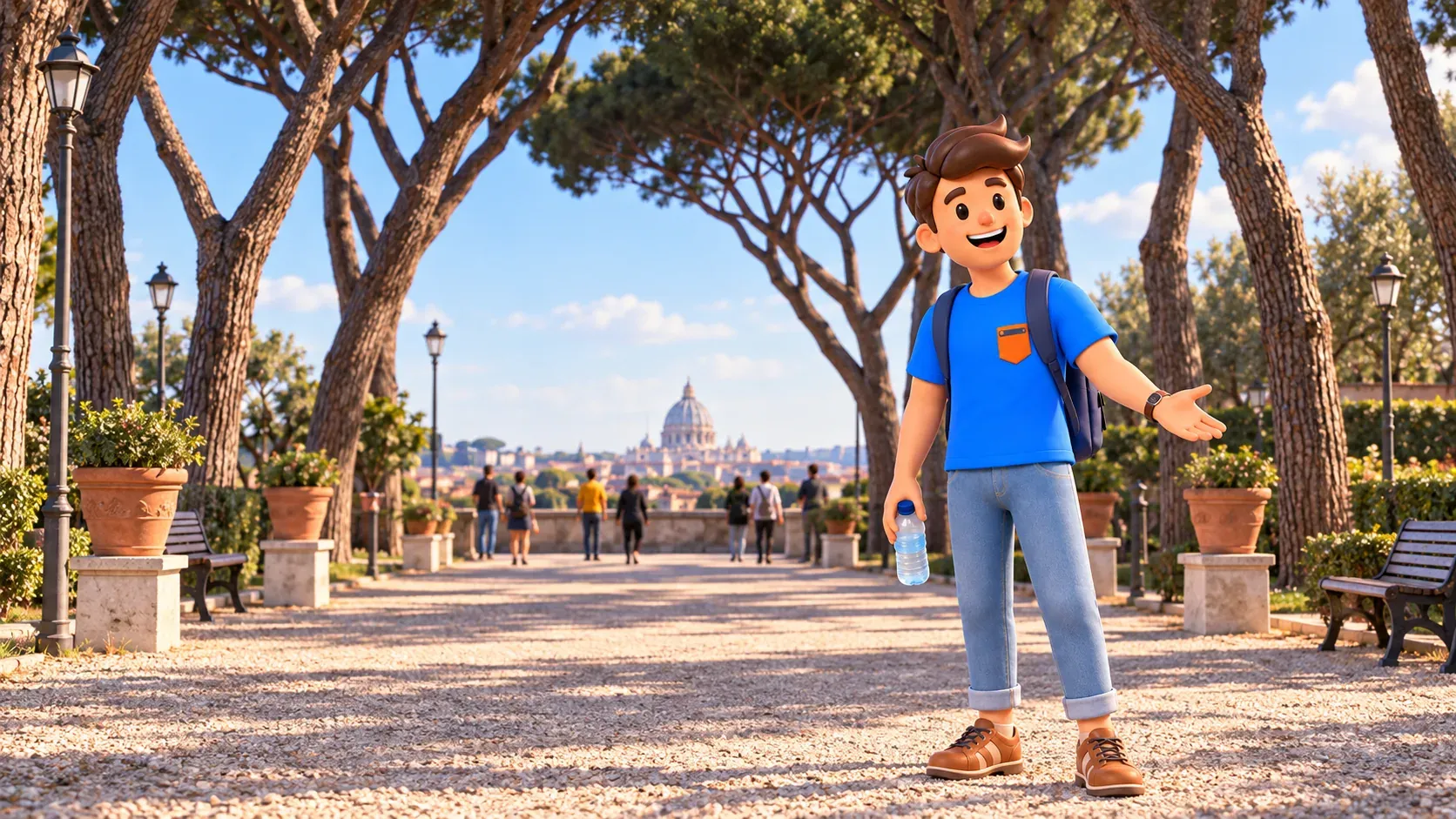
The terrace overlooks the Tiber and Rome, with St Peter’s dome visible when conditions allow. This is a view in its own right. The famous Knights of Malta keyhole is elsewhere on the Aventine; it is neither the entrance to this garden nor a compulsory continuation. If you want one unhurried evening impression, the avenue and terrace can provide it.
Do not expect a secluded garden simply because somebody photographed it without people. Visitors may gather at the viewpoint when the light is attractive. Wait briefly or choose another permitted position if the edge is busy. Searching indefinitely for a supposedly perfect empty frame can consume the relaxed part of the evening you came to enjoy.
Check the garden gates against your actual sunset
When checked in October 2026, the municipal timetable listed opening at 07:00 and closing at 18:00 from October to February. March and September had a 20:00 closing time, while April to August had 21:00. Confirm the current timetable and any notices for your own date. Seasonal hours do not mean that the garden automatically stays open until the sun has set.
Look up local sunset for the precise date, then compare it with closing time and allow a margin to leave. Reaching the terrace just before the gates close is not a workable sunset plan. If the light you want comes later than the permitted visit, enjoy an earlier garden outing or select another viewpoint beforehand. Avoid basing the evening on a hurried cross-city replacement after finding a closed gate.
For a fuller introduction to the hill, use our two-hour Aventine walk. Its other experiences have separate access conditions. Adding that entire programme to a long sunset wait changes the duration, and church visiting hours cannot simply be transferred to an evening garden visit. The climb and the eventual descent remain additional.
Pincio: recognise the square before searching the horizon
The principal Pincio terrace is on Piazzale Napoleone I above Piazza del Popolo. Begin with the space immediately below: the shape of the square, its obelisk, movement and departing streets. A place you may have crossed at ground level becomes a composition from above. That connection makes Pincio especially rewarding early in a Rome trip.
The modern promenade is associated with Giuseppe Valadier’s nineteenth-century work. Instead of memorising a single construction date, notice how the slope connects square and upper level. Walking up after seeing the piazza can make that organisation tangible. The climb is nevertheless part of the physical outing, with paths, winding approaches and stair sections to account for beforehand.
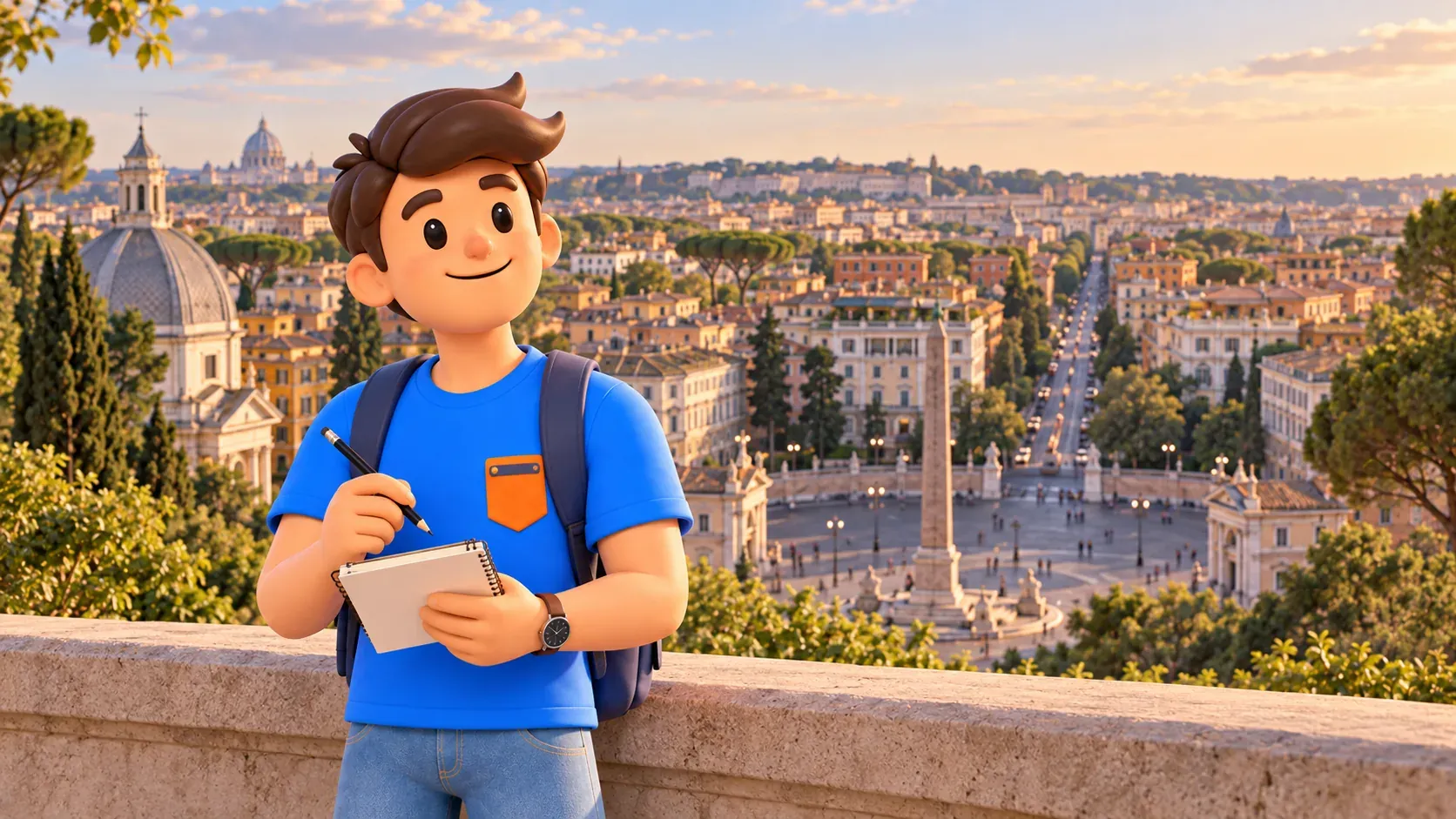
Then let your eye move over the roofs towards St Peter’s dome on the skyline. The terrace looks towards the western city, but the sun’s exact setting position changes through the year. A photograph showing the solar disc directly behind the dome does not promise that alignment on your date. Cloud and haze also influence what you actually see.
The municipal tourism listing describes the Pincio terrace and promenade as always open. Temporary restrictions still matter, and this does not establish access through every neighbouring gate or into a museum or private terrace. Choose a public space that is actually available and a specific return route. A line across the park on a small map is not enough to settle the evening.
Keep the Pincio walk proportional to the evening
From Piazza del Popolo, use an open route through the paths, ramps and stair sections. The word ramp is not proof of a complete accessible approach for your needs. Establish the exact route if gradients or steps matter, and do not rely on a historic lift merely because it appears in a description of the promenade. Leave time to catch your breath on arrival.
Our Popolo, Pincio and Via Margutta walk offers a longer sequence. For a sunset-focused evening, select a suitable part and allocate the terrace time explicitly. Keeping every original stop while quietly adding an hour of waiting produces a different programme. A smaller outing can still have a clear beginning and satisfying finish.
After the view, descend by your chosen public route and treat dinner as a separate decision. It is outside the ninety-minute example below. There is no requirement to continue to the Spanish Steps when everybody is tired. Returning to the lower square may be enough; a longer city transition is useful only if there is still an appetite for walking.
Janiculum: watch the city receive evening light
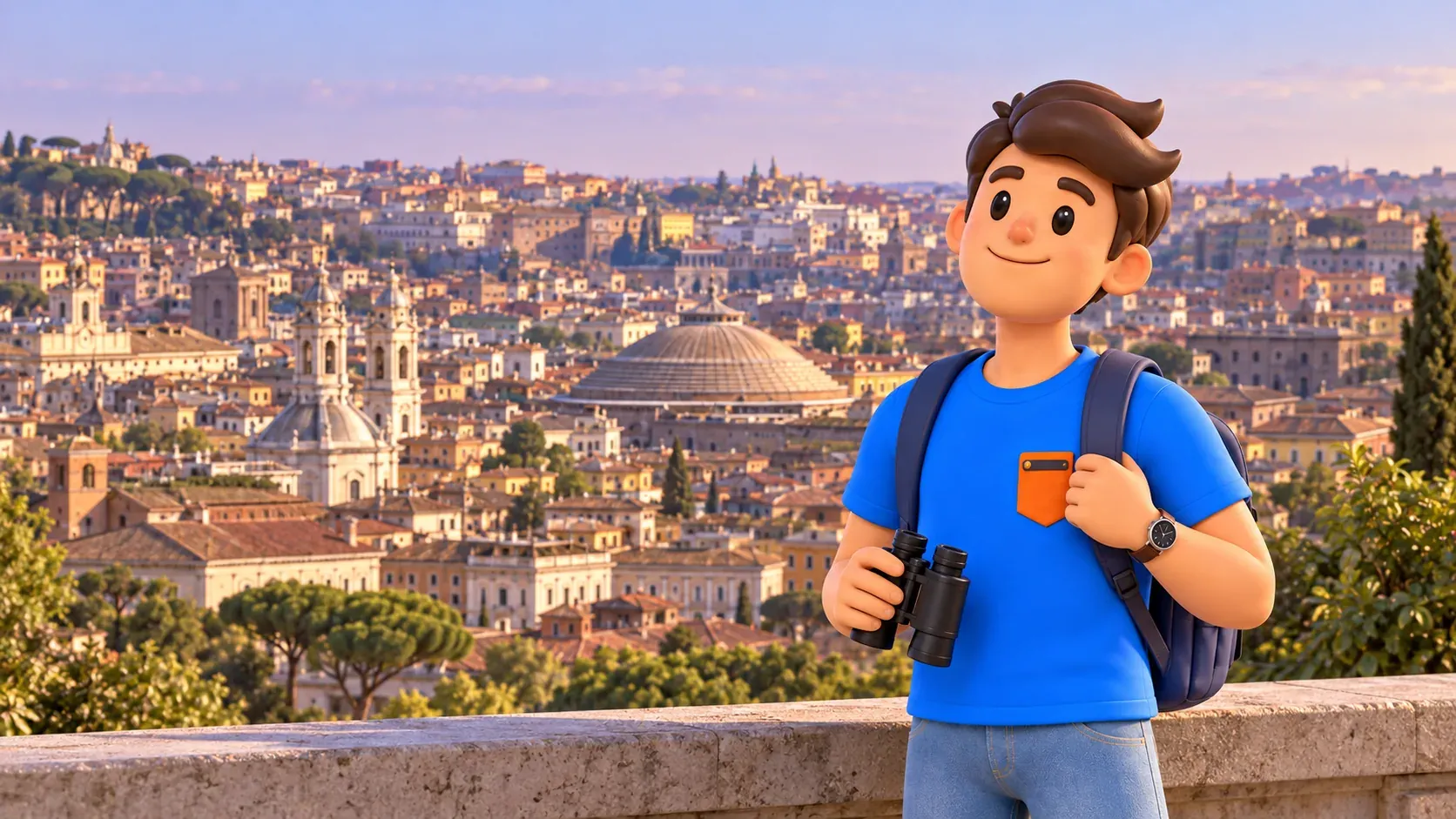
Use Piazzale Garibaldi as the destination for the main belvedere. Rome stretches across the view in layers of roofs, towers and domes. Facing the historic centre means looking broadly east. In the evening, light on the buildings and colour in the sky change, while the setting sun is on the opposite side, behind the observer.
That distinction does not make Janiculum a poor evening choice. It gives the visit a different purpose: seeing Rome in changing light, rather than expecting the solar disc above the central monuments. Start with the broad arrangement and then choose one recognisable form. The Pantheon’s low, wide dome reads differently from the taller church domes in the surrounding cityscape.
The hill also carries a historical layer. The public promenade created in 1883 commemorates the defence of the Roman Republic in 1849. Emilio Gallori’s equestrian Garibaldi monument helps explain the character of the square. This brief context gives the place meaning beyond photography. The famous cannon shot belongs to noon, rather than sunset, so it is not an event to await during this evening visit.
The municipal listing gives the promenade as always open, subject to any temporary restrictions. Plan the ascent and later descent separately. Our Janiculum evening walk provides a longer approach from the Acqua Paola fountain, with its own timing. A general hill label is not a single destination that every approach reaches equally quickly.
A ninety-minute example once you are already uphill
Start this allowance at the upper destination: the Orange Garden entrance, Piazzale Napoleone I or Piazzale Garibaldi. Choose one. Travel there, the ascent, subsequent descent, transport and food are extra. This is an example of how to distribute attention at a viewpoint, not a measured walking route between three hills.
Use fifteen minutes to orient yourself and recover from the approach, twenty-five for an initial look, fifteen for a pause in a suitable available place, and another twenty-five for the panorama and a short nearby movement. Leave the final ten minutes for departing. In the garden, that means actually passing through the gate before closing, with an additional margin.
For an available Pincio or Janiculum visit, the example could run from an hour before sunset to half an hour afterwards, provided access and return conditions suit you. In the garden, fit the entire ninety minutes before closing with a margin: start earlier or shorten the outing. If weather makes an exposed viewpoint unsuitable, reconsider the walk rather than demanding a particular colour from the sky.
Try RoadMe to develop a personal itinerary for the whole trip with your preferred balance of art, walking and rest. Planning busy days and open evenings is more convenient in the app; check actual gate hours and local conditions for the chosen date separately.
Bring water, comfortable shoes and a little spare time. A camera or sketchbook can give the visit a personal theme without occupying the whole railing or blocking another person’s view. A successful evening is one in which you had time to look at Rome, rather than count how many viewpoints you reached before dark.


