
A Janiculum Sunset Walk: Plan the Hill without Rushing
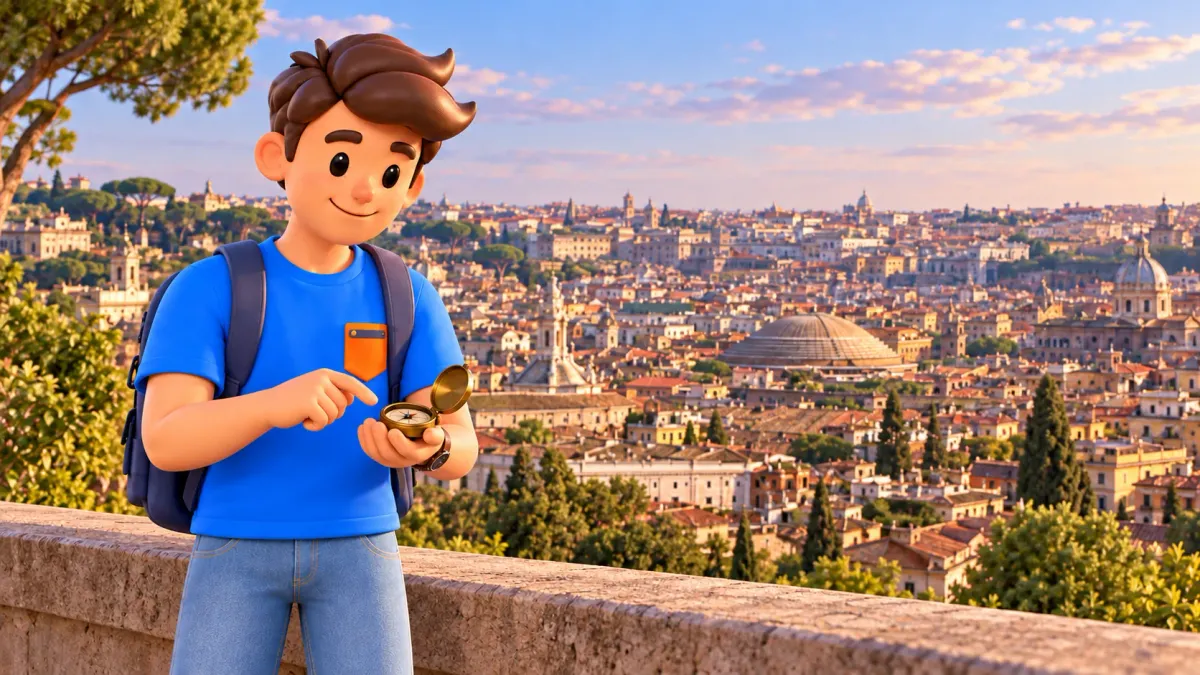
An evening on the Janiculum works better when you leave time for the view itself. Reach the great fountain, walk towards Garibaldi's square, take a short rest and watch Rome change in the evening light: that already forms a complete outing. A church, Bramante's Tempietto and every monument on the hill need not fit into the same short visit.
This main walk takes roughly ninety minutes, from the Acqua Paola Fountain on Via Garibaldi to the panorama by Piazzale Garibaldi. The example begins one hour before sunset on your date and ends around half an hour afterwards. Reaching the fountain uphill, transport and the descent after finishing are additional. The allocations are a planning guide, not measured route timings.
What arriving for sunset actually means
First check Rome's sunset time for your particular date, then the weather forecast. Record two useful markers: when you want to be at the fountain and when the preceding activity must end. Travel, ascent and a little margin need to fit between them. A time borrowed from somebody's summer photograph does not automatically work for an autumn or winter day.
RoadMe makes it easier to develop a personal plan for your whole trip around your interests, dates, pace and budget. The app brings walks and visits into a coherent sequence so that the finished itinerary and map are more convenient and effective to use on the ground.
The main city panorama faces broadly east. The sun sets on the western side, so avoid promising yourself a solar disc disappearing behind the historic centre directly in front of you. The experience here is evening light on roofs, changing sky colours and the gradual arrival of twilight. The word sunset does not guarantee an identical photograph in every season.
A walk timed around sunset
| When | Stage |
|---|---|
| 60–45 minutes before sunset | Acqua Paola Fountain exterior on the Janiculum |
| 45–25 minutes before | Public-street and promenade approach to Piazzale Garibaldi |
| 25–15 minutes before | Giuseppe Garibaldi monument exterior |
| 15–5 minutes before | Seated rest if a suitable available place can be found |
| 5 minutes before until 30 minutes after | City panorama and changing evening light |
That totals ninety minutes: fifteen at the fountain, twenty walking, ten at the monument, ten resting and thirty-five for the view. Finding the rest place belongs within its allocation; an empty seat is not guaranteed. To see more of the city before twilight, start earlier or shorten the monument stop while keeping a comfortable pace.
Weather can mean a clear horizon or a softly clouded evening. The table is not an obligation to remain at the viewpoint for half an hour after sunset. Finish when it suits you and consider the onward journey. Observing light change without hurry matters more than formally completing every minute.
Reaching the start is a separate part of the outing
The Janiculum rises above Trastevere on the Tiber's right bank. An approach from lower streets can include a noticeable climb, steps or a longer street alternative. Choose according to your abilities and current mapping. Do not start counting the main programme at a lower landmark when the table begins at the fountain already reached uphill.
If using transport, check the actual stop and remaining walk rather than only a hill name in search results. Arriving on the Janiculum does not necessarily mean stepping out beside your chosen viewpoint. If ascent or descent is difficult, establish the specific approach and a workable return beforehand. This article does not certify a step-free route.
Arriving slightly early helps after a demanding day. Catch your breath first and make sure your companions are ready to continue. Evening light is not a reason to hurry someone struggling with the climb. With little energy, reduce the outing to one panoramic stop and plan arrival and return separately around it.
Acqua Paola: a fountain telling the story of urban water
The starting point is the Fontanone del Gianicolo on Via Garibaldi, the great Acqua Paola Fountain on the hill. Do not confuse it with the fountain in Piazza Trilussa. Their names are connected, but these are different places at different starting heights. Check the actual object's appearance and position before planning your journey.
The fountain was created in the early seventeenth century for Pope Paul V as a monumental terminus of a restored water supply. Its architecture turns water provision into an urban spectacle: five arches, columns, an inscription and a substantial upper composition read almost as a façade. Late in that century, Carlo Fontana added a large semicircular basin in place of several separate ones.
For fifteen minutes here, choose two scales: an overall view, then one arch or the combination of column and water. Translating the lengthy inscription in full is unnecessary. Understanding that this is a monument to an important urban system gives more than a photograph alone. Water flow and individual sections can depend on maintenance; an illustration does not confirm every jet operating on your day.
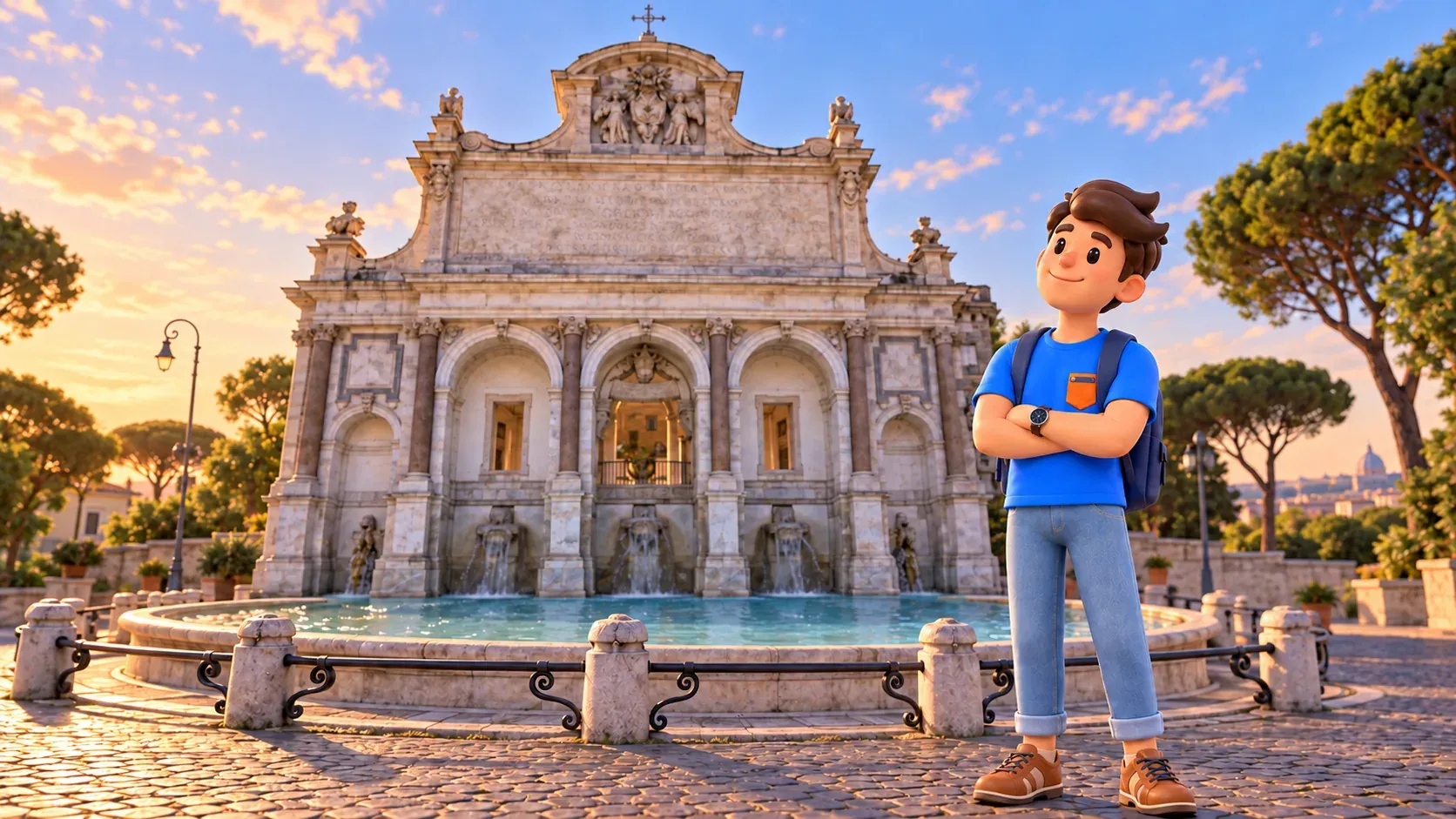
The main walk assumes an exterior view from public space. The garden behind the fountain has separate visiting arrangements and lies outside these ninety minutes. Avoid treating it as a shortcut towards the panorama. Stay behind the basin barrier and choose photographs without obstructing pedestrians or nearby road traffic.
San Pietro in Montorio and the Tempietto: earlier extras
If Renaissance architecture is your particular interest, arrange San Pietro in Montorio before the main walk. Bramante's Tempietto is a small circular structure with a colonnade and dome inside the complex's courtyard, dating from the early sixteenth century. It is neither a fountain nor a freestanding chapel in an unrestricted public square.
The church and Tempietto have different access arrangements. The church's website directs Tempietto opening-hour enquiries to the Spanish Academy. An open church does not confirm an open courtyard, and one place's timetable cannot be applied to the other. Allow separate time and check the date; expecting a casual entrance during an evening outing is particularly unwise.
Both places sit off the direct continuation from the fountain towards Garibaldi's square. Treat them as earlier additions and then reach the main starting point separately, rather than doubling back midway through the evening walk. With limited time, save the architectural visit for another day. The main outing remains complete without it.
Walk towards Garibaldi's square with a margin
From the fountain, continue along public routes towards Piazzale Garibaldi and the Belvedere del Gianicolo, using current mapping and signs. The connection includes uphill walking; the example's twenty minutes allow orientation and a gentle approach but are not measured for every pace. Avoid relying on closed-property shortcuts or a required crossing of a private garden.
Notice real road crossings and surfaces. The entire connection is not an isolated pedestrian avenue. Stop aside from movement for conversation or a photograph. If it takes longer, adjust what remains: less time at the monument, an earlier start on another occasion, or simply a later finish.
After the fountain, put the camera away briefly. It helps reveal the transition: the architectural façade recedes while trees, monuments and a gradually opening view take over. The purpose of this section is to reach the panorama with attention and energy, rather than photograph every intermediate object.
Garibaldi's monument: a little history before the view
Emilio Gallori's equestrian monument to Giuseppe Garibaldi was inaugurated in 1895. The bronze figure on its tall stone pedestal belongs to the remembrance of nineteenth-century events and Italian unification. It introduces a different layer from the antiquity and Baroque architecture you may have encountered elsewhere in the trip.
For a brief introduction, first notice the relationship between rider, pedestal and surrounding space. Then choose one relief or sculptural group at the base. Detailed study of every military episode is unnecessary. If the subject interests you, allow a separate daylight outing rather than read a long historical account in the final minutes before the panorama.
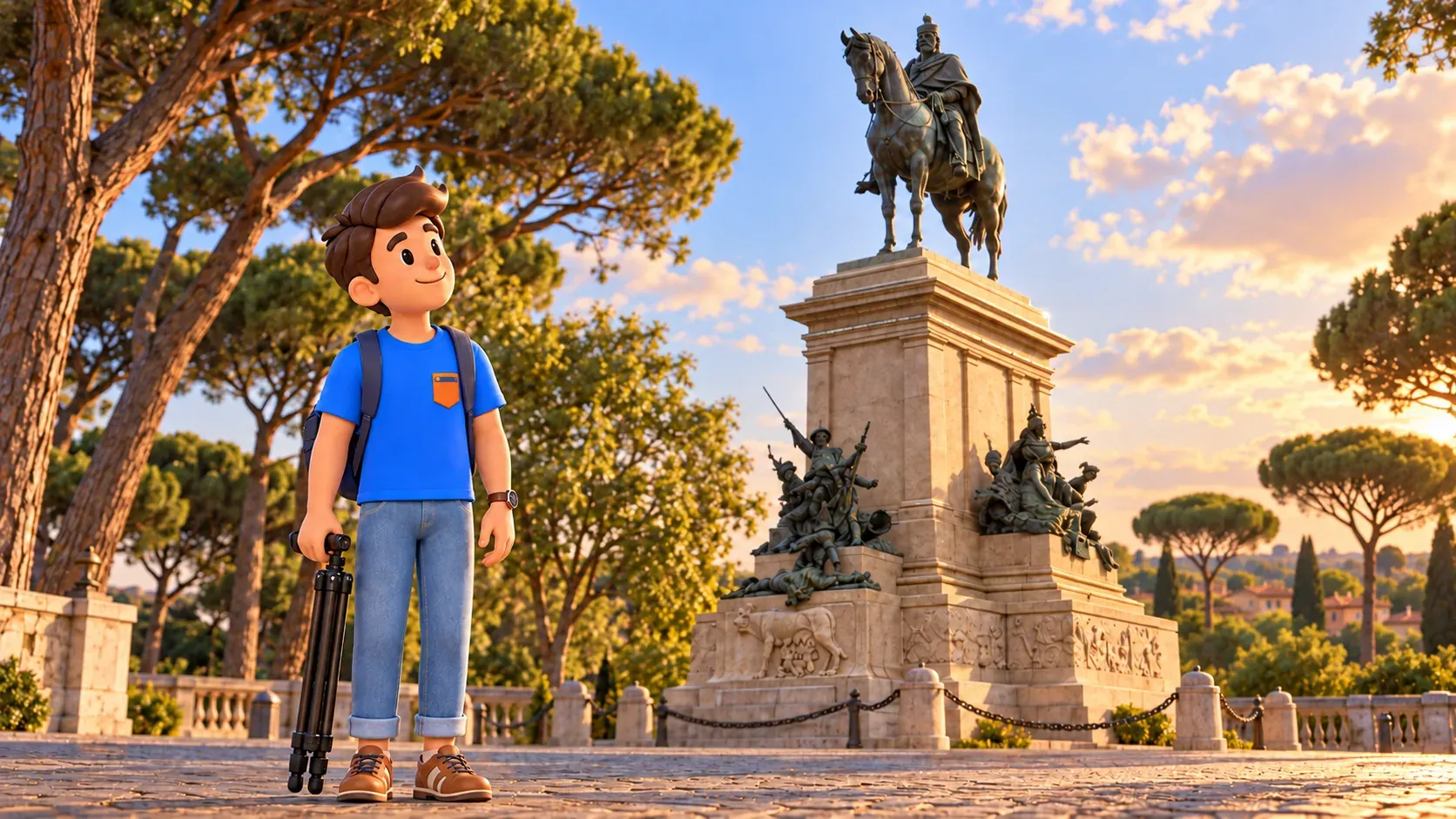
The familiar cannon-shot tradition belongs to noon, a different time of day. This sunset walk does not include it or promise a special evening repetition. Remember that when reading general hill descriptions, where experiences are often listed together without explaining that they cannot all be combined into one short visit.
Rest, then keep thirty-five minutes for the panorama
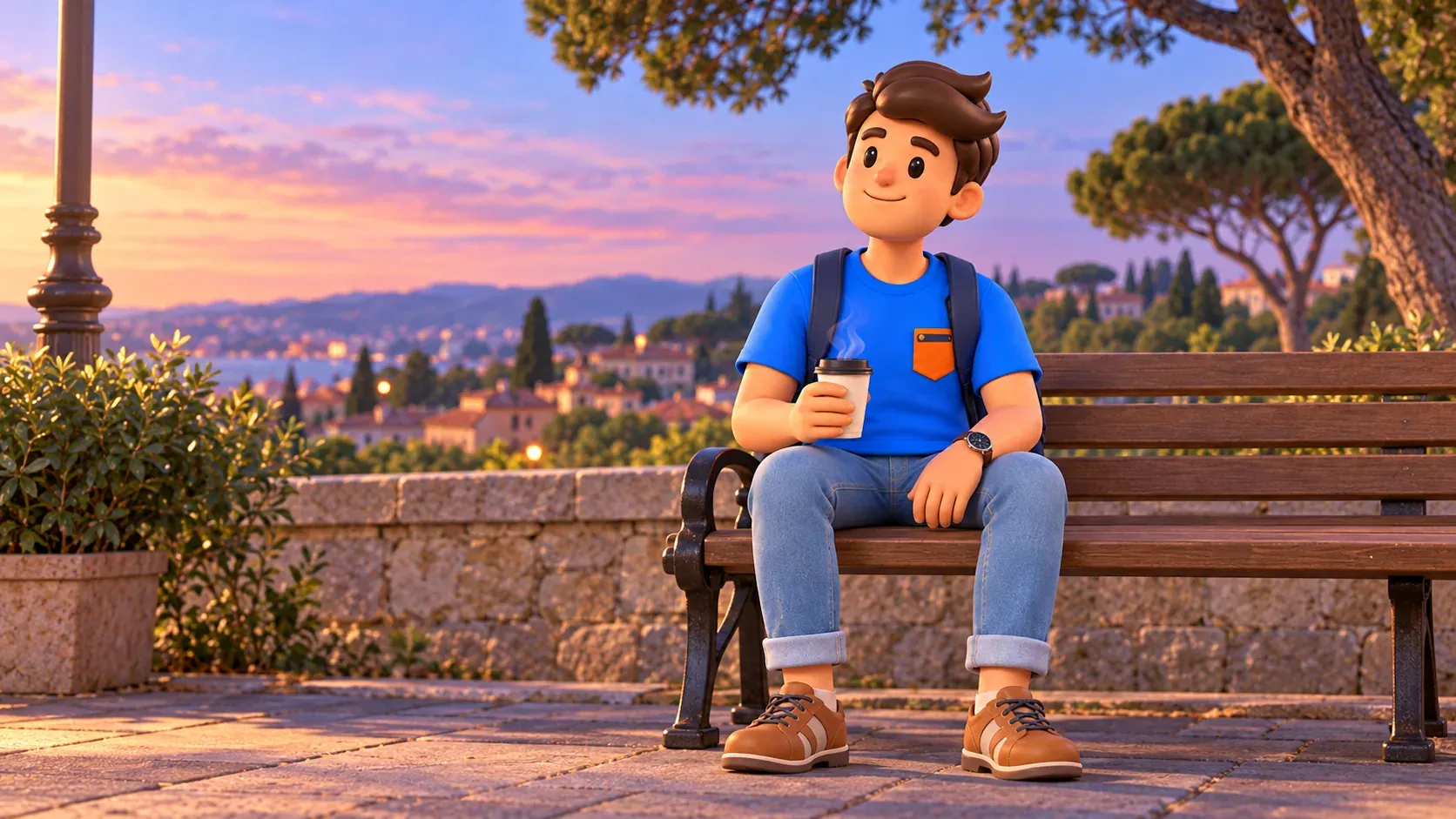
Find an appropriate available place for a ten-minute pause. Water and a small snack brought beforehand can help after climbing; do not depend on a particular open kiosk or empty café table. A full dinner needs separate time. If there is nowhere to sit, choose a workable option and avoid obeying the example at the expense of your comfort.
At the viewpoint, first look over the city without zooming in. Then find a few different shapes: a broad low roof, a slender tower, one of the domes. Naming everything correctly is unnecessary. The panorama connects familiar streets into a larger space, and recognition sometimes arrives only after several quiet minutes.
For photographs, compare one overall frame before twilight with another later, keeping a similar direction. That provides a clear observation of the changing light. There is no need to change position after every picture or place a tripod in a narrow passage. With a dense pedestrian flow, find a more practical spot instead of defending one position at any cost.
End the evening without hurry
Before leaving, consider the return: where to descend, which transport to use afterwards and how much energy will remain. After sunset, changing illumination affects how you judge surfaces and landmarks. A charged phone and an established direction are more useful than an improvised shortcut down unfamiliar steps. Finish earlier if the weather deteriorates.
RoadMe helps create a personal plan for the whole trip, connecting a Janiculum evening with your interests, pace and other days in Rome. The app makes a complete considered itinerary more convenient and effective to use than repeatedly piecing together walks, visits and rest yourself.
If choosing between hills, compare this outing with our two-hour Aventine walk, where garden and basilica hours particularly matter. On the Janiculum, keep the evening view as the main experience. The fountain and monument explain the place; unhurried observation makes the walk your own.


