Three Seoul walks without buying attraction tickets
Seoul offers rewarding two-to-three-hour outings without buying attraction admission: walk from Gwanghwamun Square to Cheonggye Plaza and Bosingak, compare DDP with Heunginjimun Gate, or climb from Hyehwa to Naksan Park. Choose one option. They reveal different parts of the city rather than forming a single continuous route. The idea is free outdoor sightseeing; transport, food and extra activities remain separate expenses.
Each walk has value in its own right. Public squares explain the organisation of a capital, façades reveal ways of making form, and a hilltop wall shows terrain and former boundaries. These are complete subjects without an obligatory paid continuation. Give yourself time to notice relationships rather than racing through the largest possible number of free places. A short programme needs a few clear anchors and a proper pause between observations.
Choose today’s walk
For a first impression of the centre, choose Gwanghwamun: a broad perspective gradually changes into smaller-scale urban water and a bell pavilion. For architectural contrasts, choose Dongdaemun with DDP and the historic gate. For a panorama and physical movement, choose Naksan, allowing for slopes and steps. All three use public routes. Each can feel complete without assuming that its most important content must be hidden behind a ticket counter.
Build the day more conveniently with RoadMe: the app develops a complete personal route or travel plan around your interests, dates and pace. Free walks, cultural visits and rest receive suitable space in a programme that is easier and more effective to follow during your stay.
| Walk | Start and finish | Suggested time | What to observe |
|---|---|---|---|
| Squares and city rhythms | Gwanghwamun → Jonggak | 2–3 hours | Gwanghwamun, Cheonggye, Bosingak outside |
| Two architectural periods | Dongdaemun History & Culture Park → Dongdaemun | 2–3 hours | DDP outdoors and Heunginjimun |
| Wall and panorama | Hyehwa → Naksan Park → Hyehwa | 2–3 hours | A selected park path and viewpoint |
Times are editorial allowances for looking, local orientation and rest, rather than measured walking durations. Travel from your accommodation is additional. With limited time, reduce observations while keeping a clear subway finish. Combining all options is possible as a different plan, but requires connections and more hours. One route is already enough for an unhurried introduction, especially when another visit is planned later in the day.
First option: Gwanghwamun and the open city centre
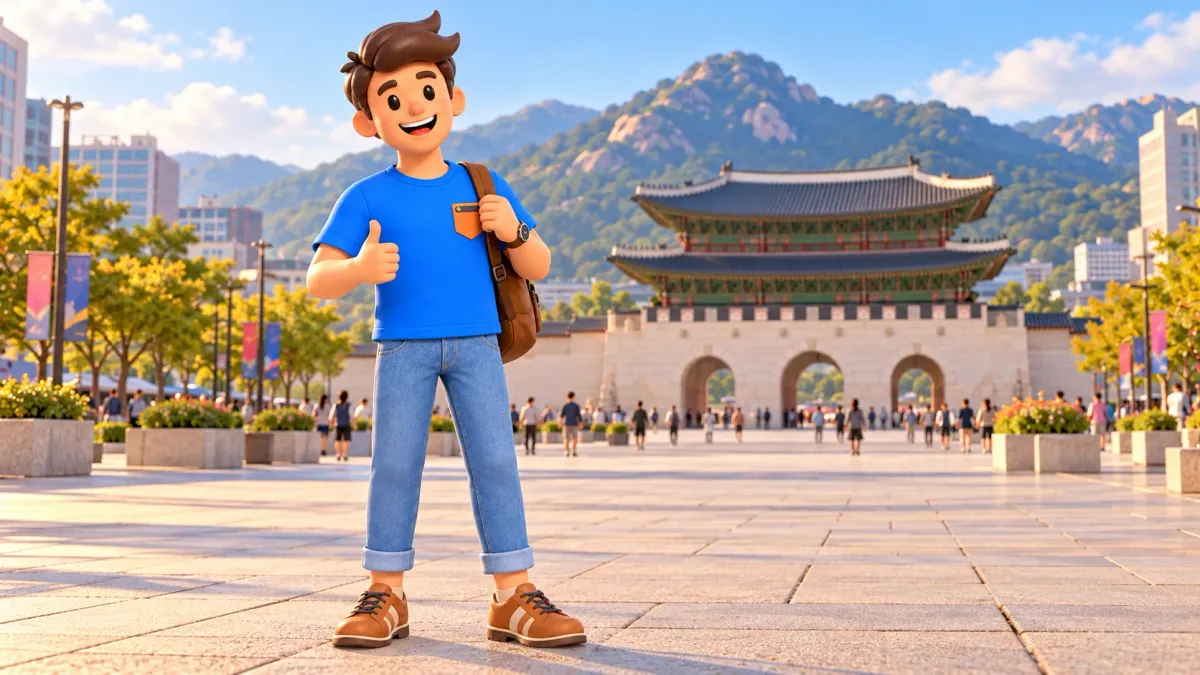
Begin at Gwanghwamun station on Line 5 and follow the public approach to 광화문광장. Distinguish the square, the historic gate at its northern end and the palace beyond. This outing needs only the exterior perspective. It explains the capital’s axis, the relationship between broad open space and a mountain backdrop, and the gate’s scale. Visiting palace courts is a separate route with its own conditions, rather than an unfinished part of today’s programme.
Look along the square, then move slightly sideways. An axis turns separate structures into an organised sequence; the side view shows how it belongs to an ordinary working city. The space relates to Hanyang’s principal administrative street and later changes to the centre. Today’s view brings several periods together. Notice how direction and distance work, instead of trying to assign every surrounding element one common date or a single unchanged historical appearance.
The square is free public space. Temporary events or restrictions may alter the permitted passage and the apparent emptiness of the perspective. This is the working centre of a major city, whose daily life also forms part of the experience. Stop where movement remains possible. Watch how different people use one extended space for meetings, rest and routine passage between neighbouring streets. The way a place functions can explain as much as its monuments.
Continue to Cheonggye Plaza and Bosingak
Follow public pavements south towards 청계광장, the plaza at the beginning of Cheonggyecheon. In this version, observe water from a permitted upper street-level position. Descending and following the lower stream for a long distance are not required. The scale changes from a broad civic axis to a linear waterside setting. Looking down already explains the relationship between street, descent and water without adding a separate lengthy walk.
The plaza appeared in 2005 as Cheonggyecheon returned to public life. Its present water landscape followed decades when the stream was covered by roads and an elevated highway. This is an engineered urban space rather than a literal reconstruction of untouched nature. Its value includes the chance to stop beside water among office buildings. Compare street sound, visual depth and reflections: the city changes while you remain within its dense central fabric.

Next, use public streets at ground level towards Bosingak, 보신각, and Jonggak station on Line 1. The bell pavilion introduces urban time and signals that once helped regulate the capital’s life. Here it is viewed from outside. The programme does not promise a bell ceremony, ascent or entry behind a barrier. Roof shape, the openness of the structure and its relationship with a modern street already provide material for a meaningful short stop.
For two to three hours, allow roughly forty to fifty minutes at the square, thirty to forty for water and connections, and another half-hour for Bosingak and a pause. Remaining time is a margin for orientation and finishing. A fuller stream exploration deserves another outing. Cheonggyecheon Museum is elsewhere farther east; its related name does not make it a neighbouring room at the initial plaza. Today, three ways of organising public space are enough.
Second option: DDP and Dongdaemun Gate
Start at Dongdaemun History & Culture Park on Lines 2, 4 and 5. From the current DDP exit, follow public access towards the exterior. Save 동대문디자인플라자. This walk focuses on outdoor architecture and needs no exhibition ticket. Interior galleries, tours and events have separate conditions. Even when a room is unavailable, permitted outdoor observation remains an independent architectural task, rather than an attempt to see a paid exhibition through a doorway.
Zaha Hadid’s complex opened in 2014 on transformed land formerly occupied by Dongdaemun Stadium. Its defining features are continuous curves and an aluminium skin that changes from a broad shape into individual panel joints. Observe it from a distance, then select a section beside a permitted path. Seams make the surface understandable as precise assembly. As you move, curves advance or disappear, so movement really does help explain the building’s form.
Try distinguishing lower edge, swelling surface and passage space. A conventional rectangular façade can be described through floors and windows; this design uses another logic. Specialist education is unnecessary to see how the shell guides attention and relates to open areas. A personal sketch needs only two or three lines on your own sheet. The reward is noticing a principle, without reproducing every panel or finding a photograph identical to a guidebook cover.

From a metal curve to a historic gate
After the exterior visit, use public streets and crossings north towards 흥인지문, Heunginjimun, also known as Dongdaemun. Finish at Dongdaemun station on Line 1 or 4. Distinguish this gate from the palace’s Gwanghwamun. Heunginjimun belongs to the capital’s defensive system. Its current form relates to rebuilding in 1869, while later urban changes broke the continuity of adjoining wall sections. The structure’s setting therefore belongs to more than one period.
Compare form as well as age. The gate presents a substantial base, arched opening and tiered roof; DDP’s surface appears continuous. Historic architecture need not become mere decoration for its modern neighbour, or vice versa. Together they reveal different tasks and construction approaches. View the gate from a permitted exterior position, using pedestrian crossings rather than approaching its traffic island through moving vehicles. The comparison depends on attention, not on getting as close as possible.
Allow around an hour for DDP, half an hour for the urban connection and orientation, then thirty to forty minutes for the gate and a quiet pause. This is a flexible guide. Evening lighting may change the impression of materials, but a light show is not an obligatory daily feature. A daylight first visit is straightforward. Shops and markets can be chosen separately, without turning the architectural walk into a required purchase or search for one particular business.
Third option: Naksan from Hyehwa
For terrain and a panorama, start at Hyehwa on Line 4 and follow the exit towards Naksan Park. Municipal directions use Exit 2 for this approach. Continue along the signed public route to a permitted viewpoint and selected wall path, returning to Hyehwa afterwards. This is a short out-and-back visit, rather than a promise to complete the entire official gate-to-gate wall section within the same two-hour allowance.
Naksan is one of the historic city’s lower inner hills. The climb keeps the panorama close enough to distinguish neighbourhoods and understand how a former defensive boundary followed the terrain. The wall has been repaired and restored repeatedly. Compare stone sizes, surface treatment and block fitting rather than assuming every section is equally old. Differences show the structure’s history, while the wider city reveals how far urban life has expanded beyond the old boundary.
An ordinary park path and one viewpoint provide enough for observation. Look first at nearby masonry, then the continuing line and finally the city below. Detail, line and panorama form a clear sequence. This can give a stronger impression than taking photographs continuously. Residential lanes are not compulsory: the outing uses public paths while respecting everyday life nearby, without treating each courtyard as another sightseeing scene or a required shortcut between viewing positions.
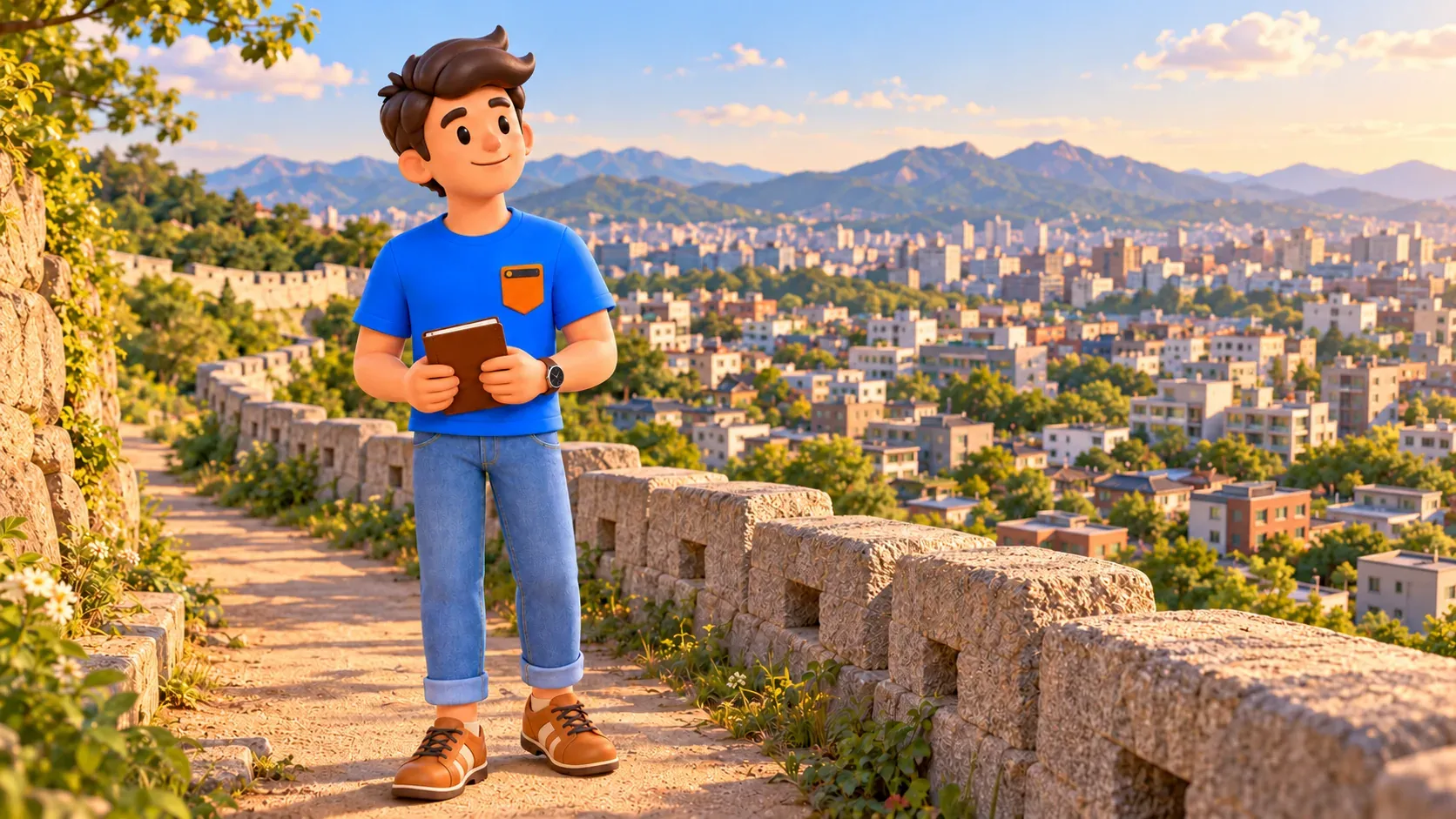
Allow for slopes and steps. Two to three hours with climbing, rest and return is an estimate for a selection, without implying equal accessibility on every route. If a level environment is essential, consider the first city option and check its approaches beforehand. At Naksan, choose dry daylight and shorten the walk when the pace requires it. A rewarding view does not require climbing on the wall or reaching the farthest possible platform.
Free admission and a useful personal programme
Each option has a clear finish near a subway station and a subject of its own. You can end as planned without adding a paid attraction to make the visit feel legitimate. Before setting out, check weather and temporary restrictions for the chosen space. Then select one question: an axis, a metal seam or changing masonry. That small interest gives more than moving randomly between free names on a map without understanding their relationship.
Plan the whole stay more conveniently with RoadMe: the app prepares a complete personal programme around your interests and distributes walks, museums, neighbourhoods and rest across your days. A considered plan helps you use time effectively and choose activities suited to your particular trip.
Choose squares for urban organisation, DDP and Dongdaemun for architectural comparison, or Naksan for wall and terrain. Buying an admission ticket does not determine the depth of an experience. A clear sequence, time on site and a few details you actually notice create it. A short free outdoor route becomes a distinct part of the trip, rather than an interval spent waiting for another, more expensive attraction to begin.