An evening by the Han: Banpo and Jamsu Bridge
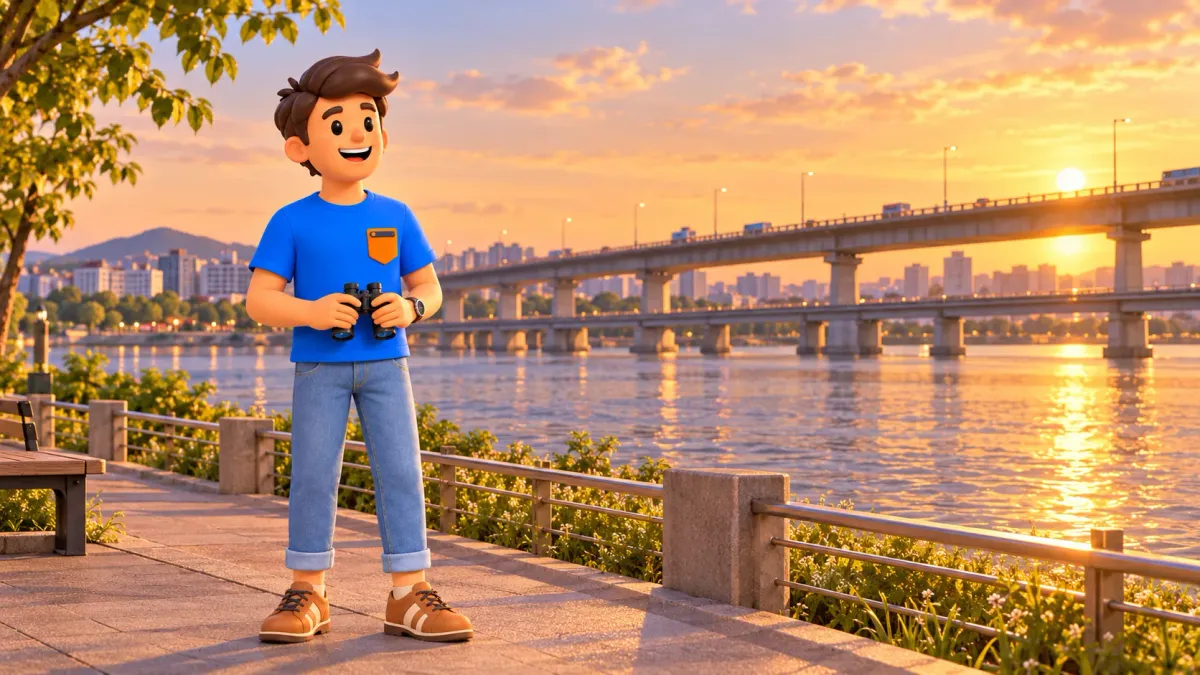
For an evening by the Han River, choose Banpo’s south bank and the two-level Banpo–Jamsu crossing. Two and a half to three hours allow a riverside walk, changing light and, during operation, one suitable fountain show. Start and finish around Express Bus Terminal on subway Lines 3, 7 or 9. Crossing the river is optional: the bank-based version remains worthwhile without stepping onto the lower bridge.
Jamsu is changing. All vehicle traffic closed on 26 October 2026 for its conversion, while an initially separated permitted route remains for pedestrians and cyclists. A closure to those users is also planned for May–August 2027. This walk therefore centres on the bank, treating a short lower-bridge approach as conditional. You can understand the engineering without making the whole evening depend on a complete crossing.
One bank with time to pause
Reach the river through the signed public access, walk a manageable park section, choose an observation spot and return to the familiar transport anchor. Include one show if the fountain operates; otherwise, watch the bridge and reflections. There is no need to add a compulsory cruise, market and extensive opposite-bank walk. Staying within one geography matters especially when the evening is short and transfers would consume much of it.
Plan this evening much more conveniently with RoadMe: the app develops a complete personal route or trip around your interests, dates and pace. Riverfronts, architecture, meals and rest become a coherent programme that is easier and more effective to use during your stay.
| Part | Suggested allowance | Purpose |
|---|---|---|
| Subway approach | 25–30 minutes | Find the current river access |
| Bank walk | 35–40 minutes | Water and two bridge levels |
| Observation window | 20–30 minutes | One fountain show or evening view |
| Pause | 20–25 minutes | Sit without rushing |
| Return | 25–30 minutes | Same bank and subway |
| Optional Jamsu approach | 20–25 minutes | Only the permitted pedestrian section |
These are editorial estimates rather than measured connections. Do not add every upper allowance as a guaranteed exact duration: select a short bank section and one focus. The suggested window is not a full crossing and return, a long restaurant dinner and several shows. Travel from your accommodation is additional. If sitting by the water matters most, shorten the walking distance while retaining the pause itself.
Reach Banpo without an unnecessary transport loop
Express Bus Terminal is a substantial interchange, and leaving the platform is not arriving at the river. Municipal directions refer to Exits 8-1 and 8-2, or shopping passage G1, towards the bridge; the park estimates around fifteen minutes for the approach. Allow more for complete orientation. Follow current Banpo Hangang Park and Banpo Nadeulmok signs, using the permitted underpass beneath the transport corridor rather than crossing roads wherever the water seems closest.
Save 반포한강공원, 반포대교 and 잠수교. Park, upper bridge and lower crossing are different parts of the evening. On reaching the bank, identify the return access before wandering. After dark, similar paths and transport barriers look different. Your return should not depend on crossing the river, finding another bus or finishing precisely in another district. A familiar access point gives the short route a useful practical boundary.
Construction changes from 26 October 2026 reroute buses formerly using Jamsu over upper Banpo, with some former park stops closed. Older bus directions can therefore produce unnecessary searching. This plan uses the subway as its simple foundation. If choosing a bus, check the current stop position and direction for your date instead of automatically repeating an older guide’s list. The main aim is to reach the river, not to preserve an outdated transfer.
Understand the two bridges
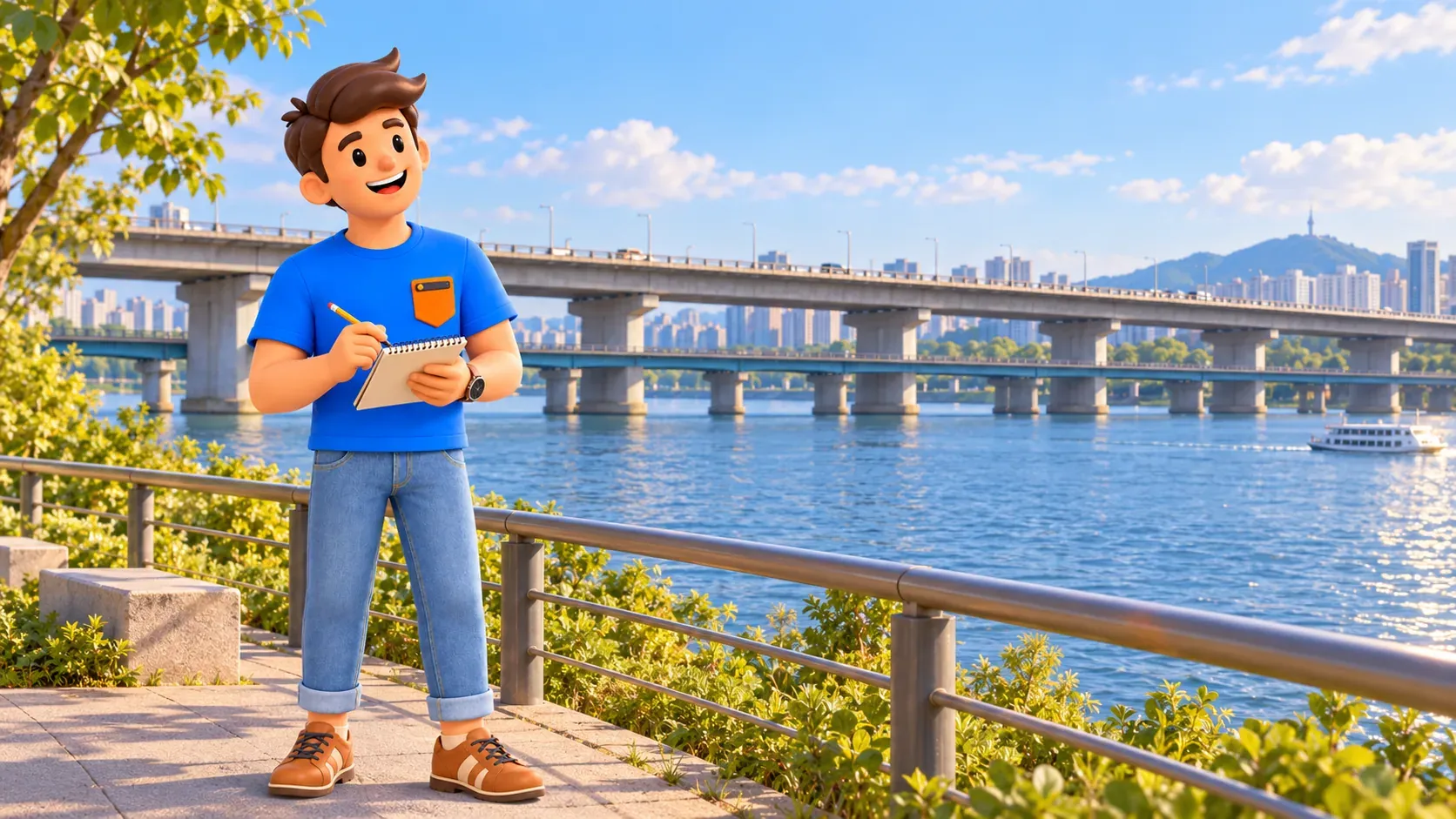
Jamsu opened in 1976 as a low crossing near the Han’s usual surface. Upper Banpo followed above it in 1982. From the bank, two road planes are visible: a high horizontal line and a lower path close to water. That relationship is enough for a first understanding. Do not look for monumental decorative arches or tall pylons at Jamsu; its interest comes from proximity to the river rather than a spectacular vertical silhouette.
The lower bridge’s name relates to submersion. During major floods, water can cover it and access closes. This is a design condition of a low crossing, not an invitation to watch rising water from the structure. In calm conditions, closeness offers a different scale from a high panorama. Yet the bank already allows comparison of both levels, supports and the way one transport connection was supplemented by another.
That perspective makes ordinary infrastructure a worthwhile attraction. The city first addressed crossing the river, then increased transport capacity, and later added recreation and spectacle. New roles do not remove earlier layers. One location shows transport history, public leisure and a new attempt to provide more pedestrian space. For a walk, this is more rewarding than checking off the bridge as another night-photo background and immediately looking for the next destination.
The fountain follows the upper bridge
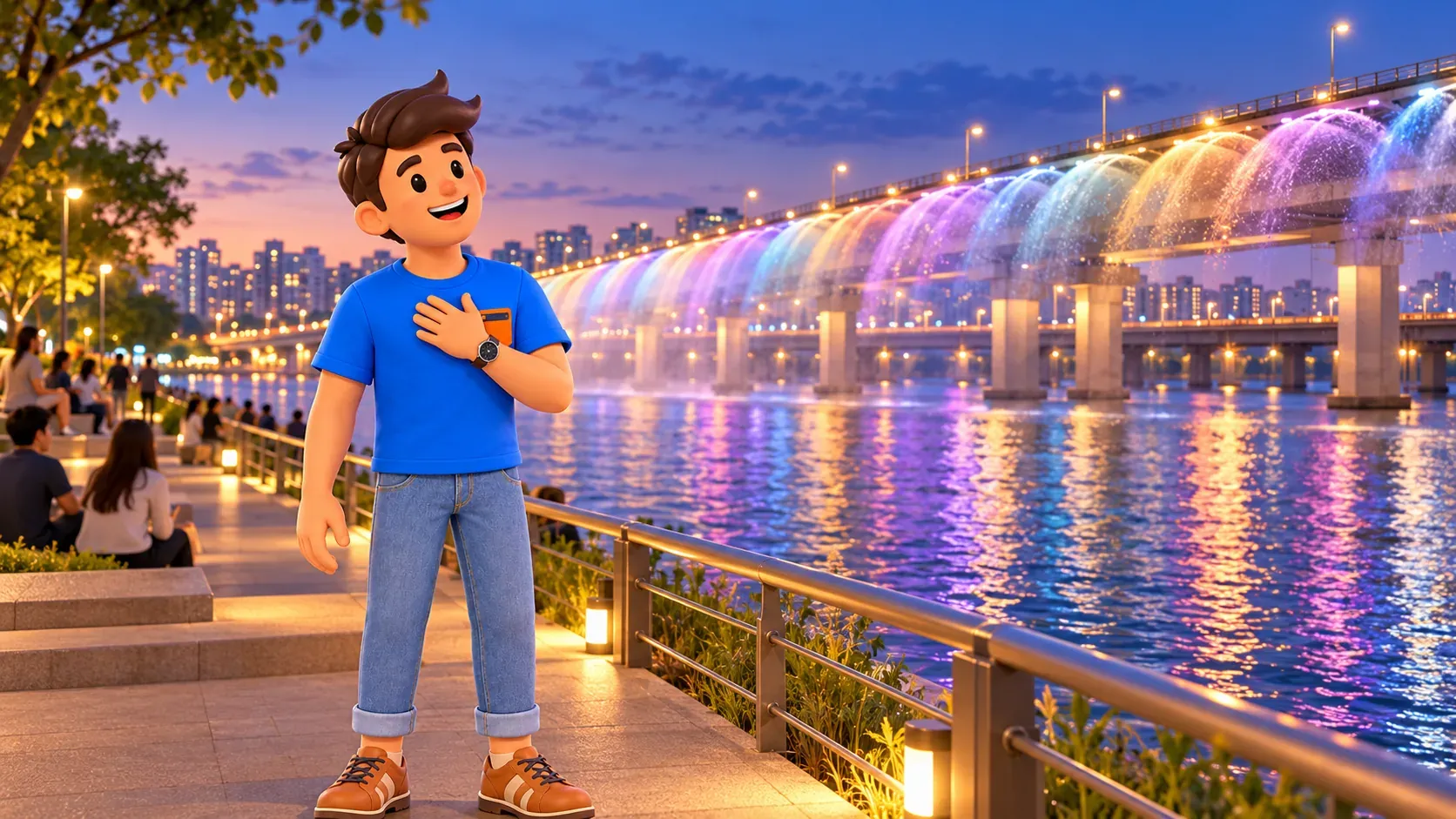
The Moonlight Rainbow Fountain formed part of the Han waterfront transformation and officially opened in April 2009. Water arcs emerge from equipment along upper Banpo, not from Jamsu’s road surface. Streams return to the river rather than a separate urban basin. The long composition matters: the bridge’s strict horizontal line gains movement, music and colour, while the water surface becomes part of the setting rather than merely a foreground.
First watch the line of the streams, then the reflection below. It need not reproduce the pattern above, because current and wind break colour into separate fragments. This simple observation works without an ideal frontal position. You need not film the whole show. A short image can remain a souvenir while a few minutes of direct attention reveal more changes than continuously watching through a screen and adjusting the framing.
The illustrations convey atmosphere rather than an exact accessible camera position or a guaranteed operating side for your date. The bank view follows current arrangements. During construction, the downstream fountain direction is affected by a stoppage; do not expect both sides to operate simultaneously. Choose your viewing area through fresh park notices and keep the general evening flexible enough that losing a particular angle does not cancel the whole outing.
A seasonal timetable, not a nightly guarantee
The published general season runs from 15 March through October. Evening starts in March–May and October are 19:30, 20:00, 20:30 and 21:00; June–September adds 21:30. Each show lasts around twenty minutes. A 12:00 daytime start also exists, but it is outside this evening version. Watching from the permitted bank does not require a separate paid ticket, and the outing need not include a purchased riverside activity.
A timetable does not guarantee operation on your chosen day. Wind, forecast rain, river-water conditions, inspection and events can change it. In late October 2026, Jamsu-related changes also affect the viewing side. Check the park’s notice before setting out rather than relying only on a saved table. Outside the season, choose the walk for river and bridge without expecting the same fountain programme to continue through winter.
Sunset time changes too. A summer show start does not necessarily coincide with complete darkness, while an autumn start may already be after dark. Aim to experience the transition from daylight visibility to lights instead of searching for a universal perfect sunset minute throughout the year. If a relaxed walk matters most, arrive earlier and avoid building everything around the final late show, followed by a hurried departure for the subway.
Jamsu during the conversion
Conditions were checked on 26 October 2026: vehicles are fully excluded, while pedestrian and bicycle movement initially continues in a corridor separated from works. This is not yet the completed new pedestrian bridge. Announced extra viewpoints and transparent decking belong to the future project. Do not look for them as existing attractions or treat a rendering of the completed scheme as a precise map of today’s permitted route.
The city plans to halt walking and cycling too during paving in May–August 2027. A bank-based version is particularly suitable then. On any date, current barriers and staff directions determine the possible approach. If a section is open and you want the low perspective, take a short permitted stretch and return the same way. Keeping the full crossing optional preserves the programme’s clear end and manageable length without depending on another bank’s exit.
Give the riverside pause a purpose
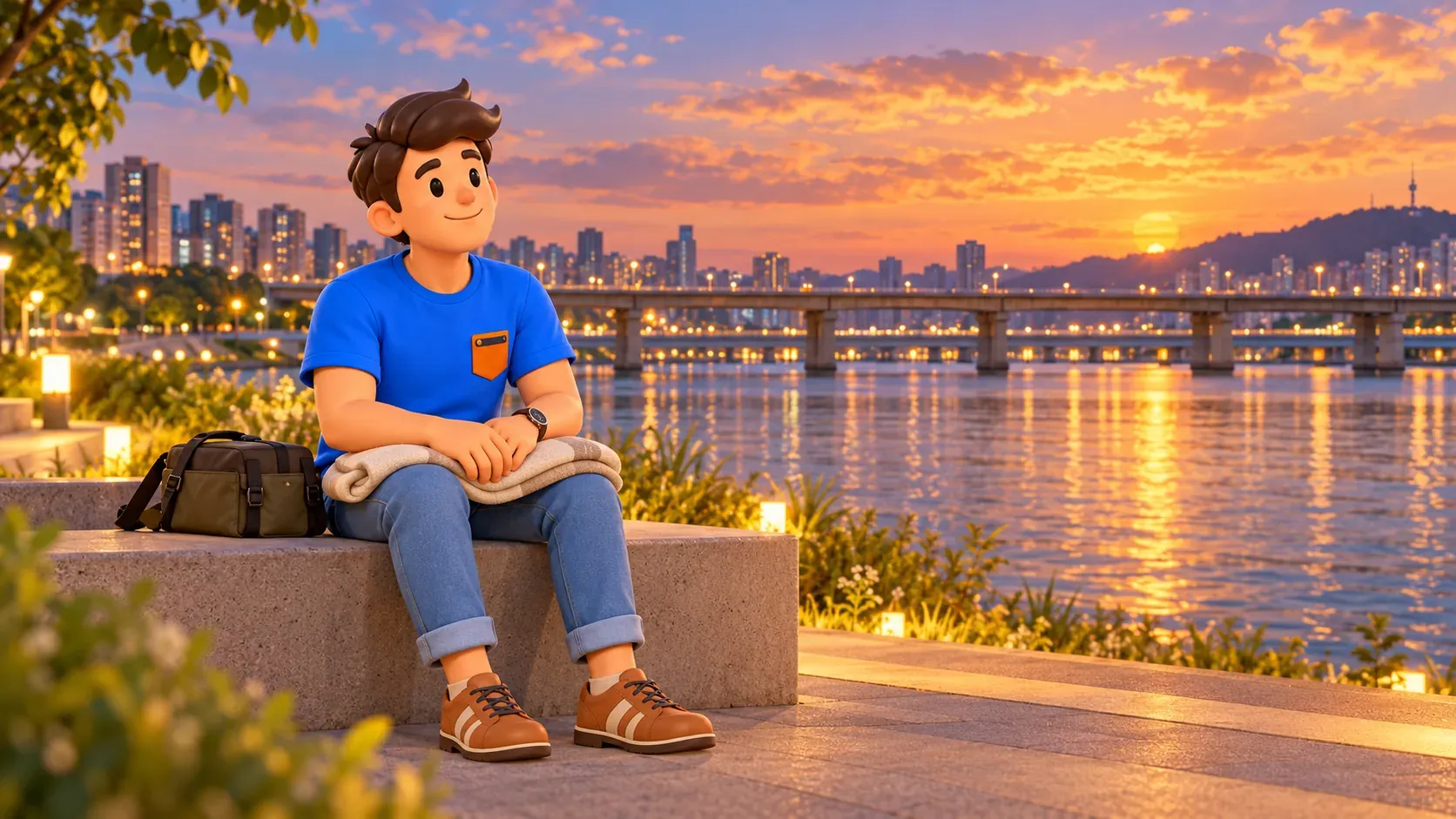
Choose a place outside the cycle flow and sit for twenty minutes. The Han rewards attention to width and movement: the opposite bank changes scale, reflections lengthen and the bridge joins different depths. Put aside the task of finding another photograph briefly. An evening can finish with one well-remembered view. You need not reserve a floating restaurant or buy an extra attraction to make time by the river a valid part of the trip.
If you want food, choose according to the actual setting and available time. A park does not guarantee festival stalls, food trucks or a special event every day. Bring a suitable seasonal layer, since open water feels different from a sheltered street beside the subway. For a long dinner, enlarge the plan in advance rather than retaining the same short return allowance after an unplanned extra hour at the table.
Distribute evenings like this across the holiday more easily with RoadMe: the app fully develops a personal trip plan around your interests and preferred rhythm. Museum days, neighbourhoods and waterside rest form a convenient sequence that helps you use time in Seoul more effectively.
Return along the south bank to the familiar access and subway. The evening’s main interest is the meeting of a broad river with everyday engineering: lower Jamsu, upper Banpo, changing light and water arcs when conditions allow. The bank-based foundation gives clear geography and freedom. It permits an unhurried finish after one strong impression, without a compulsory crossing, second show or opposite-bank journey merely to complete a longer checklist.