
Popolo to the Spanish Steps via Pincio and Via Margutta
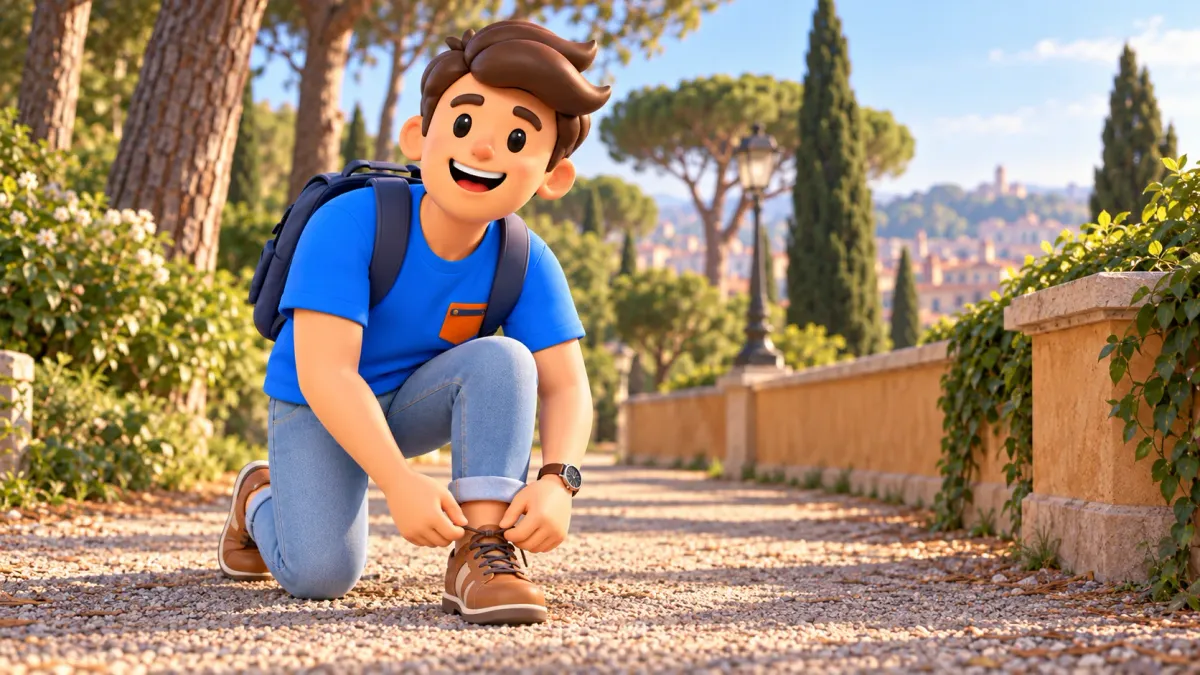
This Rome walk changes scale as you go: the broad space of Piazza del Popolo, a city panorama from the Pincio, the smaller details of Via Margutta and the pale curves of the Spanish Steps. It suits travellers who enjoy views, street architecture and an artistic atmosphere without building the afternoon around a large museum visit.
Begin at Piazza del Popolo, climb to the Pincio terrace, return downhill and continue through Via Margutta to Piazza di Spagna. Allow roughly two and a half hours, including a short seated break. The timings below are an illustrative allocation rather than measured journey times; travel to the start and onwards from the finish is additional. Museum, church and gallery admissions are outside the basic programme.
Decide whether the climb belongs in your day
The Pincio gives this route its central experience: seeing from above a square you have just explored at street level. It also means a real ascent and descent. If you would prefer to remain in the lower streets, choose Piazza del Popolo, Via Margutta and Piazza di Spagna instead. That is a shorter version without the panorama, and its surfaces, crossings and kerbs still need checking against your own mobility requirements.
RoadMe makes it easier to work this walk into a personal plan for your whole trip, shaped around your interests, dates, pace and budget. With the itinerary and map together, the programme is more convenient and effective to use in the city than a collection of separate notes.
The main sequence has one climb to the Pincio followed by a return downhill. At the finish, you can appreciate the Spanish Steps from the square without climbing again. That preserves both the view and the artists' street while keeping the second staircase optional. Before leaving, consider your willingness to walk uphill as well as the apparently modest distances on a map.
A practical allocation for 150 minutes
| Time from the start | What it includes |
|---|---|
| 0–20 minutes | Piazza del Popolo: the space and an overall view |
| 20–45 minutes | The climb to the Pincio terrace at your own pace |
| 45–65 minutes | The panorama and a short breather |
| 65–90 minutes | Descent towards Popolo and the approach to Via Margutta via the Via del Babuino area |
| 90–115 minutes | Via Margutta: façades, windows and artistic atmosphere |
| 115–135 minutes | Walk to Piazza di Spagna and view of the Spanish Steps |
| 135–150 minutes | A seated rest somewhere suitable nearby |
The walking is included, but a substantial lunch, shopping or an exhibition visit is additional. If the programme starts to run long, remove an extra activity before removing rest. Choose a useful part of your day, perhaps after breakfast or after an afternoon break. The plan does not depend on an assurance of empty squares: visitor numbers cannot be known in advance.
Keep the finish flexible if you have a later reservation. Work backwards from the time you need to leave the area, including travel to the next address. A walk with no admission booking can still become stressful when its final minutes are treated as spare time for a distant appointment.
Piazza del Popolo: see the whole before the details
Resist heading straight to the obelisk. Find a position that shows the width of the square, the two similar churches on the street side and the green Pincio slope. Via del Corso, Via di Ripetta and Via del Babuino meet here. Their arrangement helps explain the square's role as a place that gathers people and sends movement into different parts of the centre.
The modern elliptical composition is associated with Giuseppe Valadier's work in the early nineteenth century. The Egyptian obelisk is much older than the surrounding arrangement; it was moved here from the Circus Maximus in 1589. For a short walk, that contrast in ages is enough. It reveals something of Rome without asking you to memorise every statue and date.
Compare the obelisk's vertical line with the broad space around it, then turn towards the slope. Soon you will be looking back from above. This simple observation connects two stages of the walk. If exploring separately from companions, agree on a meeting point before dispersing: a large piazza makes casual wandering easy and finding an unannounced new location less straightforward.
Make the ascent part of the experience
A system of paths and stair sections leads up the Pincio slope from the Popolo side. Choose an actually open route using current mapping and signs. The twenty-five-minute allocation allows for an unhurried ascent and small pauses; it is not a performance target. A ramp symbol or curved road on a map does not by itself establish a gentle or fully accessible route.
Pause once on the way and notice how the square changes. At first the façades remain in front of you; gradually the space becomes a composition below. Photographing every turn is unnecessary. Watching the transition from street to panorama may be more memorable. If the early sections already feel too demanding, return to the lower version and enjoy that walk.
In heat, carry water and give the climb more time. Shade varies with the section and the sun's position, so avoid relying on a continuous cool corridor. After rain, pay attention to steps and the later descent. If you have particular mobility needs, establish a specific suitable access route beforehand rather than relying on an unverified lift.
On the terrace, find the square you now know
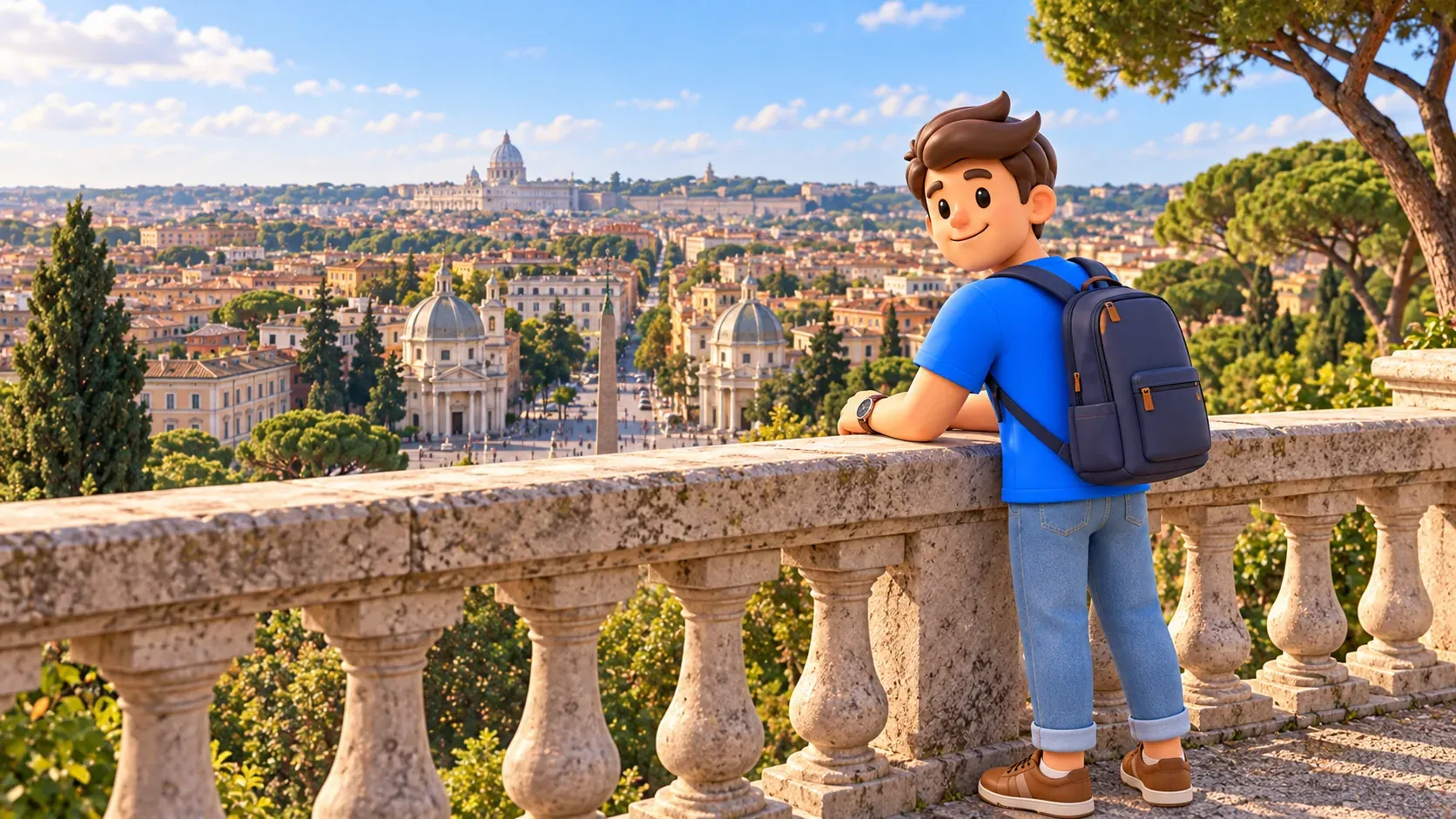
Piazza del Popolo below is your first landmark. Recognise the obelisk and the shape of the space you have just crossed, then let your attention move to the roofs and distant domes. When visibility allows, St Peter's dome can be seen on the skyline. That connection is useful even if the Vatican is still ahead of you on another day.
The Pincio is more than a viewing platform: its planned urban promenade is also associated with Valadier. From here, square, slope and upper terrace begin to read as a connected arrangement. You do not need to find every monument in the surrounding avenues. Twenty minutes can be enough for a breather and a different sense of the city.
For photographs, try a wide composition before zooming in. Then choose one detail: a line of roofs, the obelisk or the relationship between trees and stone. Stay safely behind the barrier and leave access to the view clear. Weather and haze alter the scene; the walk remains worthwhile without a particular sunset effect or an identical view to somebody else's photograph.
Why the route returns downhill
An upper-level continuation towards Trinità dei Monti is possible, but it changes the sequence. This walk returns towards Popolo so that Via Margutta follows the panorama. The partial return is deliberate: it creates a square–view–artists' street progression. It avoids assuming that a terrace connects directly to whichever small courtyard looks attractive below.
After descending, approach Via Margutta through the Via del Babuino area on public streets. The twenty-five-minute block includes that approach. Check the street entrance on your map before turning; a narrow side street may not look like the main flow of the walk. An open residential gate is not automatically a public shortcut.
Via Margutta: exchange the panorama for small observations
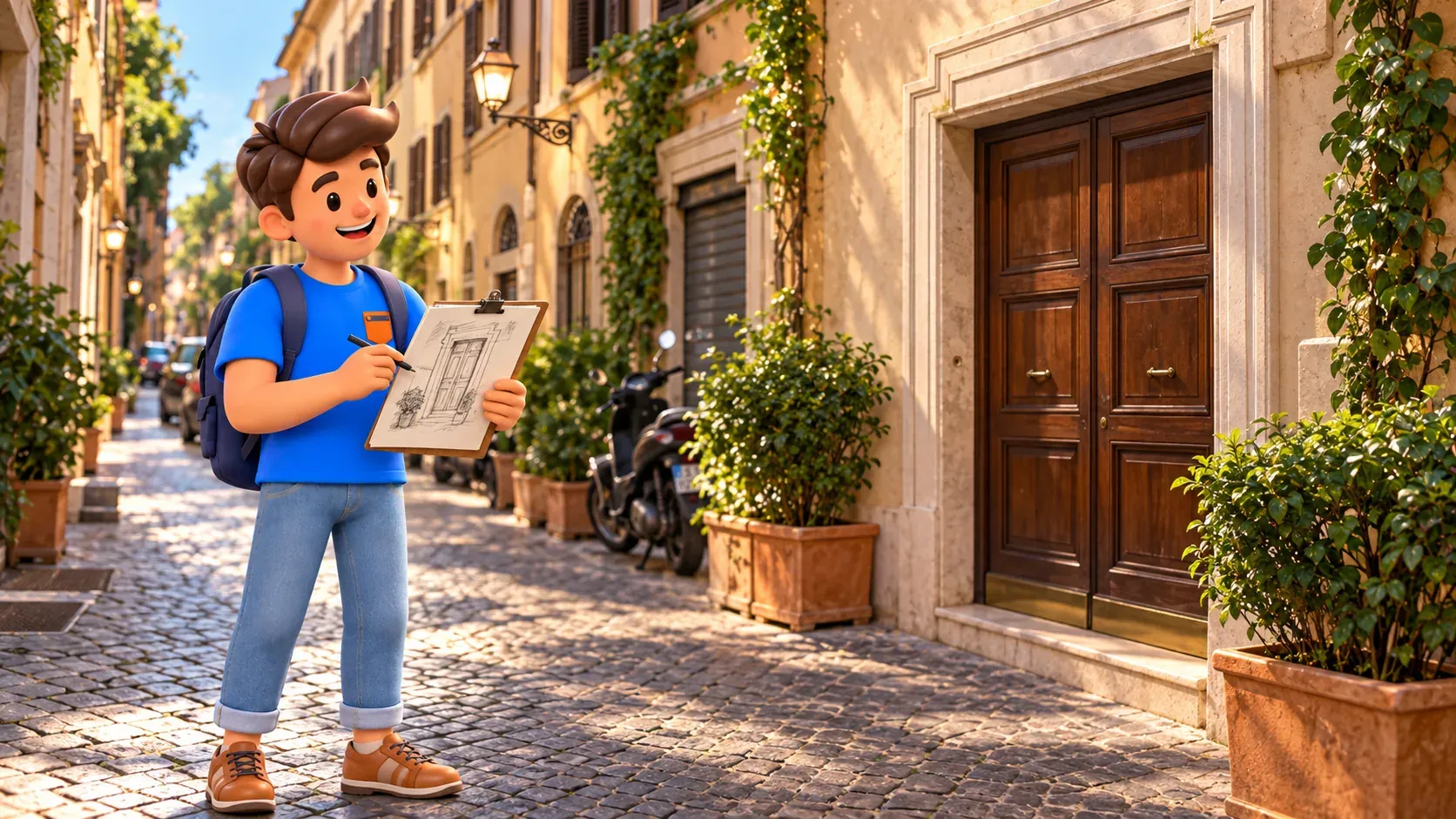
Slow down here. After the width of Popolo and the view from above, a wall's texture, plants against a façade or a small display can hold your attention. Via Margutta lies below the Pincio between Piazza del Popolo and Piazza di Spagna. Its artistic reputation is connected with studios and galleries, and the film Roman Holiday also helped make it famous.
A short introduction need not become an address-by-address film pilgrimage. Choose a fragment visible from the public street and consider how differently it works from the square you started in. Even if a particular gallery is shut, the street itself remains part of the experience. Current exhibitions and working studios deserve separate research for the date you intend to visit.
If you like drawing, bring a small sketchbook and make a quick study of a door or a plant while standing clear of the passage. For photography, try two scales rather than a large number of near-identical pictures. Avoid aiming into residential windows or entering a studio for a photograph without agreement. Twenty-five minutes suits an introduction; a longer creative session needs an expanded schedule.
Piazza di Spagna: finish with the staircase in view
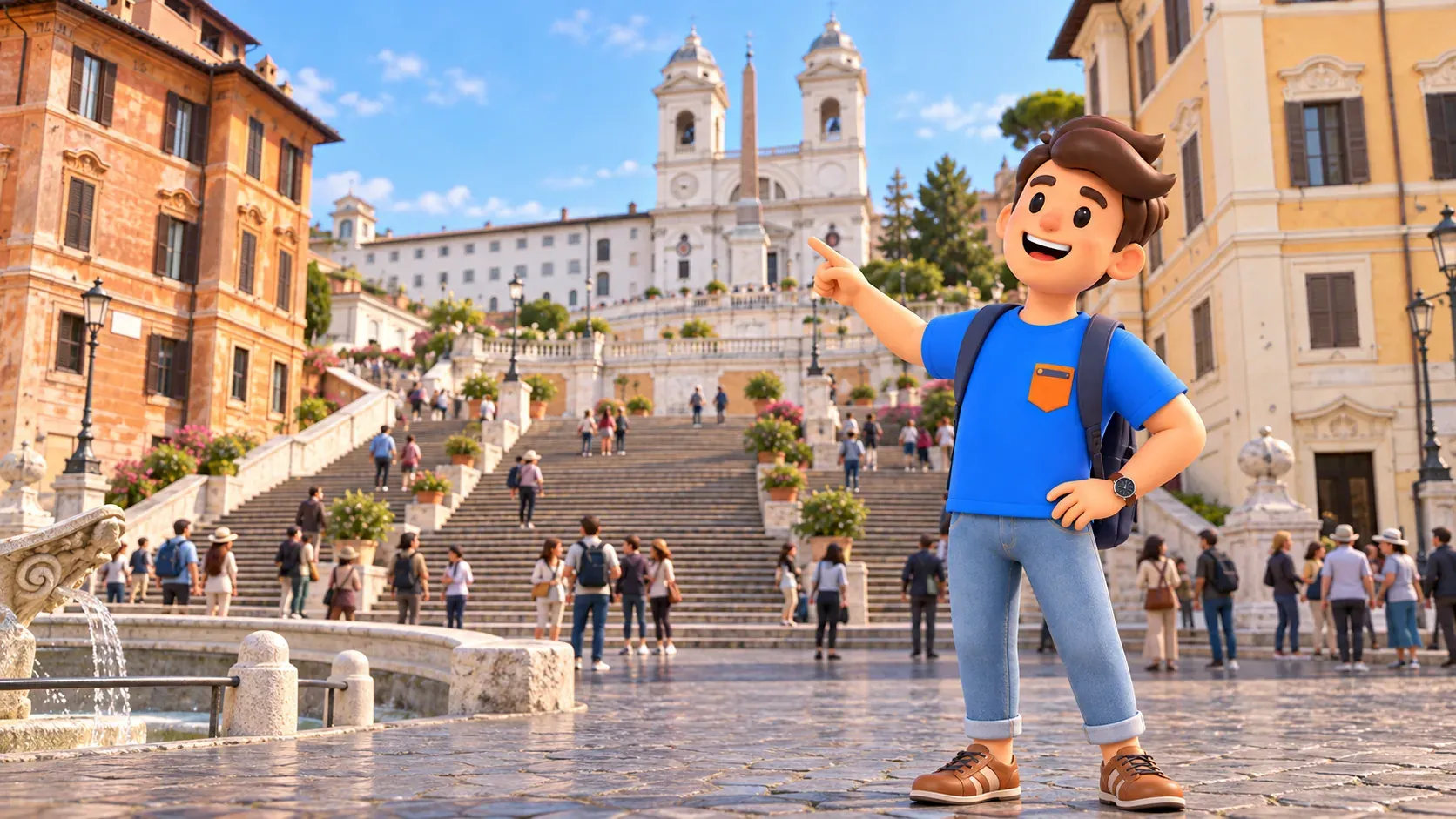
Continue from Via Margutta towards Piazza di Spagna, checking crossings on your map. This stage is a gentle finish rather than a test of walking speed: the main climb is behind you. Look up towards the Spanish Steps and the church of Trinità dei Monti. The eighteenth-century staircase is associated with architect Francesco De Sanctis, its curves turning a change in level into an architectural scene.
From below, follow the way the flights separate and meet again. Let your eye trace that movement before deciding whether to climb. At the foot is the boat-shaped Barcaccia fountain. An overall impression of water, square and staircase is enough here; a detailed history of each element can belong to a different visit.
Climbing the Spanish Steps is outside the basic allocation. Add time and account for the extra exertion if you choose to do it. For the final seated rest, find a suitable place or café nearby, leaving stairs and passages clear. Arriving at a famous sight does not oblige you to search immediately for the next one.
Adjust the emphasis, rather than adding everything
For a view-focused outing, spend longer on the Pincio and make Via Margutta an unhurried passage. If art matters more, select one gallery that is actually open and extend that section, shortening another stop or increasing the total duration. Several interiors would create a different programme with a different timetable.
With children, suggest one observation at each stage: recognise the obelisk from above, notice a plant on a wall, or follow the staircase's curves. This is a way to sustain attention rather than a quiz with compulsory answers. Adults benefit from the same shared expectations about the time available for photographs, browsing and pauses.
In RoadMe, these ideas become easier to develop into a personal itinerary for the whole trip, taking your interests, pace, dates and budget into account. A thought-through mix of walks and other experiences makes the plan more convenient and effective to use when you are actually in Rome.
For several distinct days, see our three-day Rome plan. This stretch can also remain a complete outing in its own right: a square, a panorama and smaller street details provide plenty to notice. Leave room afterwards for food and the onward journey instead of automatically filling every remaining hour.


