
Two Hours on the Aventine: Orange Garden, Santa Sabina and a View
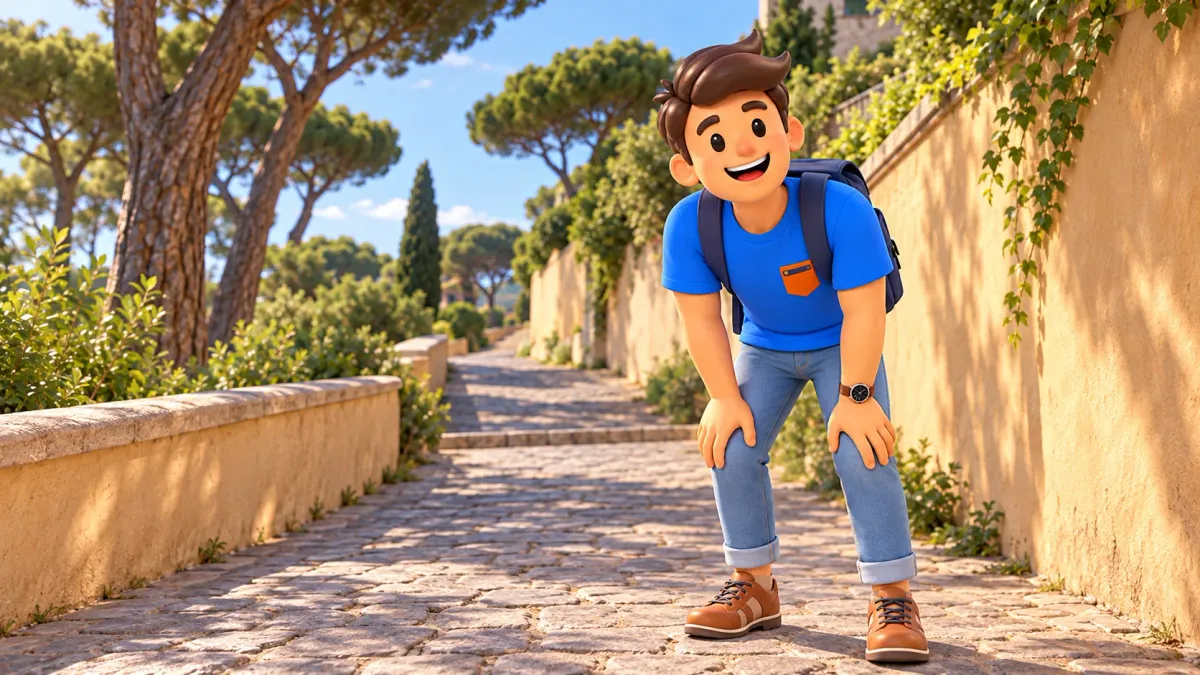
Climb the Aventine for a combination of experiences: trees and a city view in the Orange Garden, the space of Santa Sabina, and the unusual decoration of the Knights of Malta square. The famous keyhole can be a small extra. If its queue does not suit your pace, the outing remains complete without it; there is plenty to notice beyond a single door.
This route allows about two hours on the hilltop. Start at the Orange Garden entrance by Piazza Pietro d’Illiria and finish at Piazza dei Cavalieri di Malta. The uphill approach, subsequent descent and transport are additional. The allocations below are a planning example, not measured walking speeds or a promise about a particular queue.
Plan the climb and garden access first
The Aventine is a hill, so the short distances between its upper landmarks do not describe the whole outing. Choose an approach from your actual starting point and consider gradients, surfaces and energy. A short line from a nearby station does not automatically mean a few effortless minutes. Allow yourself to climb gradually and begin sightseeing after catching your breath.
RoadMe makes it easier to develop a personal plan for the whole trip around your interests, dates, pace and budget. The app works through the combination of routes and visits, making the finished itinerary and map more convenient and effective to use in Rome.
Garden access matters because its terrace view is a main reason for coming. When checked in October 2026, the municipal timetable listed an 18:00 closing time from October to February. Other seasons have different hours. Confirm current conditions before leaving and allow a margin before closing; advice to arrive for sunset does not itself establish that the park will still be open.
How to use two hours on the hilltop
| Time from the start | Stage |
|---|---|
| 0–30 minutes | Orange Garden paths, trees and panoramic terrace |
| 30–40 minutes | Seated garden rest if a suitable available place can be found |
| 40–45 minutes | Public approach to Santa Sabina's entrance |
| 45–70 minutes | Basilica exterior and a brief main-space visit if permitted |
| 70–80 minutes | Walk along Via di Santa Sabina to the Knights of Malta square |
| 80–100 minutes | The square and its architectural decoration |
| 100–110 minutes | Optional keyhole: waiting and looking within your chosen limit |
| 110–120 minutes | Unhurried finish by the square and choice of onward route |
Ten minutes at the keyhole is a personal waiting limit for this example, not a queue forecast. If you have not had a look within that time, continue observing the square. For anyone determined to wait until their turn, the overall duration becomes open-ended. Choose that priority beforehand rather than quietly spending the garden, basilica and rest allowances on it.
Even short transitions require finding an entrance that is actually open. Avoid connections through private monastic courtyards or neighbouring gated properties. The aim is not a circuit of the entire hill. The sequence is compact: garden and basilica near Piazza Pietro d’Illiria, then a public street towards Piazza dei Cavalieri di Malta to the southwest.
The Orange Garden: designed to open a view
The Orange Garden is the familiar name for Parco Savello. Its present public garden was created in 1932 to Raffaele De Vico's design among surviving medieval walls of the Savelli estate. This juxtaposition is interesting: an older fortified space acquired a new urban purpose involving walking and public access to a view.
Notice the symmetry and the central direction of the path towards the terrace. Trees are more than an incidental photo frame here: they help organise the gradual opening of the panorama. Look along the avenue before approaching the viewpoint. Avoid judging the garden solely by the number of distant buildings you can identify.
The terrace overlooks the Tiber and city, with Saint Peter's dome visible when conditions allow. Weather and light affect visibility; a perfectly clear horizon cannot be promised. Choose one landmark, then look at the arrangement of roofs and greenery around it. That creates a sense of Rome as a space rather than a collection of isolated monuments.
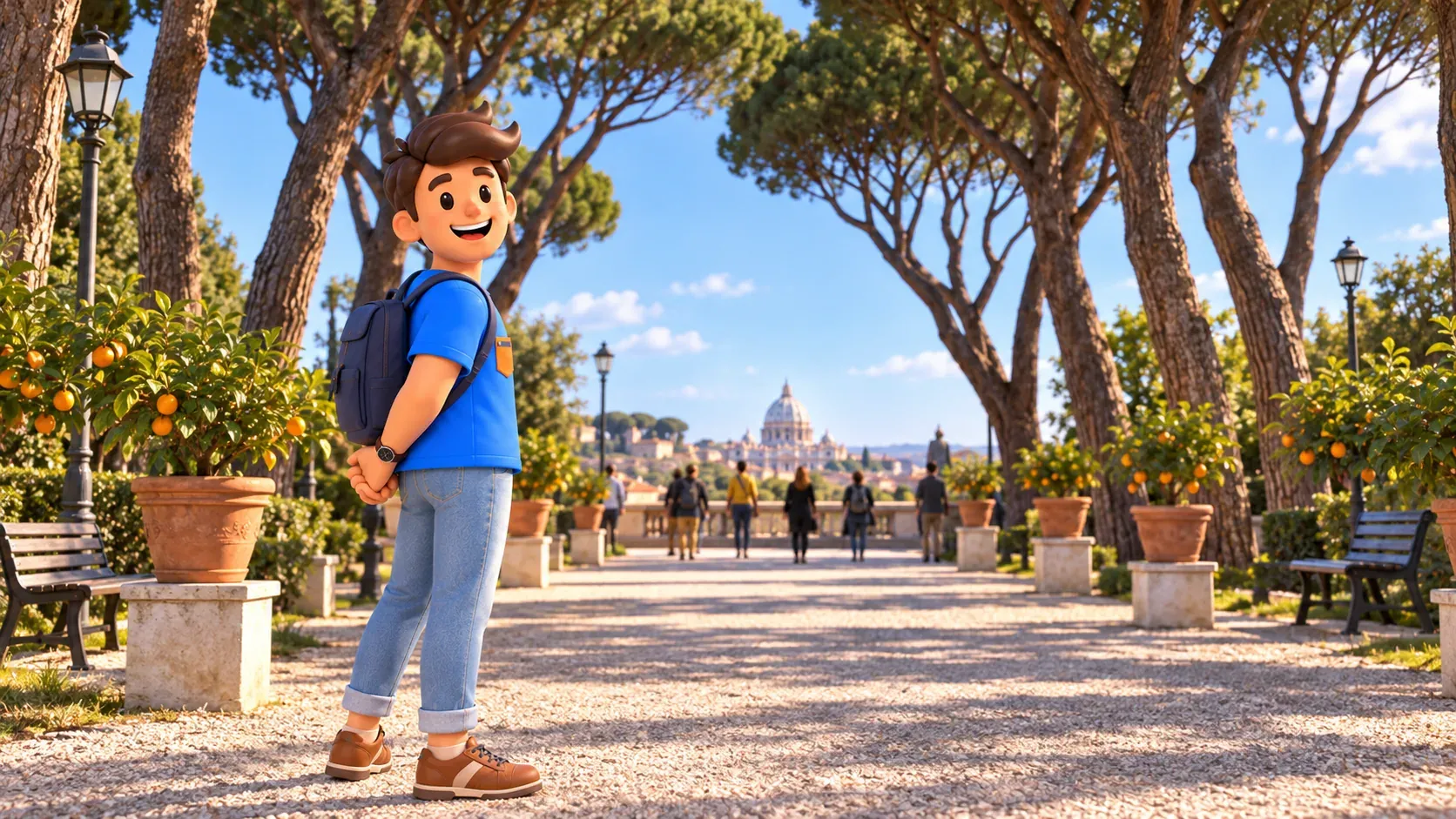
The garden's name is not an invitation to pick fruit or enter planted beds. Stay on paths, share the terrace and avoid climbing the barrier for a photograph. If photography is your interest, begin with an overall avenue view and one closer tree detail. A lengthy session requires additional time beyond an illustrative half-hour stop.
Pause before the basilica
After the panorama, keep ten minutes to sit if a suitable place is available. This is especially useful after the ascent that sits outside the main table. Bring water beforehand; a small pause does not provide for a full lunch. If no seat is free, find another suitable option and extend the walk slightly if necessary.
Compare the entrance area with the open terrace. Where did trees hold your attention, and where did the distant horizon take over? That question helps reveal the arrangement without requiring a landscape-architecture lecture. Simply sitting quietly is equally reasonable. There is no compulsory programme of conversation, games or photographs at every stop.
Santa Sabina: understand an early basilica's space
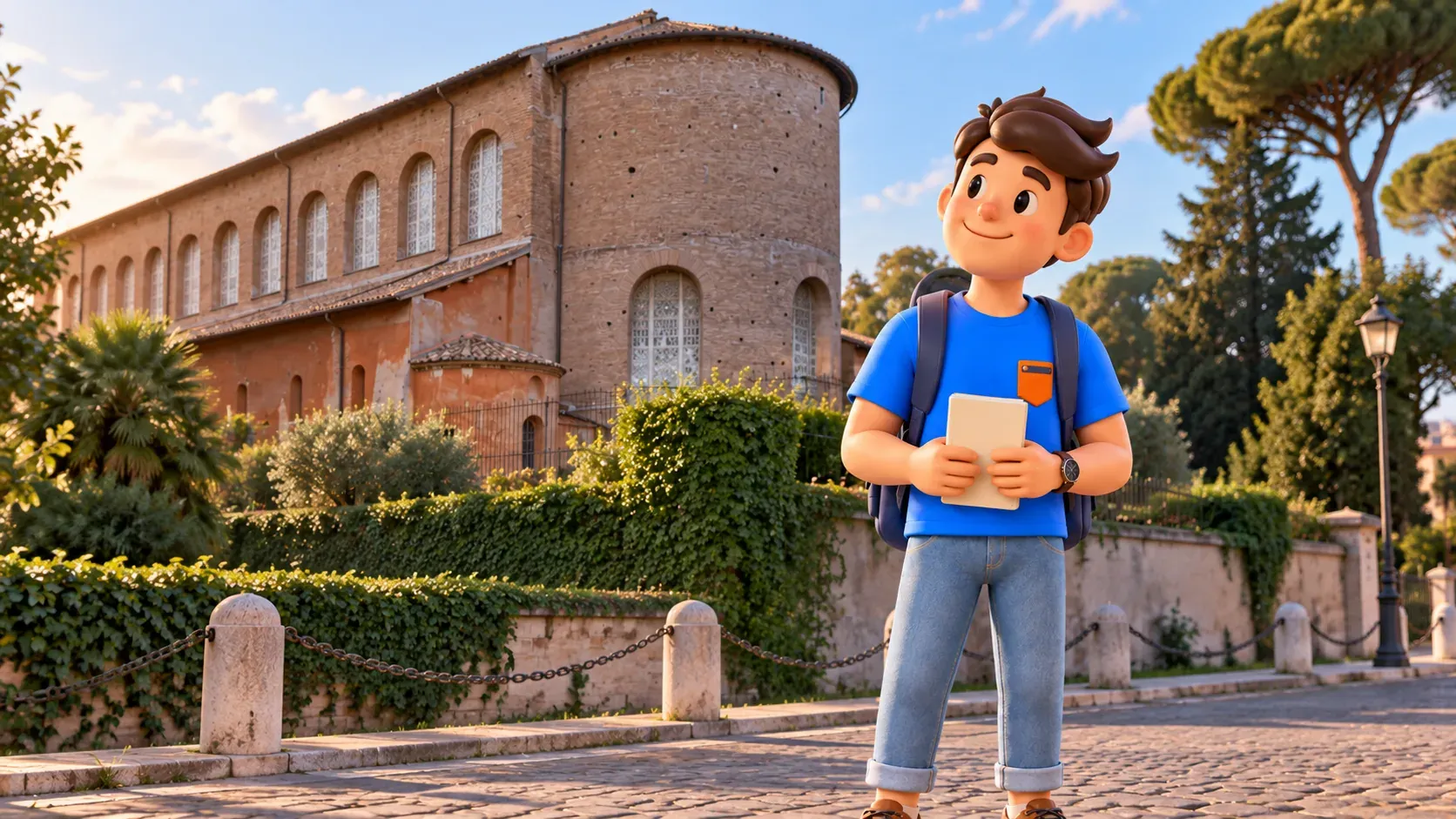
Santa Sabina dates from the fifth century and is associated with the Dominicans. Its present appearance nevertheless developed through several alterations and restorations. Avoid treating the building as an untouched capsule of the fifth century. It is more interesting to see how an architectural idea remains legible within a church that continued to change.
If the main interior is open for visiting, begin with the overall perspective: rows of columns separate the side spaces and direct attention towards the apse. The long hall and repeating supports make the arrangement easy to understand. One attentive look is enough for an introduction; counting every column and identifying every component is unnecessary.
The carved wooden door leaves with biblical scenes provide another reason to pause at the portal when access allows. Examine the reliefs without touching the old wood. Decoding every episode in a few minutes is unnecessary: compare two scenes and how figures fit within their limited fields. If access to a detail is difficult, avoid making it a condition of a successful outing.
When a Santa Sabina visit is possible
The basilica has specific sightseeing hours. In the timetable checked in October 2026, visits begin at 08:00 from Tuesday to Saturday and at 12:00 on Sunday and Monday, with closing listed at 19:00. Holy days of obligation follow the Sunday pattern. Check current basilica notices for your particular outing.
Sightseeing is not allowed during scheduled or unscheduled liturgical celebrations. An open door then does not invite visitors to move around with cameras. The main visit is free and requires no advance reservation, while the archaeological excavations are inaccessible. They are outside these two hours and are not a promised extension.
If you arrive before visiting time or during a service, keep the exterior introduction and continue, or arrange a later start. That is more sensible for a short outing than waiting indefinitely and rushing afterwards. If church art is your central interest, give Santa Sabina more time by reducing other stops or extending the overall programme.
Along the street to the Knights of Malta square
From the basilica, follow Via di Santa Sabina towards Piazza dei Cavalieri di Malta. Look beyond the screen: corners, walls and entrances change the sense of distance. The example's ten minutes include a little orientation time. An ordinary public street is preferable to an imagined through-route across a monastery or private garden.
This transition changes the scale: after an open horizon and a large church hall comes a smaller square with concentrated decoration. The sequence itself makes the three parts distinctive. Another nearby church need not automatically become an additional stop. Keeping a little space between experiences helps you give each one attention.
Piranesi's square rewards a visit of its own
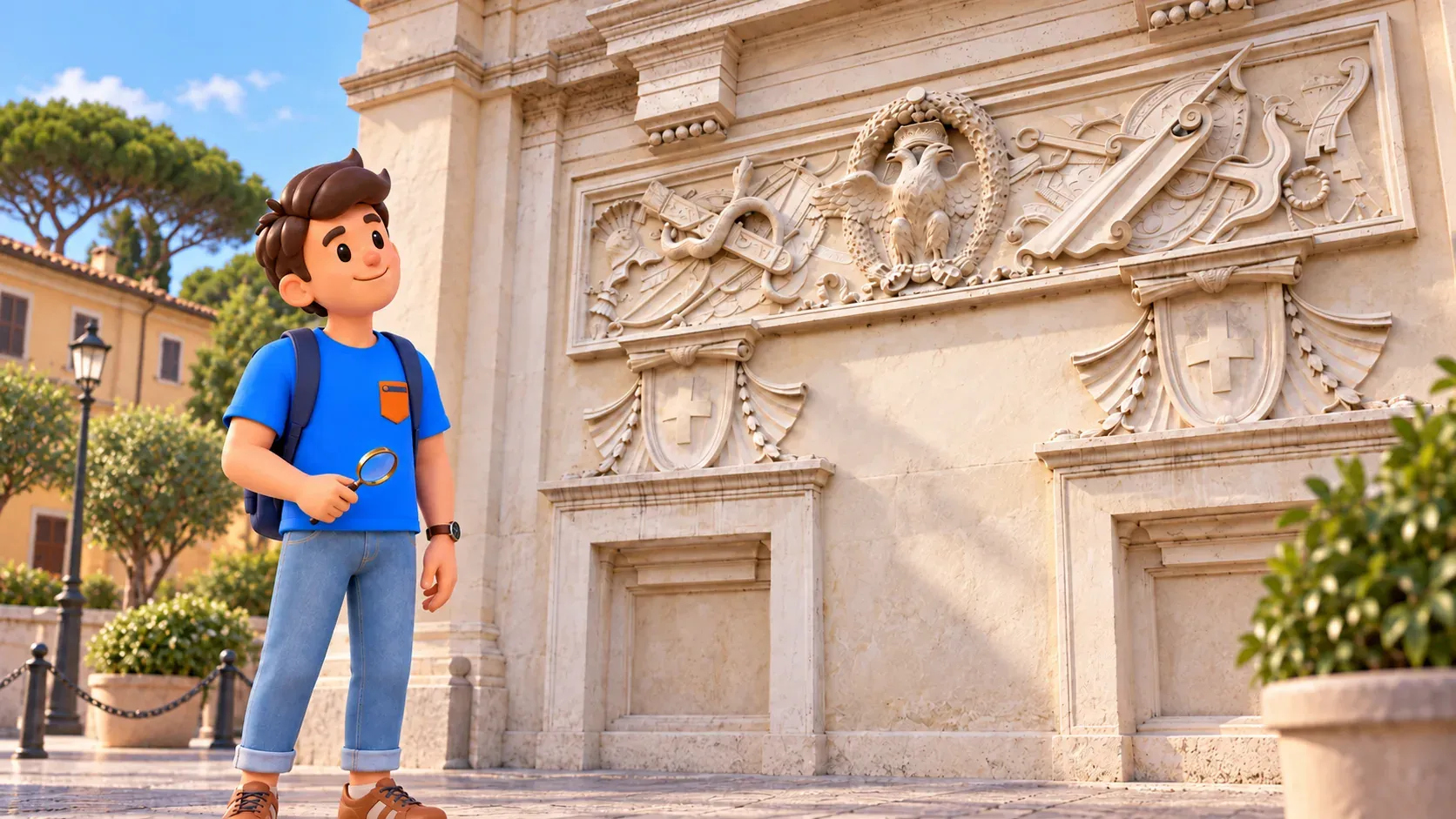
The square's appearance is associated with Giovanni Battista Piranesi and his eighteenth-century work. Decorative motifs on its walls refer to the history and traditions of the Order of Malta. Notice the combination of flat surfaces, relief compositions and frames. A short pause here can be an architectural experience independently of the keyhole.
Choose one composition, follow its symmetry, then step back for the overall arrangement. You do not need to know every symbol's meaning. Avoid touching decoration or blocking gates, and do not treat the square as admission to freely available villa gardens. The property is used by the Order; looking from outside and visiting inside are different activities.
The keyhole: a small extra after a broad panorama
Through the opening in the gate at number 3, Saint Peter's dome appears framed by greenery. It offers a change of optics after the garden panorama: the city narrows to one distant landmark. Avoid promising yourself a perfect phone photograph. Eye and camera produce different results, and a prolonged attempt holds up people waiting behind you.
Set a waiting limit before joining. Our example allows up to ten minutes for both waiting and looking. If the queue exceeds what suits you, use the time for the square and finish without hurry. A missed photograph does not cancel the garden, basilica and architecture that form the main outing.
The visual effect should not be explained as Piranesi's conclusively proven intention: even the Order's own account acknowledges uncertainty. The actual perspective through greenery is enough to enjoy. A brief look through the gate does not promise access to the villa grounds or a tour of its garden.
Fit the Aventine into the wider trip
In hot weather, preserve water and rest; in rain, consider path surfaces and the value of an exposed viewpoint that day. If the garden is closed, change or postpone the walk: its terrace view cannot be replaced by assuming you can go through the gates. Choose evening light together with access hours rather than independently of them.
RoadMe helps develop a personal itinerary for your whole trip around your interests and pace, connecting the Aventine with other suitable days in Rome. The app makes the complete plan more convenient and effective to use, with walks, visits and rest worked into a coherent sequence beforehand.
For different neighbourhoods across several days, see our five-day Rome plan. After the square, allow separately for the descent and onward journey. Two hours on top already form a complete walk: the garden opens the city, the basilica changes your attention, and the square finishes with a handful of expressive details.


