
Sormiou, Morgiou or Sugiton: choose your calanque from Marseille
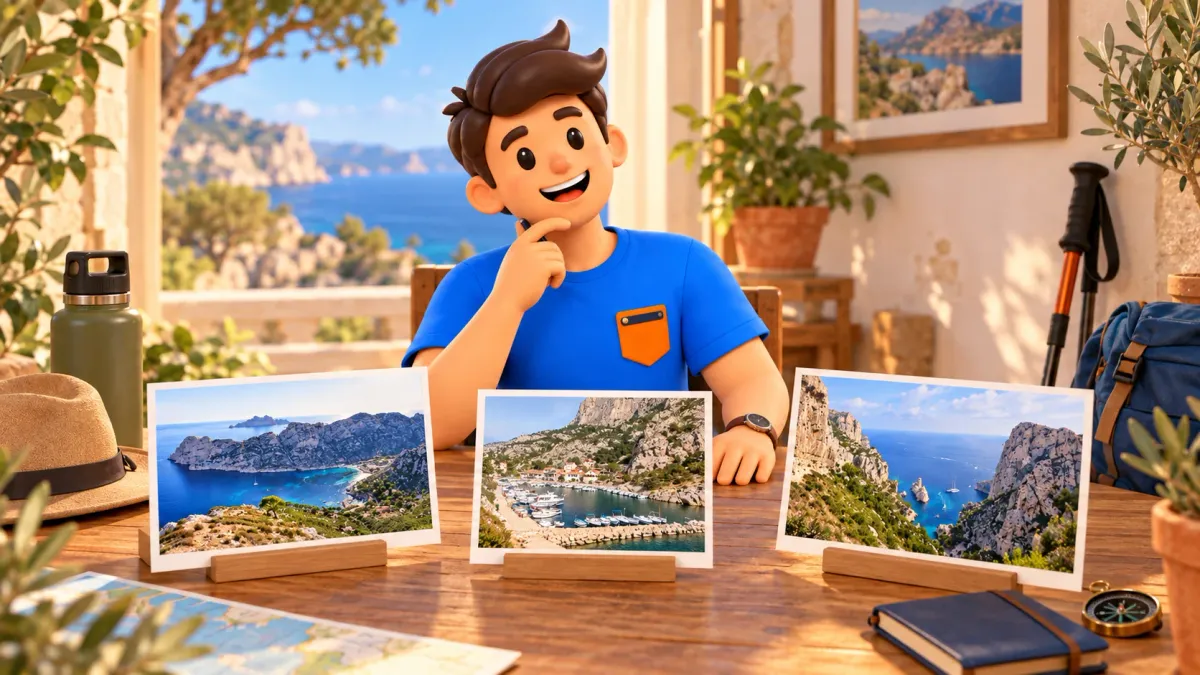
Choose Sormiou for a beach and cabanon setting, Morgiou for a working fishing harbour, or Sugiton for cliffs and the distinctive Torpilleur rock. At Sugiton, decide separately between the high lookout and a descent to the cove. These choices give quite different days, even when the photographs share the same blue water and pale limestone.
The useful question is which experience deserves your available time. Plan one outing with its own approach, break and uphill return, adding the journey from Marseille. Nearby names on a map do not turn three calanques into a casual promenade. Here is how to make the choice before opening a detailed route.
Choose the experience before comparing photographs
Start with what you want to do after arriving. If the imagined highlight is an unhurried picnic beside a beach, Sormiou makes a clearer starting point. If you enjoy watching the arrangement of boats and reading a settlement through its working life, Morgiou has a distinct character. For a landscape dominated by high rock walls and a small cove, consider Sugiton. Its upper viewpoint provides another scale of visit when you want a panorama without making the complete descent to the water.
Next choose the amount of walking the whole group wants. Each approach begins away from central Marseille, and the shortest published walking time rarely represents a whole outing. It leaves out waiting for a bus, sitting down for lunch, photographs and the return to your accommodation. The time allowances below are editorial planning estimates from different walking starts. They are not measurements of a trip from the Old Port, nor a ranking of universal difficulty. Your pace and actual conditions remain decisive.
Use the comparison as a way to remove unsuitable options first. A beach does not remove the climb home; a shorter lookout walk does not guarantee smooth or step-free ground. With children, an inexperienced walker or particular mobility needs, evaluate the real terrain and the slowest comfortable pace. If none of the natural paths works for your party, a city waterfront day may be the better choice. You can enjoy Marseille’s relationship with the sea without forcing a hike into the schedule.
| Choose | Main attraction | Allow for |
|---|---|---|
| Sormiou | Beach, broad bay and cabanons | A proper uphill return |
| Morgiou | Working harbour and local stories | A port visit with carried supplies |
| Sugiton cove | Cliffs and the Torpilleur rock | Rocky descent, return and seasonal reservation |
| Sugiton lookout | A broad panorama from above | Natural terrain; this is not a shore visit |
Let RoadMe develop your complete personal Marseille itinerary around your interests, time and walking pace. The app makes it much more convenient to choose the right coastal day and balance the whole trip with city visits and rest.
Choose Sormiou for the beach and cabanon landscape
Sormiou has the broad composition many visitors imagine: a sheltered-looking sweep of blue, pale slopes, a beach, small houses and a little harbour. Give the beach and the settlement time rather than using them as a quick photograph before another calanque. Swimming is optional and depends on the actual sea, ability and local instructions. A picnic and a long look across the bay can make a complete stop. The visual promise of the water should never determine a return you have not allowed for.
The cabanons add a small piece of Marseille history. Fishing families associated with Mazargues used the calanque, and a strong family leisure tradition developed around the modest houses. This is one reason the place feels different from a formally planned resort. Notice the scale of the buildings and their relationship with the shore from permitted public places. The settlement still has private homes and working spaces. A pleasant visit leaves entrances and passages clear and does not assume that a picturesque building is open to explore.
For the La Cayolle approach, the park describes about an hour one way via the Col de Sormiou; line 23 serves the La Cayolle starting area. For a visit with beach time, food and the return, allow roughly five to six hours from that walking start, plus city transport. This is our planning allowance, not a fixed official duration. The uphill return needs energy even after a restful lunch. Our Sormiou day plan develops this particular outing. Confirm any restaurant separately and carry enough food and water for the whole day.
Choose Morgiou for a harbour with a working life
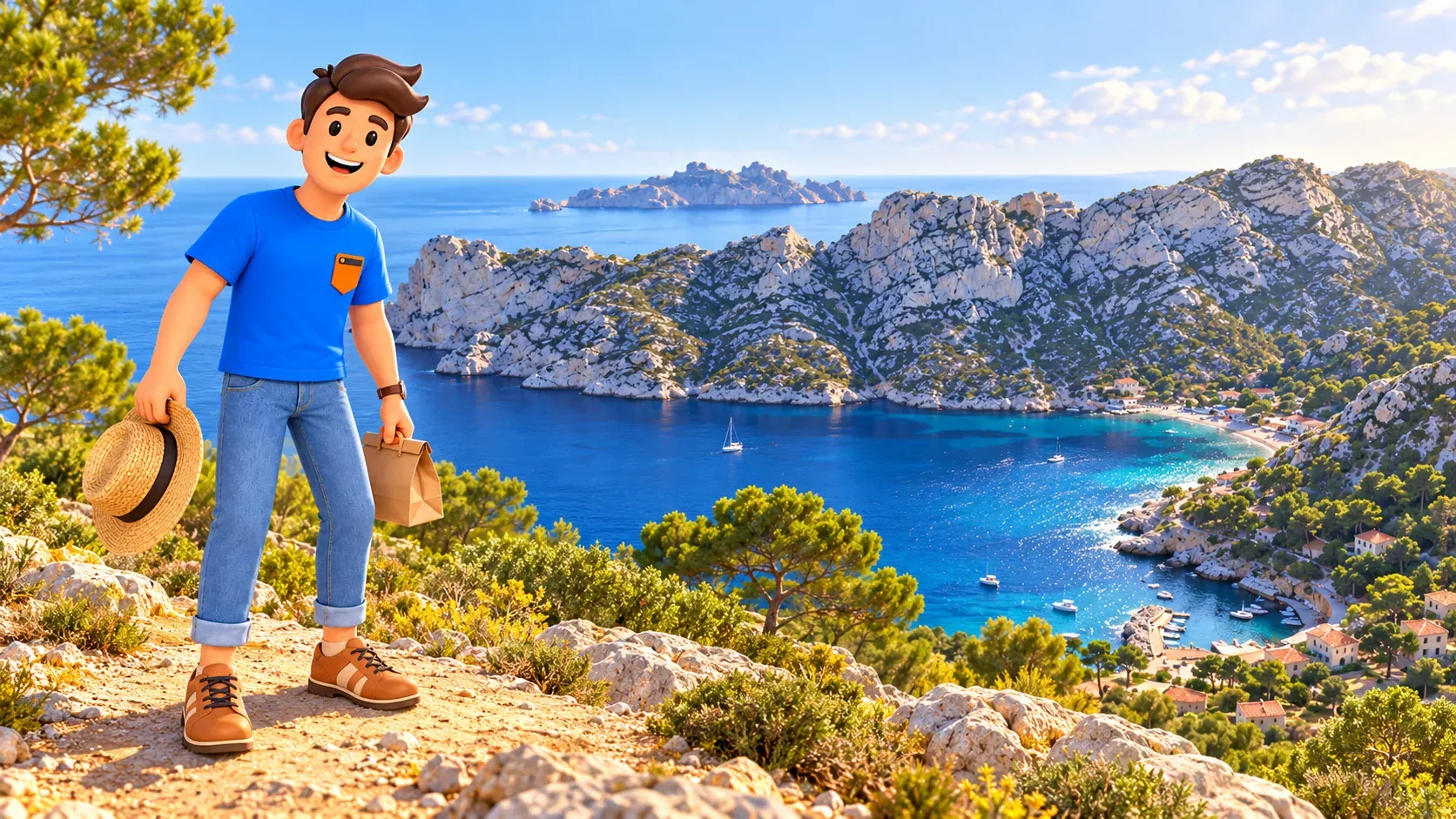
Morgiou concentrates the view around a small port: closely gathered boats, two rocky breakwaters and houses beneath the limestone wall. Choose it when the harbour itself is the attraction. The experience is more about observing a lived-in coastal place than settling into a large beach day. Find a permitted place to pause, leaving working areas and boat access free. A camera can help you notice the arrangement of roofs, hulls and cliffs, but you do not need to cross private spaces to make sense of the scene.
The national park describes a fishing settlement inhabited throughout the year. Its history also includes the practical effort of carrying water from Mazargues and taking fish back to sell. That detail changes the postcard: the distance from the city once shaped ordinary work as well as leisure. Let it add context without turning the visit into a hunt for every historical trace. The harbour’s present life is enough to make the pause interesting. Respect the people using it and keep the same consideration when choosing a picnic place.
The usual public-transport approach is line 22 to Les Baumettes, followed by roughly an hour of walking according to the park. The local association recommends the hill route via La Colette rather than making the long road the default pedestrian plan. Check the current authorised route and return connection. Allow about four and a half to five and a half hours from the walking start for an unhurried outing, with city transport extra. Our Morgiou harbour day explains that choice further. Bring water and food; a boat passing the port does not establish a return service for walkers.
At Sugiton, choose the lookout or the cove
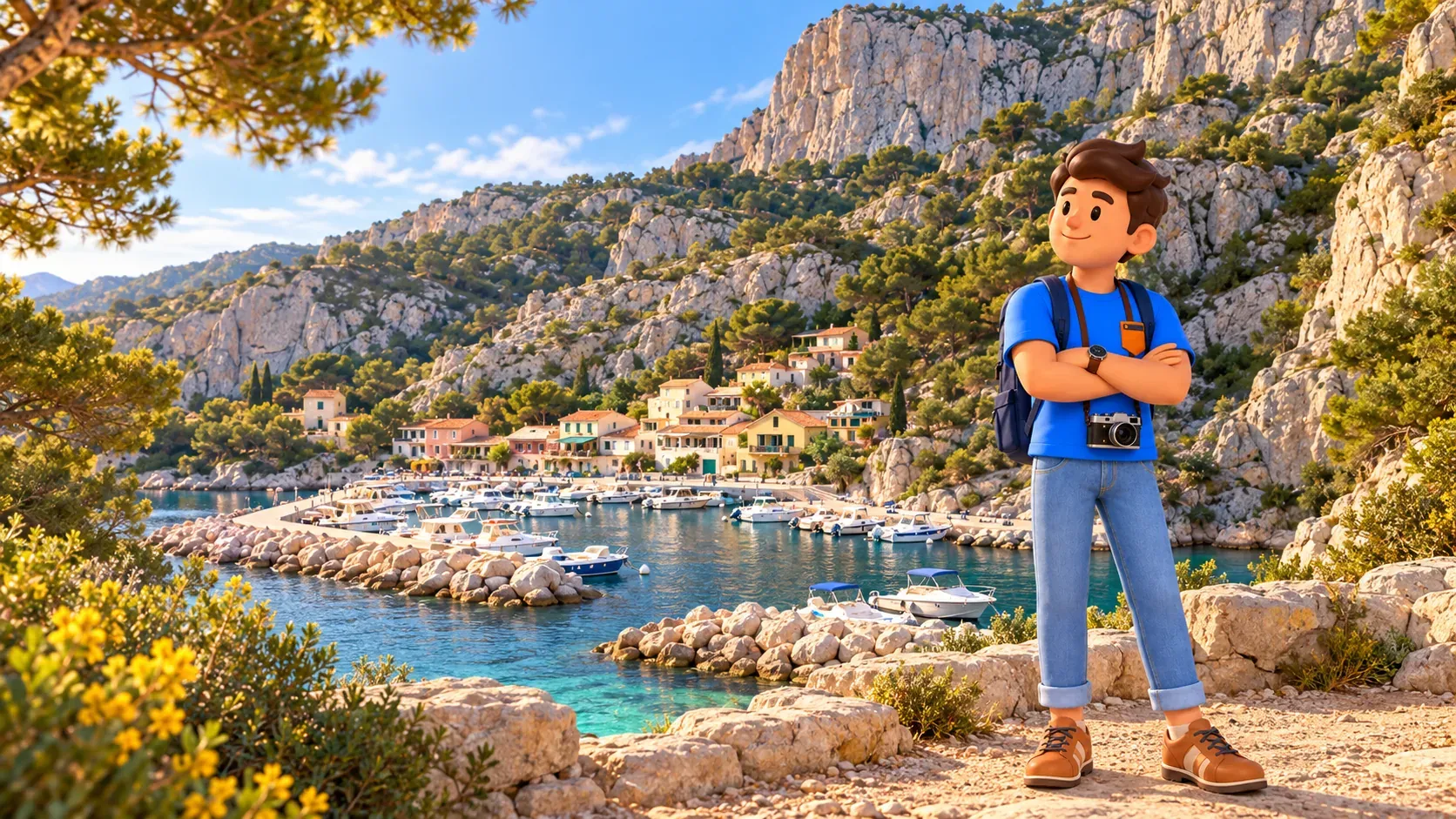
Sugiton is the choice for a more dramatic relationship between cliffs and water. The small cove and the elongated Torpilleur rock have a different scale from Sormiou’s beach or Morgiou’s boat basin. The approach from Luminy begins through a landscape with a history of farming and grazing before its later university setting. Even a brief awareness of that past makes the approach more than a passage to the coast. Line B1 serves Luminy; check the actual stop, service and return for your date.
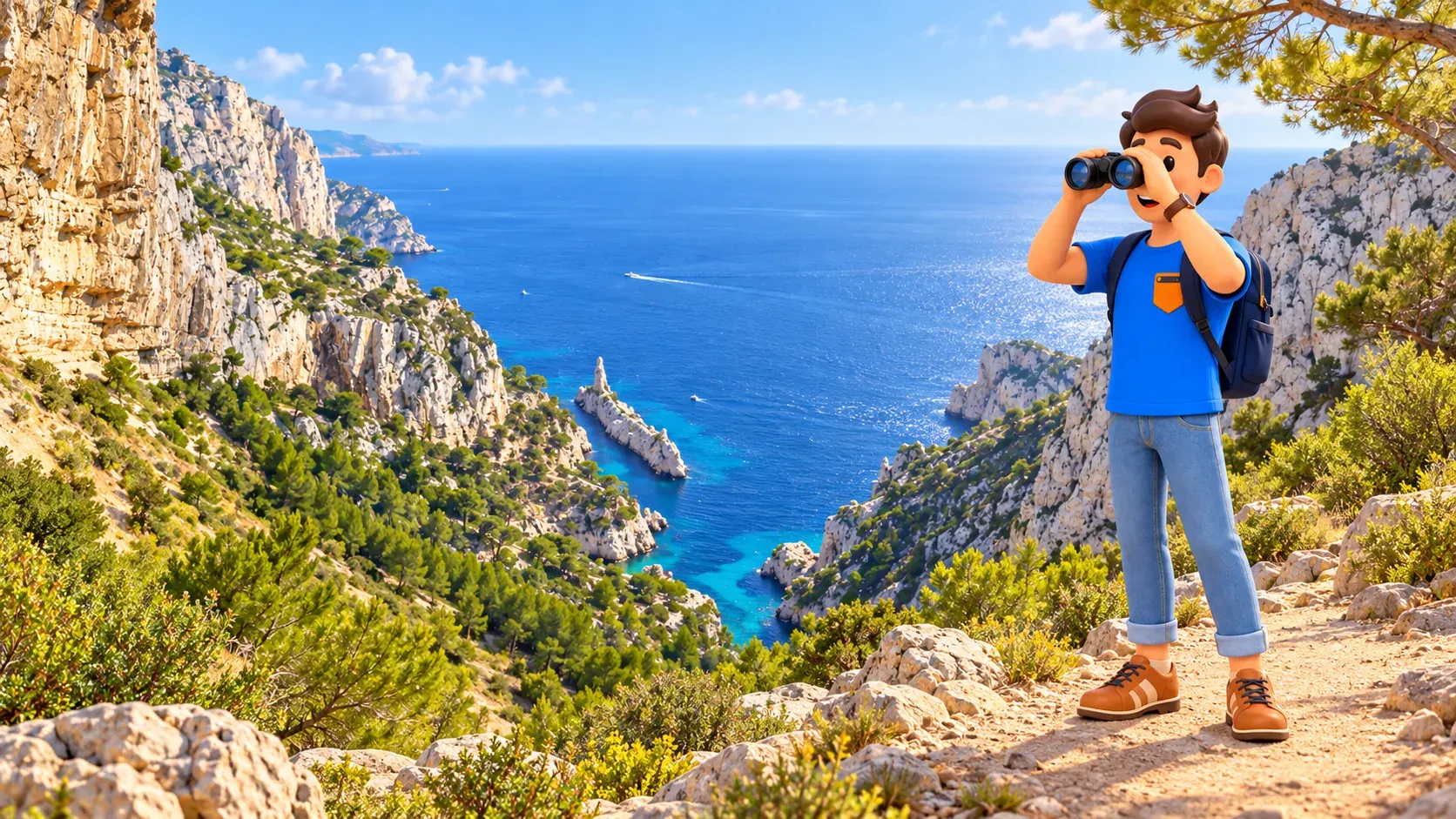
The upper lookout, associated with the former Tour d’Orient watching site at roughly 245 metres, gives a broad view across the coastal relief. The view towards Morgiou’s harbour should not be confused with standing at Sugiton’s shore. Allow about two to two and a half hours from Luminy for a modest outing to the viewpoint and back, with pauses; this is an editorial estimate. It can suit someone who mainly wants the panorama, provided the actual natural path, wind, heat and access conditions suit the group.
For the cove, plan a longer outing of roughly four to five hours from Luminy, including a proper stop. The park’s route reference gives around one hour down and one hour fifteen back for walking alone. The rocky lower approach and uphill return deserve attention. If you also visit the lookout, return to the appropriate marked junction rather than imagining a direct descent from the cliff edge. Our Sugiton lookout or cove plan separates these options. In the regulated season, the coastal reservation zone has its own booking requirements; the next section explains the distinction.
Compare access rules as carefully as walking time
Three different questions need separate answers: whether the massif is open to walkers, whether the chosen coastal zone requires a reservation, and whether a motor road is open to ordinary vehicles. A closed vehicle road does not by itself describe every pedestrian rule. Equally, an available restaurant table should not be treated as proof of unrestricted access. Check the park, the municipality where relevant and current transport information for your actual date. Make the decision before leaving the city, while it is still easy to choose another day.
Sugiton and Pierres Tombées have a free but mandatory coastal reservation on designated seasonal dates. That system does not mean that every trail in Luminy, Sormiou or Morgiou uses the same quota. Read the official calendar and boundary instructions for the year of your visit, and keep the required confirmation. The published 2026 dates are not an automatic calendar for 2027. Do not assume that a plan for the upper viewpoint is interchangeable with permission to enter the regulated shore zone. Match the authorisation to the actual outing.
Fire-risk restrictions can override the plan, including a reservation. During the regulated period from 1 June to 30 September, the next day’s access decision is available by 18:00; check it and review conditions again before departure. A land-access closure also rules out trying a different nearby trailhead into the closed area. A shorter viewpoint option is not an exception to a relevant closure. If the chosen day fails this check, keep the Marseille part of the trip and move the natural outing to a suitable date.
RoadMe can work out your whole personal trip with the mix of beaches, local stories and landscapes that suits you. Use the app to plan the days more efficiently and comfortably, while checking official access for the actual outing.
Fit one calanque into the trip you actually want
For a first visit with a strong beach interest, begin by testing Sormiou against your group’s walking ability and the day’s access. For boats, village life and a compact harbour scene, test Morgiou. For cliff scenery, choose between Sugiton’s panorama and its longer cove outing before setting the day’s scale. These are starting choices rather than a universal league table. A person who loves a working port may remember Morgiou more vividly than a famous swimming photograph; another may prefer the space of the broad bay.
Agree on a return margin before starting. Take suitable footwear, protection for the conditions, enough drinking water and food, and the current permitted route. Keep swimming and restaurant meals as separately assessed choices. Do not rely on an unconfirmed café, refill point or boat pickup to make the plan work. A slower return, a longer lunch or a tired participant should fit within the day you prepared. The most useful comparison is often between the full day each person can comfortably enjoy, rather than the advertised minutes to reach blue water.
Once one option fits, let it fill its place in the holiday. Leave the evening flexible after a long natural outing and give other days to Marseille’s museums, neighbourhoods or an easier waterfront walk. There is no need to connect all three calanques across unfamiliar terrain to make the excursion feel complete. One approach, a meaningful stop and a comfortable return can provide the memory you wanted: a beach and its houses, a working harbour, or a pale cliff framing the sea.


