A day at Sormiou: planning one Calanque from Marseille
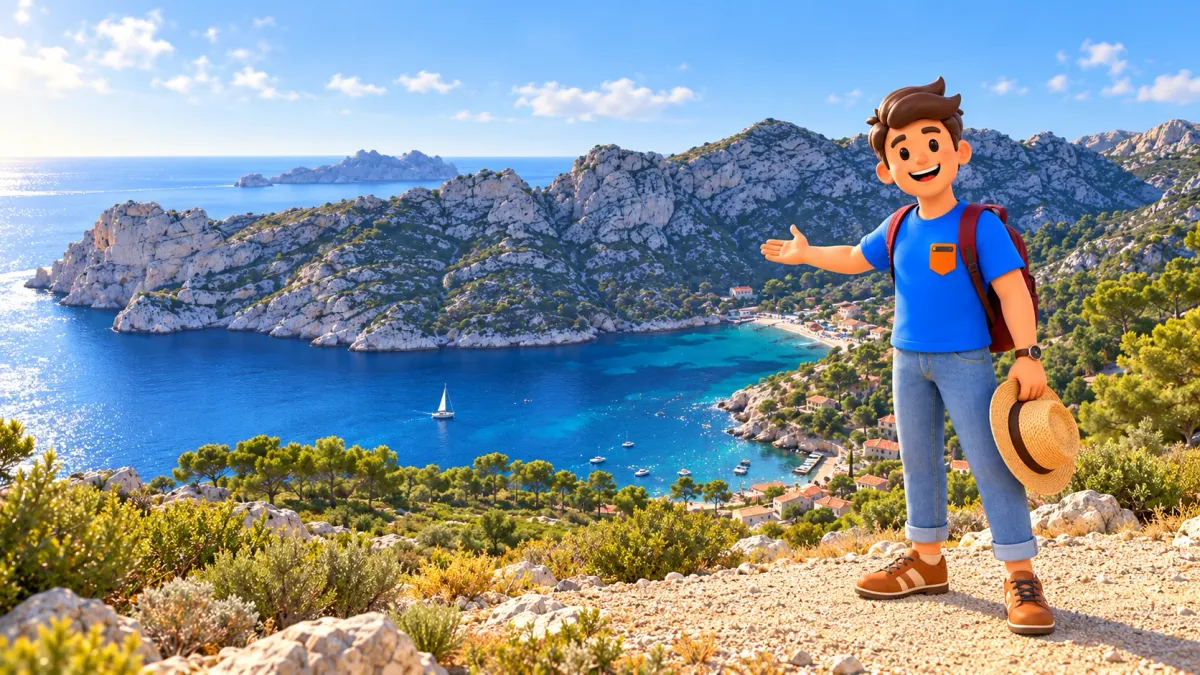
Sormiou makes a good destination for a day with one main place: cross a limestone pass, walk down towards the turquoise inlet, notice the little cabanon village and leave time to sit by the sea. The journey and the stay belong together. Give the bay enough space instead of treating it as the first stop in a chain of neighbouring coves.
This plan uses the approach from La Cayolle via the col de Sormiou and returns the same way. Allow roughly five to six hours from the walking departure, including shore time, lunch and pauses, plus your transport from Marseille. That is an editorial framework, not a measured promise. Weather, pace and current access determine the real day.
Before leaving: make it a walking day with a proper return
Check the official access conditions before you build the day around Sormiou. A seasonal restriction on the motor road and a closure of the massif for fire risk are different things. The first affects ordinary driving access; the second can prevent the walk itself. During the regulated period from 1 June to 30 September, check the next day’s official status, available by 18:00, and review the information again before setting off. A restaurant booking or a clear forecast does not override a land-access closure.
The municipality publishes a dated road calendar. For example, the 2026 summer schedule restricted unpermitted motor vehicles during daytime periods, with additional weekend restrictions in September. Check the actual programme for your date rather than transferring a previous year’s dates to a new trip. This itinerary starts on foot from La Cayolle, so it does not depend on driving down to the beach. Do not confuse Sormiou with Sugiton’s separate coastal reservation scheme. Local conditions and any current instructions still need to be checked.
Prepare your transport and supplies together. Use current RTM information for bus 23 towards La Cayolle and identify a workable return, adding the actual journey from your accommodation. Bring food and enough water for the complete outing. The park recommends at least two litres for this exposed walk; adjust what you carry to the weather and your needs. Plan a realistic uphill return while you are still fresh, rather than spending the morning assuming a lift, a boat pickup or a restaurant will solve the later part.
Let RoadMe work out a complete personal Marseille itinerary around your interests, available days and preferred pace. The app makes it much more convenient to give Sormiou the time it needs while balancing the rest of your trip with city visits and rest.
Morning: reach the pass and let the bay appear
From La Cayolle, follow the current authorised approach towards the col de Sormiou, using the park’s route information and the signs on the ground. The park describes an outward route of about 2.8 kilometres and an hour of walking, with moderate difficulty. That is a one-way reference, not the whole day. It includes an approach to the pass before the descent. A wider surfaced section does not make the surrounding terrain an urban promenade or remove the effort that will return later in the opposite direction.
Give the pass a short pause where stopping is permitted and comfortable. Sormiou opens as a wider inlet than its neighbour Morgiou: pale slopes, an enclosing ridge, small roofs and changes from deep blue to turquoise close to shore. First notice the shape of the bay, then find the beach and compact harbour. This is a satisfying moment in the route itself. Photograph from an appropriate place without blocking the way or stepping onto fragile ground to improve the angle. The landscape already gives enough material for a clear first impression.
Continue on the marked open route, keeping the eventual climb in mind without letting it dominate every step. The park presents the surfaced track and the marked brown trail as approaches through the col; follow the actual permitted option appropriate to your ability and conditions. A shorter-looking trace between bends is not automatically a safe shortcut. If the approach already feels too much for someone, change the day early. A view from an allowed stopping point followed by a comfortable return is preferable to committing the group to a descent it cannot enjoy.
Arrival: meet the cabanon village from its public spaces
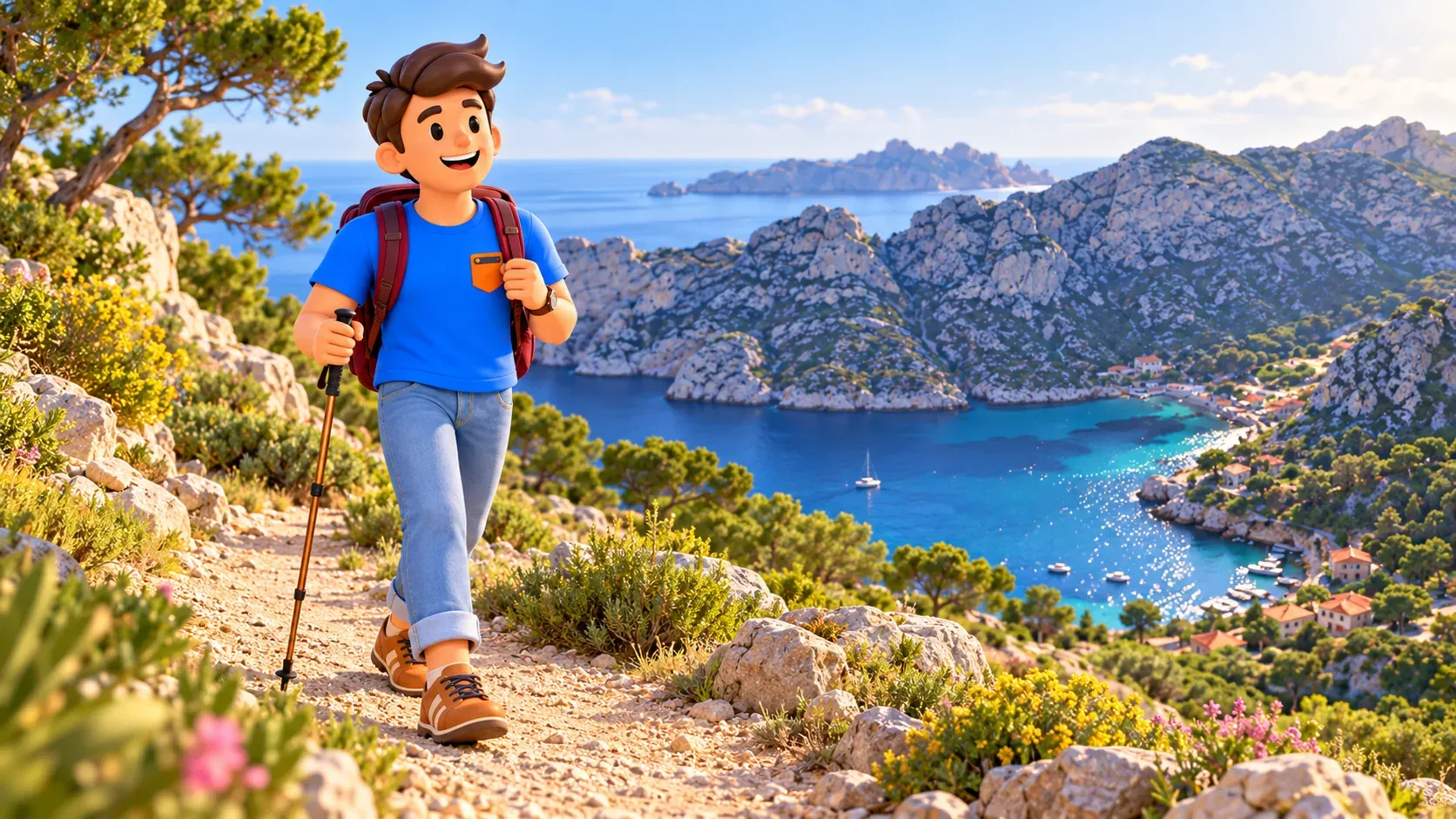
As the water gets closer, Sormiou becomes a lived place rather than only a panorama. Small houses, boats and the relation of roofs to the slopes are part of its character. Use the public authorised passages and leave entrances, working areas and private terraces clear. Looking at a cabanon from outside does not create permission to enter or use its shade. Keep the group together and choose a place to pause without blocking the movement of residents and people carrying equipment between land and water.
A short history makes the scale easier to understand. The national park connects the village with fishing families from Mazargues and a later tradition of leisure around the cabanons. Simple shelters gradually became places for family stays and weekends close to nature. This helps explain why the buildings feel different from a resort arranged around visitors. You do not need a list of every house or a detailed chronology to appreciate that relationship. Look at the modest forms against the much larger limestone background and let the contrast tell part of the story.
One more layer belongs to Marie de Sormiou, the poet associated with the bay. The larger summer residence built for her and her husband in 1894 was nicknamed the Château for its relative grandeur among the small houses. The restaurant bearing that name has its own later history. This is useful context for an exterior, not an invitation to an unconfirmed interior visit or a promise of lunch service. Keep the historical pause brief and return to what makes the day appealing: the small settlement within a broad natural inlet.
Lunch: give the shore a real middle of the day
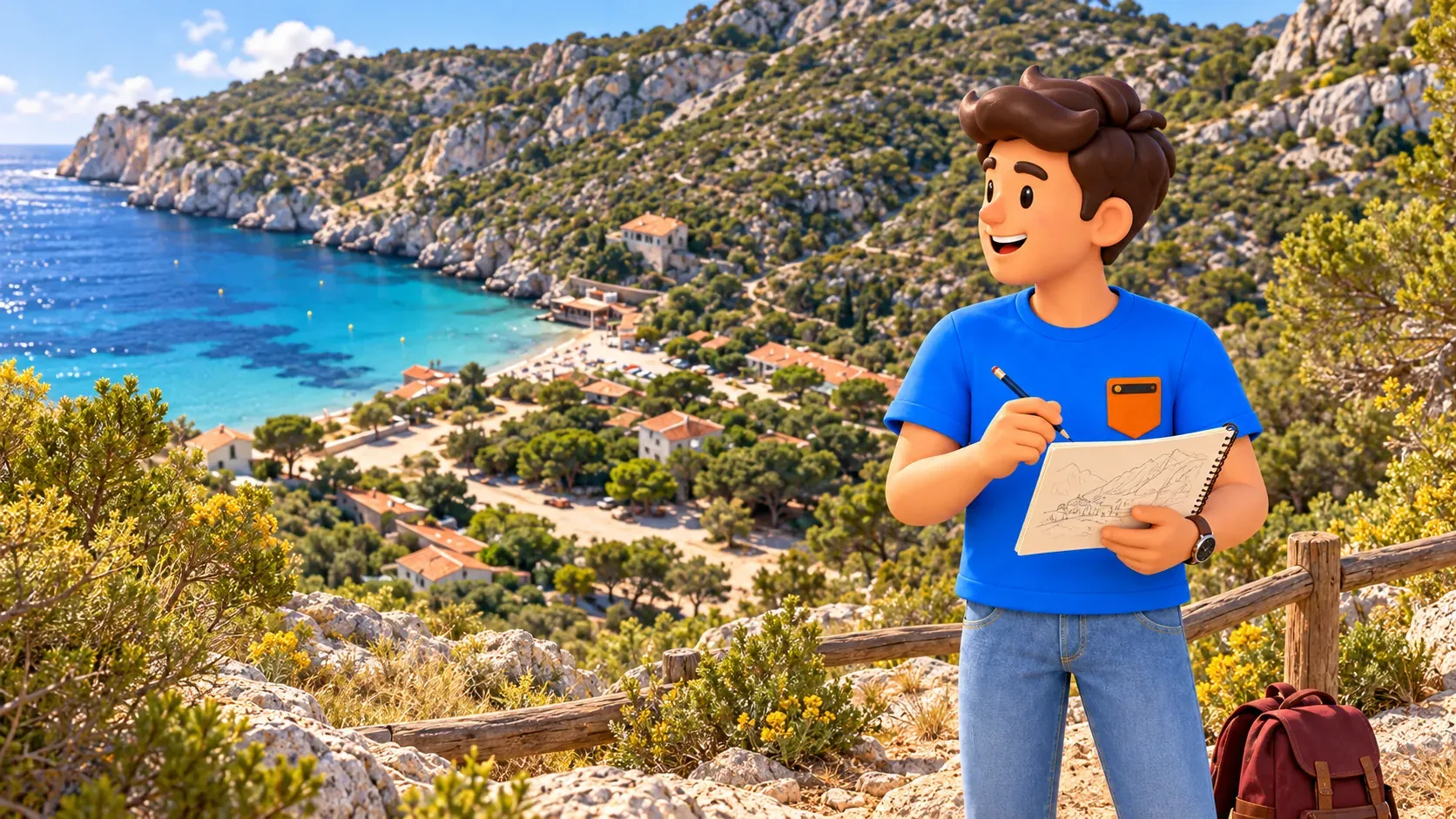
Bring a simple picnic that you can eat in a permitted place without spreading over the access path or protected ground. A proper seated break gives the day a clear centre and lets you reassess energy. Keep food packed while moving and take all waste back with you. A small practical meal can be enough; the interest is the setting and the unhurried time it creates. Do not wait until everyone is hungry to discover whether an assumed shop or restaurant is actually working.
If you prefer a restaurant, confirm the actual opening and booking conditions directly before the trip and adjust the walking plan to the real table time. Seasonal service should not be assumed from an attractive terrace photograph. The Château’s own published calendar includes closures and limited services, so this day remains workable with your own food. An offered arrangement for a particular establishment also needs its real conditions checked. It does not turn every meal reservation into a general permit to drive, and it never cancels a fire closure.
After eating, make the beach pause as long as the complete return calculation allows. Swimming is optional and depends on the actual sea, your ability and local instructions. The park describes summer supervision at Sormiou; that is not a promise of a staffed service throughout the year or on your visit. A walk along the permitted shore, looking back towards the houses, can be enough. Keep the experience proportionate to your interests instead of treating a swim as the obligatory proof that you have reached a Calanque.
Afternoon: notice what the bay protects and keep energy in reserve
Use part of the shore time to look at the sea as a living environment. The park identifies Posidonia meadows at Sormiou. This underwater habitat supports varied marine life and contributes to protecting the coast from waves and currents. You do not need to enter the water or identify every dark patch to appreciate that the colours have an ecological setting as well as a visual appeal. Leave plants and animals undisturbed and avoid turning a curious look into collecting something to take home.
On land, stay within permitted areas and respect the vegetation around paths and houses. The attraction of Sormiou depends on the relationship between a small inhabited place and its surrounding landscape. Keep sound and belongings at a scale that fits that setting. There is no need to add a cape, cave or high ridge to make the outing feel substantial. Such continuations can demand different abilities and a new assessment of the route. The simple plan already contains an approach, a pass, a descent, history, rest and the same work in reverse.
Before the break becomes too long, agree when to begin the return. As an editorial allowance, keep around an hour to an hour and a half for the walk back, with more for your actual pace and pauses. Check the remaining daylight and the chosen bus connection. The official outward hour should not be copied automatically as a guarantee uphill. If heat or fatigue is building, start earlier and take the climb calmly. This is a useful moment to choose comfort for the whole group rather than one more photograph beside the water.
RoadMe can develop your whole personal trip with the mix of nature, local stories and downtime that suits you. Use the app to organise the days more efficiently and comfortably, while checking the official access conditions for this walking outing.
Return: climb back by the chosen route and keep Marseille easy
Return by the authorised route through the col de Sormiou that you prepared. Give the uphill section time, pause in suitable places and keep enough water until the end. Watch the ground rather than following a photograph or an improvised line across a slope. If a road section is in use by vehicles, follow the actual pedestrian conditions and leave room where needed. The return is part of the outing, not an inconvenient appendix to the beach. Treating it that way makes the day easier to pace from the morning.
At the pass, a permitted short stop can give the bay a final perspective. You may notice how the village fits into the land more clearly after seeing it close up. Continue to La Cayolle and the transport arrangement you checked. Avoid making a late change towards Morgiou or another distant destination on the assumption that all neighbouring coves are connected by an equally simple path. A new route has its own terrain and return requirements. Finishing the selected walk well is enough for a full Sormiou day.
Our Borély park half-day is a different, urban option when the group wants gardens and an easier day to organise, subject to the park’s actual opening. Choose an appropriate city plan before travelling to the massif if access is closed. When Sormiou works, let the return to Marseille remain quiet: a meal, rest and time to remember the pass view, cabanon life and the scale of the water. One bay can give the trip a complete day when it has enough room to be experienced at your own pace.