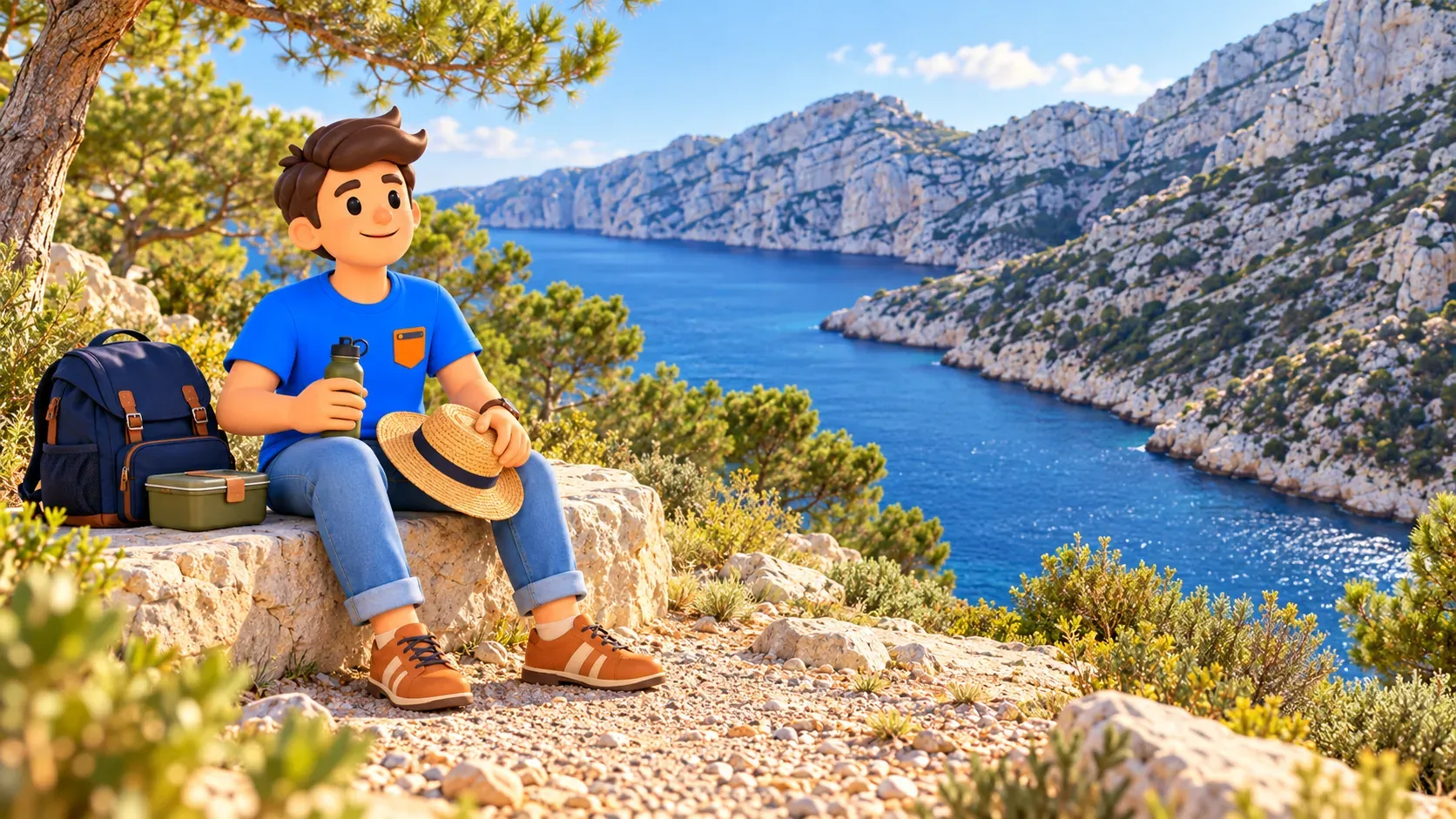
Morgiou: a day around a fishing harbour in the Calanques
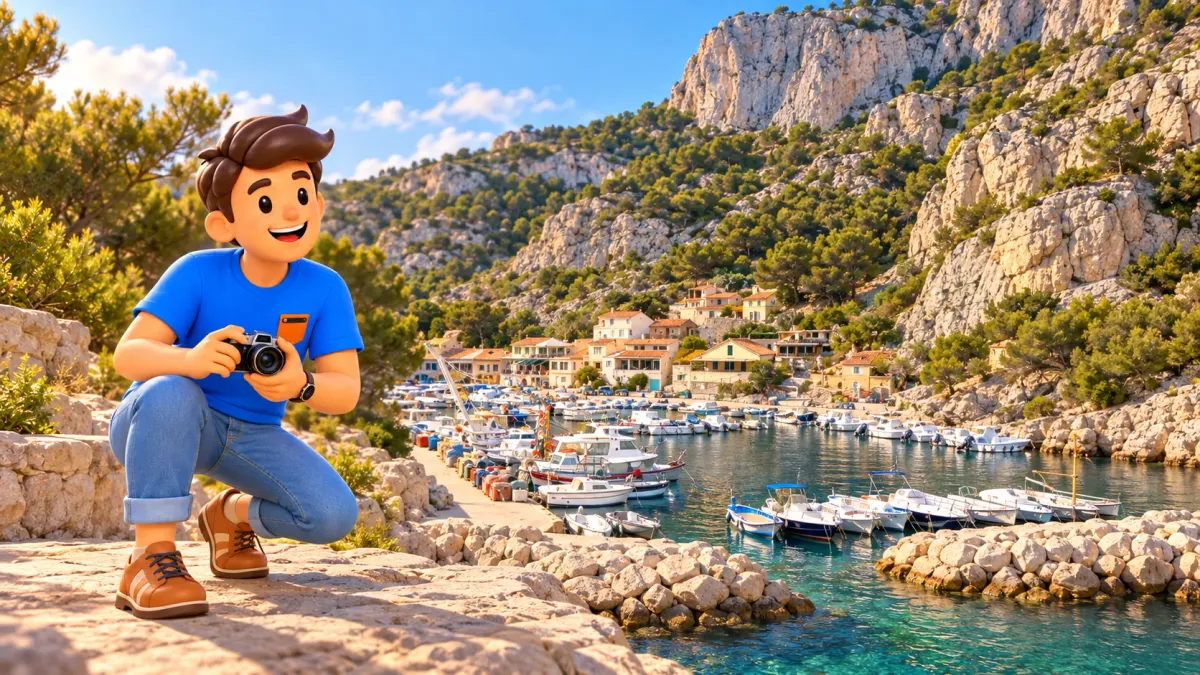
Morgiou rewards a day centred on a small working harbour. Arrive through the hills, look at boats held between limestone slopes, discover a little of the settlement’s fishing history and leave time for a meal and a quiet view of the inlet. The pleasure comes from understanding the place as well as seeing it. Give this one destination enough attention to feel its scale.
The plan starts and finishes at Les Baumettes, reached by bus 22. As an editorial framework, allow about four and a half to five and a half hours from the walking departure, including the harbour, food and pauses. Add your actual transport from Marseille. Pace, conditions and the permitted route can require longer; these timings are estimates rather than a measured itinerary.
Choose a day for the harbour and its story
Come to Morgiou when you want the relationship between a village, its boats and the enclosing landscape. The national park describes a place inhabited throughout the year and closely tied to professional fishing. That makes a different sort of day from choosing a large beach as the destination. A little time to observe from public spaces, a historical detail and a proper rest can fill the middle of the outing. The approach through the hills and the return then give the visit a clear beginning and end.
Check the actual access status first. A seasonal restriction on the motor road concerns driving; a closure of the massif for fire risk can stop the walk. During the regulated period from 1 June to 30 September, consult the official decision for the next day, available by 18:00, and check again before departure. Use the current municipal road calendar if driving affects your plans. Do not transfer a previous year’s dates automatically. Morgiou is also separate from Sugiton’s coastal booking scheme; the applicable local instructions still matter.
Prepare a return connection and carry the supplies for the whole day. The local associations warn that there is no running water in the calanque, so do not rely on refilling a bottle when you reach the village. Bring enough for the walk, the stay and the climb back, plus suitable food and protection for the expected weather. A small backpack, walking shoes and a route you have understood make the start simpler. The idea is to arrive ready to enjoy the harbour instead of immediately searching for the services you assumed it would provide.
Let RoadMe develop a complete personal Marseille itinerary around your interests, available days and pace. The app makes it much more convenient to fit this harbour outing into a trip with the right balance of local stories, walking and rest.
Walk from Les Baumettes with the right route in mind
Check current RTM information for bus 22 to its Les Baumettes terminus and plan the real journey from your accommodation. Read the destination carefully: 22S to La Seigneurie is a different service, rather than a shuttle to the harbour. The national park gives about an hour of walking after the terminus as a general access estimate. That time begins at the walking departure, not at your hotel or the Vieux-Port. Leave enough room for getting oriented and follow the return service appropriate to your actual date.
The local associations recommend the hill approach known as the sentier de la Colette from the bus terminus. They discourage walking the longer road approach as the default option. Prepare the authorised trail using the current park map and local signs, rather than reconstructing turns from an old photograph. This article gives the logic of the day, not detailed navigation. Keep your route information available and avoid shortcuts through vegetation. A nearby paved road should not be taken as proof that every path through these hills is easy or suitable for everyone.
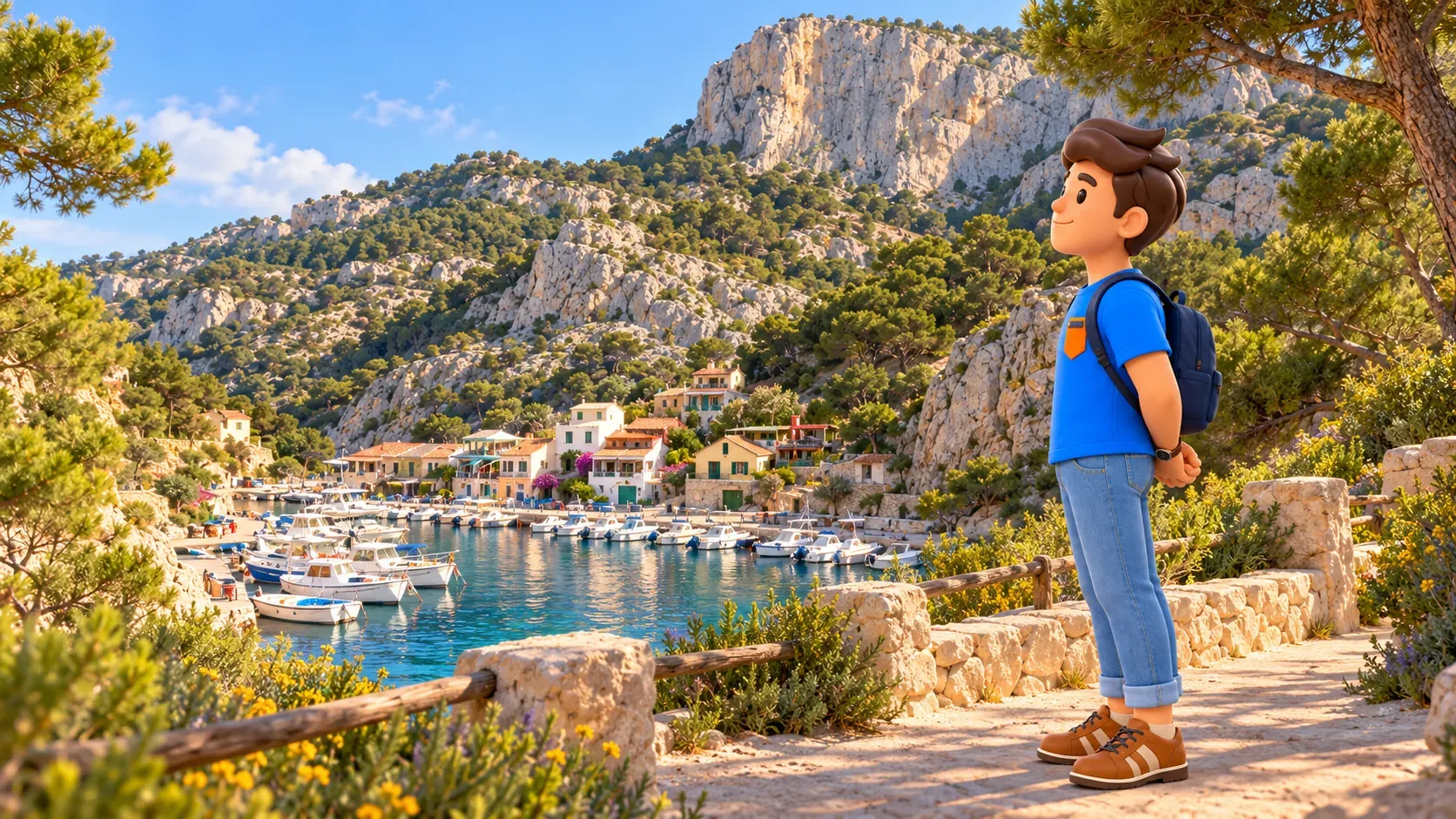
Give the descent a comfortable pace. Notice how the houses and the narrow water gradually come into relationship with the slopes. Stop only where there is appropriate space and keep the group together. If the path, weather or someone’s energy makes the outing unsuitable, changing the plan early is useful. You still have the return to consider. The first view should introduce a visit you can enjoy, rather than commit everyone to a longer programme because the harbour looks close from above.

Read the working harbour and the year-round village
At Morgiou, choose an authorised public place to look across the basin before moving farther. Small boats, moorings and houses pressed into the foot of the hills explain much of the character. The metropolitan port authority describes a fishing and pleasure harbour protected by two rocky breakwaters. Read that shape from the shore: it helps make the sheltered water understandable. The breakwaters and moorings are part of a working place, so do not assume every pier, boat or edge is an invitation to explore. Follow the signs and leave access clear.
Watch ordinary details without needing to interrupt anyone’s work. A line between boat and shore, the scale of a roof beneath the cliff or equipment being carried can be more memorable than a long list of viewpoints. Give residents privacy and space, and ask before making a person the subject of a close photograph. The village does not become a visitor attraction in every part simply because the landscape is beautiful. A short, considerate observation can reveal why the place feels different from a waterfront arranged mainly for a promenade.
The cabanons belong to an inhabited community. The park and local associations connect Morgiou with a professional fishing past and a continuing local life. Knowing that gives the small buildings a meaning beyond their colours. Look from the permitted public passages and leave doors, terraces and storage spaces alone. The same restraint helps you see the whole: a compact settlement within an inlet that is much larger than its houses. Let the visit keep that human scale, with time to notice one or two relationships instead of trying to account for every boat and building.
Give the royal fishing story a place beside lunch
One historical episode adds an unexpected royal thread. On 7 November 1622, Louis XIII came to fish at Morgiou after the Marseille fishermen’s organisation invited him. The national park and local associations link the staircase known by his name to that visit. The fishery involved tuna caught in an enclosing net system before the final catch. This is a useful short story about how significant fishing was to the place. It need not become a hunt for a particular stairway on a restricted edge or a promise that every named historical feature is accessible.
Another story explains everyday effort. Before the modern access road, donkeys helped carry supplies between the village and Mazargues, with fish travelling towards the city’s markets. The lack of a local drinking-water source made that connection especially important. Remembering this while looking back at the hills gives the approach a different meaning. The landscape that makes a visit attractive also shaped the practical work of living here. A little of that context is enough; the harbour can remain the main subject rather than becoming an inventory of every period in local history.
Now give the day a proper meal break in a permitted place. A carried picnic makes the outing workable without depending on restaurant opening. If you want a table at the Nautic Bar, confirm its actual service and booking arrangements directly before travelling and fit the walk to the real time. A photograph or a mention in a guide is not confirmation of availability. Keep the path clear, pack away food when moving and take all your waste back. The pause belongs to the experience and also gives you an honest moment to assess the return.
Enjoy the inlet without adding an unplanned expedition
After lunch, look beyond the basin from a permitted place along the public shore. The longer blue water and layered limestone slopes give a different impression from the close view of the boats. Let both belong to the same visit. You do not need to reach a cape to understand the calanque’s shape. Choose a comfortable place, leave passage for others and stay within the areas actually open. This plan is built around the harbour and a view of the inlet; it does not depend on swimming or moving into the working boat basin.
A route towards Sugiton, another calanque, the Cap Morgiou or a cave is a separate decision. Nearness on a map does not establish equal difficulty, terrain or a convenient way back. The main outing returns to Les Baumettes by the authorised approach you prepared. If a longer hike is your real interest, give it its own route research, suitable equipment and time budget. Do not attach it casually after lunch to make this day look more complete. The harbour already offers the walking approach, local life, history and rest that you came for.
The same care applies to a return by sea. The local associations describe sightseeing boat visits without landing. A boat visible in the bay therefore does not become a public pickup service for walkers. Keep the actual land return as the basis of the day unless you have independently confirmed a suitable arrangement. Before the rest stretches too far, check energy, remaining daylight and transport. A useful editorial allowance is around an hour to an hour and a half back, plus the additional pauses and margin your group needs.
RoadMe can work out your whole personal trip with the mixture of nature, neighbourhoods and downtime that suits you. Use the app to organise your days more efficiently and comfortably, while checking the official access conditions for the walking route.
Return to Les Baumettes and keep the evening simple
Begin the return with enough water and daylight for the actual route. Follow the authorised path you have prepared and the current signs, keeping the group together. Give the uphill parts time and pause in suitable places instead of trying to recover every minute. Footing and weather deserve attention even when the harbour visit has felt relaxed. If you cross or share a road section, follow the real pedestrian conditions. The day is complete when you are comfortably back at the transport point, not when the last harbour photograph has been taken.
Use the final part of the walk to connect what you have seen. The small harbour, year-round homes and old supply routes all belong to a place where living beside the sea has required practical effort. You may remember a boat shape or the royal episode more clearly than a whole catalogue of sights. Those impressions are enough. Reach Les Baumettes with a realistic allowance for the bus and the onward journey. Avoid fixing an immediately timed distant activity after a return whose duration depends on the whole group’s walking pace.
Our L’Estaque harbour half-day offers another way to spend time with Marseille’s maritime neighbourhoods when a mountain approach does not suit the group or the massif is closed. It has its own local conditions to check. Choose an appropriate city alternative before travelling to Les Baumettes, rather than searching for another entrance to a closed area. When Morgiou works, leave the evening open for a meal and rest. One fishing harbour can give the trip a complete day when the approach, the place and the return each receive enough attention.