
Why Bangkok makes more sense from the water

Bangkok becomes easier to read when the Chao Phraya stops being a strip of blue between attractions and becomes part of the explanation. Palaces, temples, trading areas, homes and contemporary shopping complexes all relate to the water in different ways. A river view lets you notice those relationships. A walk afterwards gives them human scale. Together, they can make a few chosen places feel more connected than a long collection of separate stops.
The point is not to spend the whole trip on boats. Water offers one perspective on the city, while streets and neighbourhoods supply another. The broad river reveals distance, banks and prominent forms; a smaller canal brings houses and everyday spaces closer. A useful first plan chooses one water experience, then one manageable area on land. Give both your attention rather than try to make every waterfront attraction part of a single journey.
The river gives the city a visible structure
From the water, the relationship between the two banks becomes easier to grasp. A temple tower, a palace-side stretch and modern riverside buildings belong to different chapters of Bangkok, yet share the same moving foreground. That is a useful introduction before looking at individual details. You can begin with a simple question: what does this place face, and how does its connection with the river help explain its position within the city?
With RoadMe, it is much easier to turn that curiosity into a personal Bangkok trip: the app develops the whole itinerary around your interests, available time and comfortable pace. Let it connect a water experience with the neighbourhoods and pauses that make the city meaningful to you.
Watching also changes the scale of the visit. Places that sit close together on a screen can belong to different banks, entrances or transport systems. Others share a visible riverside relationship without needing to be visited on the same day. Take the view as an introduction rather than a set of commands. You can recognise a landmark, understand where it belongs and decide to return for a proper visit on another day.
1782: a palace and the geography of power
The Grand Palace’s official history describes the move of the capital to the river’s left, eastern bank in 1782. The palace was built for royal residence and administrative functions. That short piece of history helps turn a grand architectural stop into part of an urban story. The location is connected with how the new capital was organised, rather than simply being a beautiful building that happened to end up beside a river.
Look across the water as well as along it. Wat Arun’s profile on the western side makes the relationship between banks especially legible. Its tower can become a point of orientation before you choose a closer temple visit. Looking from outside and entering a religious site are separate experiences, each with its own time and conditions. A first river encounter can create interest without requiring an immediate full visit to everything it reveals.
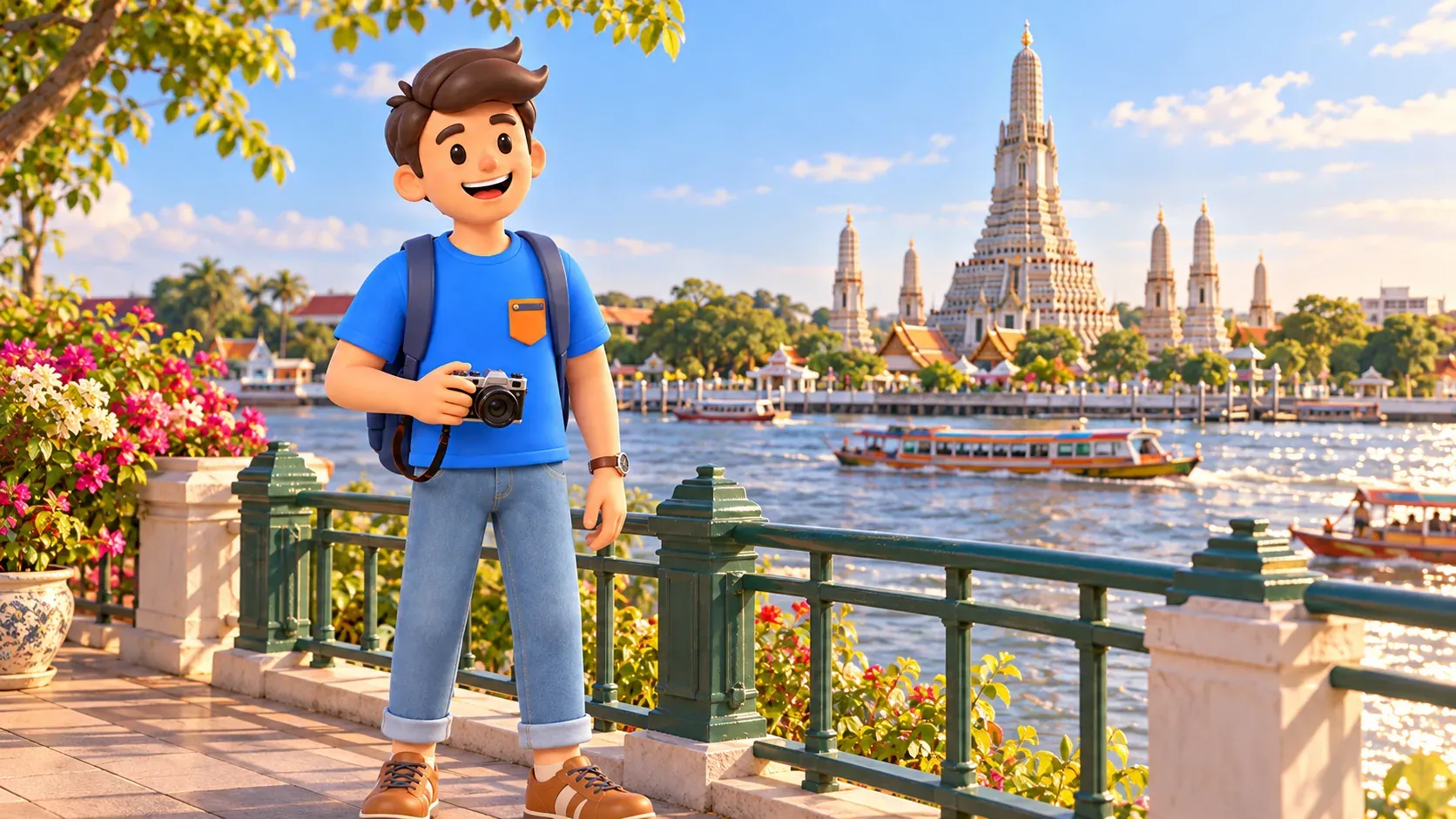
That distinction preserves some pleasure for later. You may notice the shape of a prang from the river today and examine its surfaces on a different morning. The view and the close encounter answer different questions. One tells you where the building sits in Bangkok; the other lets you look at material, scale and detail. Neither needs to replace the other, and together they offer more than repeating the same photograph from several nearby positions.
Both banks belong to contemporary Bangkok
A first-time visitor can easily give the eastern bank most of the attention because several famous stops cluster there. The western bank deserves its own time as part of the living city. Wat Arun, the Kudi Chin area and the Royal Barges Museum offer different starting points, in different locations. They should not be combined merely because they share a bank. Choose the kind of experience that most interests you and make the approach to that place explicit.
A broad river view does not explain every neighbourhood on its own. Buildings facing the water can hide the small streets, shops and places of worship behind them. Going ashore adds the part that a boat cannot provide. Our two-hour idea in Kudi Chin is a separate way to follow that curiosity. It has its own timing, rather than being an automatic extra after any boat trip that happens to pass the western bank.
A canal changes the scale
The Chao Phraya gives a broad view; a smaller canal can make the relationship between water and daily life more immediate. Houses, greenery, verandas and little waterside spaces appear closer. The interest is often in an ordinary sequence rather than a single celebrated monument. Notice how buildings meet the edge, where people can reach the water and how a view changes around a bend. These observations give the journey a thread without requiring a catalogue of named stops.
A canal neighbourhood is inhabited, and attention works best with that in mind. Look from the public route, give people room and ask before making a close portrait. An open veranda is part of someone’s home, not an invitation to enter. Enjoying the setting does not require imagining that the district is an unchanged rural village. It belongs to Bangkok now, with contemporary lives alongside older forms of building and movement. That continuity is part of its value.

Choose the boat arrangement for the experience you want. A canal excursion, a public river service and a cross-river ferry fulfil different purposes. Establish the actual departure and return, duration and what is included before setting off. You can combine water and walking thoughtfully without assuming that any boat can carry you to the next saved point. For another day, our half-day idea around a Thonburi canal offers a distinct ground-based direction to explore.
Royal barges show another meaning of water
The Royal Barges Museum introduces a ceremonial dimension very different from an ordinary journey through the city. Long wooden vessels, carved prows and rich decoration make boats into objects of craft and royal representation. The well-known Suphannahong has a golden prow shaped around a mythical bird. Seeing the relationship between an elongated hull and a sculptural prow offers a different way to understand the water: as a setting for ceremony as well as transport and commerce.
These are ceremonial vessels associated with special occasions. They are not a regular sightseeing fleet or boats to board as part of an ordinary visitor cruise. A museum visit is its own cultural stop, and the vessels on view can depend on current arrangements, conservation or ceremonial use. Confirm access and the display for your date before making it the centre of a day. The interest is in the craft and function, not in collecting a guaranteed fixed inventory.

Processions and rehearsals also show why the river remains an active public space rather than a permanent tourist backdrop. Special arrangements can change access to parts of the waterfront and water services. Consult the relevant current announcements when choosing that day’s outing. A ceremony is not an everyday performance that can simply be added to a standard boat ride. Planning around actual conditions lets the historical interest remain enjoyable without making an ordinary transport assumption do work it cannot do.
Trading places become neighbourhood stories
Water also provides a useful lens for commercial Bangkok. In an area such as Talat Noi, looking at the relation between the river and the streets can make old buildings and small working spaces feel connected rather than isolated curiosities. Going on foot brings the details close: a frontage, a courtyard visible from public space, a doorway or the way an alley leads towards the water. Choose a few observations instead of trying to decode the whole neighbourhood at once.
Kudi Chin offers another direction of curiosity on the opposite side, including the Santa Cruz church as a recognisable reference in its setting. These neighbourhoods are not interchangeable examples of one simple riverside identity. Each deserves attention on its own terms. A view from water may prompt the question; a respectful walk supplies the texture. You can keep that relationship without turning the article into a complete catalogue of communities, buildings and private places to enter.
The riverfront keeps changing
Contemporary developments also belong in the picture. ICONSIAM and Asiatique show different uses of the waterfront for food, shopping and leisure. Their presence makes a river journey a view of several eras at once, rather than a departure from modern Bangkok into an exclusively historic scene. Watch how a large contemporary facade, lower buildings and passing vessels share the frame. The contrast can be interesting without declaring one version of the city more real than the others.
A riverside evening is a possible separate chapter after a quieter part of the trip. It should not automatically follow every museum, temple and canal in a single long day. The water connects the story visually, but practical journeys still take time. Let the places you pass become ideas to choose between. A coherent trip can contain fewer actual visits while leaving you with a clearer understanding of the relationship between them and more attention for each.
Build a small outing around one question
Choose a question before a route: the organisation of the historic capital, life beside a canal, ceremonial craft or a particular neighbourhood. Then choose one water experience and one area to walk. As a local allowance, fifteen minutes to orientate, ninety for selected streets, forty-five for seated rest and thirty for departure make about three hours on land. Actual boat waiting, boarding and travel, and the hotel journeys, come in addition. This does not include full palace, temple or museum visits.
Adjust the scale to your interests. If ceremonial boats are the priority, give the museum its own visit instead of adding it between unrelated stops. If everyday streets are what attracts you, a limited walk and a seated pause may be enough. A good plan makes clear what it contains. The river should help you understand the city, rather than become a reason to keep expanding the itinerary until the original question disappears beneath the number of things scheduled.
RoadMe makes it more convenient and effective to bring these interests into a personal plan for the whole trip. Let the app work out your overall route and pace, giving water, neighbourhoods, cultural visits and proper rest the space that suits you.
Read the view, then go closer
A river journey gives Bangkok a visible structure; a canal changes its scale; ceremonial barges and neighbourhood walks add other meanings. Choose a manageable part and give it time. Seeing both banks does not require seeing every attraction on them. The most useful result is a clearer question and the wish to go closer to a place that caught your attention. From there, the city becomes easier to explore as connected experiences rather than disconnected pins.


