Seoul’s second lives: an old station, oil tanks and a waterworks island
Explore a different kind of old Seoul at Culture Station Seoul 284, Oil Tank Culture Park or the island park Seonyudo. Former transport and industrial spaces have received new purposes while retaining parts of their earlier form. Choose one according to interest: architecture and art, large industrial volumes or gardens among concrete structures. These are three independent outing ideas, not a compact walking route. Travel between the central station, western Mapo and a Hangang island requires additional time. One clear transformation can be enough for a rewarding introduction.
Ask the same questions at each place. What was the space needed for? What trace of that work remains? What do people do there now? Answers turn unusual photographic backgrounds into readable urban history. Old need not mean a palace or medieval street. A large modern city holds memories of movement, reserves and essential infrastructure. When a previous function ends, material traces can join public life rather than vanish with an enterprise’s closure or passengers’ move elsewhere. The interesting subject is how those traces have been used again.
Choose a mood rather than all three stops
The station suits a comparison of historical architecture and contemporary cultural use, when an exhibition is open. The tanks offer external scale and materials. Seonyudo concerns an industrial landscape changed through water and planting. Allow about one to one and a half hours for the first, one and a half to two for the second, and around two hours for selected island gardens with the bridge. These are editorial allowances without hotel travel, an extensive event programme or an obligation to examine every corner.
Build a trip that fits you more conveniently with RoadMe: the app fully develops a personal itinerary around your interests, dates and pace. Architecture, art, unusual parks and rest form a coherent programme that is easier and more effective to use in Seoul.
| Place | Former purpose | Today’s interest |
|---|---|---|
| Seoul 284 | Railway station | Historic space and cultural programmes |
| Oil Tank Culture Park | Strategic fuel reserve | Steel cylinders and public grounds |
| Seonyudo | Water treatment | Basins, columns and new gardens |
Seoul 284: the building no longer dispatches trains
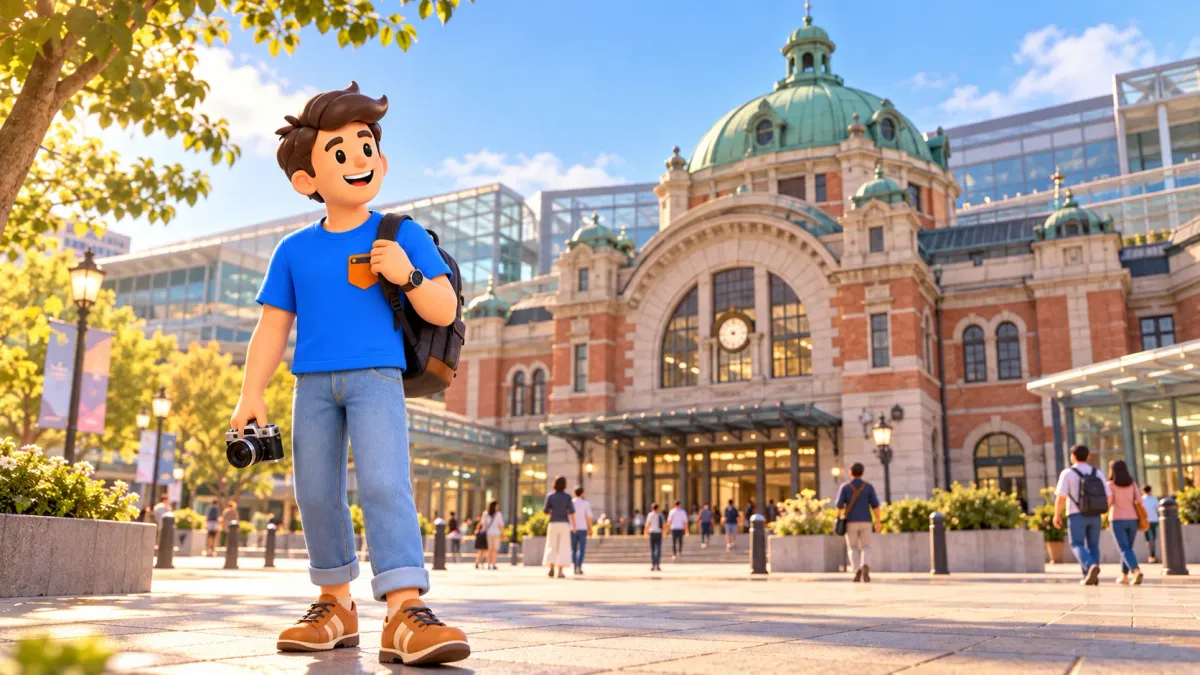
The historic station beside present-day Seoul Station opened in 1925 under Japanese colonial administration as Gyeongseong Station. Its history includes transport development, urban movement and the complex context of that period. An attractive dome should not become a story of an uncomplicated past. After station functions moved to the modern complex, the older building gained a cultural role; Seoul 284 opened in 2011. Visitors now come for architecture and programmes rather than boarding a long-distance train.
Outside, notice brick, pale stone details and the central dome. Begin with façade proportions and its position beside today’s transport hub. A building designed for passenger flows can now hold people inside for deliberate observation. Its new function does not erase the scale of an entrance or hall. Compare a station’s expected movement with what appears before you. Which visible parts continue to communicate the first purpose? That question begins before entry and gives the exterior a subject beyond a picturesque old building beside modern glass and busy streets.
When open, a cultural programme adds another layer. Art or an event occupies rooms arranged for an earlier life. The subject is not a promise of a particular work on a wall, but the encounter between shell and current use. Doorways, windows and room volume help reveal it. Do not assume every visible component remained untouched since 1925: conservation and restoration also belong to the history. An old building continues through decisions made later as well as through its initial construction. Reuse involves choices about what remains legible and what changes.

Choose the station’s visiting date
Use Seoul Station on Lines 1 and 4, Exit 2, then approach Culture Station Seoul 284 at 1 Tongil-ro, rather than the active passenger hall. Ordinary cultural-space hours are 10:00–18:00, last entry thirty minutes before closing, with Monday closed. Another condition matters: the space can close when no exhibition or event is taking place. General admission is free; architecture tours follow separate reservations. Match an indoor visit with the actual programme calendar. A nearby station entrance alone does not establish which cultural rooms are available.
If the interior is closed on your date, exterior observation is a different, shorter outing. It does not replace an hour promised inside. Façade and modern-station surroundings offer a useful comparison, but not entry to every historic room. Separate permanent building from changing event. The architecture remains in place; an exhibition has dates; open doors depend on the cultural centre’s current work. Keeping those conditions distinct helps make a visit satisfying. A well-chosen exterior stop can still explain transformation when that is the programme intended from the start.
The oil depot: a hidden reserve becomes public space
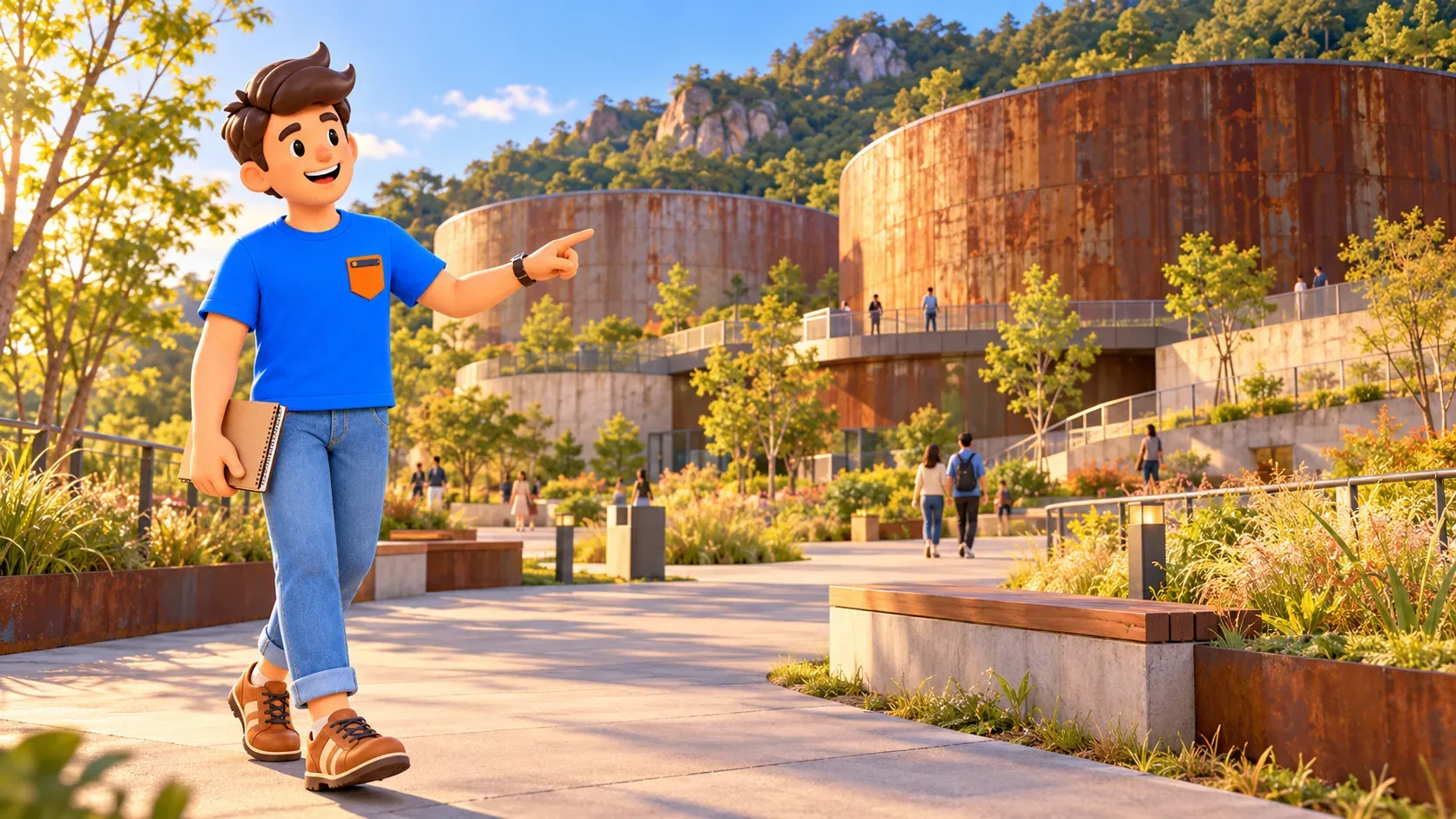
Oil Tank Culture Park, 문화비축기지, lies in Mapo near World Cup Stadium. Following the 1973 oil crisis, five tanks were built in 1976–1978 for fuel storage rather than public visits. The depot closed for safety reasons before the 2002 World Cup. A later cultural reuse led to the park opening in 2017. Infrastructure once separated from everyday visitors acquired a different public role. This is part of the city’s more recent material history, where large objects were shaped by supply and security rather than ceremonial display.
Outside, the key subjects are cylinder scale, metal, concrete and surrounding landform. Do not reduce the experience to attractive rust. Tank shape arose from storage, while new paths changed a visitor’s relationship to its volume. An operational container can now be considered as architecture. Find a view with a public path or person nearby to make size legible. Then compare old shell and a contemporary addition. New use need not disguise itself as an entirely unchanged past. The meeting of inherited material and altered movement is part of the interest.
T6 makes this especially clear: it is a new structure using metal from dismantled T1 and T2. Saying that all cultural rooms occupy untouched old tanks would be inaccurate. Preservation can involve a retained volume, dismantling, reused material and new construction. The site concerns both the former reserve and decisions made in turning a closed industrial ground towards public use. Different approaches coexist within one complex. Look for what was kept in position, what material moved and where a new purpose demanded a new form rather than simple retention.
Do not assume entry to every tank
The outdoor park is open around the clock, but since April 2025 T1–T6 have operated under a different use arrangement and routine interior visits are unavailable. An older expectation of arriving and freely walking through every hall should not shape today’s plan. Public outdoor areas form this outing’s basis. Events and guided visits have separate calendars and booking conditions. Daylight helps read shape and material; twenty-four-hour grounds do not promise an indoor programme at night. Architecture can still provide a clear subject when the visit is planned around what is accessible.
Use World Cup Stadium on Line 6, Exits 2 or 3, followed by the public approach. There is no need to add a compulsory Haneul ascent or all western parks. One and a half to two hours allows a selected outdoor circuit and pause. See a cylinder from afar, approach on the permitted route and step back again. Two scales distinguish material from volume. The place remains meaningful without an interior visit when expectations match that choice. A short sequence of views can reveal more than a hurried search for an open door.
Seonyudo: a waterworks becomes a garden
Seonyudo supplied treated water to southwestern Seoul from 1978 to 2000. The island opened as a park in April 2002. Here industrial form changed through landscape: former containers and a structural grid acquired new roles among plants and water. This is not a classical ruin, ancient temple or operating municipal plant shown from inside. The interest is how a park can emerge through reinterpretation rather than erasing every previous trace. Concrete elements remain understandable as infrastructure while the experience around them becomes a public garden.
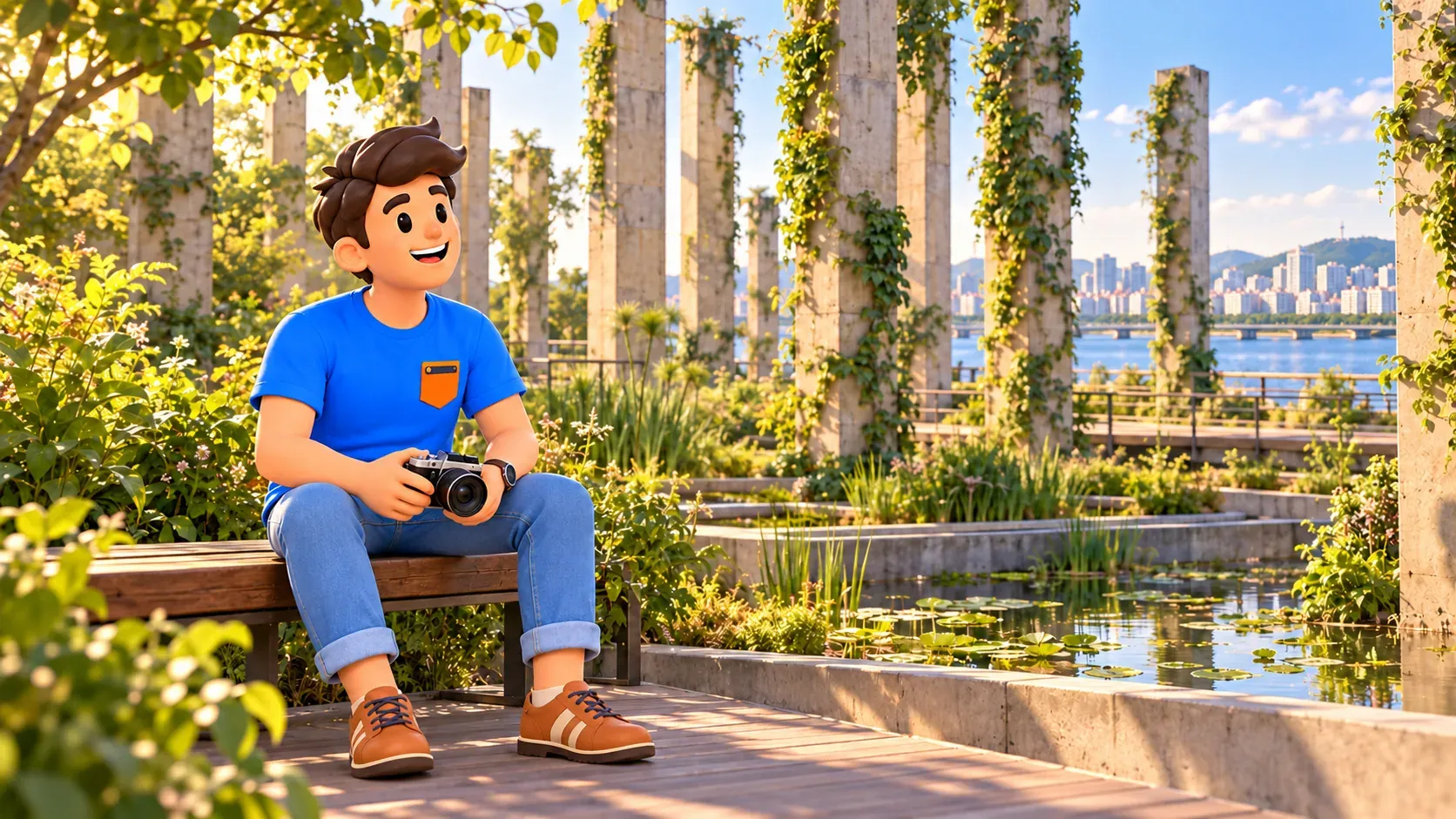
At the Garden of Green Columns, the former reservoir’s upper concrete slab was removed and columns retained. What supported a roof now establishes rhythm in open space. Climbers and light change the rigid grid. Read the repeated supports, then see how planting softens their appearance. The difference from an antique colonnade is precisely the point: ordinary infrastructure has acquired a landscape life. It need not pretend to be a palace or become a decorative reconstruction to reward a visitor. The previous work remains visible through a changed relationship with sky and vegetation.
Former basins and treatment areas also received different tasks. Water plants and low concrete boundaries retain a link with earlier operations. That does not promise every visible pool now processes municipal drinking water. Observe container shape and the garden within it. An engineering boundary becomes a frame for a landscape. The main event here is not necessarily an exhibition inside a building, but a change in the environment through which people walk. It offers a calm version of reuse, where public experience develops from arrangement of existing structures rather than from one spectacular new object.
Keep the island as its own outing
Seonyudo on Line 9 offers an approach by public routes to the southern Hangang side and Seonyugyo pedestrian bridge. Distinguish it from Yanghwa’s road bridge. Around two hours for bridge and selected gardens is a relaxed allowance without hotel travel. Ordinary outdoor park access is 06:00–24:00; buildings follow separate hours. The Story Gallery in a former pump building opens 09:00–18:00, until 17:00 in winter, and closes Mondays. It is an addition rather than a condition for the entire walk. Match river-path access and weather with the day.
Choose one column sequence, one former basin and a river view. That can reveal the transition from engineering work to public space. Another hour seated near water does not undermine the topic; it lets today’s island life become evident. Leave room for observation instead of completing every garden name. Concrete, water and planting then form one understandable story rather than separate photographic corners. The current use matters as much as the retained trace, because reuse concerns people inhabiting a changed landscape as well as objects conserved within it.
Three transformations, three kinds of memory
The station retains historical volume for cultural life. The depot changes a relationship with a large industrial shell. Seonyudo turns an engineering grid into landscape. New purpose appears beside old traces in each case, but the means of preservation differ. There is no need to select one universal correct method. Notice instead how urban memory can continue through building, material and space. That perspective works elsewhere in Seoul, where an unassuming structure may begin a story about how the city once operated.
Continue this theme more conveniently with RoadMe: the app prepares a complete personal plan around your interests and preferred rhythm. Cultural places, parks, contemporary districts and rest become a coherent trip that helps you use time more effectively.
Begin with one transformation. Identify former task, visible trace and present life. A station, tank cylinder or concrete column can then become more than an unusual backdrop: each belongs to a city learning how to use what already exists as well as how to build anew.