
Half a day in Thonburi: Wat Paknam’s Buddha and a canal neighbourhood
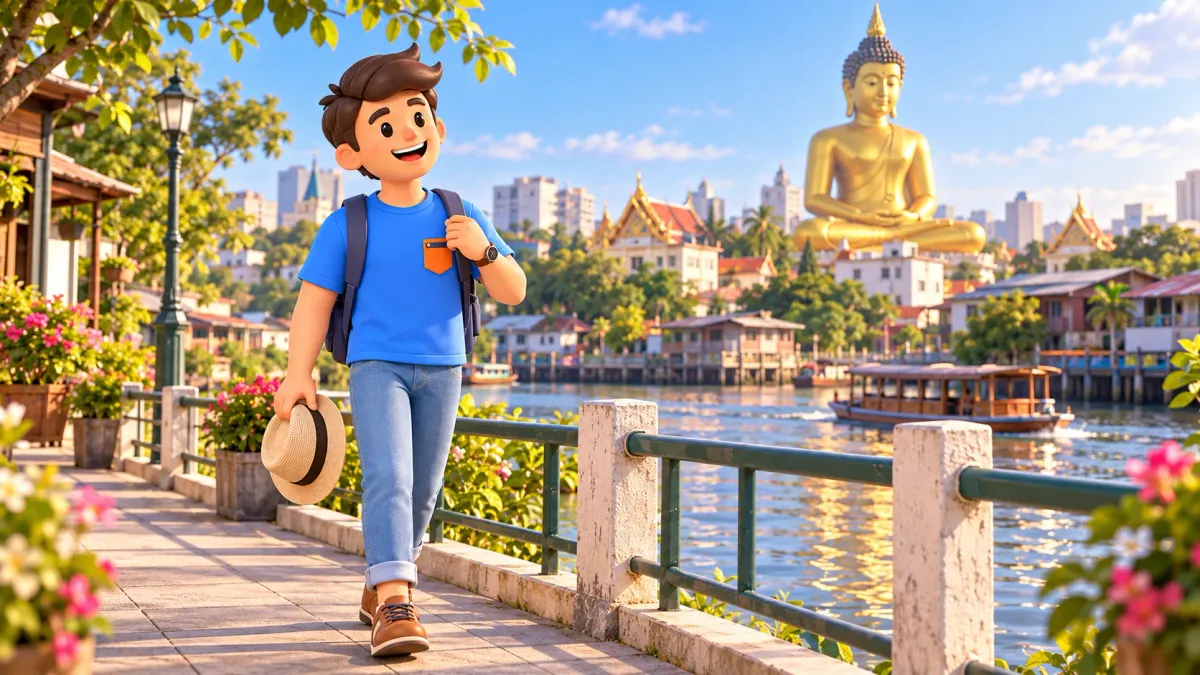
A half-day in western Bangkok can have two very different scales: the large seated Buddha at Wat Paknam and the small details of a wooden house beside a canal. Connect them with time for the journey, rather than imagining an uninterrupted waterside walk. Wat Paknam Phasi Charoen and the Artist House at Khlong Bang Luang make a useful pair when you want a substantial temple visit followed by a quieter neighbourhood setting.
Build the outing around two experiences
Allow about four and a half hours from arrival at Wat Paknam, with the journey from your accommodation and onward travel counted separately. Use the first part for the temple, a distinct middle section for changing areas and the second part for the Artist House and nearby public canal-side streets. The outline works as a half-day with a proper pause. A long workshop or an extended meal can turn it into a longer outing.
Let RoadMe develop a personal plan for your whole Bangkok trip around your interests, available time and pace. The app makes it much more convenient to combine a major temple with a quieter neighbourhood, giving each experience a sensible place in the day.
Before leaving, confirm the visitor arrangements that matter to your plans: the areas available at the temple, current viewing conditions around the Buddha and the Artist House’s reception or activities. An illustrated image is not evidence of an unobstructed view today. Pick daylight for the outing and avoid making it depend on a single photograph or an unconfirmed performance. The interest lies in a change of setting as much as in the individual landmarks.
At Wat Paknam, give the scale time to register
The large golden seated Buddha is the immediate visual anchor. Rather than trying to approach it from every possible direction, begin from a suitable visitor position and let the contrast with the surrounding city become apparent. The image has a religious purpose as well as a striking outline. A few quiet minutes help the visit become something more than a search for the same camera angle you may already have seen online.
Treat Wat Paknam, the large Buddha and a chosen accessible part of the complex as one visit. They do not need to become three competing stops in your timetable. Allow around ninety minutes for orientation, viewing and moving calmly through the parts receiving visitors. If you are interested in the great stupa, establish its current access and use some of this same allowance. You can select one interior rather than attempt every room and viewpoint.
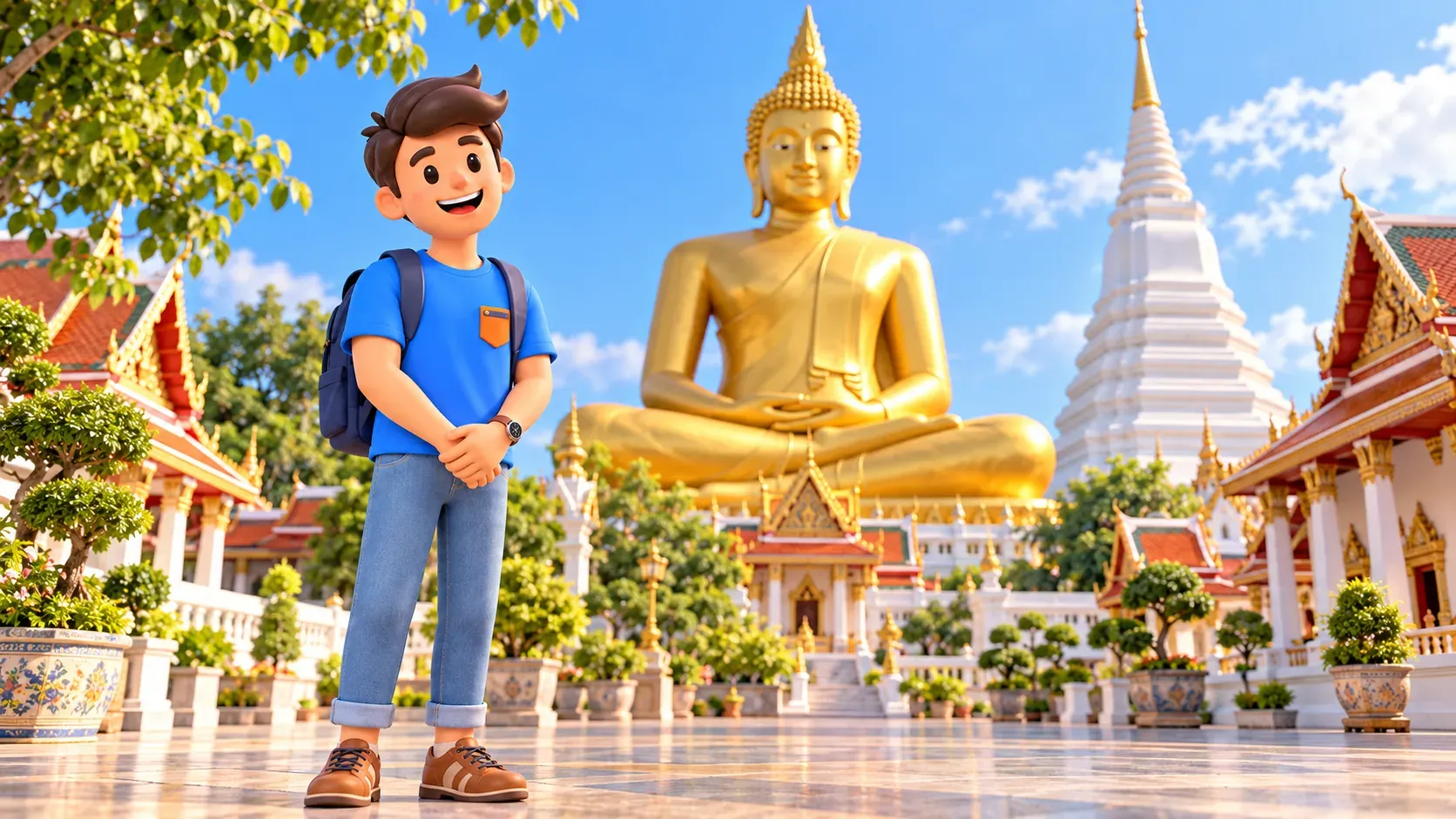
Wear clothing covering shoulders and knees, and follow instructions about shoes, photography and restricted areas. Keep entrances clear for worshippers. If a ceremony, maintenance or another condition changes what you can see, use the permitted areas thoughtfully and adjust the visit. Do not enter a private courtyard or an inconvenient lane simply because a map appears to offer a closer view. One clear impression from an appropriate place is enough to anchor this half-day.
Choose what matters before moving on
With companions, agree whether the main interest is the Buddha’s scale, religious architecture or time inside a particular accessible space. Let that choice shape the first stop. Someone who enjoys photography may need less movement and more patience; someone curious about the stupa may prefer to spend the time there. The ninety-minute frame leaves room for a selective visit, not a complete survey. Save conversation for places where it will not disturb prayer.
Keep a separate allowance for the transfer
The Artist House lies generally northwest of Wat Paknam. The locations may appear close on a map, but canal banks, bridges, actual gates and public street connections determine the usable route. Do not assume you can follow the water continuously from one to the other. This plan gives the transfer roughly forty-five minutes, including the approach to a suitable pick-up point, any wait and the final walk to the visitor entrance. It is a planning allowance, not a measured driving time.
A land journey is a straightforward basis for planning. Choose the practical transport from your actual exit and destination entrance, confirming the drop-off with the available route. If you prefer to walk, check the public connection first and give it the time and energy it needs. A boat excursion can be an entirely different experience; it is not an assumed scheduled link between these two stops. Do not rely on a boat appearing just because both places are near canals.

Use this middle section to reset the day. Have water, put away the camera and check how everyone feels. The move from a monumental temple to an intimate canal neighbourhood is easier to enjoy when it does not become a race. If the first visit ran long, reduce the second section’s detours rather than trying to recover time through rushed transport decisions. The transfer is a real part of the outing, not blank space between two photographs.
The Artist House: an old home with a creative present
The Artist House occupies an older wooden house by Khlong Bang Luang. Once a goldsmith family’s home, it has been adapted to creative use. That short history explains its appeal: domestic architecture and a canal setting now form a place for art and time spent together. You do not need to turn the visit into a full architectural inventory. Begin by noticing the timber, the scale of the rooms and the relationship between house and water.
Allow around seventy-five minutes for the house and a selective look at the immediate neighbourhood. Look at whichever spaces are actually open to visitors, then choose whether to browse art, sit with a drink or explore the available creative activity. The venue presents itself as a café and art workshop destination; a particular class, seat or demonstration should be confirmed before it becomes the purpose of your journey. There is no need to do every option to appreciate the setting.

Older descriptions of the area may foreground puppetry. Do not treat that as a promise of a performance at the time of your visit. If a show matters, confirm the current programme directly with the venue and plan for that specific event. The house and canal can still make a worthwhile stop without it. Keeping this distinction avoids spending your best visiting time waiting for something that was never part of the day’s actual arrangements.
Leave time for the canal neighbourhood itself
Choose a short stretch of public walkway rather than trying to cover the whole canal. Notice a house front, a reflection, the contrast of timber and plants, or the everyday movement around a small business. Keep the experience local to where you can comfortably stand and walk. A picturesque boardwalk does not establish that every section beyond it is public or connected. Where the path ends or becomes private, turn back without treating it as a missed attraction.
Ask before photographing people or stepping into a workshop area. Keep doors and working passages free. If you are with children, stay attentive near the water and make the walk short enough for them to remain interested. For someone who needs easy access, confirm the actual entrance and available surfaces first. A short distance between buildings does not describe thresholds, stairs or narrow sections. Choose the usable part rather than promise a fully accessible canal circuit.
A half-day with a pause built in
Use the allocation below as a flexible framework starting at the temple. All times are estimates. Visitor conditions, waiting and your own interests will change the balance, and the journey to the start or away from the finish remains extra. The buffer belongs to ordinary transitions, not a compulsory third major attraction.
- First ninety minutes: Wat Paknam, the Buddha and a selected accessible part of the complex.
- Next forty-five minutes: transfer allowance, including reaching transport and the final approach.
- Next seventy-five minutes: the Artist House and a short look at nearby public canal-side streets.
- Next thirty minutes: an unhurried seated break, which can overlap with the house visit if that is more convenient.
- Final thirty minutes: flexible time and a calm exit toward onward transport.
If your drink break is already part of the Artist House stop, use the freed time for a longer look or finish earlier. Do not add minutes twice just to make the plan appear fuller. Conversely, a workshop that you want to complete deserves its actual duration. Reduce the canal wandering or extend the outing. A half-day has enough value with two well-chosen experiences; it does not need a full list of every activity advertised nearby.
For a trip that balances temples, neighbourhoods and creative time, RoadMe works out a personal itinerary based on what you enjoy. In the app it is much easier to organise the whole Bangkok plan at your pace, with enough room for the transfer and a real pause.

Choose the shorter version when it suits you
In strong heat, make the neighbourhood walk brief and use a seated stop as its centre. In rain, wait somewhere visitors are allowed rather than assuming every covered doorway is public shelter. Reconsider the transfer if weather makes the second visit less enjoyable. You can end after Wat Paknam and return to the canal on another day. Equally, someone mainly interested in art may choose the Artist House as a separate, slower outing.
The strongest version is the one with a clear interest and enough energy left to notice it. For another western-bank neighbourhood, keep the Kudi Chin two-hour walk for its own occasion. The route around Wat Arun offers a different temple-and-street focus. Wat Paknam and Khlong Bang Luang already give this half-day its own rhythm, from the monumental to the small and personal.


