
Kudi Chin in Two Hours: Bangkok on the Other Bank

Kudi Chin gives a short Bangkok walk a clear theme: different traditions living close to the same river. Santa Cruz Church, Kian An Keng Shrine and Wat Kalayanamitr are distinct places, yet the lanes between them make a compact neighbourhood experience. In two hours, you can notice that relationship, stop for something to eat and leave with a sense of the west bank beyond a single famous temple.
This is a daylight outing that begins near Santa Cruz Church. Travel across the city or river and the return journey need separate time. The suggested two hours include exterior views, ordinary streets and a seated pause. Choose one principal interior if access allows, exchanging part of the walk for it. The route is a framework for an attentive visit, with estimated time blocks rather than measured walking intervals.
Who this short Kudi Chin route suits
Choose it if you enjoy neighbourhood scale: a church beside homes, a small shrine, a temple and the streets connecting them. It works well when you have already seen some of royal Bangkok and want another perspective, or when you prefer a modest outing to a full day of admissions. The main interest is the relationship between places. Knowing every architectural date is less useful here than having enough attention left to notice how the quarter fits together.
RoadMe can turn this idea into a personalised Bangkok plan based on your interests, time and pace. The app makes it much more convenient to work out the whole trip, so a short neighbourhood walk fits naturally into the days you actually want.
The following budget leaves a proper pause. If one interior holds you longer, shorten another section or extend the outing. The church, shrine and temple do not need equal time, and their current access conditions can differ. Choose the visit that matters most before leaving your accommodation, then let the nearby streets support it.
| Time from the start | Suggested focus |
|---|---|
| First 20 minutes | Santa Cruz exterior and the surrounding approach |
| 20–40 minutes | Neighbourhood lanes, with a museum option replacing time |
| 40–65 minutes | A seated cake or drink pause |
| 65–85 minutes | Kian An Keng, according to access |
| Final 35 minutes | Wat Kalayanamitr area and a calm finish |
Santa Cruz: start with the church in its neighbourhood
Santa Cruz is a landmark of the local Catholic community. Begin by looking at the exterior and its place among the surrounding homes and riverside setting. Rather than treating the church as an isolated photograph, notice the scale of the approach and the transition back into ordinary lanes. This is a useful introduction to Kudi Chin: a recognisable religious building that belongs to a lived-in district.
The quarter’s cultural story includes different communities and inherited traditions. You can recognise that variety through the short walk without expecting each household or doorway to explain it. Look at the architecture from permitted spaces and follow the current arrangements if you wish to enter. During religious activity, give worshippers room. An exterior visit can still be a complete first stop, leaving the interior for a time when it is accessible and you can stay attentively.
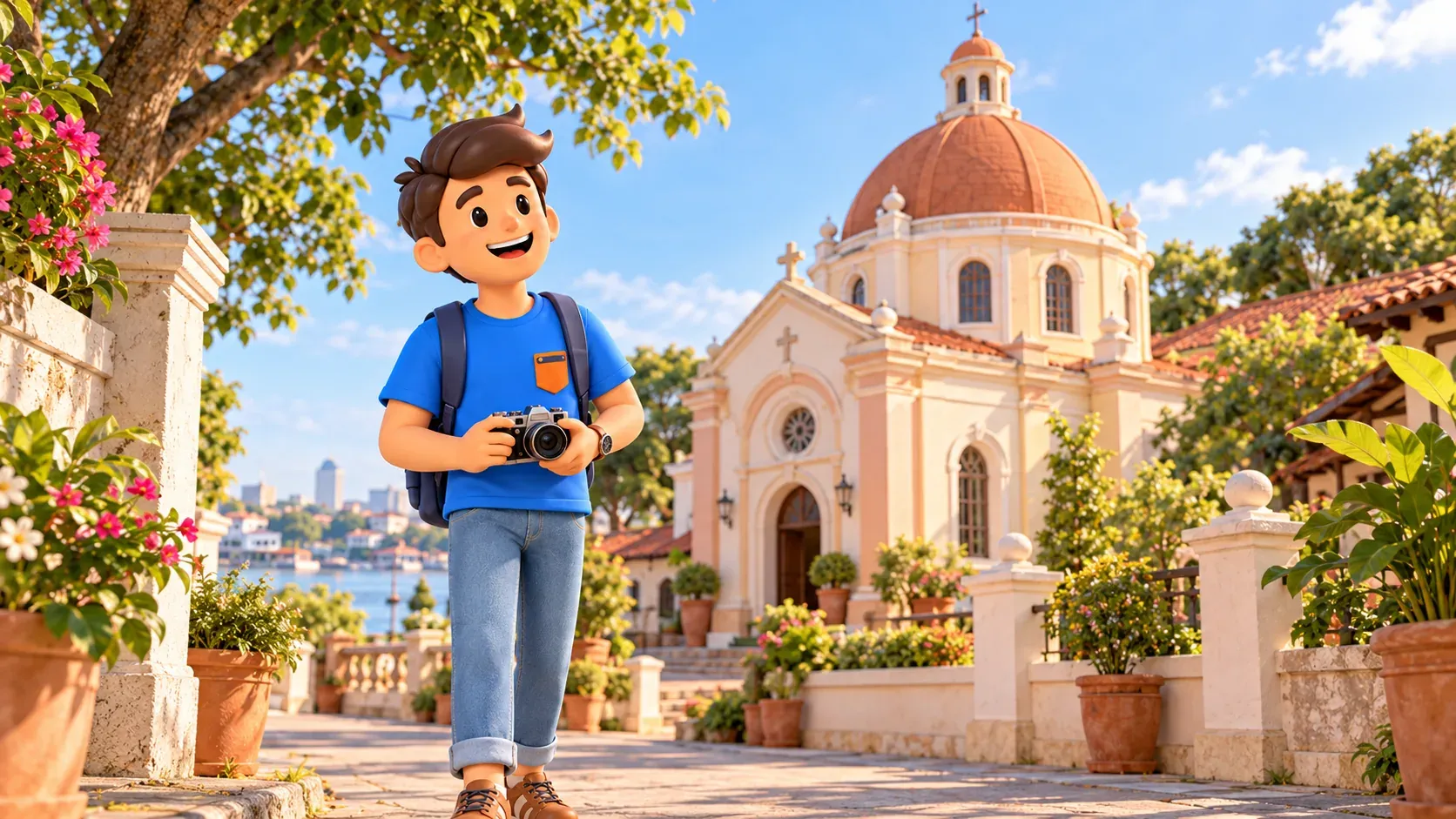
Use the opening minutes to settle into the pace. Check the next part of the route somewhere that leaves the approach clear, put the phone away and look around. A small distance between buildings can contain several changes of atmosphere. The point is not to move immediately from one named site to another, but to begin noticing the spaces that make them neighbours.
The lanes: let everyday details connect the landmarks
Leave time for the residential streets near the church. Potted plants, doors, a small shopfront or a change in shade can be enough to hold your attention. Use public passages and leave entrances clear. Ask before a close portrait or entering a space whose status is unclear. These ordinary courtesies make it easier to enjoy a district that is also somebody’s home, without turning daily life into an arranged performance.
A useful way to look is to choose one comparison. How does a house entrance differ from a church approach? Where does a broad view become a narrow passage? What changes when you step into shade? Such questions give a short walk substance without needing a long list of extra stops. You can keep a few impressions rather than trying to identify every object or turn the neighbourhood into a complete catalogue.
When to include Baan Kudichin Museum
The museum is an optional focus if it is open and you want more context. Check the current arrangements before making the interior essential. Its place in this two-hour plan is a choice, not an addition that appears outside the time budget. A proper visit may require reducing the lane section or spending longer overall. If the museum interests you more than the final temple stop, give that preference a real place in the schedule.
If it is unavailable, continue with the outdoor thread. The walk still connects three different religious settings through a neighbourhood. A closed interior does not remove the value of what you can see outside. This distinction is helpful on short outings: one selected visit can deepen the experience, while the route remains coherent without depending on every door being open.
A local cake pause belongs in the middle
Kudi Chin’s Portuguese-style cakes offer one way to connect a food break with the quarter’s inherited traditions. If you find them available and want to try one, make that your pause. You do not need a particular shop to make the route work. Check the ingredients and price as needed, choose what suits you and give yourself time to sit or stop comfortably rather than eating while trying to keep moving.

A drink alone is equally valid if you are not hungry. The useful part is the change of rhythm: you have seen the opening area and can decide how much attention remains for the shrine and temple. Compare what you noticed with your companions or simply enjoy a quiet moment. A seated break is not time taken from the neighbourhood; it can be the moment when several separate impressions begin to make sense together.
Keep the pause flexible in location. A shaded, comfortable place with a clear menu may serve you better than crossing the lanes again in search of one photographed table. If the first half has already expanded into a long interior visit, the break is a natural point to shorten the rest. Preserve the part of the outing you actually want, rather than treating every later suggestion as a debt.
Kian An Keng: a smaller scale and a closer look
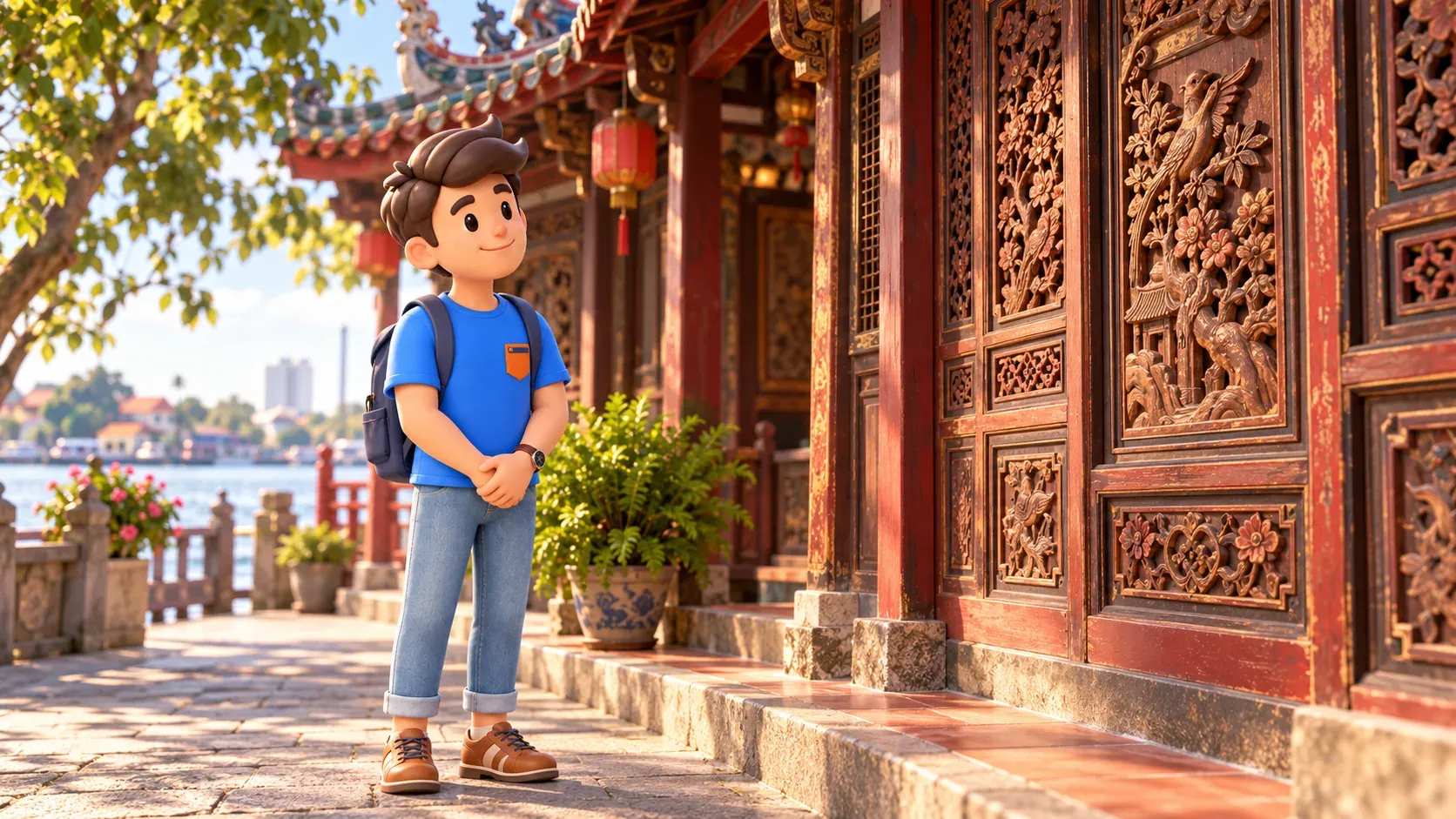
Kian An Keng brings Chinese shrine architecture into the sequence. Where accessible, carved details offer a different kind of attention from the broader church view. Choose one feature and observe it quietly. The reward of the stop is partly a shift of scale, from a façade seen at a distance to details that invite a slower look. You can appreciate that difference without needing an exhaustive explanation of every image or decorative element.
Follow the current access and photography instructions. A shrine remains a place of religious practice, and a calm visit leaves other people room to use it. If you stay outside, look from permitted positions rather than assuming an entrance must be available to complete the route. Your purpose is to understand how another tradition appears within this small neighbourhood, not to prove that every interior has been visited.
With RoadMe, you can develop a personal route that gives more time to the Bangkok interests you value, from cultural heritage to food and local streets. The app makes the whole trip easier to organise than separate lists, with your own priorities shaping the plan.
Wat Kalayanamitr: finish with a broader temple setting
Wat Kalayanamitr changes the scale again. Established in 1825 during Rama III’s reign with merchant patronage, it provides a short historical connection to the growth of the west-bank area. The large principal Buddha is one reason visitors choose the temple, but the available time and access should decide whether an interior is your main visit. You can also give the final section to the surrounding temple setting and the transition back towards the river.
Keep the finish calm. Dress appropriately for a religious visit, follow the entrance instructions and take time to adjust to the space. If the earlier parts have used more of the two hours, make this a shorter exterior conclusion. If this temple is the reason you came, shorten the opening lane section instead. The itinerary should reflect that preference, rather than distribute identical attention merely because three sites appear in the title or plan.

At the end, settle your onward journey from a suitable public place. The return is additional to the walking budget. A nearby point on a city map is not automatically the right departure point for your destination, and any river journey has its own arrangements. Keeping that practical transition separate protects the relaxed character of the short outing. It also helps when the next part of your day is fixed.
Keep the two-hour walk small, or extend it deliberately
You can place Kudi Chin within a longer stay without adding every other west-bank attraction on the same day. Our five-day Bangkok plan with free time shows one way to distribute the city more comfortably. For a different return-visit outing, the Bangkok Noi and Khlong San ideas offer separate neighbourhood choices. Completing those as well would mean a longer day, not a more complete version of these two hours.
The short walk succeeds when you notice a relationship: different buildings, traditions and ordinary streets sharing a small riverside area. One thoughtful visit, a few remembered details and a pause can be enough. If you want to return, you will already know which part deserves more time, and the next outing can grow from your own interest rather than another general list.


