
A Venice Photo Walk: Reflections, Accademia Bridge and Dorsoduro Details
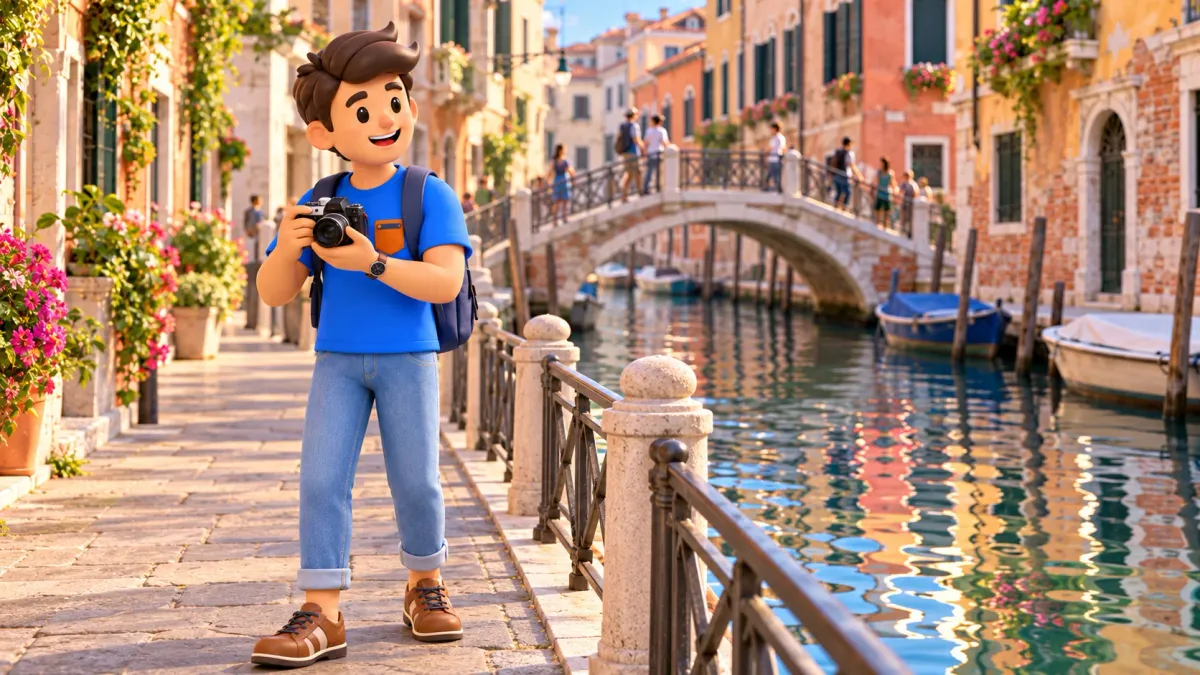
For an unhurried Venice photo walk, choose eastern Dorsoduro: Accademia Bridge, San Vio, public lanes near the Peggy Guggenheim Collection, the Salute and Punta della Dogana. Allow approximately three hours for walking, photography, coffee and pauses. Travel from your accommodation and the journey after the finish are additional; museum interiors are outside the programme.
Begin at the northern foot of Accademia Bridge on the San Vidal side, cross the Grand Canal into Dorsoduro and finish outside at Punta della Dogana’s tip. Alternate five subjects: a broad view, a reflection, a small detail, architectural volume and open water. A smartphone or familiar camera comfortable to carry is enough.
Three hours of attention
Aim for a short visual account rather than many similar postcards. Return with five impressions: where you were, what you noticed in water, a surface that interested you, architecture seen close up and the ending. It is an approachable task without expensive equipment or specialist knowledge. The pictures need not all look alike to belong together.
Try RoadMe to have a personal plan worked out for your whole trip around your interests, dates and pace. The app makes arranging photo walks, museums and rest across all your days much easier.
This programme allows more looking time than a short connection to the Salute. The same geography can support different experiences: moving between places or lingering to observe. If companions are less interested in photography, agree on the five themes and pause lengths beforehand. The camera then becomes part of a shared outing rather than an unexpected delay at every corner.
The walk remains useful without perfect pictures. You start noticing relationships between water, material and scale. Comparing images helps identify your own interests: a broad panorama, a wall surface or movement in a reflection. These observations can inform later days even if you finish with a very small selection of photographs.
The route and a realistic time allowance
From Accademia’s northern approach, cross south to Campo della Carità. Continue through San Vio and public lanes near the Guggenheim’s land entrance towards San Gregorio, Campo della Salute and Punta della Dogana outside. These are waypoints, not turn-by-turn directions. Check individual connections on a current map while standing clear of the through route.
| Part of the programme | Allowance |
|---|---|
| All external walking, including the café approach | 40 minutes |
| Looking and photography across five themes | 80 minutes |
| Coffee and a seated break | 30 minutes |
| Additional pauses and flexibility | 30 minutes |
Total: 180 minutes. The photography allowance covers the entire walk, not each stop. Walking includes all local connections and is an editorial estimate, not an author-measured trail. A full lunch, travel to the start, transport waiting and return from the point are additional. Flexibility does not turn a substantial museum visit into part of the same three hours.
If you are already in Dorsoduro, start at Carità and shorten the opening. Crossing the canal twice is unnecessary. When the bridge is crowded, take a brief photograph if possible and continue. Use the rest of the first theme after descending; its allowance is not an invitation to occupy the middle of a crossing for fifteen minutes.
Choose light for your date and weather
Morning or later in the day can produce long shadows and interesting water surfaces, but one clock time does not suit every season. Check sunrise or sunset for your date, then consider the weather and a convenient start. Empty bridges, absent boats and identical façade colours cannot be guaranteed in an ordinary working city.
An overcast day invites attention to texture, subtle colour and small details. In bright light, compare an illuminated area with shadow while retaining one principal subject. Wind may break a reflection into strips; that pattern can make a picture too. You do not need a perfectly motionless mirror before beginning to look.
In strong wind, rain or high water, assess safe access first. Municipal forecasts help decide whether to walk; they are not an invitation to seek a flooded spot for dramatic effects. Shorten an exposed section or choose another day. Nearby locations do not guarantee dry surfaces or uninterrupted transport in every condition.
Accademia: one overview and one clear line
On the bridge, take a brief opportunity to look along the Grand Canal towards the Salute. Find a main line: the water’s curve, repeating façades or the domes’ silhouette. Decide what makes the picture before lifting the camera. A few considered attempts are more useful than a long sequence of nearly identical images made without a clear subject.
Check the frame’s edges for an accidentally cut-off shape or distracting object. Try a broad view and then a slightly tighter version from a safe, available position. Keep yourself and belongings within the normal pedestrian space, leaving room for others to pass. There is no need to lean beyond railings or place equipment on an edge.
The bridge’s wooden appearance does not make it medieval. Engineer Eugenio Miozzi’s crossing opened in 1933 as a temporary solution; later repairs helped preserve its familiar form. Something that looks old can have a more recent structural history. Photograph the visible material while distinguishing your impression from a confident claim about every board’s age.
After descending to Carità, look back from another position. Depth changes when you lose the bridge’s height. The neighbouring Accademia galleries are a separate visit, not a required part of this photo story. For the outdoor route, one broad impression is enough: the distant domes will later become the architecture standing close to you.
San Vio: a reflection of your own
Continue towards San Vio through public passages. Change the scale of attention, choosing a small area of water instead of an entire panorama. What is reflected, how much of its source belongs in the picture, and what changes with a modest shift in position? Safe footing on ordinary paving matters more than the lowest possible viewpoint.
Try two photographs: one with a clear source of the reflection, another mainly with its colour on the water. You need not reproduce an internet image. Ripples, clouds and passing boats change the surface. If there is no satisfying reflection, try water meeting a wall or a simple arrangement of shadows instead.
Change one element at a time: direction, scale or the amount of water included. That makes the reason for a difference easier to see. Turning from horizontal to vertical framing may already help. Water need not occupy half the composition, and symmetry is not the only option. Keep the version that makes your idea clearest.
Near the Guggenheim: smaller details
Continue along public lanes near the Peggy Guggenheim Collection’s land entrance, then towards San Gregorio. There is no continuous Grand Canal promenade here. The museum garden and terrace belong to a separate visit, not a free shortcut between nearby places. Ordinary streets already offer enough material for attentive looking without seeking another entrance.
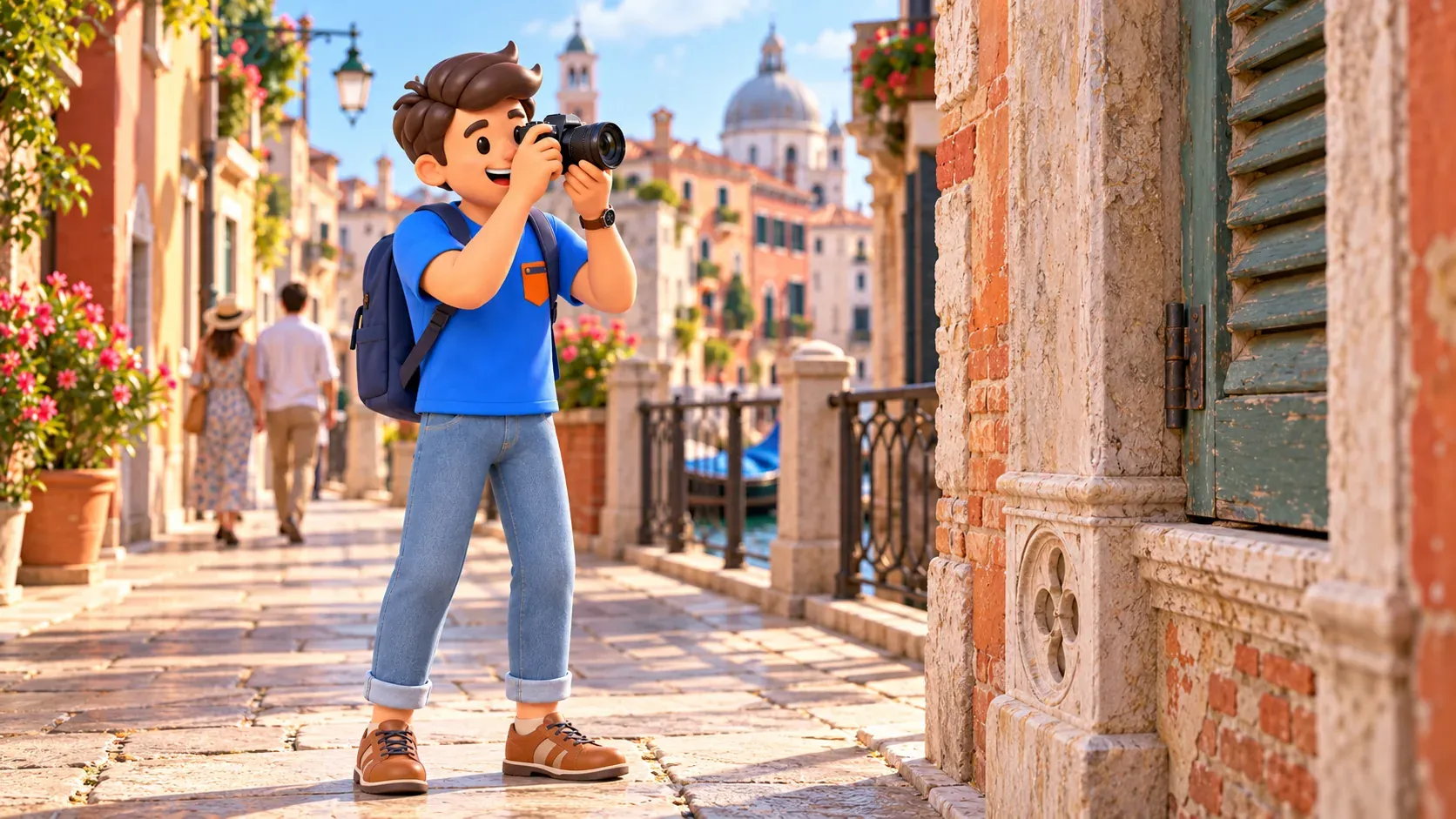
Choose one detail visible from a public path: a shutter edge, stone pattern or meeting of brick and plaster. Treat it as part of a real residential city. Peeling paint does not date a house, and an unusual door does not establish a particular legend. Sometimes an honest observation of texture is more interesting than an invented explanation.
Pair a detail with a wider image explaining its surroundings. Together they can introduce a space and then show what you noticed within it. You need not approach a private window or open a gate. For a close portrait, ask the person first; a walk does not turn residents into prepared participants in a photo session.
This section can accommodate the planned half-hour café break. Check opening and service arrangements and take time to rest, leaving picture review for the last few minutes. If a table is unavailable, choose another place or pause format. Church steps, bridges and canal edges are not substitutes for a suitable seat while waiting.
The Salute: from distant dome to volume
Approach Campo della Salute through the San Gregorio area. The silhouette from the opening panorama now stands close by. Instead of trying to include everything, choose a relationship: dome and base, steps and entrance, pale architecture and surrounding air. A deliberate selection can convey scale better than fitting every last detail into one image.
The basilica relates to Venice’s vow during the seventeenth-century plague. Its foundation stone was laid in 1631, and its architectural conception belongs to Baldassare Longhena. That brief context adds meaning to the familiar shape. It is a significant expression of the city’s hope and gratitude, still serving a religious purpose, rather than simply a backdrop for visitors.
The main stop stays outside. The interior, sacristy and additional areas require their own conditions and time; approaching the church does not open every part. Compare the distant Accademia view with the nearby form, keeping the short observation stop separate from an unplanned interior programme. You can return another day if the building becomes your main interest.
Punta della Dogana: finish with space and water
Continue to Punta della Dogana’s exterior tip along the public route. The former maritime customs complex recalls the location’s trading role. Its present warehouse configuration dates to 1682 and Giuseppe Benoni; Tadao Ando’s restoration for an art venue was completed in 2009. Exhibitions inside remain a separate choice, outside this outdoor finish.
After narrow lanes, leave more air and water in the frame. Choose a horizontal view or a silhouette against the wider space without approaching the very edge. Look without a screen too, noticing the difference from the bridge. The final image can change the walk’s scale rather than provide another closely framed façade.
If architecture, water or unhurried observation appeal most, make them priorities in RoadMe. The app helps work out a personal itinerary for the entire stay, making later walks, visits and relaxed pauses easier to fit together.
For a shorter version, keep the sequence but reduce stops: 30 minutes for all walking, 50 for looking and photography, 20 for coffee and 20 for rest, totalling 120 minutes. Start at Accademia’s northern approach and finish at Dogana. Interiors and a full lunch remain outside the plan. If walking takes longer, extend the outing or finish earlier at the Salute.
Handheld photography suits the main idea; a tripod is unnecessary for completing the five themes. If adding equipment or an interior visit, check the specific rules and permitted format separately. Do not turn one museum’s policy into a universal rule for Venice. Bridges and steps are involved; the whole route has not been verified as step-free.
Afterwards, choose a few different images rather than dozens of similar ones and compare what connects them. For another rhythm, save the short Accademia-to-Salute walk or the Dorsoduro route through squares and past a gondola yard. Allow the journey to accommodation or an actual onward landing as a separate final stage.


