
Dorsoduro Beyond the Museums: Squares, Bridges and a Boatyard
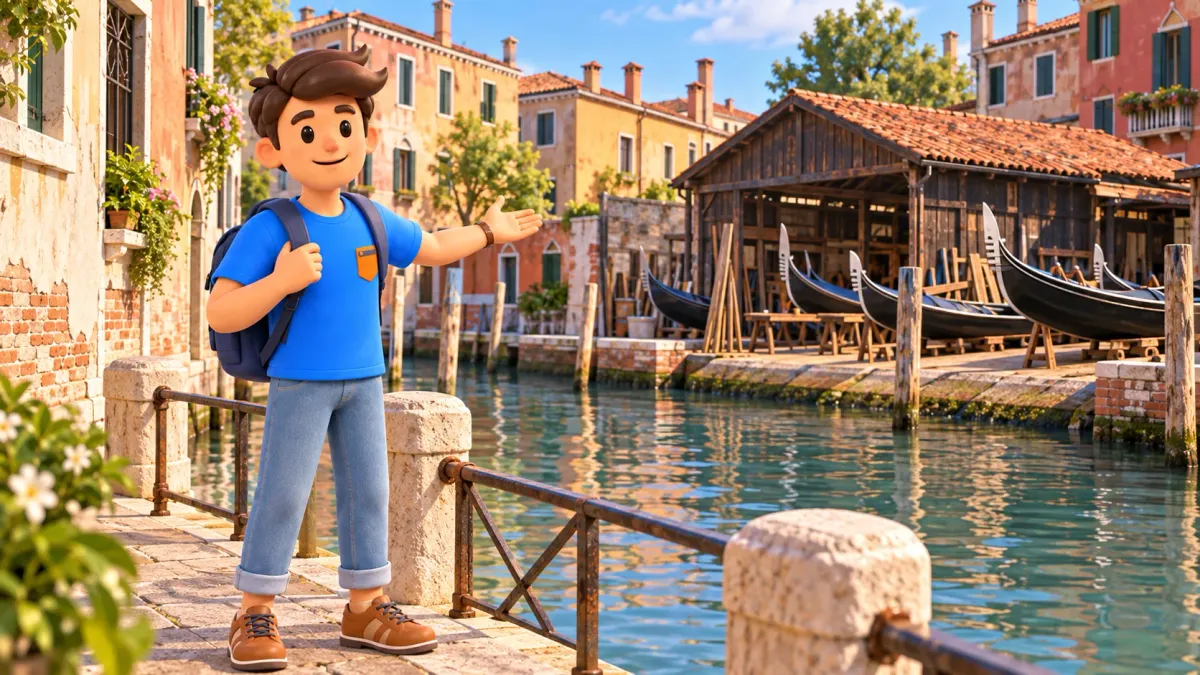
Discover Dorsoduro through squares, small bridges and work beside the water. Start at Campo Santa Margherita, cross the Bridge of Fists towards San Barnaba, then head to San Trovaso and finish on the Zattere. Allow roughly two and a half to three hours at a relaxed pace. Museum visits and entry to the boatyard are outside this plan.
This walk suits a day when you want to see the neighbourhood itself after large collections. There are small historical details, everyday spaces and a change of scale from a campo to the broad Giudecca Canal. A handful of stops gives the morning or afternoon a clear shape without making every stage a lengthy separate tour.
From a meeting place to open water
Begin at Campo Santa Margherita and finish on the Zattere around the Gesuati. Between them, the sequence is Ponte dei Pugni, Campo San Barnaba and the public bank opposite Squero di San Trovaso. That order moves from square life to a small place of craftsmanship, then out towards a much broader waterfront view.
Add your approach from accommodation, the station or a previous activity separately. If you are already near San Barnaba, start there and shorten the first section. Returning to Santa Margherita just to complete the list is unnecessary. Choose a sequence that suits your day and avoids repeating a part of the neighbourhood you have already explored.
Try RoadMe for a personal trip plan developed around your interests, available time and pace. The app makes it much easier to connect this walk with museums, rest and other neighbourhoods than assemble each day from separate sightseeing lists.
You do not have to continue to the Salute and Punta della Dogana this time. Those places offer a different scale and enough of their own experiences. For eastern Dorsoduro, use our separate Accademia-to-Salute walk. This introduction to everyday spaces can end earlier, with a proper pause by the water instead of another compulsory extension.
Allow about two and a half hours
Every duration below is a planning estimate, not an on-site measurement. The framework includes short stops and walking between the main landmarks. It excludes museum admissions, an arranged boatyard visit or a gondola ride. If one becomes your main activity, give it a separate block and reduce the remainder of the outdoor programme.
| Stage | Estimated time | Focus |
|---|---|---|
| Campo Santa Margherita | 25 minutes | The square and everyday life |
| Ponte dei Pugni | 15 minutes | A small historical detail |
| Campo San Barnaba | 20 minutes | An overview and pause |
| Lanes towards San Trovaso | 25 minutes | Walking through the neighbourhood |
| The boatyard view | 20 minutes | Looking from the public bank |
| Zattere | 30 minutes | A Giudecca Canal finish |
| General flexibility | 15 minutes | Short coffee and changes of pace |
The total is 150 minutes. Longer rests or more observation can extend it towards three hours. With less time, begin at San Barnaba and keep the boatyard and Zattere. The shorter version still offers two different impressions: a small canal beside a working yard and broad water at the finish. There is no need to preserve every stop.
Put a sit-down lunch before or after the walk, or add its duration. The short general allowance is not a full restaurant break. Agree on that with companions beforehand: one person’s wish to keep walking and another’s desire for a relaxed meal are easier to reconcile before the route than at every subsequent corner.
Most of the time is spent in public outdoor spaces. Separate costs depend on your breaks, transport and extra visits. Decide which activities you want rather than looking for one universal price for the walk. Buying food or arranging a workshop visit is a personal choice, not a requirement simply because it is available nearby.
Santa Margherita: see a square as a meeting place
At Campo Santa Margherita, look around before choosing what to notice: movement across the space, tables or the different lines of façades. Nearby university buildings help explain its lively character. The actual noise and number of people vary; expect neither the same scene in the morning and evening nor identical conditions every day of the week.
A small freestanding building on the square was created in the eighteenth century for the furriers’ confraternity. This brief detail recalls that urban spaces grew around professions and craft associations as well as palaces and famous artists. One example is enough for the walk, without an inventory of every institution that occupied the surrounding buildings.
You can begin with coffee if you want to settle after travel or a museum. Choose the service to match your intention: a short counter stop and a table for a longer rest fit differently into the morning. Check arrangements before ordering and keep the amount of time you actually want to spend on the square.
With a child, look for the building standing apart from the continuous row or choose an interesting window shape. Adults can each share one noticed detail. A simple task helps you pause and see the square, rather than treating it only as an open area to cross on the way to another name on the map.
Ponte dei Pugni: history in a small detail
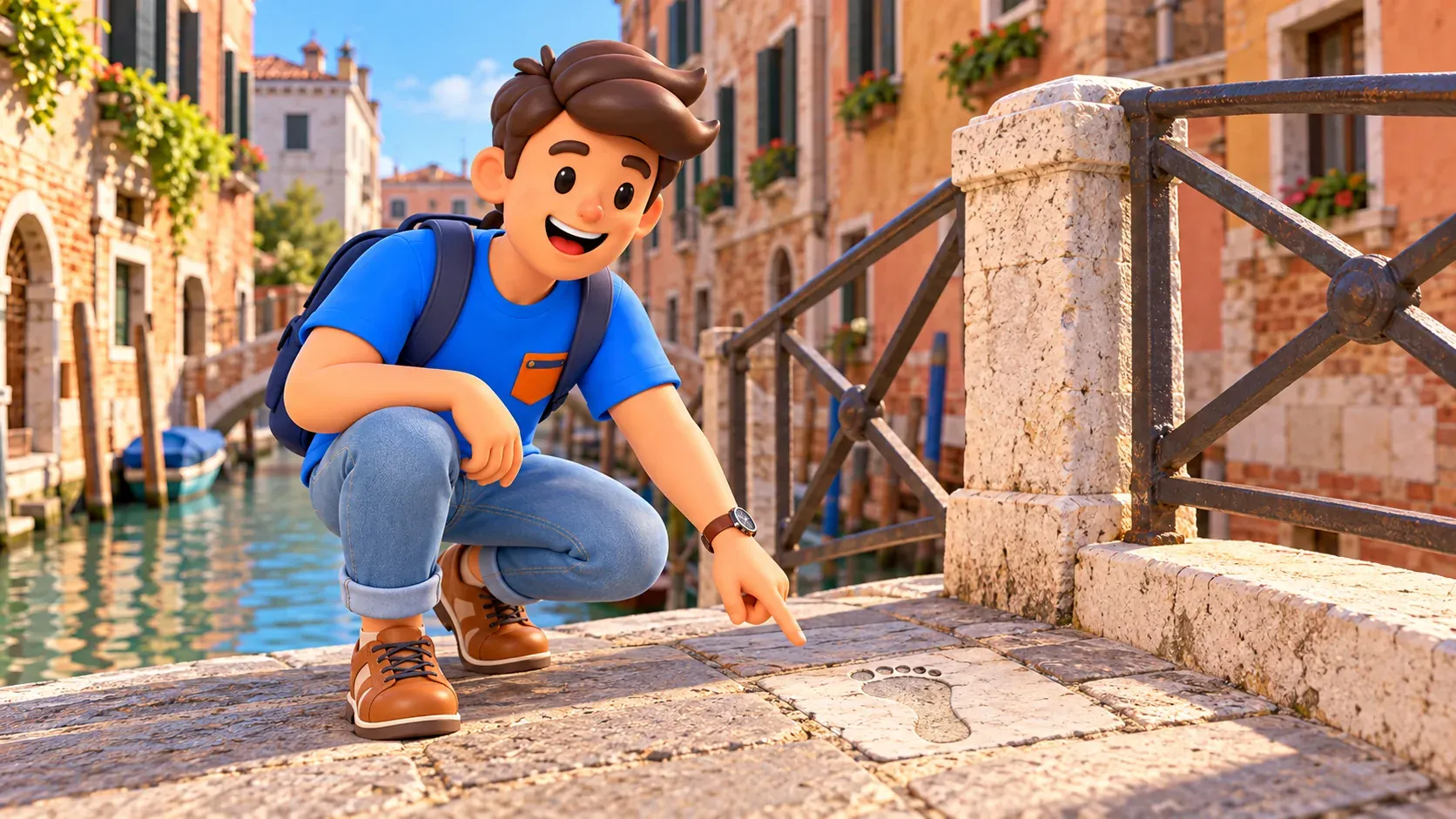
Head to Ponte dei Pugni between Santa Margherita and San Barnaba. Stone footprints sit in the paving near its corners. Its name, Bridge of Fists, relates to former fist-fighting contests between city factions. That short explanation gives a modest crossing a historical meaning without needing a long account of every rivalry or event.
There is no need to recreate a contest or occupy the passage for a long photograph. Look first, take a picture if there is room, then continue. The interest lies in the connection with an ordinary city route: traces of an earlier life remain where residents and visitors now pass as part of their day.
Venice has another bridge with the same name in Cannaregio. For this walk, you need the Dorsoduro crossing near San Barnaba. If saving a map point, check the district as well as the name. It is a useful habit when unfamiliar Italian place names are appearing in your trip plan for the first time.
After crossing, notice the relationship between the water and the nearby square. You do not need a special angle on every façade. One broad view can be enough to connect the neighbouring spaces. Small transitions are part of the experience here, rather than simply the distance separating attractions you feel obliged to collect.
San Barnaba and the lanes towards San Trovaso
Campo San Barnaba offers another overview: open space, the church, exits into lanes and the canal close by. An interior visit is not included. Pause briefly or decide whether this first part is enough. With limited time, you can shorten the remaining stops instead of retaining the original programme in full.
Continue towards San Trovaso using public streets and a current map. The stages are close on a neighbourhood scale, but a straight line on a screen is not a continuous walking route. Check turns while standing to the side, then walk a clear section. That leaves more attention for the city than following a screen continuously.
You do not have to enter every church or small shop along the way. If something interests you, linger and shorten the following pause. One personal discovery is worth keeping. Quiet streets are still places where people live, so leave entrances clear and avoid private courtyards. There is enough to notice from the ordinary public route.
Squero di San Trovaso: look at a working boatyard
Choose the view from the opposite public bank around Fondamenta Nani. The boatyard and nearby church of San Trovaso are separate places. This route concerns the craft yard beside the canal, where boats are built and repaired. Going to the church entrance will not bring you into the workshop. Keep the distinction clear when checking your map.
Look at the relationship between the wooden buildings, yard and slipway. A gondola, often encountered as a finished symbol of Venice, becomes connected with material and labour here. A particular boat, craftsperson or repair stage is not guaranteed when you arrive. The setting itself already gives an idea of the work, even without a visible demonstration.
Entering the yard is not an automatic continuation of the walk. The squero’s own page says interior guided visits can be organised by contacting the operator. If that interests you, establish the conditions beforehand. A normal stop on the opposite bank and an arranged workshop visit are different activities; choose which one you actually want.
If crafts, art or water appeal as the theme of your trip, RoadMe can develop a personal itinerary around those interests and your pace. Using a connected plan for one or several days in the app is much easier than finding a new continuation after every separate stop.
For photographs, leave space for passing people and do not expect a specially prepared scene. Look for a few minutes, choose a detail and continue. With children, ask what makes a boat-repair yard different from an ordinary workshop. The proximity of water helps answer that question without stepping onto the working premises.
Zattere: feel the width of the canal
After the boatyard view, continue to the Zattere on the Giudecca Canal. This is different water from the narrow canal by the squero and from the Grand Canal in eastern Dorsoduro. Giudecca lies opposite. Do not treat that bank as the next pedestrian stop: continuing onto the island requires a separate journey across the water.
Leave time for simple observation. Choose a direction, notice the distance between banks, the boats and the line of buildings opposite. After the small squares, an open view provides a calm finish. You do not need to cover the whole waterfront; the area around the Gesuati already works for a final pause.
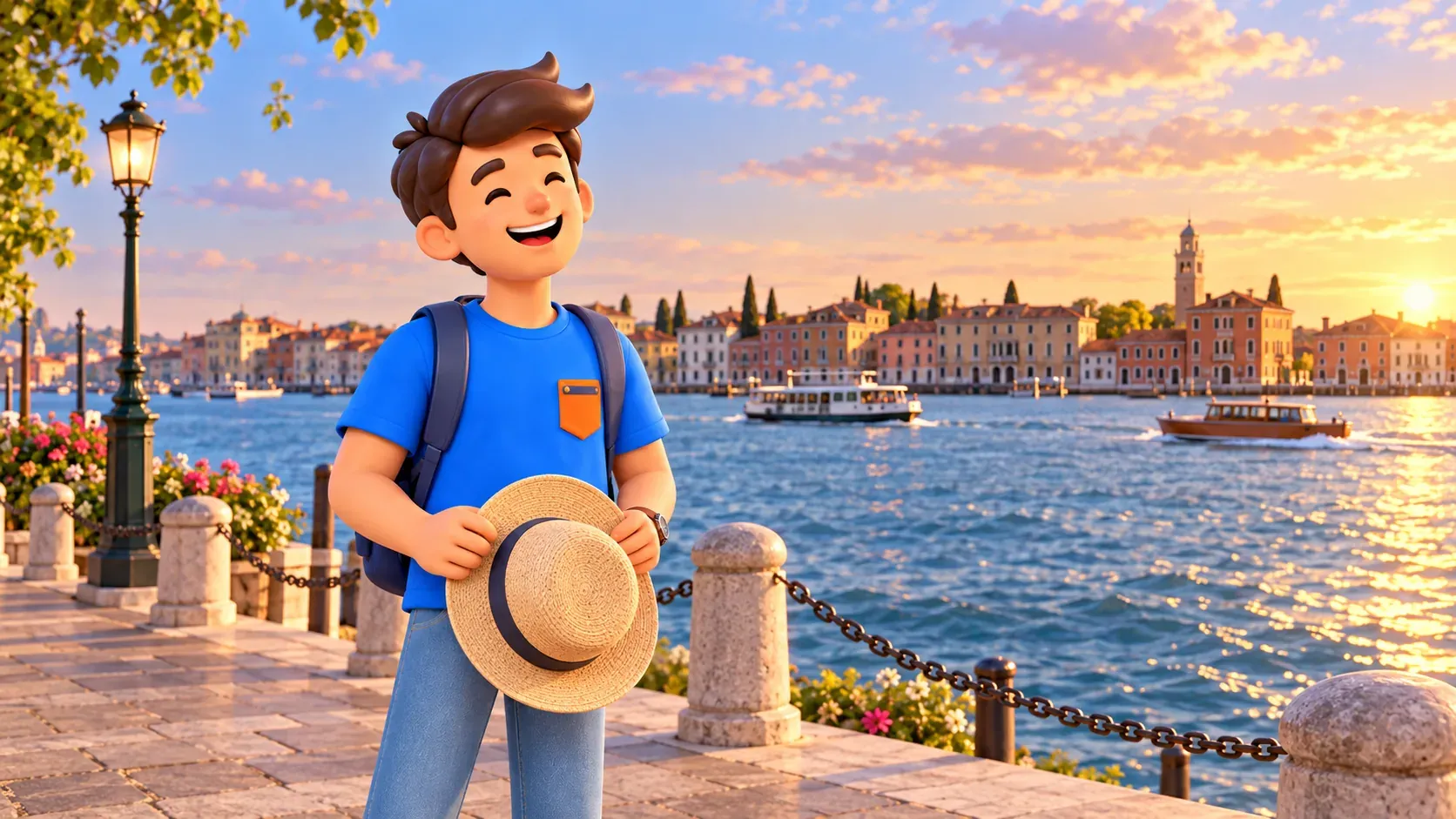
Compare the walk’s three scales: the large starting campo, the small canal-side yard and the broad water at the end. That helps the neighbourhood remain more than a list of names. If taking pictures, choose one for each scale. The photographs will describe the walk rather than repeat the same kind of façade.
If everyone has different energy left, agree on an easy shared finish. One person can walk a little beside the water while another chooses a suitable place to rest, with a clear meeting point. Name a specific landmark rather than the entire long waterfront. A flexible ending helps companions enjoy the same afternoon in different ways.
Choose gelato, coffee or a longer waterfront rest according to what you want and the conditions you find. The plan does not depend on one particular shop or identical opening hours across businesses. If you want to stay at a table, finish here. Dorsoduro does not require another museum programme immediately afterwards.
When to shorten the walk
Heat, rain or wind may change how much time you want by the water. Shorten the Zattere section or pause longer before reaching the canal. Check current city information for high water. This is not a verified step-free route; assess bridges and approaches for your own needs. After the finish, leave your journey to accommodation, a train or a booking as a separate block, checking any actual boat landing and direction. Our two-day Venice neighbourhood plan can help with the next choice, after time to rest.


