
Accademia Bridge to the Salute: Two Hours in Dorsoduro
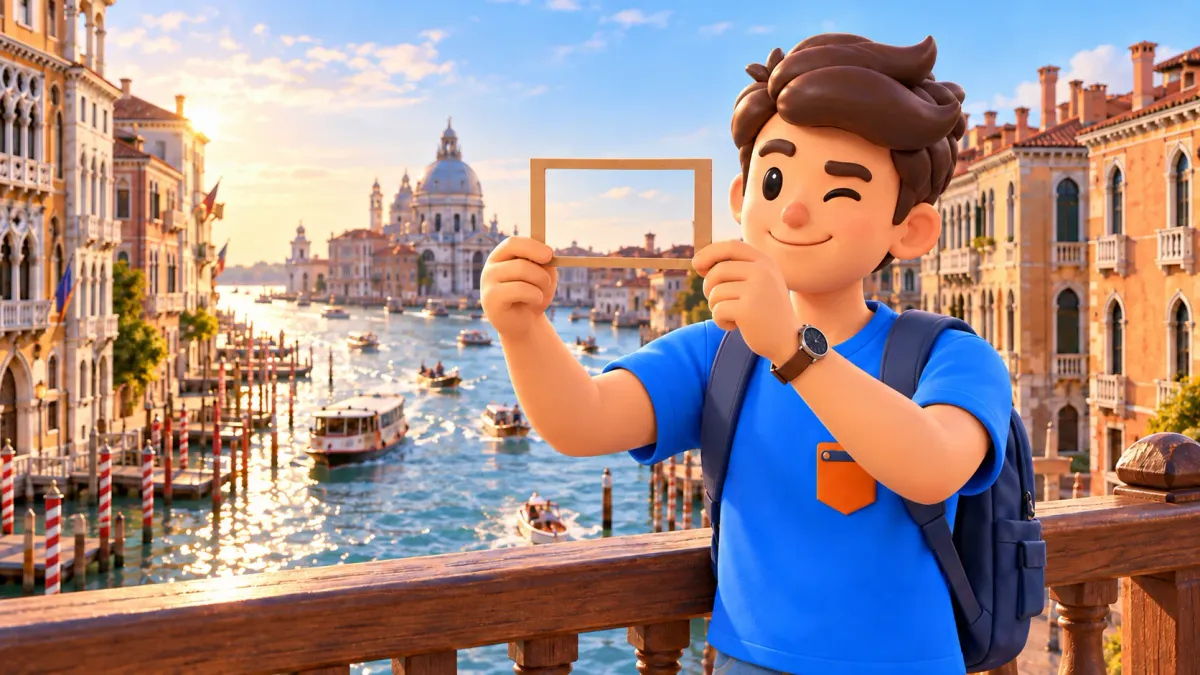
Walk from Accademia Bridge through Campo San Vio, the lanes near the Peggy Guggenheim Collection and San Gregorio to the Salute, finishing outside Punta della Dogana. Allow about two hours for looking around and a short pause. The appeal is the changing scale: a canal panorama, smaller streets, then the basilica’s domes seen close up.
This route covers eastern Dorsoduro. Visits to the Accademia galleries, the Guggenheim or the exhibition rooms at Punta della Dogana need separate time and are outside these two hours. If you already hold a museum ticket, arrange the walk around it and reduce the stops. All durations below are planning estimates, not on-site measurements.
Begin on the Dorsoduro side
First establish which bank you need. Start at the Dorsoduro end of Accademia Bridge, near the Gallerie dell’Accademia. Arriving from San Marco, your crossing can form part of the opening. Already in Dorsoduro, you can climb for the view and return to the same bank. There is no need to cross the canal twice simply to follow a formal route.
Add your journey from the station, accommodation or previous activity separately. The two hours begin when you are at the bridge and ready to look around. If a timed admission follows, allow for reaching its entrance before deciding how much time remains. That gives you freedom to finish at the Salute if the final waterfront stop no longer suits.
Try RoadMe for a personal day and trip plan developed around your interests, time and pace. The app makes it much easier to connect this Dorsoduro walk with museums and other activities than rebuilding the programme around every individual ticket.
Choose your start according to your day and preferred light. Late afternoon can be attractive, but an empty bridge or a particular sunset is never guaranteed. There is no compulsory best hour. Decide how long you want outdoors, then consider the forecast and your remaining plans rather than making one photograph the condition for enjoying the route.
A workable two-hour framework
Take in the Grand Canal from the bridge, then turn towards San Vio. Follow public lanes near the Guggenheim towards San Gregorio and the Salute. After looking at the basilica outside, continue to Punta della Dogana. These are orientation stages; check individual turns on a current map rather than memorising a complete street list.
| Stage | Estimated time | Focus |
|---|---|---|
| Accademia Bridge | 20 minutes | A first broad view |
| San Vio | 20 minutes | A smaller scale and closer details |
| Lanes towards San Gregorio | 20 minutes | Walking without museum admission |
| Salute exterior | 25 minutes | Architecture and brief history |
| Punta della Dogana | 20 minutes | An open waterfront finish |
| Coffee and flexibility | 15 minutes | A short pause and changes of pace |
The total is 120 minutes, not a sequence of compulsory timed appointments. If the bridge is busy, spend less time there and look more closely later. A long café stop needs extra time or a shorter finish. Ending at the Salute still preserves a clear story: from a distant dome to the basilica itself.
Do not try to include all Dorsoduro in the same window. San Trovaso, the western squares and a long Zattere promenade belong to a different programme. This compact eastern section is enough. After a large museum visit, simplify further to bridge, basilica and water; on an otherwise open day, give the smaller spaces between them more attention.
Accademia Bridge: see where you are going
Find the Salute’s domes along the Grand Canal perspective. They connect the beginning and end: you see the broad shape of a later stop before approaching it through the neighbourhood. Pause where there is room to keep moving past you. You do not need to join the tightest group to obtain one central photograph.
The bridge’s wooden appearance has an interesting history. Engineer Eugenio Miozzi’s twentieth-century crossing was conceived as temporary; later maintenance helped preserve its familiar place in the city. It illustrates how a practical solution can become part of Venice’s lasting identity. That does not mean every visible component is original to the first structure.
The bridge and the Gallerie dell’Accademia are separate experiences. Looking from the crossing does not require a museum visit, and the museum’s proximity does not make it a few-minute addition. If Venetian painting is your main purpose, give it a separate block and keep the outdoor walk shorter. Choose attention before adding destinations.
Before leaving, select one thing to remember: the canal’s curve, the rhythm of façades or the dome’s silhouette. You do not need to read a long account while taking in the whole panorama. A broad impression now can be compared with the close view at the Salute. That simple change gives the walk its continuity.
For photographs, try three different subjects: an opening panorama, one close detail in a lane and a wide finish by the water. The pictures will differ in meaning rather than merely camera position. This small idea can help you take the camera out less often while still keeping a clear visual account of the afternoon.
San Vio: notice the smaller city
Descend on the Dorsoduro side and head through the neighbourhood towards Campo San Vio. Attention shifts from the grand perspective to things closer at hand. Look at the square’s edges, passages and openings towards water. There is no single correct spot for a photograph: the point is to notice how the space changes after the bridge.
This is a good place to slow down. As a pair, choose one detail each, then show it to the other person. With a child, compare the broad canal at the start with a narrower waterway along the route. A small observation task needs neither specialist knowledge nor a complete history of every house.
Continue through public streets, keeping doors and exits clear. Small spaces may look inviting without being public places to explore. The ordinary route provides enough of a neighbourhood impression. If you separate briefly for photographs, agree on a visible meeting point and time; “by the canal” is too vague for an easy reunion in Venice.
Near the Guggenheim and San Gregorio
The route continues through lanes near the Peggy Guggenheim Collection. Treat the museum as an orientation point and a possible separate visit. Its garden, collection and canal view belong to the museum experience; walking near the entrance does not automatically include access to them. For this outdoor route, continue on the public streets.
Do not expect a continuous Grand Canal promenade. Two points may look directly connected along the water on a map, while the actual pedestrian route turns through lanes and over small bridges. Keep the direction towards San Gregorio and the Salute, rather than trying to stay beside the nearest visible stretch of the main canal.
If you decide to add the Guggenheim, check the calendar: the museum’s information, reviewed on 17 October 2026, lists Tuesday as closed. That affects a collection visit, not the ordinary outdoor walk through the area. You can place those two experiences on different days instead of forcing both into the same short window.
This section can accommodate coffee while the basilica and water are still ahead. Decide before ordering whether you want a quick counter stop or table service. The fifteen-minute general allowance does not cover a long lunch. If rest matters more, add time and shorten the final section rather than recovering the minutes through a rushed walk.
The Salute: from silhouette to architecture
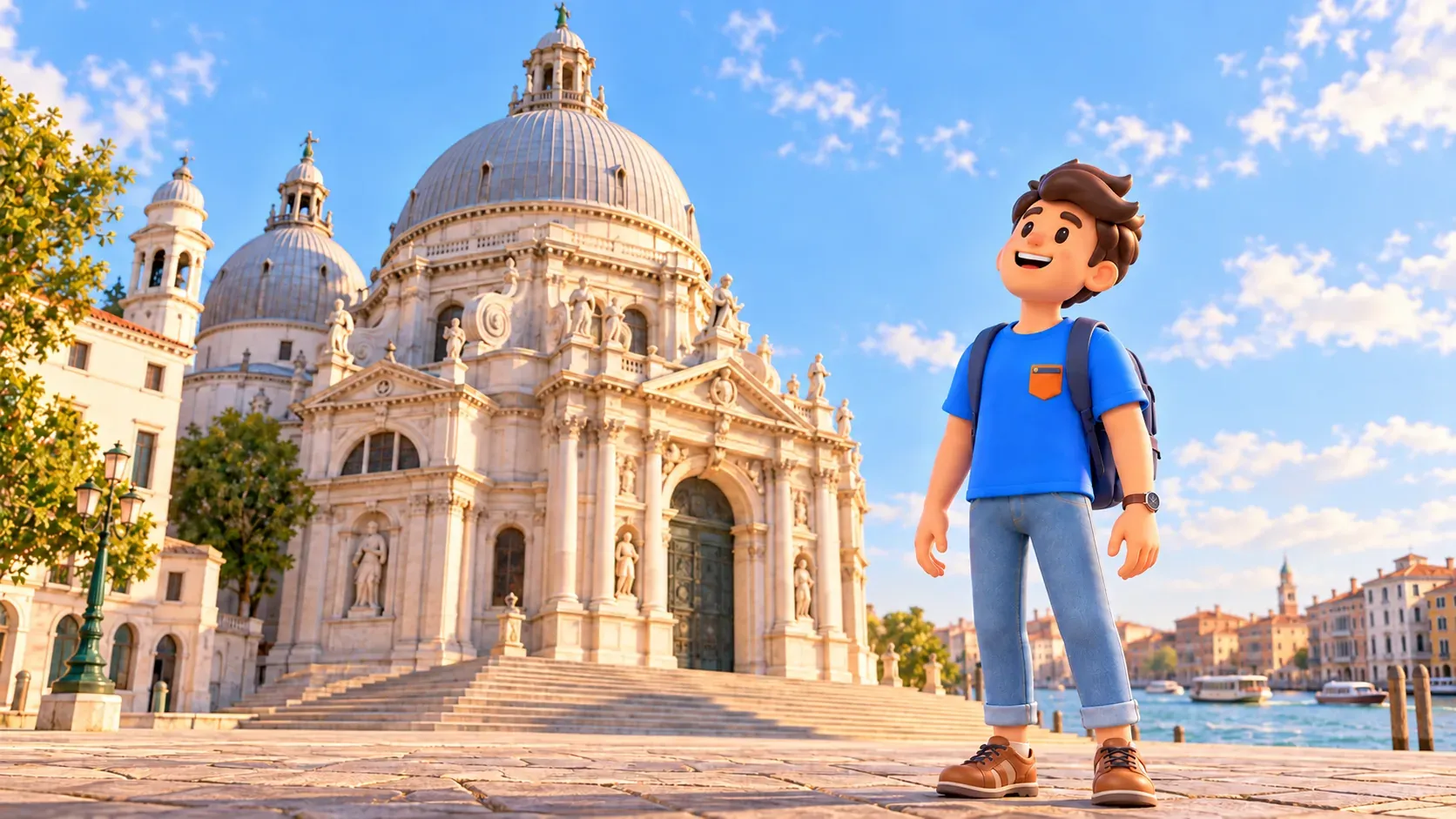
Approach Campo della Salute through the San Gregorio area. The dome that was a distant reference from the bridge now belongs to a large building beside you. First choose a comfortable position for the whole view, then look at the steps, stone forms and a few sculptural details. Pause where the route remains clear for others.
The basilica was conceived as a votive church in connection with the seventeenth-century plague. That brief context changes the familiar silhouette into a reminder of the city’s shared anxiety and hope. You do not need every date or decorative detail to understand its historical value. Connecting the building’s scale with its purpose is already meaningful.
An exterior stop and going inside are separate choices. The basilica has a midday break, while the sacristy and additional visits have their own conditions. As checked on 17 October 2026, the official site distinguishes these arrangements. Before entering, check the part you want; reaching the steps does not mean access to every room and terrace.
If this walk makes you want more art or another neighbourhood, RoadMe can develop a personal plan for your whole trip around those interests and your pace. It is much easier to connect those ideas into a practical itinerary in the app than start planning again at every entrance.
You do not have to enter to complete the walk. Stay outside, look towards the water and save the church for another day if that suits your attention. If the interior becomes your main activity, reduce the stop at the point. Choosing one experience deliberately keeps a short afternoon more relaxed than preserving every original item.
Punta della Dogana: finish with open water
Continue to the exterior of Punta della Dogana. The former customs complex recalls the trading role of this location at the Grand Canal entrance; its rooms now serve contemporary art. An exhibition is a separate programme. For this walk, focus on the outside and the views towards San Marco and San Giorgio Maggiore.
Choose a direction and spend a few minutes without the screen. After the smaller lanes, the width of the water and distance between banks become clearer. Compare this with the bridge view: there, the dome ended the canal perspective; here, the city opens in other directions. A brief unhurried look can become the most memorable stop.
Before leaving, consider what you enjoyed most: architecture, small streets or open water. That is useful information for the next days. The first suggests a separate church or museum visit, the second another neighbourhood, the third a water-based part of the trip. You do not have to decide everything while standing at the point.
Choose sunset plans according to weather and date, keeping the option to finish earlier. Wind may shorten a waterfront pause; rain leaves exposed sections to consider. Check current city information for high water. This is not a verified step-free itinerary, so bridges and approaches need individual assessment with mobility limitations. Leaving the point also takes time: decide whether you return towards Accademia or continue elsewhere, and check any actual boat journey separately. Our first-day Venice plan can help place the next activity after a proper pause.


