
Venice for free: a walk through views, squares and bridges
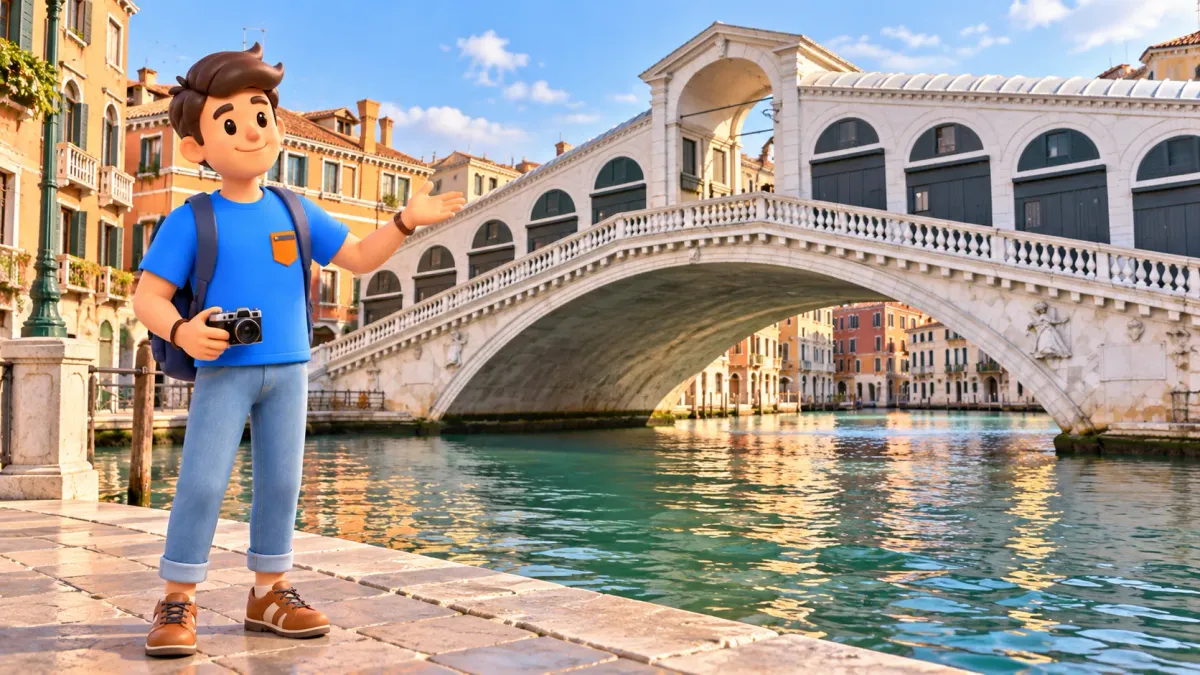
See Venice without attraction tickets on a purposeful walk from Rialto through Campo San Polo, the Frari, Campo Santa Margherita and San Barnaba to the Accademia Bridge. Public viewpoints, facades and changes in the city’s spaces provide the interest. Entering any building remains a separate decision, with its own visiting conditions.
Allow approximately three hours without a full lunch. Start at the western, San Polo foot of the Rialto Bridge and finish after crossing the Accademia Bridge to the San Marco side, towards Santo Stefano. Travel from your accommodation and back from the finish is additional. A two-hour option below uses a different start and finish.
What a free walk includes
You do not need attraction admission tickets for this sequence: it follows public streets and squares, looks at buildings from outside and crosses a bridge. Transport to the start, food, drinks, toilets and shopping have separate conditions. This plan offers several hours without attraction spending; your overall travel budget still needs its own calculation.
Try RoadMe to work out a personal plan for your whole trip around your interests, dates, budget and pace. It makes combining ticket-free walks with visits you actually want to spend time and money on much easier.
The city access fee is separate from museum admission too. As checked on 17 October 2026, the official portal says the 2026 trial has ended and the fee is not applied from 27 July. That does not promise unchanged rules in future years. Check the arrangements for your travel date; choosing a walking itinerary does not override municipal requirements.
| Part of the outing | Allowance |
|---|---|
| All external walking | 60 minutes |
| Looking around six main stops | 75 minutes |
| Unhurried breaks | 30 minutes |
| Finding your way and allowing for foot traffic | 15 minutes |
The total is 180 minutes, an editorial estimate rather than a measured track. Time around bridges includes their approaches and nearby public banks, not prolonged standing halfway up a staircase. Add coffee or lunch if you wish, extending both the time and spending allowance. No purchase is a condition of following the main sequence.
Rialto: begin with a working waterway
Meet at the western foot of Rialto, on the San Polo and Riva del Vin side. Allow about 25 minutes for the bridge area and accessible public views nearby. You do not need to cross to the opposite bank to begin this route. If you approach from San Marco, your crossing can become a separate introduction before the timed walk.
The stone Rialto Bridge was built in the late sixteenth century to Antonio da Ponte’s design. Its rows of shops recall a connection with commerce as well as movement. Compare the broad arch, rising sides and central structure with a narrow canal in a neighbouring street. Venice can change scale within a few steps, without needing another admission ticket.
Look at the canal as transport space: boats approach buildings, goods move between water and land, and passenger vessels pass the facades. You do not have to identify every boat or wait for a photograph without people. One observation is enough: this waterway participates in ordinary city life, as well as forming an appealing background.
The nearby market can provide a separate morning theme, but its trading hours are not a condition of this walk. The sequence remains meaningful when stalls are closed. For a visit specifically centred on trading activity, use the separate Rialto morning route and give that interest its own time rather than adding it invisibly here.

San Polo and the Frari: open space and a large facade
From Rialto, take public streets through the Sant’Aponal area towards Campo San Polo. The sense of space changes as narrow passages open into a substantial campo. The square and district take their name from the church dedicated to St Paul. Allow ten minutes for this introduction, without entering the church or relying on an event happening in the square.
Notice the small streets entering the open space. Choose one exit and compare its width with the campo. Then look at the placement of doors and windows. This is a way to read the city without turning every stop into a lecture. You do not need to label each feature medieval: Venice has changed and continues to change.
Continue towards the Basilica di Santa Maria Gloriosa dei Frari. Ten minutes outside gives you time to notice the restrained lines of Franciscan Gothic architecture and circular windows framed in pale stone. Begin with the overall shape, then choose a single detail. Understanding a facade often becomes easier when you stop trying to absorb every feature simultaneously.
An ordinary tourist visit inside the Frari is paid. Looking at its exterior does not include its paintings or let you examine them through the entrance. If the facade makes you want to go inside, allow a separate visit and check admission. Worship should not be treated as a device for obtaining a free sightseeing tour in a working church.
Campo Santa Margherita: change the pace
From the Frari, continue through the San Pantalon area to Campo Santa Margherita. San Pantalon serves as an exterior landmark, without an additional indoor visit. You are moving into Dorsoduro, where monumental buildings can be compared with everyday activity around shops and venues. Every worthwhile impression does not require finding another visitor entrance.
Allow ten minutes of focused looking around Campo Santa Margherita. Notice the relationship between open space and its edges: buildings of different heights, entrances to smaller streets and rooflines. Let the square connect ordinary activities rather than counting more monuments. No time of day guarantees a silent, empty scene, and a busy public square is still a living part of Venice.
You can take part of the overall 30-minute break allowance around this part of the route if an appropriate place and public bench are available. Café tables belong to the venue’s service. Sitting down for coffee is an ordinary paid pause, not a condition of seeing the square. Neither a fixed cheapest cup nor a vacant table is promised.
A walk without tickets benefits from a manageable scale. You have already seen the Grand Canal, a large campo and a Gothic facade; now give those impressions time to settle. Extra minutes do not have to become another museum. The difference between two nearby squares can be more memorable than a list of names passed at speed.
San Barnaba and Accademia: finish beside the water
Leave Campo Santa Margherita via Rio Terà Canal towards Ponte dei Pugni, then Campo San Barnaba. The bridge’s name relates to historical fist fights between rival groups in the city. Treat this as a brief story attached to the place, without reenacting a contest or holding up people using a narrow crossing in their everyday journeys.
Campo San Barnaba receives five minutes of focused attention. The church’s classical facade and the open space offer another change of scale. An exhibition inside the building is not included in the free walk. If a display or shop attracts you, distinguish the choice to enter from the freedom to walk across the public campo.
Continue through Sotoportego del Casin dei Nobili and the Toletta area towards Ponte delle Maravegie, then Accademia. This is a route through city passages, not a continuous Grand Canal promenade. You cannot follow the water’s edge throughout: canals alternate with streets, bridges and squares. Check individual turns on a current map rather than relying on an illustration for navigation.
Allow 15 minutes around the Accademia Bridge for views and the crossing. Ascend from Dorsoduro and finish after descending to the San Marco side, towards Santo Stefano. Notice the canal perspective towards the Salute dome as you cross. Save any longer pause for a permitted place where you will not obstruct other people, rather than settling on the bridge itself.
This crossing carries an interesting history of a temporary solution: Eugenio Miozzi proposed a wooden bridge, which was subsequently retained and maintained. Its appearance does not mean untouched medieval timber survives before you. Compare its materials and ascent with Rialto at the start. The two crossings show different ways of linking the banks of the same urban waterway.
Keep the walk comfortable
RoadMe makes working out a personal itinerary for the whole stay much easier, with your interests and pace in mind. Try connecting these walking days with chosen museum visits and rest, so unnecessary journeys between neighbourhoods take less of your holiday.
Bridges and streets remain residents’ everyday routes. Keep passages clear, avoid spreading belongings on stairs and do not turn canal banks, monuments or wellheads into picnic places. Look for designated seating for rest. City rules also prohibit feeding pigeons and gulls; watching them does not require offering food or interrupting other people’s use of a square.
This outdoor plan suits suitable weather and a pace comfortable for you. Rain or high water may be a reason to shorten it or choose another time. Do not budget a nearby paid museum as guaranteed free shelter. For a pushchair or mobility needs, assess bridges and steps beforehand; this route is not presented as step-free.
A morning window such as 9am–noon leaves lunch after the finish. That is a scheduling example, not a promise of empty streets or a particular light. A later start changes the atmosphere while preserving the sequence of exterior stops. Local notices and actual weather matter whichever hour you choose, especially if another booking follows the walk.
Decide before setting out what happens after Accademia. You finish across the canal from Dorsoduro, and getting home may require additional walking or paid transport. The three hours do not include delivery back to the starting point. Ending near something you genuinely want to do next is often more useful than extending the sightseeing list.

A shorter two-hour version
Start directly at Campo San Polo and finish at Campo San Barnaba. Follow San Polo, the Frari exterior, the San Pantalon area, Campo Santa Margherita, Ponte dei Pugni and San Barnaba. Allow 35 minutes for external walking, 45 for looking, 25 for rest and 15 for finding your way: 120 minutes without Rialto, Accademia or a full meal.
An independent walk does not require booking a tour. If you choose an offer called a free tour, read that organiser’s conditions separately: a guided meeting and its payment arrangements differ from walking freely on public streets. This itinerary includes no guide, group departure time or promise that someone else’s service automatically forms part of your outing.
Leave further exploring for another day if you wish. For an interest in open water, consider the Accademia to Salute walk. Today already has a complete thread: a trading waterway, spacious campi, a church exterior and another crossing. Its value comes from attention to Venice rather than the number of tickets bought along the way.


