
Two Days in Bruges: the Classic Centre and a Quieter Side
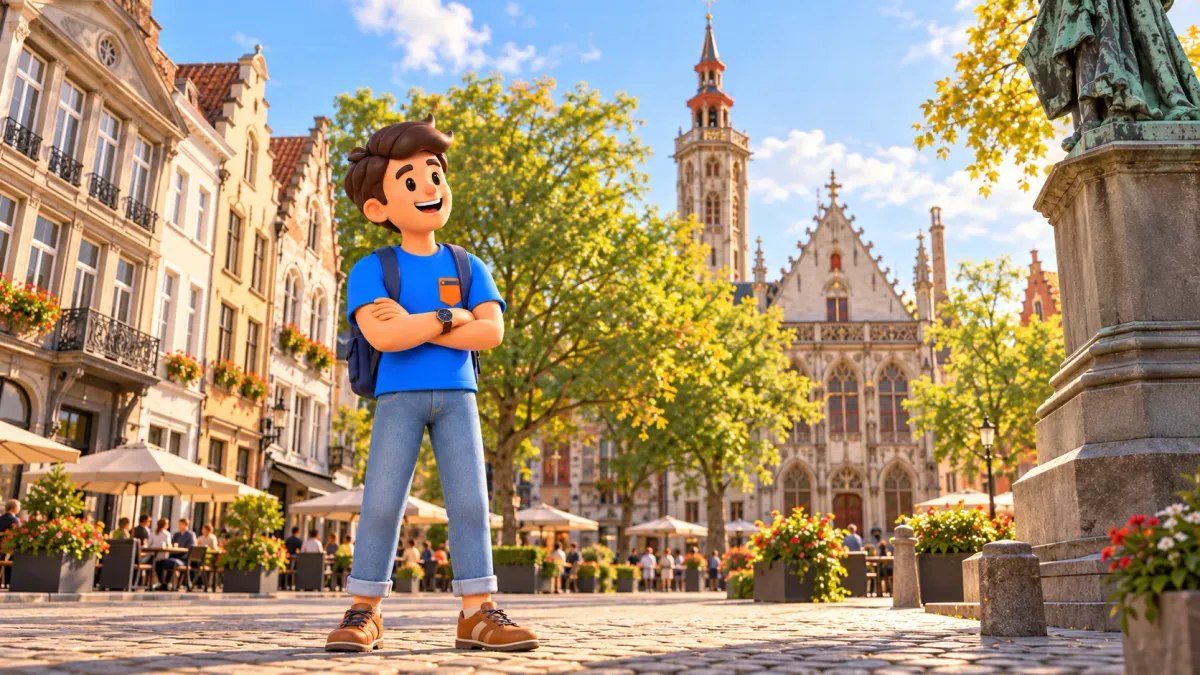
Two days in Bruges give you room to change the character of the visit. Spend one day with the central squares, canals, Beguinage and Minnewater. Use the other for the former port around Jan van Eyckplein, the streets of Sint-Anna and the windmills on the eastern ramparts. Choose one neighbourhood museum or the Adornes Estate for a more focused encounter with the city.
Both suggested days run from approximately 10:00 to 16:00, with lunch and pauses included. These are planning estimates, not fixed appointments. The first finishes in the southern centre; the second returns towards Jan van Eyckplein. Travel from your accommodation or the railway station, luggage arrangements and the final journey home need separate time.
Give each day its own purpose
The first day builds a sense of the city through its best-known public spaces. The second follows a different thread: trade, neighbourhood life and the green edge of the old town. Keeping those two areas together limits unnecessary crossings and makes an overnight stay useful even if you prefer relatively few paid visits.
Try RoadMe to build a personal two-day trip plan around your interests, available time and preferred pace. Organising the different walks and visits is much more convenient when the app brings them together in a programme shaped for you.
Call the days A and B until you have checked the calendar. They can be reversed. If the Adornes Estate is your chosen interior during a Saturday–Sunday stay, put the neighbourhood day on Saturday: the estate closes on Sundays and public holidays. The Folk Museum provides another choice, but its weekly closing days differ by season.
Allow roughly 2.5–3.5 kilometres for day A and 3.5–4.5 kilometres for day B, including moving around the squares and outdoor stops. These are editorial distance estimates rather than a GPS-measured route. Add your journeys to each starting point, and shorten a section if a longer lunch or slower walking pace suits you better.
Day A, 10:00–12:15: the two squares and the water
Start at Markt and give it about 40 minutes. The Belfry provides the strongest landmark, while the stepped gables and Provincial Court invite you to look around the whole square. Begin with the overall arrangement and then choose one or two details. You will remember more than if you spend the stop trying to identify every frontage.

Follow Breidelstraat to Burg, allowing the next 40 minutes for the short connection and the square. This has long been a centre of civic power. The Gothic Town Hall, built between 1376 and 1421, anchors the setting; surrounding buildings show how different periods contributed to the same public space. Include the Basilica of the Holy Blood from outside.
At around 11:20, leave through Blinde-Ezelstraat towards Vismarkt and continue through Huidenvettersplein to Rozenhoedkaai. The Fish Market’s classical colonnade dates from 1820, adding another architectural period to the morning. The route then opens towards the canal at Rosary Quay, whose name recalls rosaries once sold there.
Continue along the Dijver, letting the waterside walk carry you towards the museum quarter by about 12:15. The morning includes brief observations and photographs, not tower climbs, museum galleries or a boat trip. If an interior is especially important to you, give it a separate time block and remove another section instead of squeezing it in.
Day A, 12:15–16:00: lunch and a southern finish
Reserve approximately an hour for lunch around the museum quarter. Staying nearby avoids turning a break into a cross-city detour. Choose a seated meal or something simpler according to your appetite and budget; the timetable does not depend on finding a particular table or receiving an order at a guaranteed time.
Afterwards, use about 45 minutes for the Church of Our Lady’s exterior and the Hof Arents and Bonifaciusbrug setting, if public access is comfortable. Bonifaciusbrug is among Bruges’ younger bridges despite its historic-looking surroundings. If the approach is crowded or a garden gate is closed, stay on the public streets by the Dijver. Crossing the bridge is optional.
Head through Mariastraat and Wijngaardstraat towards the Beguinage, allowing about half an hour for the connection. Give the communal courtyard another half-hour if it is open. Founded in 1245 as a community of devout laywomen, it remains a residential place. Walk in silence, respect private doorways and treat the garden as part of a lived-in setting.
The courtyard visit is free, but the gates have opening hours. Check the calendar for your date rather than assuming evening access. If the gate is closed, observe the entrance and surrounding waterside spaces before continuing towards Minnewater. This outdoor plan does not require entry to the church or an exhibition.
The final hour, approximately 15:00–16:00, belongs to the lake, nearby park and a rest. Water and trees provide a different ending from the morning’s squares. Finish in this southern area rather than returning to Markt merely to close a loop. If you need the railway station afterwards, add time to reach it and your platform.
An overnight stay leaves space between the walks
There is no compulsory evening programme. Have dinner near where the day naturally finishes or return to your accommodation for a break. If you want another short look at a canal or square later, choose somewhere that fits your actual plans. Two days do not need to become two full days followed by an extra sightseeing shift.
The useful difference is the fresh start next morning. You can leave the central landmarks behind for a while and approach the city through smaller streets, a former port and the ramparts. That change of setting is the reason for the second day, rather than repeating the first with more attractions added.
Day B, 10:00–11:00: from the former port to Sint-Anna
Begin at Jan van Eyckplein, allowing around half an hour to look at the square and canal. This area once formed a busy port where merchants and goods gathered. The Toll House and nearby historic buildings give that trading story a visible setting. Keep the history in mind as you look at the water and the scale of the surrounding streets.
Bruges was an important trading hub between the thirteenth and fifteenth centuries. Here, that broad history becomes easier to imagine than it does from a list of dates. You do not need to tour every merchant building: one well-chosen observation is enough before setting off towards Sint-Anna.
Allow the next half-hour to walk towards the neighbourhood and the exterior of St Anne’s Church. The aim is to notice the change from central civic spaces to a different pattern of streets and houses. This area is often described as quieter Bruges, but that does not guarantee empty lanes or silence throughout your visit.
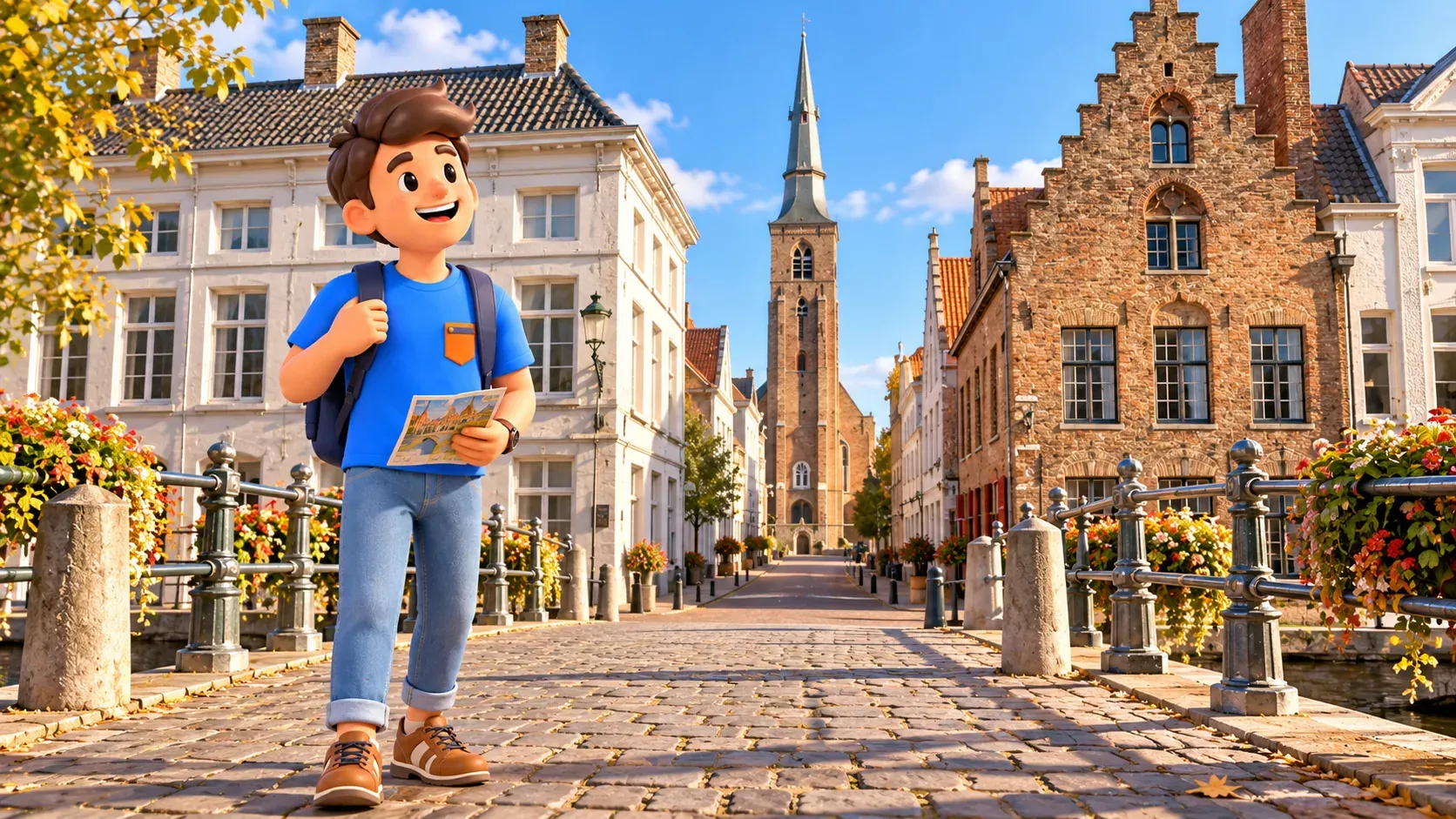
Day B, 11:00–12:15: choose the Folk Museum or Adornes
For everyday life and material culture, choose the Volkskundemuseum, the Folk Museum. Restored seventeenth-century workers’ houses contain displays interpreting Bruges in the nineteenth and early twentieth centuries, including a classroom, workshops and shops. The age of the houses and the period represented by the displays are different parts of the story.
The museum normally opens from 09:30 to 17:00. From 1 April to 2 November it closes on Mondays; from 3 November to 31 March it closes on both Mondays and Tuesdays. It closes at 16:00 on 24 and 31 December, remains closed on 25 December and 1 January, and closes at 12:30 on Ascension Day.
Choose the Adornes Estate instead if a family history and a chapel interest you more. This private fifteenth-century estate was founded by the Adorno family from Genoa; the Jerusalem Chapel was consecrated in 1429. The visit links the chapel with the family story. Do not assume that every private area is included or freely accessible from the street.
From October to March, Adornes opens Monday–Saturday, 10:00–17:00. From April to September, weekday hours are the same and Saturday extends to 18:00. It closes on Sundays and public holidays, and tickets are sold at reception. Photography inside the buildings is prohibited, so keep your camera away for the interior visit.
The suggested 75 minutes is a planning allowance for either choice, not an official visit duration. Do one of them with attention, then preserve lunch from approximately 12:15 to 13:15 in the neighbourhood. If neither is open, keep the street walk and take a longer break, or reverse the two days where the calendar allows.
Let RoadMe develop a personal itinerary around the experiences you care about, from neighbourhood history to architecture and green walks. Keeping those choices within one trip plan makes it easier to organise two days at a pace that suits you.
Day B, 13:15–16:00: the gate and windmills
After lunch, walk towards Kruispoort and the eastern ramparts, allowing about 45 minutes with observations. The surviving gate dates from 1400, following earlier structures on the site. Looking at the gateway before reaching the green edge helps connect the defended city with the much more open setting beyond its central streets.
Spend roughly 14:00–15:00 around the mills on Kruisvest, with time to rest. Four windmills remain along this stretch. The city’s mill tradition reaches back to the thirteenth century, but the surviving mills should not all be dated to that period. Sint-Janshuismolen, for example, dates from 1770 and remains in its original position.

The main plan views the mills from outside. It does not rely on an interior opening or on machinery working in a particular wind. Take in their relationship with the ramparts and the surrounding space rather than rushing between them. The last hour allows a return towards Jan van Eyckplein through the neighbourhood and canal streets, including pauses.
Keep the plan comfortable when conditions change
In rain or strong wind, reduce the exposed rampart section and preserve your chosen interior and lunch. On a Monday, Adornes may be an option when the Folk Museum is closed, provided it is not a public holiday. For a winter Tuesday, remember that the Folk Museum also closes that day. Check the exact dates before deciding the order.
Cobbles, kerbs and slopes require care. The Folk Museum’s first floor is reached by stairs; assistance is indicated at its alternative entrance, and its toilet is not wheelchair accessible. At Adornes, narrow doors and courtyard paving limit access, with accompaniment and advance contact advised. Neither this itinerary nor the historic neighbourhood should be treated as a universally step-free route.
If your stay becomes shorter, use the one-day Bruges itinerary or the two-hour first walk rather than compressing both days. Keep departure arrangements separate from the sightseeing finish. The best use of the extra day is having time for a different side of Bruges and room to notice it.


