
One Day in Bruges: a Relaxed Walk with Time to Explore

One day in Bruges works well when you give it a clear shape: begin by the water at Minnewater, visit the Beguinage, choose one museum or tower climb, then continue through the canals to Burg and Markt. A proper lunch and a few pauses belong in the itinerary. You can discover the city’s different settings without filling every hour with an admission ticket.
This plan starts and finishes at Brugge railway station. The example day runs from 09:30 to around 17:00, including the return walk, with approximately 4–5 kilometres on foot. Times and distance are planning estimates, not measurements made on location. Your train journeys, boarding allowance and any luggage arrangements sit outside that window.
Choose the visit that will shape your day
The main version includes Museum Sint-Janshospitaal, or Museum St John’s Hospital, before lunch. Choose it for a combination of historic architecture, art and the history of care. If a view across the rooftops interests you more, use the Belfry alternative below and leave out the museum. Both visits cost extra; this itinerary does not require you to book both.
Try RoadMe to develop a personal day plan around your interests, available time and preferred pace. The app makes arranging a Bruges visit much more convenient, bringing your chosen experiences and walking route into a programme that fits you.
Choose the interior before deciding your timings, because its opening day or reserved slot is the day’s main fixed point. The museum normally opens from 09:30 to 17:00 and closes on Mondays, with Easter Monday and Whit Monday exceptions. The Belfry involves 366 stairs, so the museum or an outdoor day may be a better fit if climbing is unsuitable.
There is a specific autumn exception: the Belfry is closed for maintenance from 19 to 22 October 2026 inclusive. The hospital museum is normally available on Tuesday 20 to Thursday 22 October; Monday 19 October is also its regular closing day. For that Monday, keep the outdoor programme rather than relying on either interior.
09:30–10:45: arrive by the lake, then enter the Beguinage
Leave the station on the Centre side, at Stationsplein. Head towards the southern ramparts and Minnewater, using Begijnenvest and the Minnewaterbrug area as your orientation points. Allow the first 45 minutes for walking, finding your bearings and pausing by the lake. This is sightseeing time, not simply a transfer that needs to be finished as quickly as possible.
Minnewater sits at the southern edge of the historic centre, with the park nearby and the Beguinage a short walk away. The setting provides a different introduction from going straight to the largest square. Notice the water, the trees and the change in scale as you approach the older streets. Stories associated with the lake’s romantic name belong to local legend.
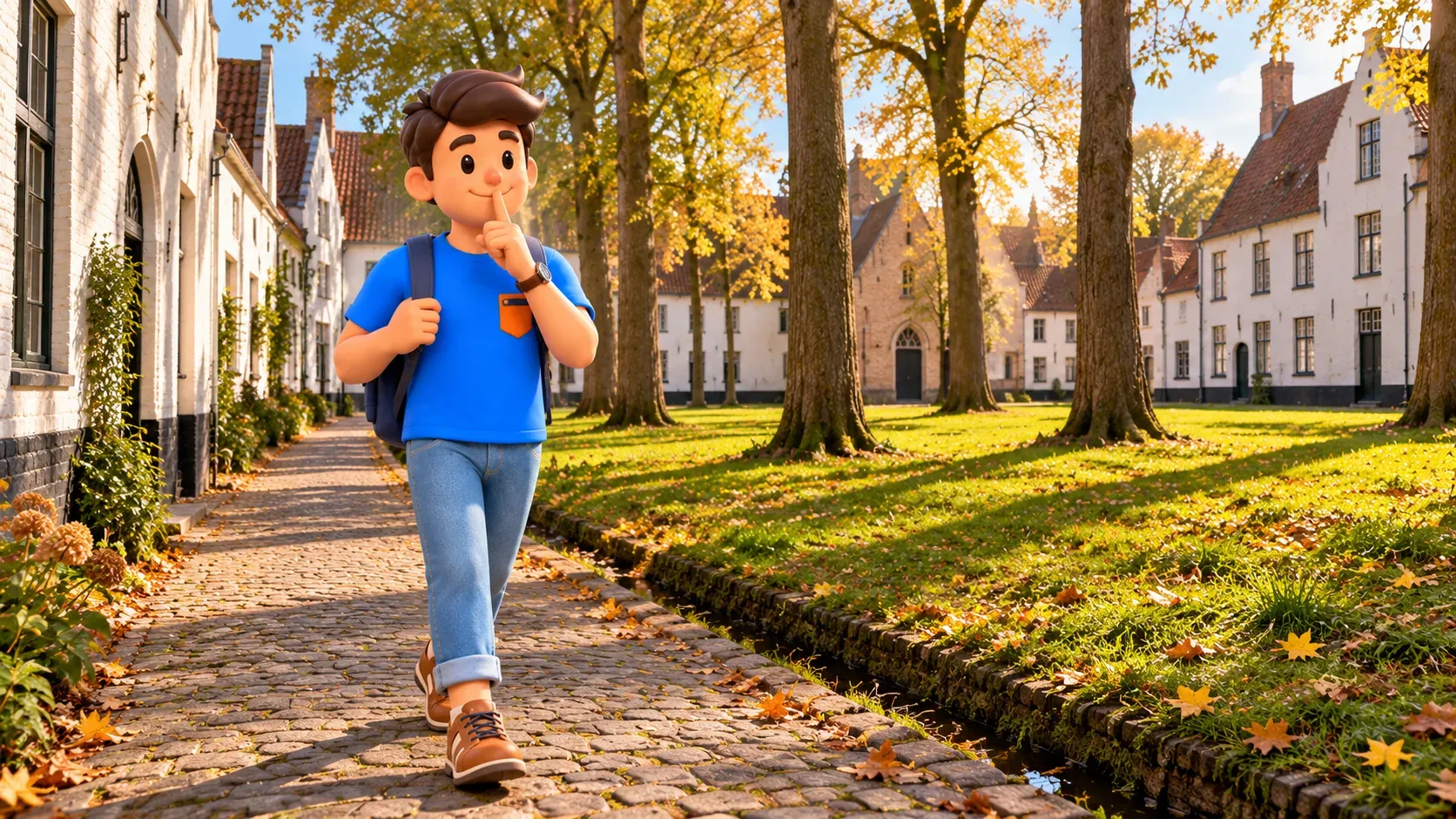
Continue towards the Begijnhof, the Beguinage, for roughly half an hour of quiet observation. Founded in 1245, it was a community of devout laywomen, the beguines. It remains a residential place, so its white houses and garden should be approached with the respect you would give someone’s neighbourhood. Walk in silence and keep out of private doorways.
The courtyard visit is free, but the gates have opening hours. Check the date-specific calendar before travelling; do not assume evening access. If the gate is closed, enjoy the entrance and waterside surroundings and continue the route. Opening arrangements for the church or an exhibition are separate from simply walking through the communal space.
10:45–12:30: one visit in the museum quarter
From the Beguinage area, continue through Wijngaardstraat towards Mariastraat. Set aside about 15 minutes to reach the hospital museum, then around 90 minutes for the visit. The aim is to spend enough time with one place for it to become memorable, while leaving a comfortable afternoon outside.
Museum Sint-Janshospitaal occupies a preserved twelfth-century hospital. Its collections connect works by Hans Memling with the history of care and contemporary art. That combination gives the building a purpose beyond its age: you can consider how a place once associated with caring for people is interpreted through objects and artworks today.
Choose what draws your attention rather than trying to see every detail at the same pace. A painting, the architecture and one part of the hospital story can provide a satisfying visit. The 90-minute allowance is an itinerary estimate, not an official visit duration or a promise that every visitor will want the same amount of time.
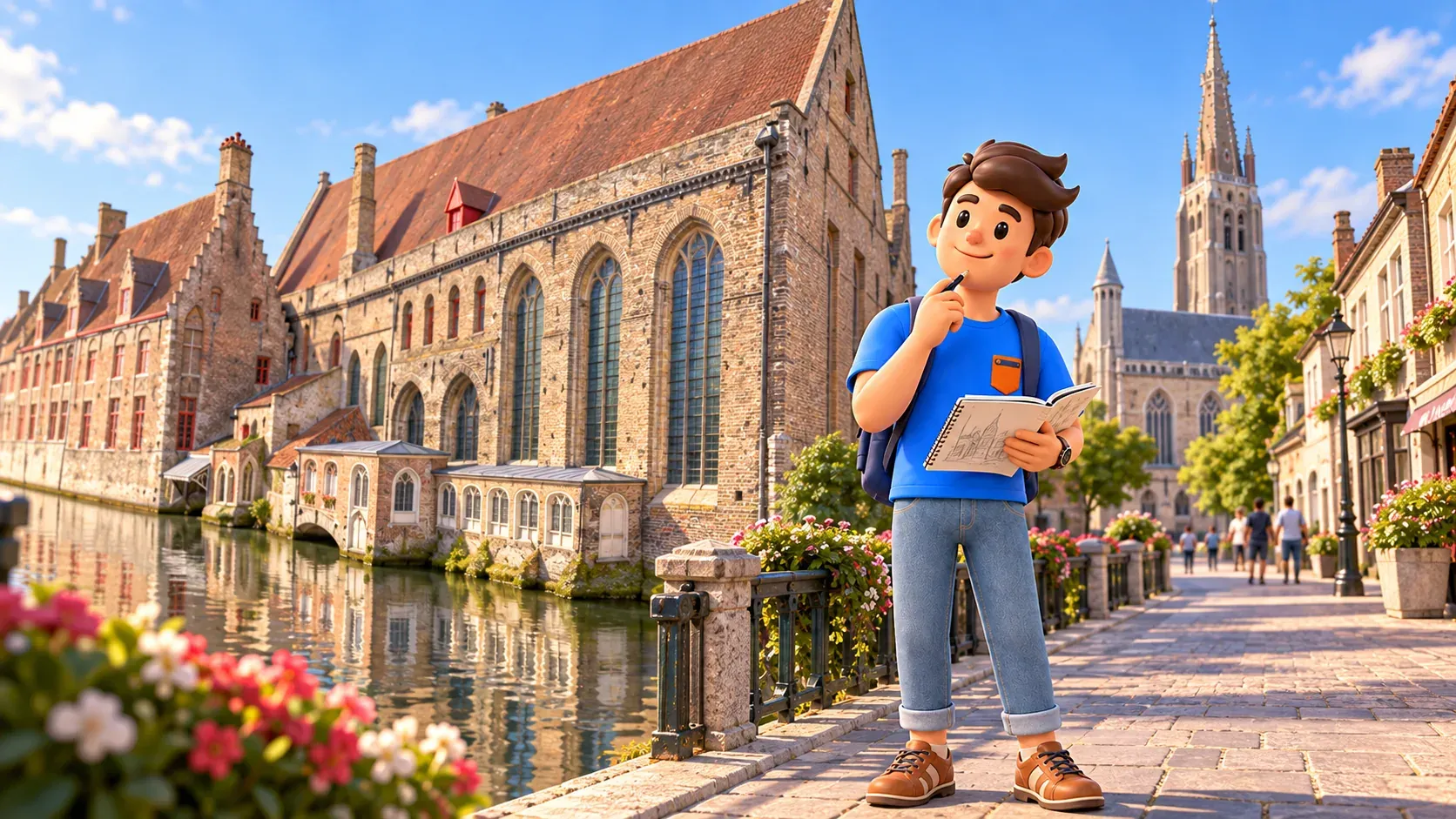
For holiday planning, the museum closes at 16:00 on 24 and 31 December, and is closed on 25 December and 1 January. On Ascension Day it closes at 12:30. These exceptions matter even with a morning visit, especially if you arrive later than planned. Recheck the operator’s current calendar before booking.
12:30–13:30: make room for lunch
Stay around Mariastraat and the museum quarter for lunch rather than crossing the centre to reach a particular café. An hour gives the day a useful breathing space. It is an allowance, not a reservation: if service is slower than expected, draw time from the later coffee break or shorten an exterior stop.
With a short visit, food can easily become either an afterthought or an unexpected delay. Decide whether you want a seated meal or something simpler before joining a queue. This plan leaves the restaurant choice open so you can follow your appetite, budget and dietary needs without having to rearrange the whole route.
13:30–14:15: church views and the canals
After lunch, look at the exterior of the Church of Our Lady and continue towards the Bonifaciusbrug and Hof Arents area if the public approach is open and comfortable. The bridge, water and nearby Gruuthuse buildings offer a different setting from the morning’s lake. Church and museum interiors would be additional visits.
Bonifaciusbrug is among Bruges’ younger bridges, despite its historic-looking surroundings. It is a useful reminder to look carefully rather than assigning a medieval date to every picturesque feature. If the bridge is crowded or a courtyard gate is closed, stay on the public streets and continue to the Dijver; crossing the bridge is optional.
Follow the Dijver towards Rozenhoedkaai, Rosary Quay. The name recalls rosaries once sold here. Pause where there is room to look at the buildings beside the water, keeping the route clear for others. The 45-minute block includes short walks and observations; it does not include a boat trip or waiting for a completely empty photograph.
14:15–15:45: the market passages, Burg and Markt
From Rozenhoedkaai, continue through Huidenvettersplein to Vismarkt. The Fish Market’s classical colonnade was designed in 1820 by Jean-Robert Calloigne. Its architecture makes the stop worthwhile even when there is no active trading. These smaller spaces also provide a change of scale before the two central squares.
Follow Blinde-Ezelstraat through the passage beside the Town Hall into Burg. The square has long been a centre of civic power. The Gothic Town Hall, built between 1376 and 1421, provides a clear historical reference, while the surrounding buildings reveal different periods. Include the Basilica of the Holy Blood’s exterior without adding an unplanned interior visit.

Leave about 45 minutes for these passages and Burg together, then take Breidelstraat to Markt for another 45 minutes. The Belfry dominates the view, but the stepped gables and Provincial Court give the square its wider character. Compare this open setting with Burg and the more enclosed spaces around the old markets.
In the museum version, the tower is seen from below. Use the time to walk around the square, choose a detail that interests you and take a pause. A day can include the best-known central spaces without requiring every major building to become a separate visit.
Prefer the Belfry? Change the timetable before you start
Keep the same morning by Minnewater and the Beguinage, but see the hospital and Church of Our Lady from outside between 10:45 and 11:30. Continue along the canals until about 12:15, then have lunch until 13:00. Visit the market passages and Burg from 13:00 to 13:45, reaching Markt with time to settle before a tower visit.
A reserved slot around 14:15 would allow approximately 75 minutes for the Belfry in this example. Book an available time directly with the operator and adapt the schedule to that time. Advance booking is recommended, and visitors must respect their ticket slot. The climb is a physical commitment; do not treat it as a replacement for a rest.
The tower is 83 metres high, with 366 stairs, and last entry is one hour before closing. Wind or storms may interrupt access. Remember the maintenance closure on 19–22 October 2026. If you cannot use the tower, the outdoor programme still works, with more time for the squares, a break or an earlier return.
Let RoadMe turn your preferences into a personal trip plan, whether you are drawn to art, architecture or views from above. Keeping visits, walking and rest together in the app makes it easier to organise a day that suits you.
Leave time to return to the station
In the museum version, keep 15:45–16:15 for coffee, rest or delays accumulated earlier. Start back around 16:15 via Steenstraat, ’t Zand and King Albert I Park, aiming to reach the station area around 17:00. In the tower version, allow a break after the climb and begin the return around 16:00, using any spare time for a green pause.
These are flexible planning blocks. Arriving at the station area at 17:00 does not mean being ready for a train departing at that moment. Work backwards from your actual departure and allow time to reach the platform. If you need to leave earlier, reduce the afternoon stops rather than making the return walk a race.
The centre includes cobbles, kerbs and changes in level. This itinerary has not been audited as step-free. The Beguinage’s main bridge is steep; an alternative approach near the lock keeper’s house still involves uneven paving. The hospital museum has a lift and resting points, although assistance is indicated at its entrance. Check your particular access requirements before choosing a visit.
If your available time has shrunk to a couple of hours, choose the short first walk through Bruges instead of compressing this whole day.
In rain, shorten the lake and canal pauses while preserving lunch and your chosen interior. If walking is tiring, leave out the optional bridge corner and reduce time around the squares. Finish with a connected impression of Bruges: water and a living community in the morning, one focused visit, then the public spaces at the city’s heart.


