
Bruges in 2 Hours: a First Walk Through the Historic Centre
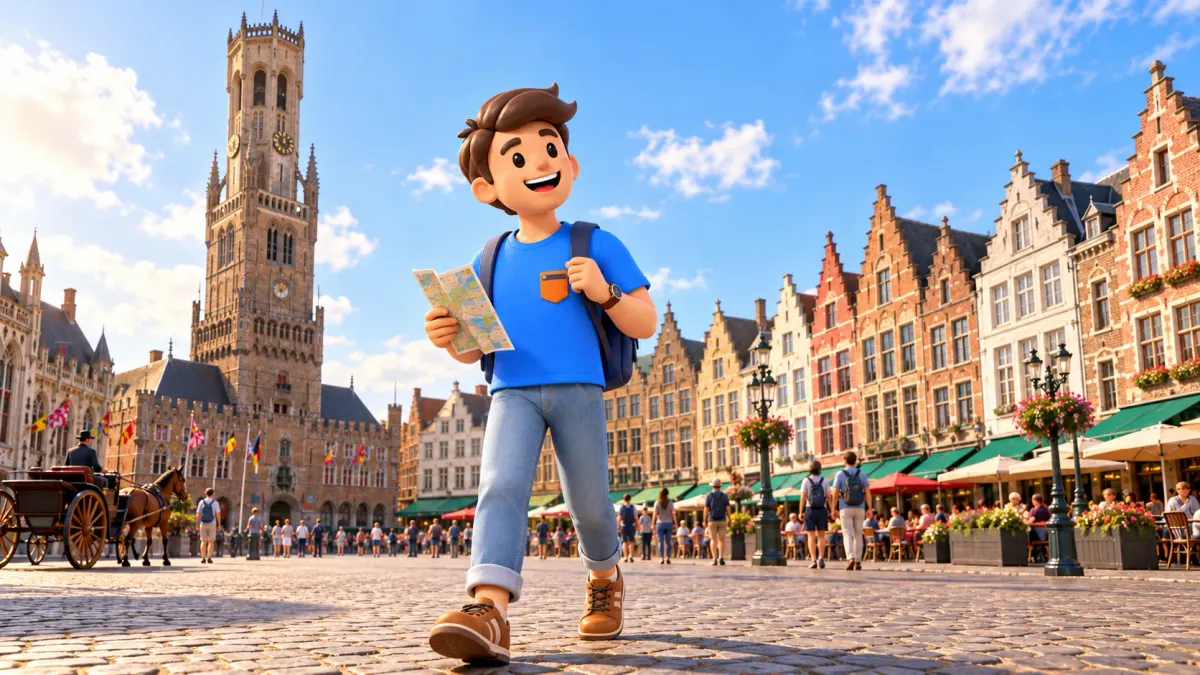
Two hours in Bruges are enough for a satisfying first walk through its central squares and along the canals. Start at Markt, cross to Burg, follow the old market streets to Rozenhoedkaai, then continue along Dijver before returning to Markt. This small loop gives the visit a clear shape: broad public spaces first, intimate waterside views afterwards.
Allow approximately 1.5–2 km, including moving around the squares and viewpoints. Both the distance and the two-hour duration are planning estimates rather than a walk measured on the ground. The plan includes a short rest and outdoor sightseeing; travel from the railway station, tower climbs, museum visits and a boat trip need additional time.
Make two hours feel like a visit
The simplest way to enjoy a short Bruges itinerary is to decide what these two hours are for. Here, the aim is to understand the centre through its public spaces: the relationship between two squares, the old trading places and the water. Choose this walk for a first impression, especially when you want room to look rather than a sequence of admission times.
Try RoadMe to build a personal itinerary around your available time, interests and pace. The app makes organising a short Bruges visit much more convenient, with your walk forming part of a plan shaped for you.
Keep the local street names on your map. The sequence is Markt → Breidelstraat → Burg → Blinde-Ezelstraat → Vismarkt → Huidenvettersplein → Rozenhoedkaai → Dijver. From there, add the small Hof Arents and Bonifaciusbrug area if access suits the day, then return to Dijver and follow it to Wollestraat, which leads back to Markt. There is no need to memorise every turn before setting off.
Use the following time blocks as a flexible budget. Spend about 20 minutes at Markt, five reaching Burg and 20 there. Give the market streets and connecting passages another 20 minutes, Rozenhoedkaai 15 and Dijver ten. The final half-hour covers the optional southern corner, a ten-minute rest and the return. Those allowances total 120 minutes.
Start at Markt and look beyond the tower
Begin with a position in the square that lets you see several sides at once. The Belfry is the obvious landmark, but the stepped gables and Provincial Court help establish the square’s wider character. Look first at the whole space, then choose one façade for a closer view. This is a more rewarding introduction than immediately trying to identify every building.
The Belfry rises 83 metres and developed in phases between the thirteenth and fifteenth centuries. That long building history is a useful reminder that the cityscape accumulated over time. The tower’s height gives Markt a strong visual centre; at street level, the surrounding architecture gives you reasons to turn away from it as well.
A climb is a separate visit, involving 366 steps as well as admission arrangements. For this walk, enjoy the tower from the square and keep the original time budget. If the view from above is your main priority, reserve more time for it and shorten the outdoor programme rather than assuming the climb can be slipped into a five-minute gap.
Before leaving, turn once more towards the gables. Compare a narrow frontage with a larger civic building: the difference in scale makes the setting easier to remember. Then take Breidelstraat towards Burg. The transition is short enough that you can carry the image of Markt into the next square and compare the two directly.
Burg: the city’s civic story in one square
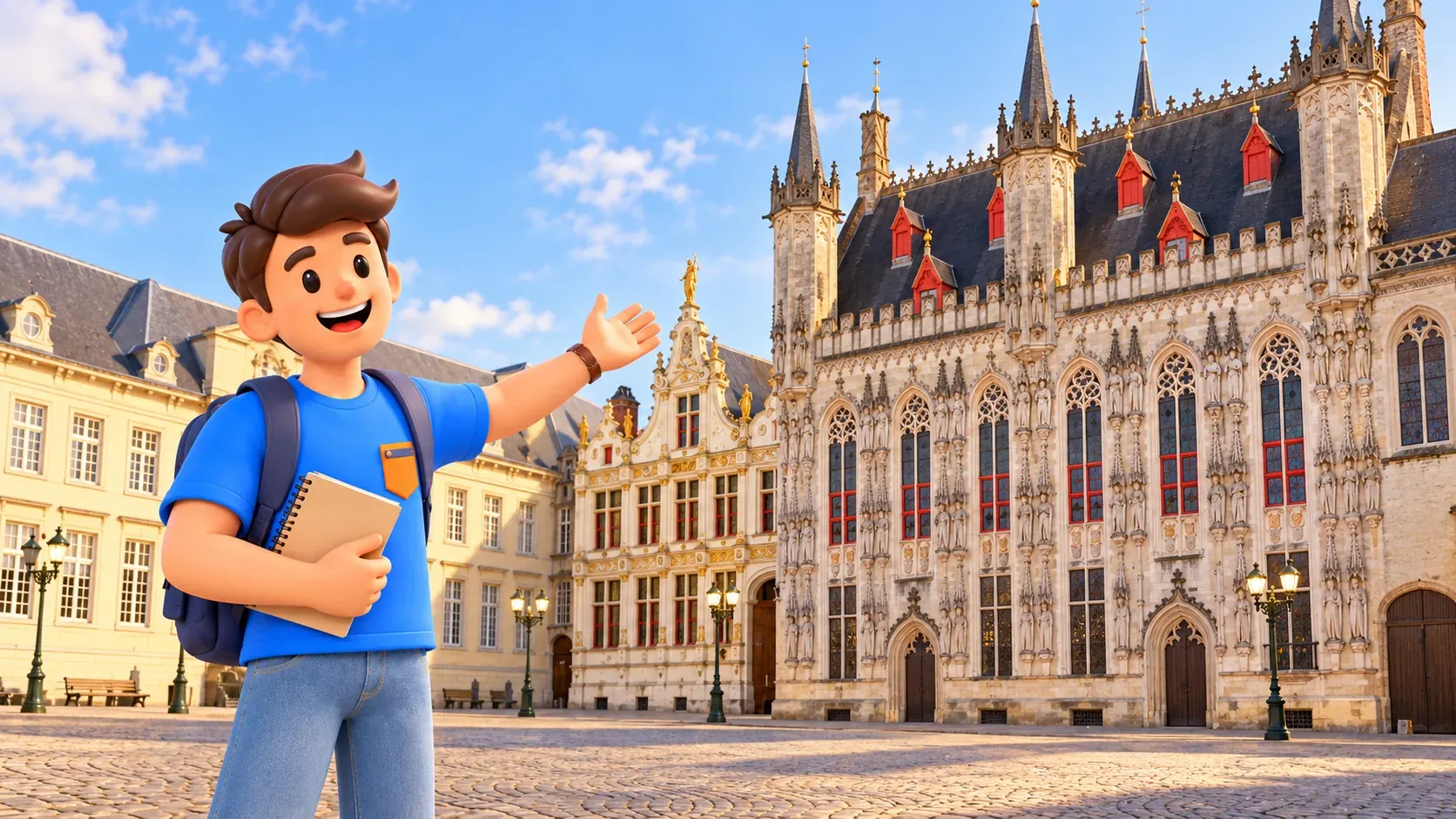
Burg presents a different set of relationships. The square has long been a centre of power, and the Town Hall remains connected with city administration. Spend a moment looking around before selecting details. Buildings from different periods stand together here, so the square works well as an introduction to how Bruges changed while retaining its historic centre.
The Gothic Town Hall was built between 1376 and 1421. Its façade gives this part of the walk a clear historical anchor without requiring an interior tour. Observe how its repeated architectural elements create a different impression from the varied frontages at Markt. You can appreciate that contrast without learning a list of stylistic terms.
Include the exterior of the Basilica of the Holy Blood in your look around. Visiting its interior is a separate decision, with its own arrangements and time needs. In a short walk, simply recognising how several important buildings share a relatively compact square is already useful. Save the detailed stories and collections for a visit chosen around your particular interests.
Leave through Blinde-Ezelstraat, passing beneath the arch beside the Town Hall towards Vismarkt. This passage is part of the route’s appeal: a formal square gives way to a much narrower connection. Follow the public way and notice the change in scale before emerging into another open space.
Vismarkt and the lanes of working Bruges
At the Fish Market, the colonnade is worth a short look even when there are no active stalls. Its classical design dates from 1820 and was the work of Jean-Robert Calloigne. The site adds a different architectural period to a walk that can otherwise feel overwhelmingly medieval. Compare the repeated columns with the Town Hall’s much more elaborate façade.
The market also carries an everyday story: fish sales were moved away from Markt in the eighteenth century because of the smell. That modest piece of practical history helps connect the grand central square with the smaller trading spaces you are now passing. It gives the walk a human scale without needing a lengthy account of the city’s commerce.
Continue through Huidenvettersplein, or Tanners’ Square, towards Rozenhoedkaai. Its name recalls the leather workers who occupied this area in the Middle Ages. The square lies between the Fish Market and the famous quay, making it a natural transition rather than a detour. Give yourself time to notice the enclosed space before the view opens towards the water.
This section takes about 20 minutes in the suggested schedule, including the passage from Burg. It is deliberately compact. A few observations about work, materials and changing architecture provide enough substance; you can keep moving without turning every doorway into a separate sightseeing stop.
Rozenhoedkaai and Dijver: slow down by the water
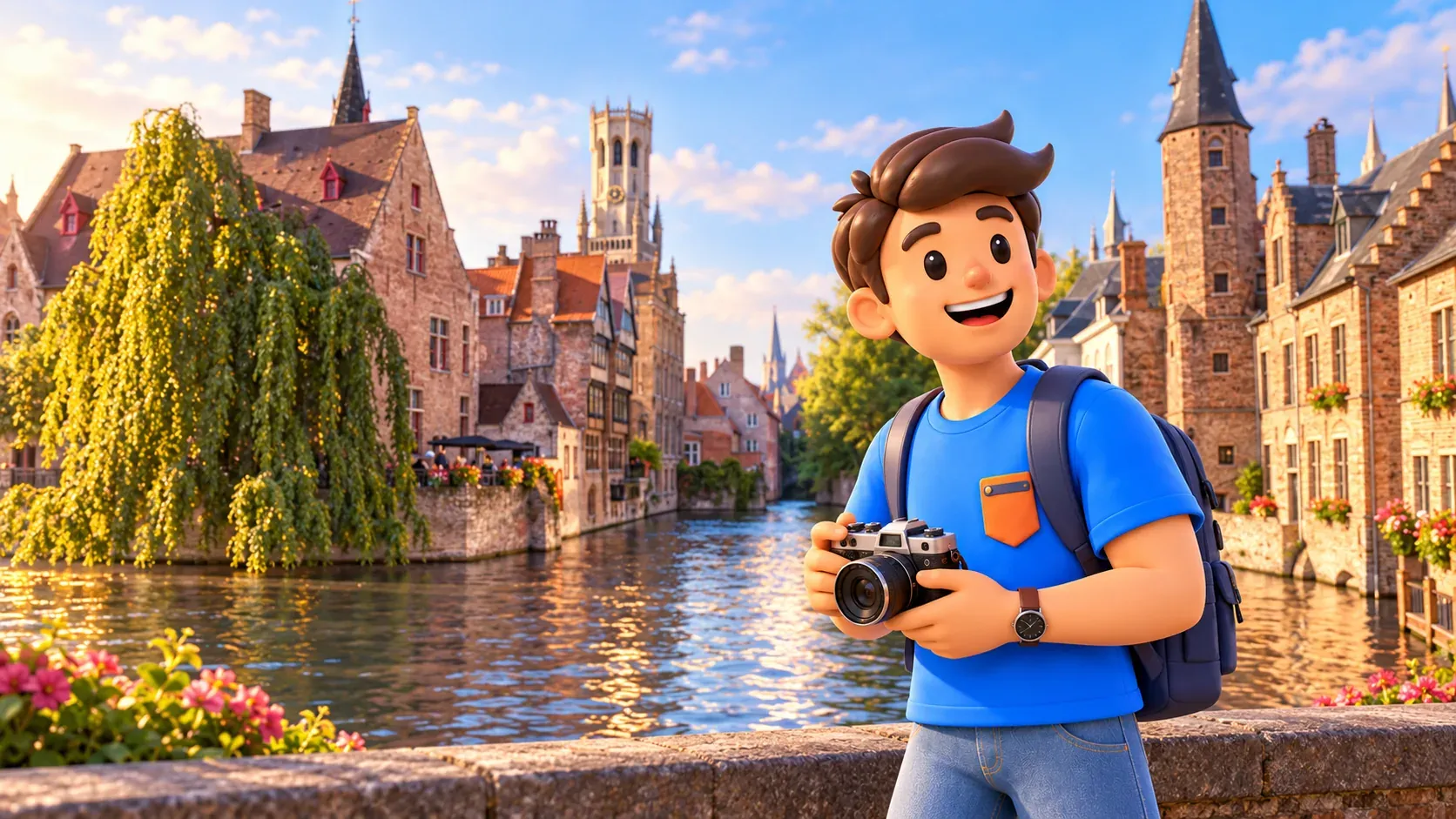
Rozenhoedkaai is one of the central views for which many people come to Bruges. Find a position with room to pause, then look at how the buildings meet the canal. Water changes the experience of the city: you can take in several façades together, notice their reflections and see the relationship between streets and waterside spaces.
The name is usually rendered as Rosary Quay. It recalls the rosaries once sold here, rather than a rose garden. A single detail like this is enough to make a familiar photographic view more meaningful. You do not have to reconstruct an entire historical scene to connect a place name with an earlier use.
Allow around 15 minutes for this stop. If the first position is crowded, keep the passage clear and look for another suitable place nearby. A photograph is an option within the walk, not a condition for completing it. Let the view be a reason to stop for a while, rather than a competition for an empty foreground.
Continue along Dijver towards the Gruuthuse and Church of Our Lady area. This is the waterside stretch where the pace can become gentler. Look across the canal as well as ahead, and give the changing viewpoint some attention. The route’s appeal comes partly from these transitions between enclosed lanes, broad squares and the line of the water.
A small southern corner, then back to Markt
If public access is open and comfortable, use the next ten minutes to explore the Hof Arents corner and look towards Bonifaciusbrug. The setting brings together water, timbered buildings, Gruuthuse and the Church of Our Lady. Treat it as a small extension of the waterside walk, with the return to Markt still part of the plan.
Bonifaciusbrug may look as though it belongs to the oldest layers of the city, but it is among Bruges’ youngest bridges. That contrast is a useful observation to take away: atmosphere alone cannot tell you a structure’s age. Enjoy the setting without attaching a medieval date to everything in view.
The bridge is optional. If the approach is congested, the garden gate is closed or the access is unsuitable, stay on the public street side around Dijver and Gruuthusebrug. You can give the water more time instead. The exterior walk does not depend on entering a courtyard or crossing Bonifaciusbrug.
For a longer stay, let RoadMe develop a day-by-day trip plan around the places and experiences that interest you. It is much easier to organise deeper visits, short walks and time to rest when the app brings them into a personal programme.
Keep the planned ten-minute rest before heading back. It can be a simple pause with your own water; the schedule does not depend on finding a free café table or receiving an order. Then return to Dijver and follow it to Wollestraat, which leads back to Markt, allowing roughly ten minutes for the return and checking the turns on your map.

Adapt the walk to the time you really have
If your available time is tight, finish the outward section at Rozenhoedkaai and return towards Markt by Wollestraat. This leaves out Dijver and the southern corner, creating a smaller loop. Spend the time you have on the two main squares and the canal view rather than hurrying through the full sequence.
For a slower walker or a family that needs more pauses, make the same adjustment from the start. Much of the centre is cobbled, and the route includes changes in level and kerbs. It has not been audited as a step-free itinerary; the optional Bonifaciusbrug area is particularly unsuitable for a blanket accessibility promise. Choose a shorter distance if comfort would otherwise dominate the outing.
Rain may make an outdoor programme less appealing, even though it does not depend on museum opening hours. Consider shortening the walk or allowing extra time for a sheltered break. Events and temporary works may alter a passage: follow the public diversion and reduce the programme if necessary. The two-hour budget is a planning tool, not a reason to rush.
Finally, keep your onward journey outside this loop. If you have a train to catch, work backwards from the station arrival time and leave a separate allowance to get there. Return to Markt with a few connected impressions of Bruges: the tower and gables, civic Burg, the old markets and water. A first visit can be complete on its own while leaving plenty worth returning for.


