
Three Days in Bruges: Museums, Green Walks and Time to Explore

Three days in Bruges let you organise the trip around different interests rather than longer lists. Give the first day to art and a short introduction to the centre, the second to neighbourhood life and the green eastern ramparts, and the third to contemporary architecture and sound, with time outdoors between visits. You can stay based in the city throughout.
The suggested days each occupy roughly 10:00–16:00, including lunch and rest. These are flexible planning blocks, not guaranteed visit times. Accommodation transfers, station journeys and boarding allowances need separate time. Before choosing the order, identify the interior that matters most on each day and check its calendar.
Make the third day a different experience
The extra day is most useful when it changes how you see Bruges. After historic art and neighbourhood streets, the Concertgebouw Circuit offers a visitor trail through contemporary architecture and art. An exhibition at BRUSK provides an alternative. Choose one main cultural visit, then combine it with a short park walk and a proper break.
Try RoadMe to develop a personal three-day plan around your interests, available time and preferred pace. The app makes organising the trip much more convenient by bringing museum visits, walks and pauses into a programme shaped for you.
There is also an optional green alternative outside the centre: the municipal grounds at Tudor. Treat it as a separate outing after confirming both outward and return transport. It replaces the contemporary-culture day rather than becoming another stop after it. The castle itself is privately owned; the public gardens are the reason to go.
If your visit is shorter, use the two-day Bruges itinerary. This three-day version gives art a focused morning and makes room for a different final experience. It does not require a trip to another city or several museum admissions every day.
Day one: start with art, then understand the centre
Begin around 10:00 at Museum Sint-Janshospitaal, the Museum of St John’s Hospital, when it is open. Allow about 90 minutes for a focused visit. The preserved twelfth-century hospital brings together works by Hans Memling, the history of care and contemporary art. You can approach the building through both its former purpose and the objects shown inside.
Choose a few things to look at closely rather than moving through every display at the same speed. A painting, an architectural feature and one part of the hospital story can give the visit a clear shape. Ninety minutes is an itinerary estimate, not an official duration or a requirement to leave while something still interests you.
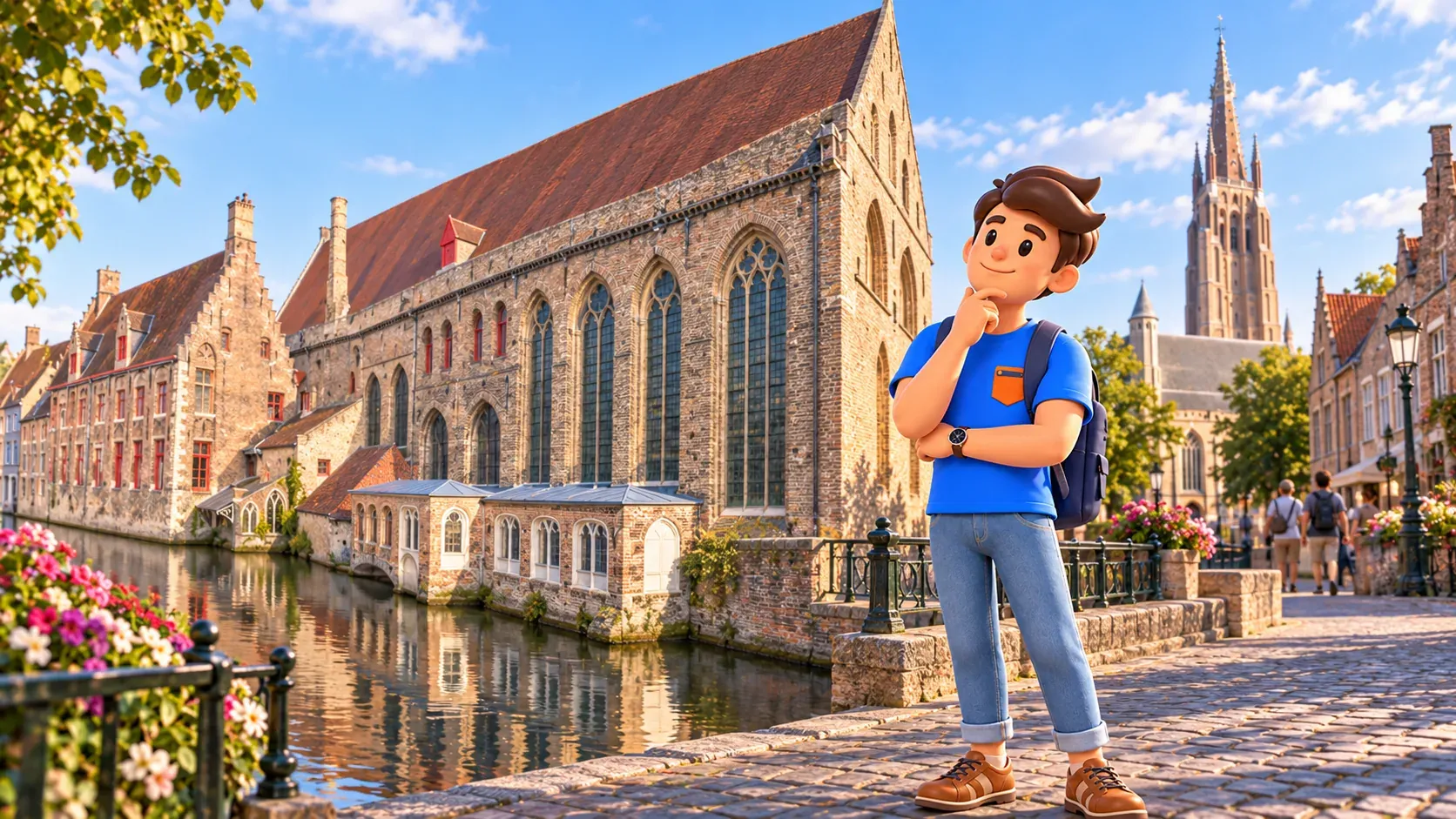
The museum normally opens from 09:30 to 17:00 and closes on Mondays, with Easter Monday and Whit Monday exceptions. On 24 and 31 December it closes at 16:00; it is closed on 25 December and 1 January. Ascension Day closes at 12:30. Place this art morning on a suitable date, and check exceptional notices before travelling.
Keep 11:30–12:00 for a rest and a look at the Church of Our Lady from outside. Lunch follows around 12:00–13:00 in the museum quarter. Choosing somewhere nearby avoids using the pause to cross the city. The schedule leaves the establishment open, so you can decide according to your appetite, budget and dietary needs.
Use approximately 13:00–14:30 for a compact introduction along the Dijver and Rozenhoedkaai towards Burg and Markt. Rosary Quay recalls the rosaries once sold there. At Burg, look at the civic buildings; at Markt, notice the Belfry, stepped gables and Provincial Court as a group. These are connected public spaces rather than a series of additional interior visits.
The last 90 minutes are deliberately flexible. Stay with a canal view, take a longer break or revisit a nearby detail that caught your attention. Allow roughly 2–3 kilometres on foot across the day, excluding journeys to the start and from the finish. This is a distance estimate; there is no need to add a southern detour simply to fill the afternoon.
Day two: the former port and neighbourhood life
Start around 10:00 at Jan van Eyckplein. The square and canal occupy a former port setting where traders and goods once gathered. The Toll House and nearby historic buildings help give that commercial story a visible form. Spend a little time looking at the water before continuing towards Sint-Anna.
Allow about an hour for the square and the walk towards the neighbourhood. The change in scale is part of the interest: civic spaces give way to smaller streets and houses. Look at St Anne’s Church from outside, then choose one interior nearby. You do not need to visit every museum and chapel in the quarter.
Choose the Folk Museum for everyday life. Its restored seventeenth-century workers’ houses contain displays about Bruges in the nineteenth and early twentieth centuries. A classroom, shops and workshops offer a different subject from the first day’s paintings and hospital history. Keep the age of the houses separate from the period represented inside.
Alternatively, choose the Adornes Estate for a private family history and the Jerusalem Chapel. The estate dates from the fifteenth century and was founded by the Adorno family from Genoa; the chapel was consecrated in 1429. This visit also gives the second day a different focus without requiring a longer journey across the centre.
Let RoadMe organise your interests into a personal itinerary, whether you prefer art, neighbourhoods or gardens. Keeping the whole trip together in the app makes planning each day much easier.
Reserve roughly 11:00–12:15 for either choice, then lunch until about 13:15. In the afternoon, take a short section of the eastern ramparts to see the windmills from outside. The open setting and a rest can be the point of the outing, with a return through the neighbourhood by around 16:00.
Plan approximately 3–4 kilometres for the day, depending on the rampart section you choose. The estimate includes outdoor stops but no mill climb. A winter closure of a mill interior therefore does not undermine the plan, and the visit does not depend on the machinery operating in a particular wind.
Choose the neighbourhood day around opening dates
The Folk Museum normally opens 09:30–17:00. From 1 April to 2 November it closes on Mondays; from 3 November to 31 March it closes on Mondays and Tuesdays. It closes at 16:00 on 24 and 31 December, is closed on 25 December and 1 January, and closes at 12:30 on Ascension Day.
Adornes opens Monday–Saturday, 10:00–17:00, from October to March. From April to September the weekday hours remain the same and Saturday extends to 18:00. It closes on Sundays and public holidays. Tickets are sold at reception, and photography inside the buildings is prohibited.
For a Saturday–Sunday stay that includes Adornes, put the neighbourhood visit on Saturday. During three consecutive days, rearrange the themes around whichever interior you most want to see. If the choices are closed, keep a shorter outdoor neighbourhood walk or switch days; avoid treating the printed order as more important than the actual calendar.
Day three: contemporary spaces, sound and a green pause
Choose the Concertgebouw Circuit if you are curious about architecture and art in a working cultural venue. This visitor trail has an official duration of 60 minutes. Allow closer to 90 minutes overall for arriving, getting started and taking a pause afterwards. It is a daytime visit, separate from attending a concert.
Opening is calendar-based. A listed 14:00–17:00 window is an admission period, not a three-hour tour. Select an available date and time through the operator before arranging the rest of the day. A café being open does not mean the visitor trail is available, and a concert listing does not establish daytime Circuit access.
For an afternoon Circuit visit, begin with a relaxed walk around ’t Zand and King Albert I Park, then have lunch near the venue around 12:00–13:00. Leave time to reach your selected admission. If a morning visit is available instead, do the Circuit first and put the park walk afterwards. Keep the final hour for a short pause rather than another institution.
Sebrechtspark is another small green option if its gate is open. This city-owned park at Oude Zak 36 was once a monastery garden and later a private garden. Its picnic benches and playground provide a different kind of stop from a museum room. Choose it only if it fits your route; there is no need to connect every park in one day.
If the Circuit calendar does not fit, consider one exhibition at BRUSK instead. The venue normally opens 10:00–18:00 from 1 April to 2 November, and 09:30–17:00 from 3 November to 31 March, with Mondays closed. Easter Monday and Whit Monday are exceptions. On 29 October 2026 it closes at 16:00.
BRUSK also closes at 16:00 on 24 and 31 December, remains closed on 25 December and 1 January, and closes at 12:30 on Ascension Day. Choose an exhibition from the programme for your dates. A public entrance area and a ticketed exhibition are different experiences; do not assume you can see the exhibition without its admission arrangements.
A green alternative: Tudor’s public gardens
If you would rather spend the third day outside the historic centre, consider Tudor as one separate park outing. Its neo-Gothic castle was built in 1904 and is privately owned. The surrounding gardens, woods and herb garden are municipal public grounds. Plan to enjoy those spaces and the castle’s exterior, without expecting a castle-interior tour.
The herb garden at Zeeweg 147b is freely accessible daily from 09:00 to 19:00 between 1 March and 30 November, and from 09:00 to 17:00 between 1 December and 28 February. Allow a few unhurried hours on site, plus lunch and the actual travel time your chosen transport requires.
Confirm the journey in both directions before choosing this option. Public transport arrangements depend on the date and departure point; this itinerary does not assign a bus number or a guaranteed travel time. If the connection is inconvenient, keep the city-culture version. Tudor is an alternative, not a necessary test of whether you have spent three days well.
Keep comfort and departure time in the plan
Rain or strong wind can make a short park walk more appealing than a long exposed rampart section. Preserve the principal interior and lunch, and reduce the outdoor distance. With a slower walking pace, use the same approach before setting out rather than waiting until the final transfer becomes hurried.
Cobbles, kerbs and historic entrances need individual access planning. The hospital museum has a lift and resting points, with assistance indicated at its entrance. The Folk Museum’s first floor is reached by stairs and its toilet is not wheelchair accessible; Adornes has narrow doors and uneven courtyard paving. Check your chosen cultural visit’s access conditions and do not treat this as an audited step-free route.
On departure day, work backwards from the time you need to reach the station or your next connection. If your available stay contracts, use the one-day Bruges plan rather than rushing through three themes. The value of the longer stay is the room it gives art, neighbourhood life and a different final experience.


