
Pourtalès: A Castle and Art Among the Trees
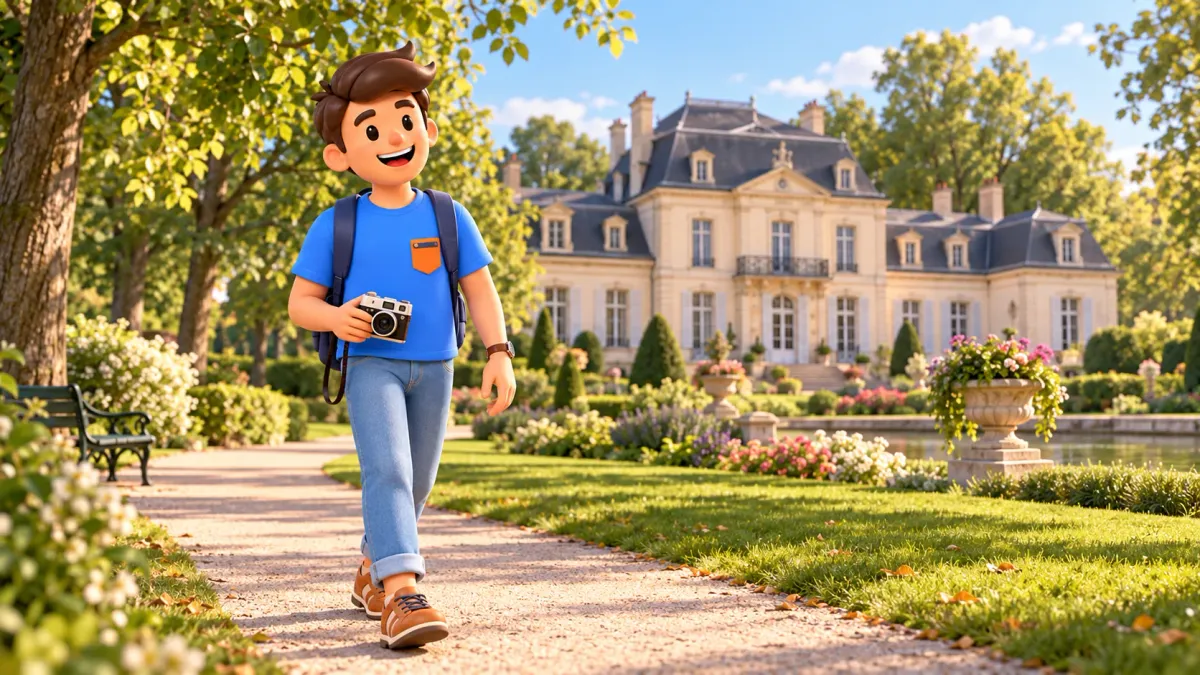
Pourtalès is a good reason to see Strasbourg beyond its dense historic centre. In this Robertsau park, a country house stands among lawns and mature trees, while contemporary art appears as a discovery along the way. A little estate history combines with a walk that needs no packed timetable.
The suggested loop connects an exterior castle view, the bronze hare The Bowler and Genius Loci, then leaves time for greenery and rest. Allow approximately ninety minutes to two hours inside the park with stops. This is an unmeasured estimate; add travel to Robertsau, return, meals and particular programmes separately.
What kind of walk to expect
The theme is the relationship between house, landscape and art. The château explains the estate, clearings reveal space, and two works offer different ways of looking. That is enough for an introduction, without completing every artwork in the park.
In RoadMe, it is easier to create a personal Pourtalès plan around your interests, dates, pace and budget. The app works out your route and connects the park with other Strasbourg districts, visits and rest within one programme that suits you.
The park lies northeast of the centre, so approach time deserves its own place in the day. Time among trees differs from travel time, especially before a train or appointment afterwards.
Begin at an available public entrance and follow current signs. Reverse the suggested order if useful. Seeing three principal themes calmly matters more than finding one compulsory turn or returning by exactly the same path.
Choose an emphasis before starting: architectural form, sculptural movement or green space. That decision keeps the outing compact but meaningful for a group with different interests.
The château: see the house with its park
Pause at a distance where central body and wings can be seen together. Here, architecture relates to an open clearing and trees. Compared with a city mansion, the surroundings contribute particularly strongly to the house's character.
The building has an eighteenth-century base, while much of its familiar outline developed later. From 1844, owners enlarged the residence; the main body gained volume and a broken slate roof. Different parts reveal gradual development.
Notice the roof's relationship with the walls and how wings extend the central body. Every decorative motif need not be identified. Understand how a relatively small country residence became a more complex representative ensemble.
A new chapter connects with Mélanie de Pourtalès, who inherited the estate. The house changed again, with a building added beside the right wing and renewed interiors. Alterations supported a way of life combining private residence and cultural meetings.
The nineteenth-century salon joined music, conversation and European social connections. For the walk, the house's role as a meeting place matters. Imagine that through residence and park, without turning the pause into an inventory of famous guests.
Today the château operates as a hotel and reception venue. This route considers it from the public exterior side. A particular event or stay requires its own choice; the park walk remains worthwhile without a compulsory interior.
From private estate to municipal green space
The park became city property in 1976. A former residential setting joined Strasbourg's municipal green space. The estate's history remained visible through the house's position, open lawns and tree groups.
Landscape arrangements reveal views gradually. One section directs attention to the house, another to the spaces between trees. The walk offers more than a quick transfer from façade to sculpture: connections have an experience of their own.
Try a simple observation while leaving the house. Notice when it stops being the principal subject. Crowns, openings and the path direction take over. The park changes attention without another museum stop.
More wooded surroundings distinguish Pourtalès from central squares, but this loop stays within the park theme. Extending towards forest trails is a separate decision requiring time. For an introduction, remain with the selected main places.
Compare several time layers: an eighteenth- and nineteenth-century residence, a municipal park since 1976, and works from 1992 and 2001. They explain why Pourtalès feels like more than an ensemble created at one moment. Art joined an existing landscape and offered fresh ways to perceive it, without erasing the estate's earlier story.
The Bowler: a hare preparing to throw
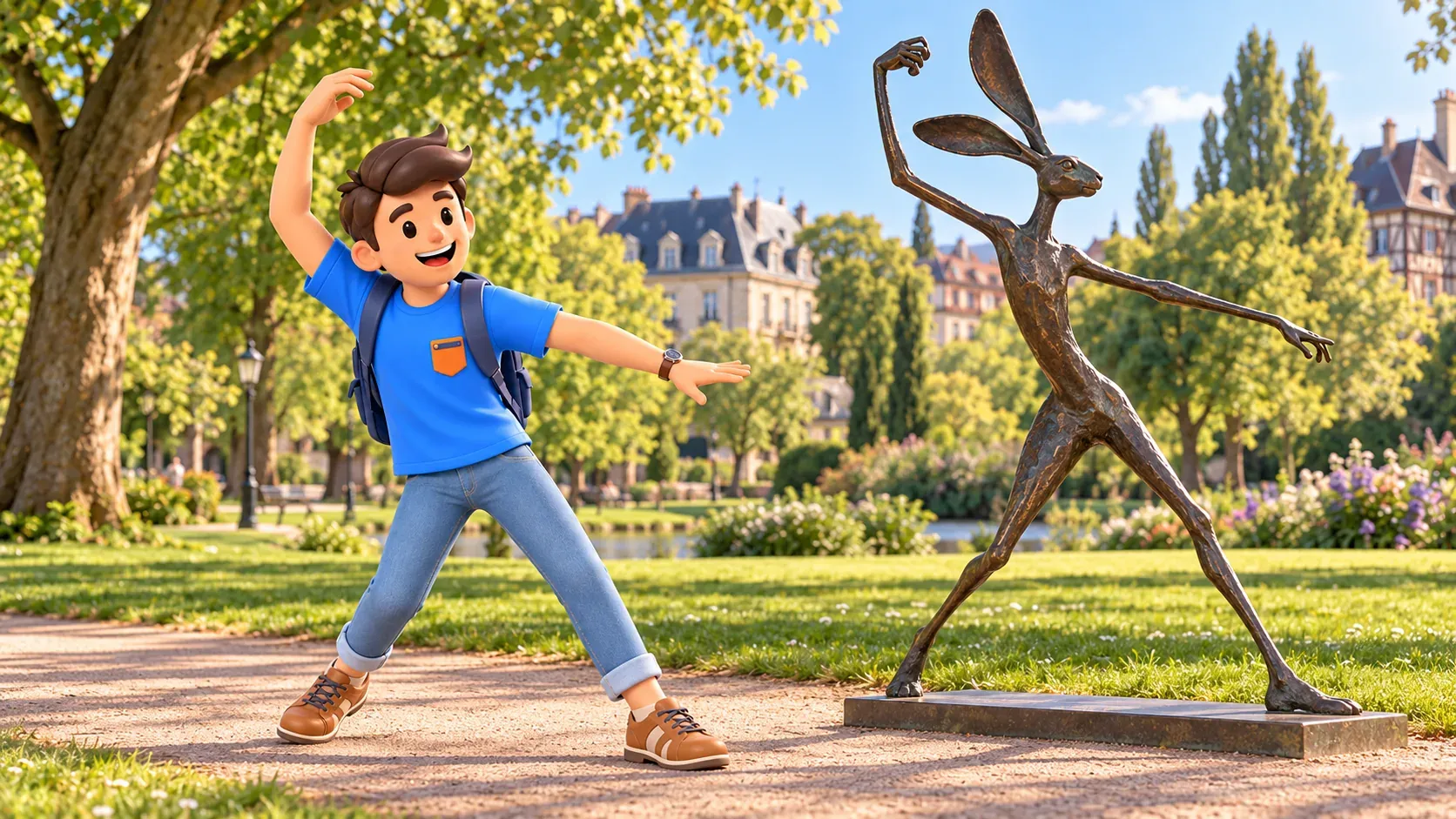
Barry Flanagan's 1992 work depicts an anthropomorphic hare. Here The Bowler means a cricket player delivering a ball. That small clarification makes the gesture clearer and avoids an association with tenpin bowling.
Elongated limbs become almost human arms and legs. The figure prepares an energetic movement that can also read as dance. The hare remains recognisable while acquiring a character connected with our own bodily experience.
Consider the outline first, then the supporting leg and extended gesture. Stationary bronze suggests a moment before action. Different available viewing angles are more revealing than immediately searching for one correct interpretation.
The surface preserves modelling traces, recalling how a hard final form grew from work with more yielding material. Close attention finds texture; stepping back gathers the movement again.
With companions, compare two readings: a sporting delivery and a dance step. Which details support each? Contemporary art becomes approachable without a complete explanation of artistic movements and specialist vocabulary.
Genius Loci: why a place exceeds its plan
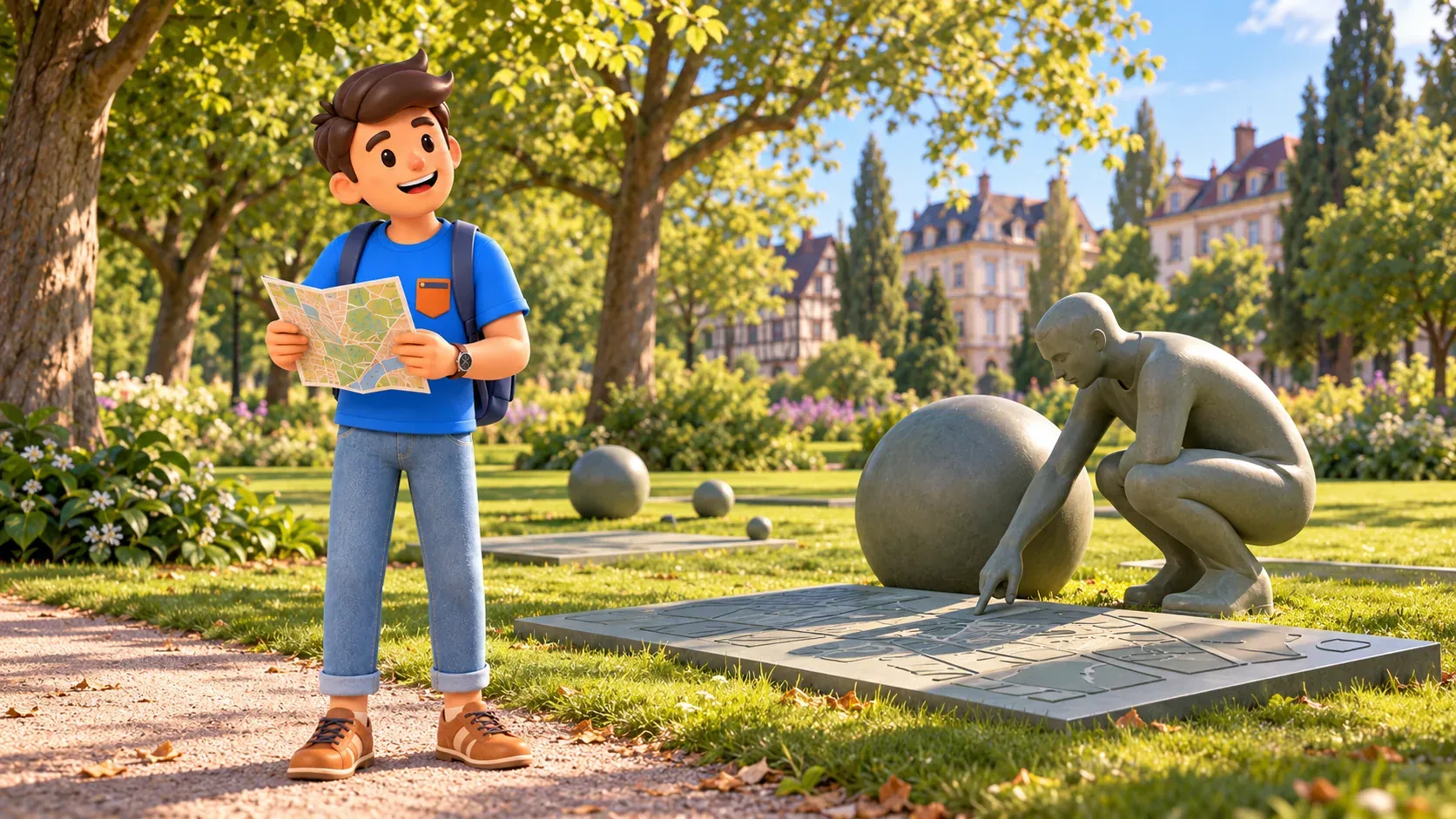
Giulio Paolini created the work in 2001. Genius Loci refers to the spirit of a place, explored here through maps and changing scale. After the expressive hare, a quieter consideration of space begins.
A crouching human figure beside a sphere points to a map on the ground. Further along, the plan repeats at a smaller size, with small spheres relating to other park sculptures. Later fragments shrink and seem to disperse among vegetation.
Look at the nearest group, then follow the sequence. The passage between parts matters as much as the individual figure. A map that normally promises a clear arrangement gradually loses its familiar completeness.
Compare the work with your own walk. A plan locates points easily, but cannot fully convey viewing distance, moving branches or the moment an object emerges between trees. The difference between an image and experienced space becomes the subject.
You need not find equally clear details of every fragment. Season and vegetation influence perception. An introduction is enough to understand that the composition develops through your movement and offers more than one frontal view.
In one repeated plan, seven small spheres mark other park sculptures. This places an art route within the artwork itself. Further reduction and dispersal make the earlier clarity less stable. A familiar mapping device becomes something to observe, while the viewer follows a transition from the whole to fragments.
What happens between artworks
After the two works, leave a short section without a new target. Art interacts with its setting through distance, grass, shadow and approach. Rushing between names can hide this part of the experience.
Look back at the previous object from a distance, then ahead. One becomes part of a wider green view while another has not yet appeared. The transition lets sculpture belong to surroundings rather than feel like a museum object simply placed outside.
For a sketch or photograph, choose a broad view and one detail. At the hare, these could be outline and bronze surface; at Genius Loci, the arrangement between elements. Preserve differences rather than collecting identical views at every work.
If you enjoy drawing, suggest the hare through a few lines: support, stretched body and gesture direction. Compare the sketch with the sculpture from a distance. This optional pause reveals movement without copying every surface mark. At Genius Loci, try noting distances between parts and leaving more open space on the page.
Leave time for rest
Return towards an available green section and choose a quiet pause. It may be brief or become the main conclusion. Free time need not automatically produce another destination.
Seasons alter relationships between house and trees. Dense foliage separates views, while open branches reveal the architectural outline more clearly. Follow what interests you today and keep the loop's length flexible.
Current park notices and signs matter more than assuming every path is always available. Use an open public connection towards your exit. Hotel areas and service passages are unnecessary for the principal theme.
Shorten or extend the loop
With less time, retain the castle exterior, one artist and a short section among trees. The Bowler begins with recognisable movement; Genius Loci suits a slower conversation about space and representation.
With more time, extend the stops themselves. See the house again from another distance or return to the work that interested you most. The outing remains connected without becoming a complete catalogue of park art.
Decide what the rest of the day should be before the return. You can continue city exploration, but travel and another visit need their own margin. The park loop already has a complete story.
What remains after walking
Compare three ways of occupying landscape. The house organises open space in front, the hare gathers attention through movement, and Genius Loci directs the eye between parts. Together they reveal Pourtalès through architecture, body and your own gaze.
Keep one personal moment: an unexpected sporting gesture, a disappearing map or a house among trees. That memory preserves the outing's individual character more clearly than a list of places seen.
RoadMe works out a personal route or full trip plan around your interests and available time. In the app, it is more convenient to connect Pourtalès with other neighbourhoods, visits and rest, so the day reflects your way of travelling.
For another park experience, try the Orangerie with pavilions and sculpture. For substantial public buildings, use the European Quarter route. Pourtalès can remain a quiet outing of its own, offering another rhythm of Strasbourg.


