
Strasbourg’s European Quarter: A Walk to the Orangerie
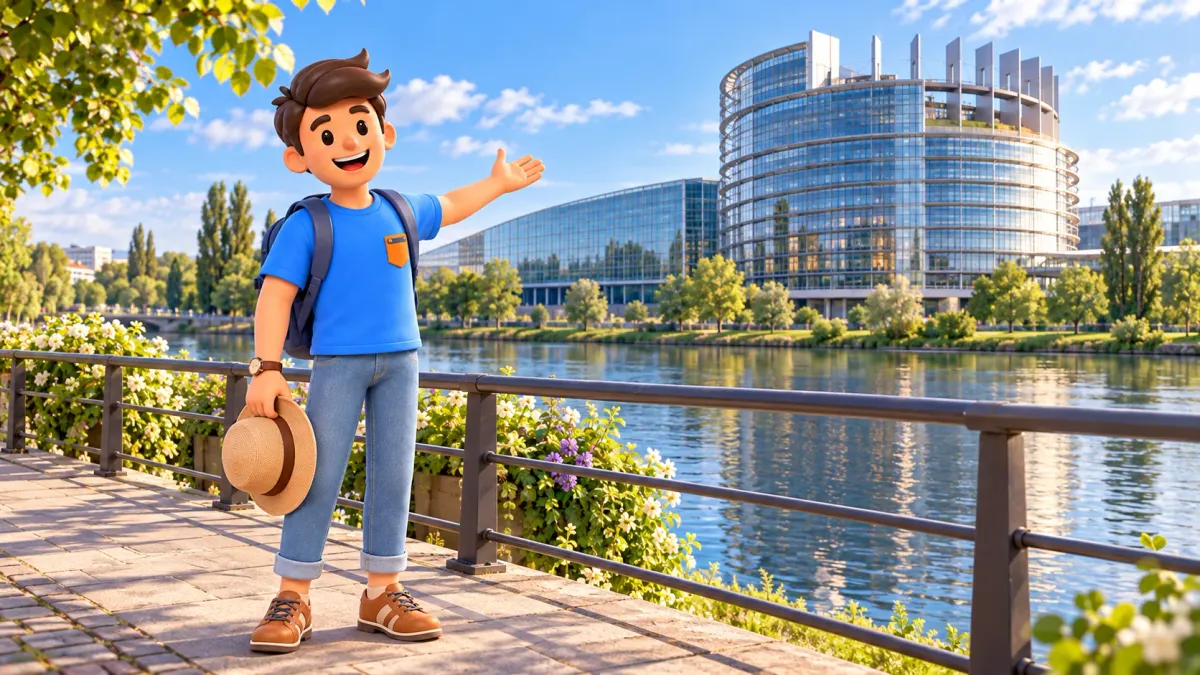
The European Quarter reveals Strasbourg through glass, metal, water and substantial public spaces. Compare the architecture of different institutions, then finish in the Orangerie park. The route offers a change of atmosphere after timber-framed streets and cathedral squares.
Begin at the European Parliament's Louise Weiss building. Continue towards the Human Rights Building, optionally visit Lieu d’Europe, then consider the Palais de l’Europe and enter the park. Allow roughly two to three hours for exterior stops and relaxed park time. This is an unmeasured estimate; add interiors, your journey from the centre and the return separately.
What to understand before the first connection
The European Parliament, Council of Europe and European Court of Human Rights are different institutions. Neighbouring locations do not make them one organisation. For a walk, connect each name with its own building and broad role.
In RoadMe, it is easier to get a personal European Quarter plan around your interests, dates, pace and budget. The app works out your route and wider trip, connecting modern architecture, selected visits and park time in a sequence that suits you.
Parliament belongs to the European Union. The Council of Europe is a separate international organisation associated with human rights, democracy and the rule of law. The Court operates within the European Convention on Human Rights framework. This is visitor orientation rather than an explanation of legal procedures.
Before setting out, decide whether you want one interior programme. Its time and entrance then anchor the route. For architecture and walking, keep buildings as exterior landmarks and preserve enough time for the park.
The route is linear: Parliament and the park finish occupy different places. Decide where you will go after the Orangerie. Returning to the starting building, reaching the old centre and beginning another walk all need separate time, especially before a train or other appointment.
With a Parliament visit, place it before a long park pause or reverse the order. For the Lieu d’Europe exhibition, keep a distinct, unhurried period within the district. An entirely exterior day can instead follow your energy and time outdoors.
European Parliament: a substantial building by water
The Louise Weiss complex opened in 1999, designed by Architecturestudio. Its glass volumes differ strongly from the historic centre. First see the combination of curved body, water and surrounding open space rather than concentrating on the tower alone.
The most recognisable element is a round tower with an unfinished-looking upper outline. Its architectural reading relates to the European project as a continuing process. The silhouette is an intended design choice rather than a sign of abandoned construction.
The building honours Louise Weiss, a journalist and public figure who advocated European cooperation and women's rights. A little context gives a human story to the large geometry without requiring a full biography during the stop.
In 1979 Weiss entered Parliament at the first direct elections. As its oldest member, she presided at the opening of the newly elected assembly. This short story connects the late twentieth-century building's name with an earlier parliamentary chapter.
From available public space, compare glass reflections and transparency. Then consider the overall outline from another distance. Water helps reveal the complex as a whole, while a closer position shows the envelope's rhythm and scale beside people.
Parliament visits follow different formats according to the plenary calendar. They are free, with their own preparation requirements. Entry needs a valid physical passport or eligible national identity card; screening applies and large luggage is not accepted.
Check the actual language offered by your chosen format rather than assuming all multilingual activities work identically. These conditions belong to an optional visit. For an exterior walk, continue exploring without making an interior compulsory.
The waterside connection: compare urban scale
Continue towards the Human Rights Building along available quays, pavements and crossings. Follow current signs: entrances to working institutions and public walking routes serve different purposes. A shortcut through institutional grounds is unnecessary for understanding the district.
Compare this space with the old town. There, a nearby window or street turn often holds attention; here, the eye takes in substantial volumes and longer distances. It is another way of arranging a city, with its own qualities of space.
Choose one position where building and water work together. That pause explains the relationship with surroundings more clearly than photographs only at entrances. Another approach to contemporary public architecture appears next.
Human Rights Building: round volumes and visible structure
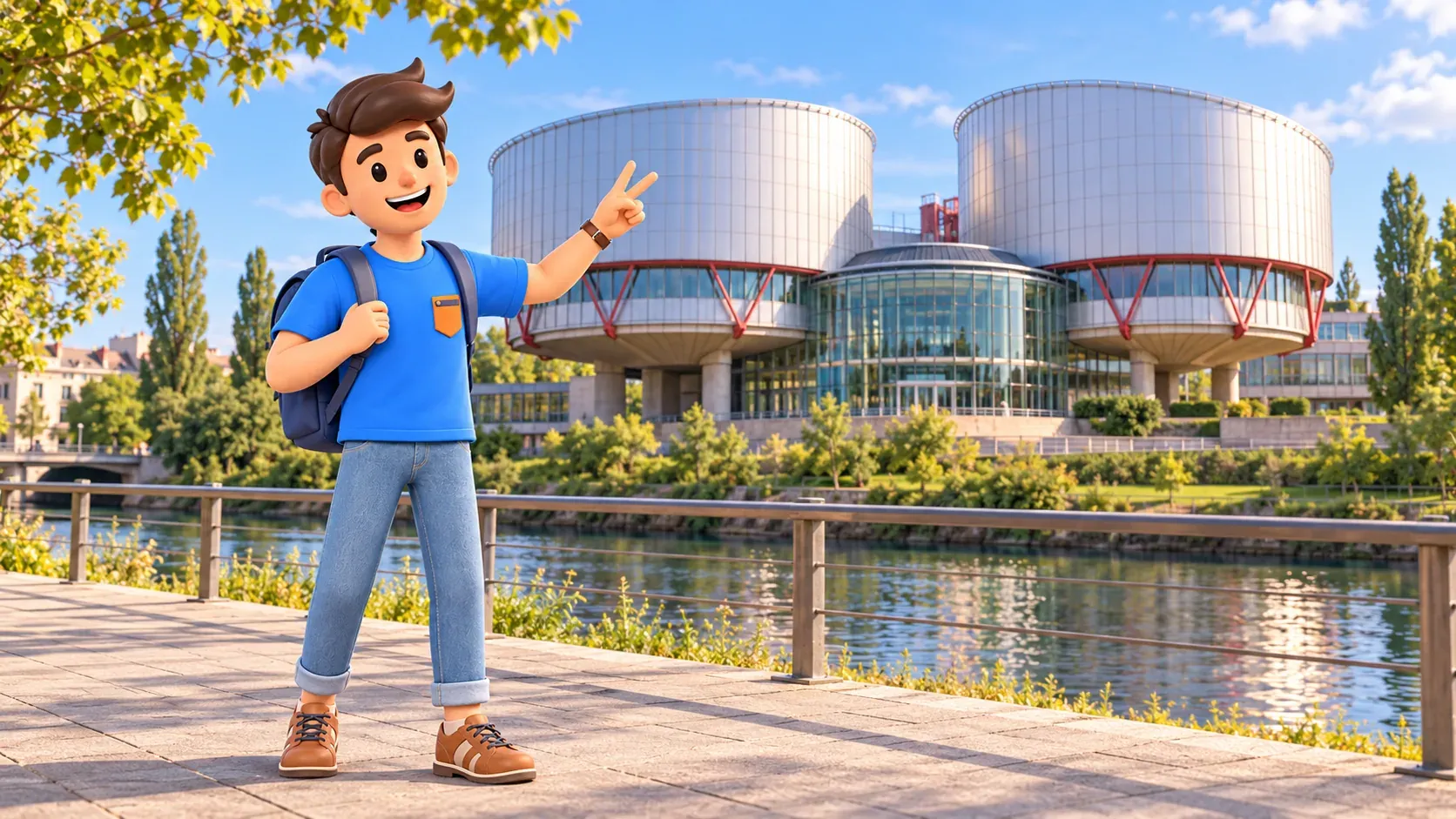
The Palais des droits de l’Homme houses the European Court of Human Rights. Richard Rogers and Claude Bucher designed the building, completed in 1995. Two metal cylinders, red structural elements and glass speak differently from the neighbouring Parliament.
The paired round volumes relate to the original programme for the Court and the former human rights Commission. An unusual shape has a functional history. That explanation is enough for an introduction, without decoding every line as a separate symbol.
Compare the substantial and transparent parts. Red elements make construction visible, while glazed sections connect the entrance environment with its surroundings. Notice how materials and orientation address both the river and people approaching.
The Court offers particular visiting formats through its announced programme. An exterior walk does not establish unrestricted access to a hearing or working rooms. For an interior introduction, reserve separate time and check registration arrangements.
This is a useful place to name the institutions individually again. If Parliament and Court now feel distinct, the architecture walk has already achieved something: substantial names have acquired different forms and positions on your mental map.
Lieu d’Europe: a smaller scale and wider context
A small detour to Lieu d’Europe moves from substantial institutions to a more intimate setting. The municipal centre occupies the historic Kaysersguet villa and garden. Its scale introduces European Strasbourg through learning and cultural connections.
The permanent exhibition explains history and organisational differences. When checked, texts were offered in French, English and German. If one suits you, the centre can become your selected interior visit instead of attempting to enter every institution.
Add exhibition time to the walk rather than hiding it inside the initial two-to-three-hour estimate. The centre has its own opening arrangements and programme. Staying outside, compare villa, garden and contemporary use, then return towards the Palais de l’Europe.
For a group with varied interests, ask which institution you would like to understand more closely. That answer helps choose a later visit while keeping the exterior route a shared part of the day.
Palais de l’Europe: architecture of the 1970s
The Council of Europe's principal building opened in 1977 to Henri Bernard's design. A compact monumental volume, substantial supports, metal and glass create a more contained image than the curved parliamentary complex.
Begin with the complete building, then notice how supports and windows serve its large geometry. Compare two ideas of representation: transparent extension and a weightier, clearly bounded volume.
The buildings' histories overlap slightly: before acquiring its own complex, the European Parliament also held sessions here. This helps explain occasional confusion of names and images. Keep the palace's connection with the Council of Europe clear on today's walk.
An interior visit needs an independent check of current arrangements. If you chose Parliament or Lieu d’Europe, the exterior palace view completes the main theme. After several large public buildings, the change to park space becomes particularly noticeable.
Compare three dates: Palais de l’Europe opened in 1977, the Human Rights Building was completed in 1995, and Louise Weiss opened in 1999. They distinguish architectural generations, while the two later complexes show that similar ages can produce different forms.
Orangerie: finish among trees
Enter Parc de l’Orangerie through an available entrance from the district. Leave the institution-to-institution pace behind and choose a relaxed section towards Pavillon Joséphine and water. The park provides a substantial final chapter rather than simply somewhere to sit briefly.
It developed across different periods, with straight avenues beside freer landscape paths. Compare how the direction of your gaze changes. After public façades, attention returns easily to trees, reflections and smaller distances.
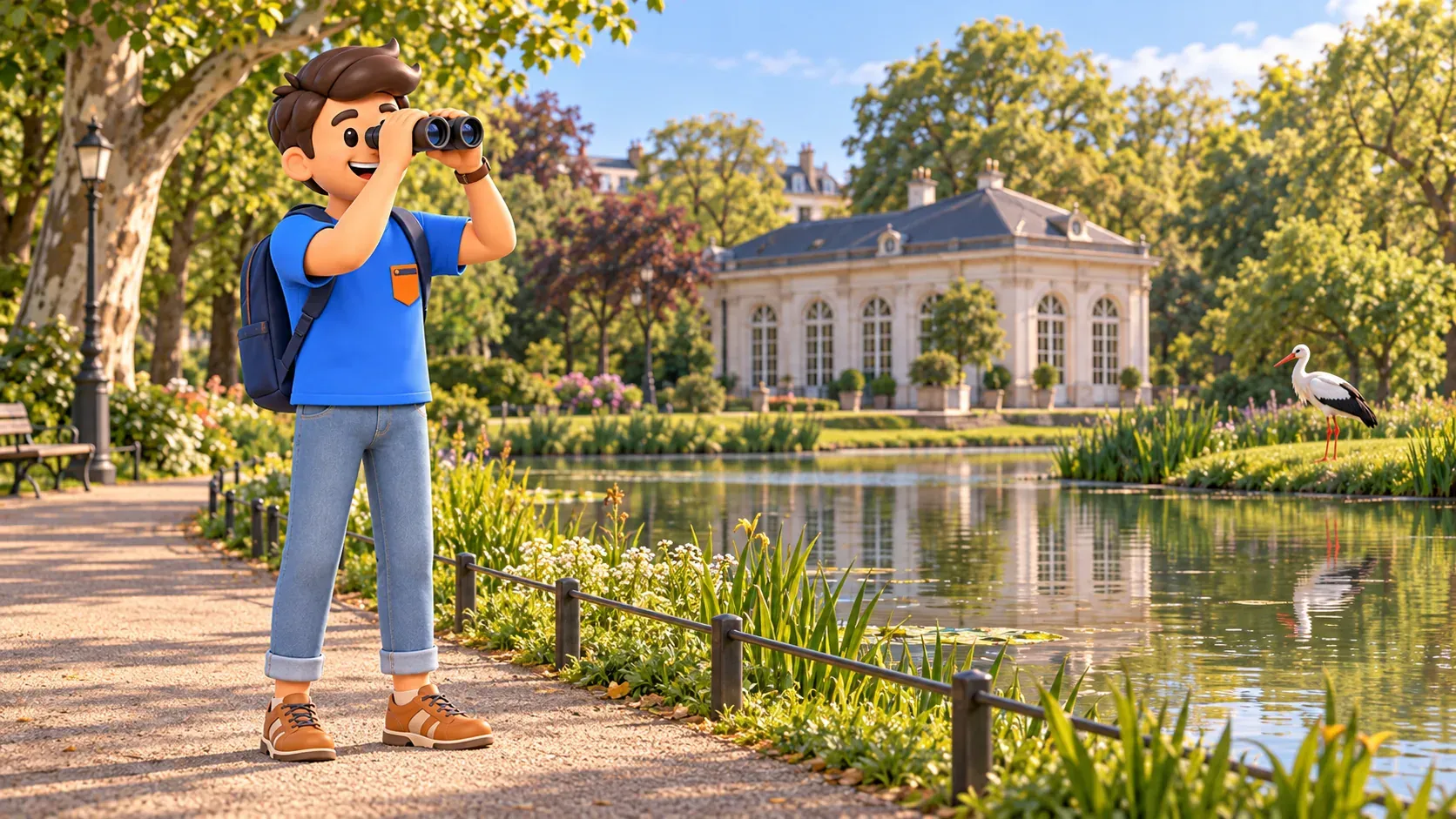
The Joséphine pavilion was built in 1804–1807 for a collection of citrus trees. That practical history explains the Orangerie name. Its present appearance also relates to rebuilding after a 1968 fire, making change part of the park's architectural story.
Look at the pavilion with its surrounding open space, then continue to water on a suitable path. Interior access and organised activities are unnecessary for this finish. A small loop of your choosing and time to rest are enough.
If you encounter a stork, watch from a distance; birds are not a promised stop. Old zoo references should not become your programme either: the former zoo closed and its site is changing use. The park itself is the value of this final section.
The park's earliest planting belongs to the late seventeenth century, with landscape arrangements developing later. A straight avenue and winding path can preserve different ideas of walking: one directs the view forward, the other reveals it gradually. Experience that change through movement.
Fit the European Quarter into your trip
Choose one interior emphasis on a first outing, or keep the route entirely outdoors. Three consecutive institutional visits can displace water, connecting walks and park time. That becomes a different day with another purpose and duration.
For photographs, choose three themes: Parliament's glass outline, the Human Rights Building's technical forms and a softer park view. The series communicates changing architectural languages more clearly than similar pictures at every entrance.
RoadMe works out a personal route or full trip plan around your interests and available time. In the app, it is more convenient to connect the European Quarter with other neighbourhoods, visits and rest in one considered programme.
For another historical scale, try the Neustadt walk; for science and living collections, explore the university route. The European Quarter adds contemporary Strasbourg, where substantial institutions meet water and an ordinary city walk.


