
Orangerie Park: A Slow Walk Among Pavilions and Sculptures
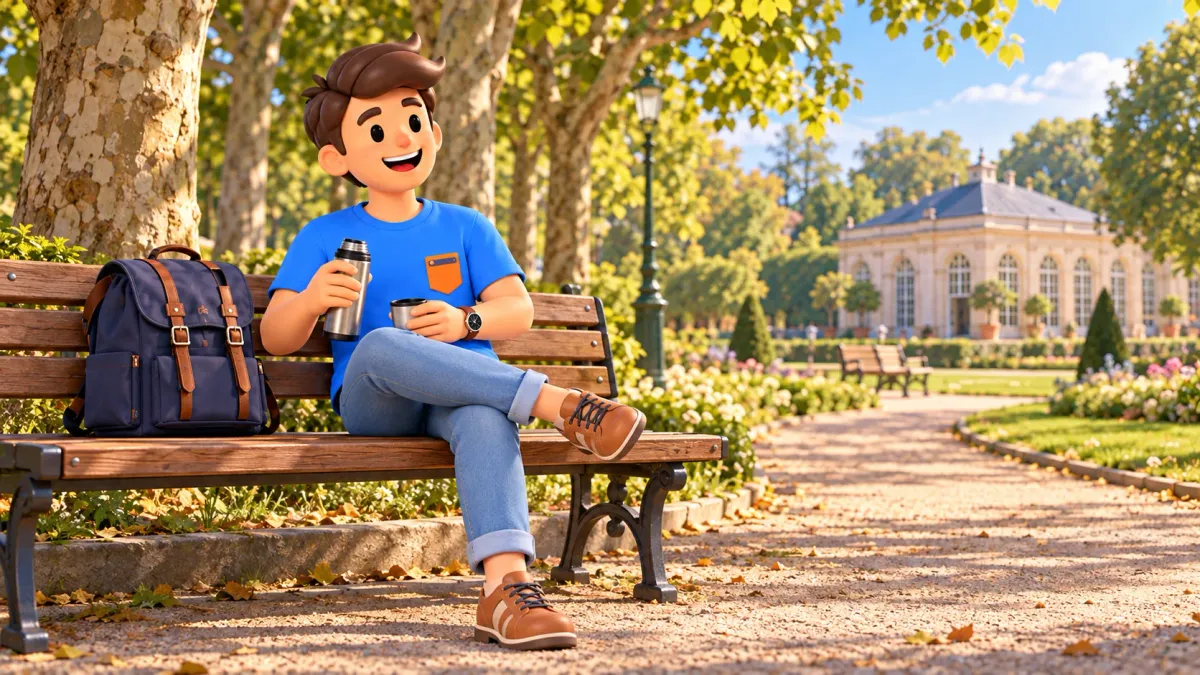
In the Orangerie, walk from story to story. A former orangery explains the park's name, a small toll pavilion recalls city trade, a bronze goose animates a scene of rural Alsace, and a contemporary well invites you to seek an image of the Moon below your feet.
For an introduction, choose a small loop: the toll pavilion on the European Quarter side, Pavillon Joséphine, Gänseliesel, Le Puits voleur, water and the Temple d’Amour. Allow roughly two hours for observation and rest. This is an unmeasured planning estimate; add travel from the centre, a meal and particular activities separately.
Set the pace for an unhurried walk
The thread is changing biographies. Some buildings moved here from elsewhere, a sculpture was intended for a market, and a structure for plants became the main architectural landmark. The park gathered different histories while remaining a place for ordinary walking.
In RoadMe, it is easier to get a personal Orangerie plan around your interests, dates, pace and budget. The app works out the route and whole trip, connecting park architecture, art and rest in a programme that suits you.
The European Quarter side fits the suggested order. Entering elsewhere, reverse the loop or start with the nearest section. Keep relaxed connections rather than treating the exact sequence of names as essential.
Before the first monument, choose today's emphasis: architectural details, small stories or green space. One attentive pause can offer more than a hurried search for every sculpture on a large park map.
The toll pavilion: a small temple with a practical task
The Pavillon d’octroi looks almost like a small ancient temple. Pink sandstone, columns and a triangular pediment give it a representative character. Its original purpose was everyday administration: collecting a city duty on goods arriving from outside.
It dates from around 1830 and moved to its present position in 1972. Distinguish those dates. The building's age does not mean it always stood among these particular park paths.
Find the word octroi and compare it with the form. Without the reference to a levy, the structure could appear purely decorative. A small detail returns the city's economic history and shows how expressively a service building could be designed.
An exterior view from available public space is enough. Continue towards Pavillon Joséphine afterwards. Moving from a small structure to a long façade reveals two architectural scales within one park.
Pavillon Joséphine: citrus trees and the park's name
Valentin Boudhors designed the pavilion, built in 1804–1807 for a collection of bitter-orange trees. Plants from Bouxwiller, previously associated with an aristocratic estate, acquired a place in the city. That practical story explains the Orangerie name.
The trees needed light and protection from cold. The long front and substantial openings therefore express more than an attractive composition. Architecture met the requirements of a living collection while giving it public presence.
The name recalls Joséphine de Beauharnais and her stay in Strasbourg. Today's appearance also belongs to rebuilding after the 1968 fire. The historic idea continued through substantial loss and reconstruction.
Consider the pavilion with its open setting before choosing a smaller detail. Going straight to the wall can hide the horizontal composition. A few steps back sometimes explain a building better than prolonged attention to one door.
The sphinx figures at the entrance came from the gardens of Château Klinglin in Illkirch. They extend the theme of relocated heritage: the park preserved objects whose original surroundings were elsewhere. Building and sculptures acquired a shared new life here.
An interior visit is unnecessary for this route. Keep time for the avenue in front, which makes the building part of garden space. Architecture works with movement and the distance of the view.
Straight avenues and winding paths: two garden ideas
The park's early history belongs to the regular promenade tradition of the late seventeenth century. English landscape-garden features developed later. Its gradual formation explains why a strict line and freer curve offer different ways of shaping an impression.
Walk a small straight section, then choose an available winding path. The first directs your eye forward; the second reveals views progressively. Experience garden history through movement without needing specialist terminology.
The apparent naturalness of landscape areas is designed too. Tree groups, open lawns and water arrange what becomes visible. Notice where the pavilion disappears behind greenery and where it returns, linking the next section with the beginning.
A legend connects the Orangerie with André Le Nôtre. An avenue bearing his name can easily appear to establish authorship of the whole park, but the municipal history draws on different archival evidence for the early promenade. Treat the garden as the result of many stages rather than one famous designer.
Gänseliesel: a small bronze story
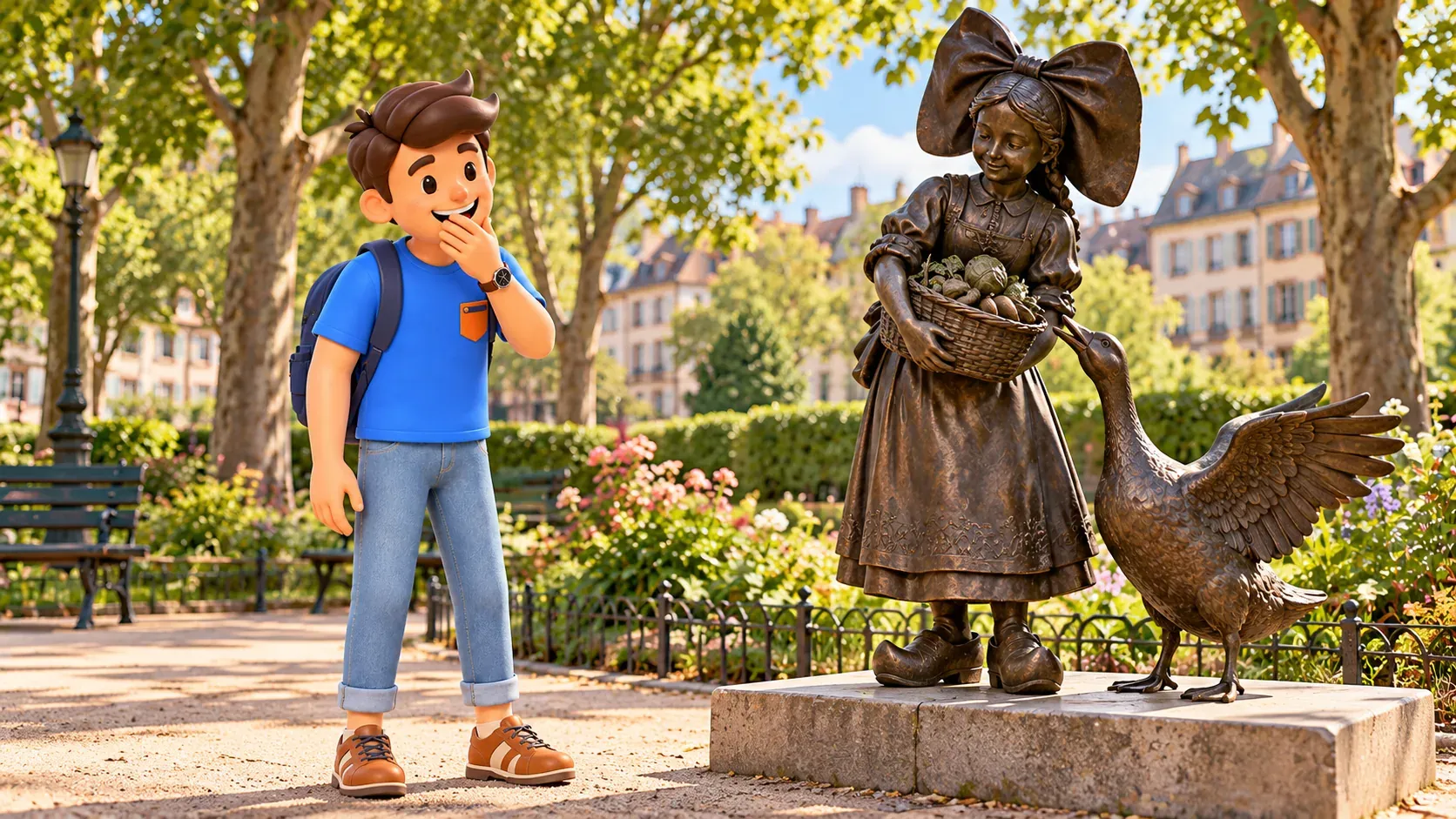
Albert Schultz's Gänseliesel was commissioned in 1898 for the market at the Old Customs House. It moved to the park in 1900 at the artist's wish. Rural life entered a promenade setting, retaining connections with trade and regional culture.
A girl in a traditional headdress carries a basket of vegetables while a goose attempts to reach them. The small conflict explains the figures' movement. An everyday moment becomes a story that is easy to imagine unfolding.
Notice the bird's head direction, basket and the girl's turn, then change your viewing angle while remaining on the path. Relationships between the figures reveal the sculpture, while clothing connects it with rural Alsace.
With a child, ask what might happen a second later. Adults can consider how a domestic episode becomes public art. Neither approach requires a museum lecture or the sculptor's complete biography.
The name Gänseliesel belongs to a familiar goose-girl motif in German-speaking culture. Strasbourg's composition gives it local character through dress and the market basket. It is both a recognisable regional subject and a particular work for city space, worth remembering through action as well as an unfamiliar name.
Le Puits voleur: looking down for the sky
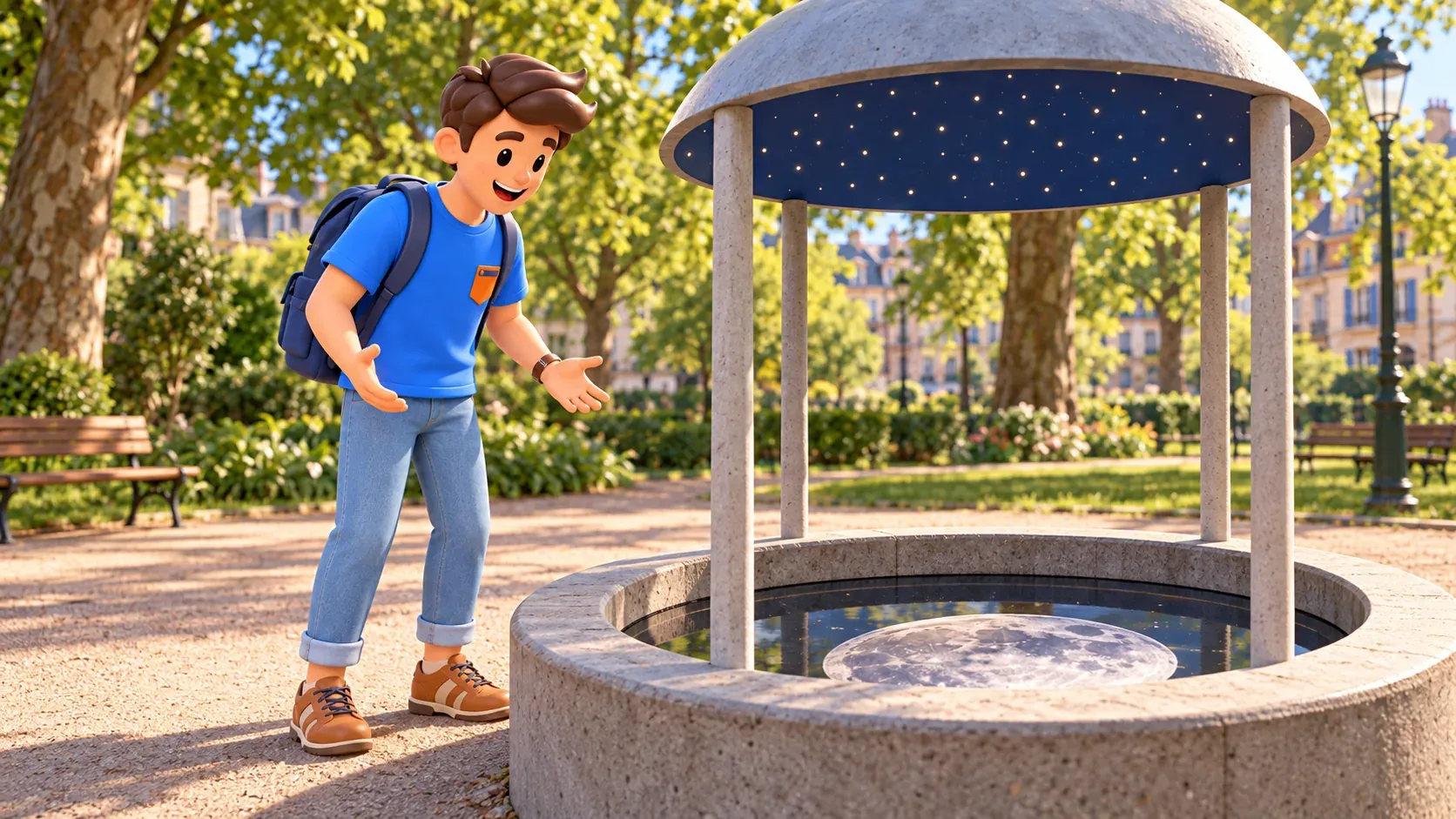
Patrick Bailly-Maître-Grand's Le Puits voleur dates from 1994, commissioned by CEAAC. From a distance, its small dome on four supports can suggest a garden pavilion. Closer attention turns architectural form into part of an optical game.
In the work's intended arrangement, a starry image appears beneath the dome and a full Moon image within the well. Printing, imagery and mirrors create the effect. The direction matters: a celestial subject is sought below rather than overhead.
Notice your expectation first, then the arrangement. Understanding the mechanism does not cancel the artistic idea; trust in what we see becomes the subject. This park stop offers something different from the neighbouring bronze narrative.
The description explains the artist's intention; the effect's visible condition on site can change. If the image is difficult to see, consider structure and idea as part of the walk. Finding one view need not consume the rest of your outing.
Compare the two stops. At Gänseliesel, movement occurs between figures; here, it happens between expectation and the viewer's gaze. Neighbouring works involve visitors in different ways.
Water and the Temple d’Amour: a freer landscape
Continue towards water on available paths. After close attention to sculpture, give your gaze a longer distance. Trees and reflections connect individual objects into a wider landscape, changing the sense of space.
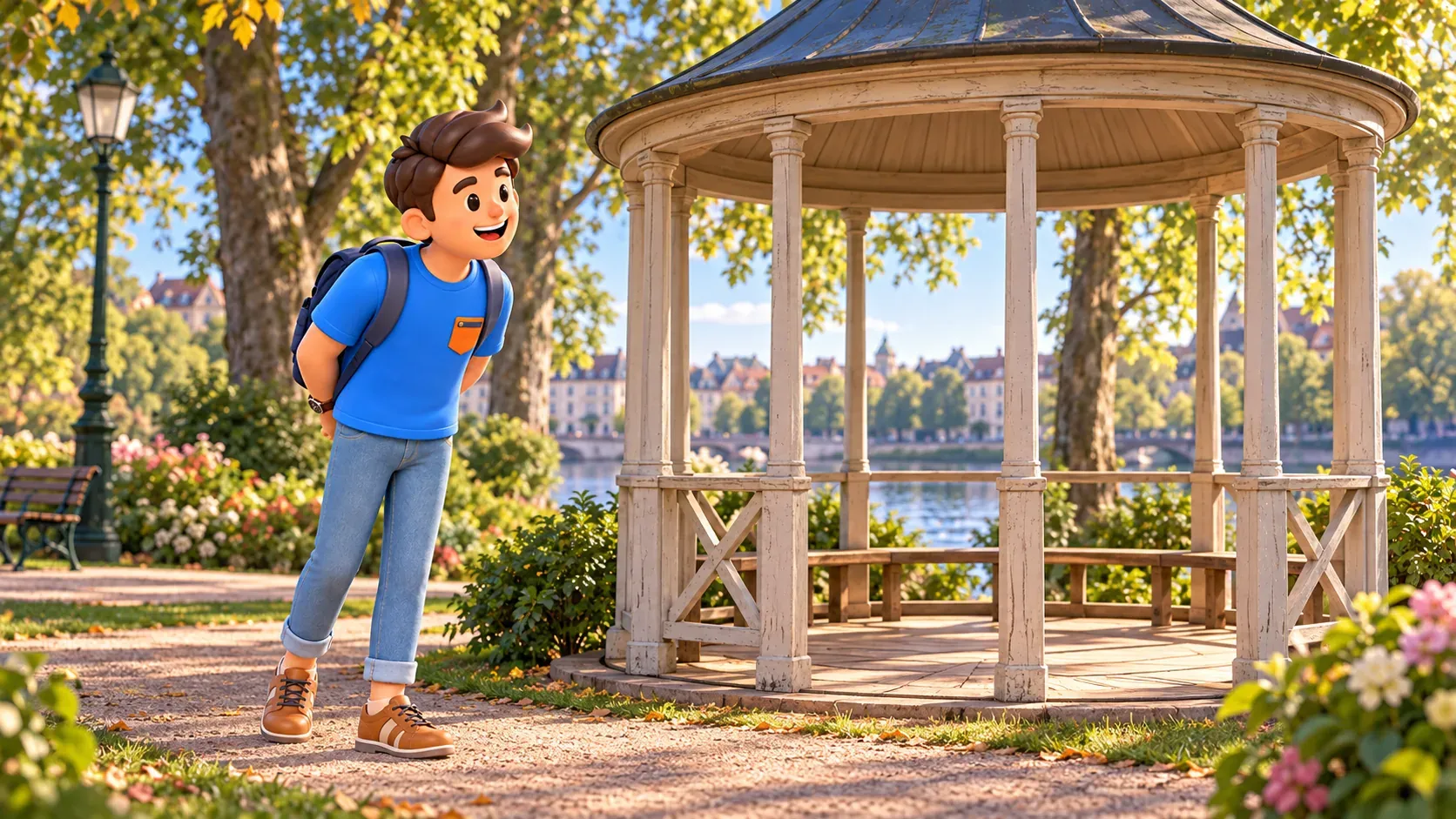
The Temple d’Amour is a light wooden garden pavilion from the early nineteenth century. It previously stood in the Kammerer garden near Parc du Contades. Saved from demolition, it moved to the Orangerie in 1958.
Its age differs again from the date of arrival here. The story echoes the toll pavilion and Gänseliesel, with another result: an open structure becomes part of a green view, allowing its surroundings to remain visible through it.
Look between the supports, then step back to see the pavilion among trees. A small building need not dominate like an urban monument. It contributes a particular accent within a walking landscape.
Leave a pause here without new historical information. Sit on a suitable bench or continue a little beside the water. Unhurried time belongs to the route as much as names and dates, letting the park feel like a place for rest.
Compare the Temple's light timber with the toll pavilion's stone. Both can recall small temples, yet their purposes differ. One admits the view between supports; the other preserves a memory of city trade controls. A related architectural image can carry different histories.
Choose the return
Return towards a suitable exit along open paths without repeating every turn. You can revisit the Joséphine pavilion or finish at a convenient connection with the city. Count the journey to the next part of your day separately.
With less time, retain the pavilion, one artwork and a small waterside section. For more, add a free loop through greenery. Extend the outing through observation time as well as additional destinations.
Seasons distribute attention differently. Dense leaves change views, open branches reveal forms, and water reflects shifting light. Choose what is visible today rather than trying to reproduce a picture from another season.
Remember this park walk
Compare three relocation stories: toll pavilion, Gänseliesel and Temple d’Amour. The park becomes a place where the city preserved varied heritage in new surroundings. Pavillon Joséphine and contemporary art add other forms of change.
For photographs, choose an overall park view, a small architectural fragment and a narrative sculpture detail. The selection communicates the walk without photographing every object identically. Keep one personal note about where you wanted to stay longer.
RoadMe works out a personal route or full trip plan around your interests and available time. In the app, it is more convenient to connect the Orangerie with other neighbourhoods, visits and rest in one considered programme.
To continue beyond the park, use the European Quarter walk. The university route with the Botanical Garden offers another view of green space. In the Orangerie itself, you can finish with one chosen story and a good pause.


