
University Strasbourg: Palace, Garden and Observatory Walk

Discover university Strasbourg through three different settings: a ceremonial palace, a living plant collection and a historic observatory. This walk considers how the city made room for science. The transition from representation to observation matters as much as the individual façades.
Begin at the Palais universitaire, then follow available campus streets towards the Botanical Garden. After its accessible outdoor areas, consider the observatory from an available exterior viewpoint. A separately chosen planetarium visit can finish the outing. Allow roughly two to three hours with relaxed garden time, an unmeasured estimate. Add a show, guided tour, approach and return separately.
Build the walk around one interest
Choose a leading question: what does a university look like, how does a scientific collection work, or how was the sky studied? All three occur nearby, but one helps distribute attention. Architecture lovers can linger at the palace; plant enthusiasts can give the garden more time.
In RoadMe, it is easier to create a personal university Strasbourg plan around your interests, dates, pace and budget. The app works out your route and whole trip, connecting architecture, scientific visits and rest in a programme that suits you.
Select a day and any booked experience before fixing the order. The garden follows seasonal arrangements, while tours and shows have their own times. The historic campus is a group of working institutions with different visitor arrangements.
If you arrive on the Neustadt route from Place de la République, the university palace becomes a natural transition. That walk explained an urban axis; this one explores the university world beyond its ceremonial end.
Without a booked visit, keep a simple order: palace, campus connection, available garden areas and observatory exterior. With a tour, its actual meeting point becomes the anchor and may differ from the historic building itself. Check where the group assembles before heading directly to a façade. Reverse the order when that better fits the appointment.
Palais universitaire: an image of knowledge
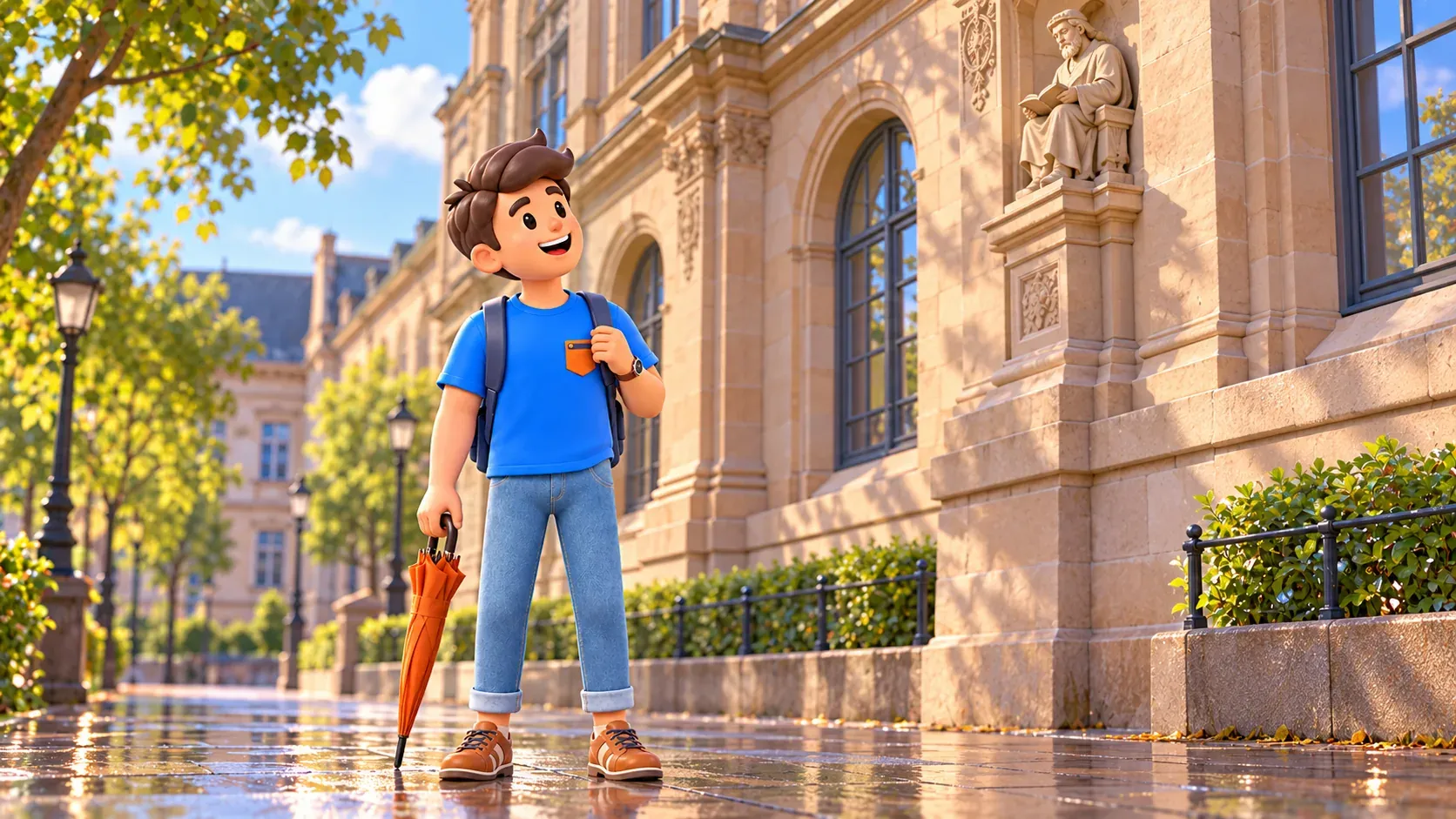
The palace opened in 1884 to Otto Warth's design. Its Neo-Renaissance front gave the university a representative presence comparable with major public buildings. Science appeared as one foundation of Strasbourg's ambitious late nineteenth-century urban expansion.
Look from a distance to understand the window rhythm, entrance and upper outline. Then select a scholar figure or decorative fragment. Moving from whole to detail helps explain the architecture without requiring a list of every person represented.
Notice the avenue direction in front. The façade ends its perspective, while the campus continues beyond. The difference between a ceremonial face and a working environment will guide the next part of the walk.
The Aula has a history of its own, including an association with the Council of Europe's first session in 1949. Treat the interior as a separate visit under current arrangements. The university offers particular guided tours; approaching the façade does not replace their participation conditions.
The outside is enough to begin. Keep time for the garden and scientific buildings instead of waiting at the entrance in the hope of seeing every interesting room immediately. Other settings reveal different sides of the university.
The campus between palace and garden
Continue towards the Botanical Garden along available public connections and streets. Notice how separate buildings form a scientific environment. Rather than one enormous building, the university developed a system of spaces serving different disciplines.
Compare windows and distances between buildings with the palace front. Ceremonial architecture contributes to a city view; a scientific building adds requirements for light, equipment and work. An outside look cannot explain every feature, but asking the question changes what you notice.
This is a working campus. People attend classes, laboratories and jobs, making ordinary use part of the interest. There is no need to wait for a photograph emptied of city life or turn teaching entrances and restricted areas into compulsory destinations.
The Botanical Garden and surrounding university green spaces have different visitor arrangements. For the garden, use the indicated entrance via Allée Anton De Bary rather than assuming a shortcut between neighbouring buildings will provide access.
Botanical Garden: seeing plants as a collection
The garden's tradition begins in 1619, when plants had particular importance for medical teaching. Its present site belongs to the university's late nineteenth-century expansion. The age of the institution differs from the age of the particular garden you encounter today.
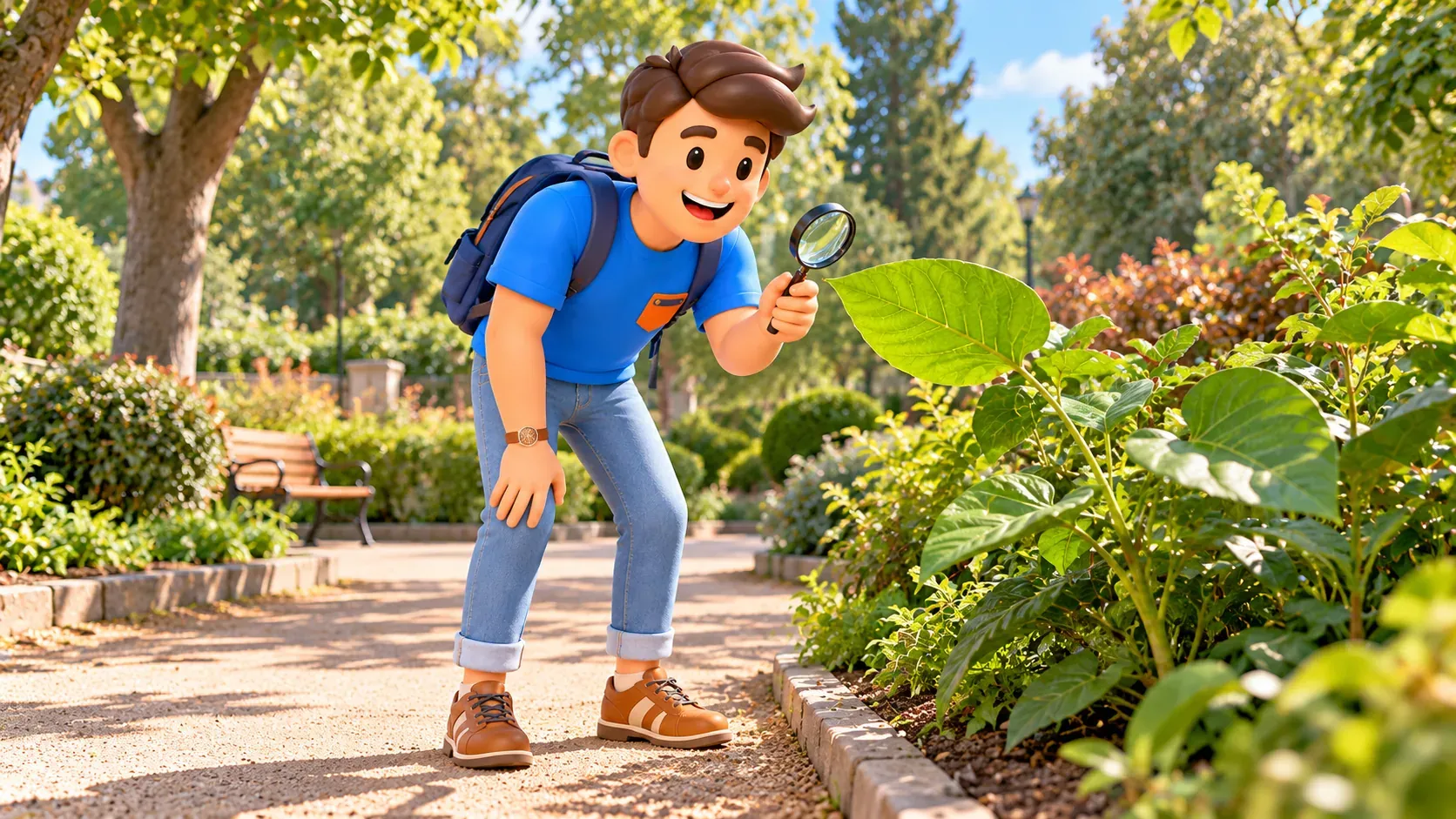
It shows how observation becomes comparison. A plant matters beyond a bright flower or impressive crown. Leaves, bark, branching and the arrangement of beds reveal features through which a living collection is studied and explained.
Select two plants visible from an open path and compare leaf shapes from a distance, then look at their overall silhouettes. This simple exercise provides a focus without Latin names or the need to cover every section at once.
Independent public entry is free, but seasonal hours and weather closures apply. The garden section must fall within the actual opening period for your day. A morning campus walk does not establish morning access to the collections.
As checked on 22 October 2026, the university states that greenhouses are inaccessible from late September 2026 until late May 2027, with some garden paths also temporarily closed. This route therefore uses available outdoor areas. Check the updated notice for travel beyond that period.
If the garden is completely closed, keep the exterior campus walk and your selected scientific visit. Save the living collections for a suitable day rather than treating a fence or closed gate as a complete substitute for the garden experience.
Season changes the subject as well as entry times. A dense crown may attract attention in summer, while branches or bark can lead the view at another time. A living collection rewards change. Use available labels to connect one visible feature with a name or plant group, without trying to read every sign.
De Bary greenhouse: a form explained by a plant
The historic de Bary greenhouse demonstrates purpose-built scientific architecture. The twelve-sided glass structure was created for a giant Amazonian waterlily. Light and a central pool responded to cultivation needs rather than simply producing an unusual pavilion.
It connects botany and building design. When one living organism requires particular conditions, enclosure, light and internal arrangement change. A building begins to explain scientific work without a detailed lecture on greenhouse technology.
Do not organise the current walk around entering it. Relate its history to a wider view when the relevant exterior area is available. Where barriers apply, retain it as historical context and continue along open paths.
Observatory: architecture for observation
Strasbourg's observatory opened in 1881 as part of the new scientific complex. Building arrangements depended on instruments and observing directions. This is another way to create architecture beside the representative palace composition at the beginning.
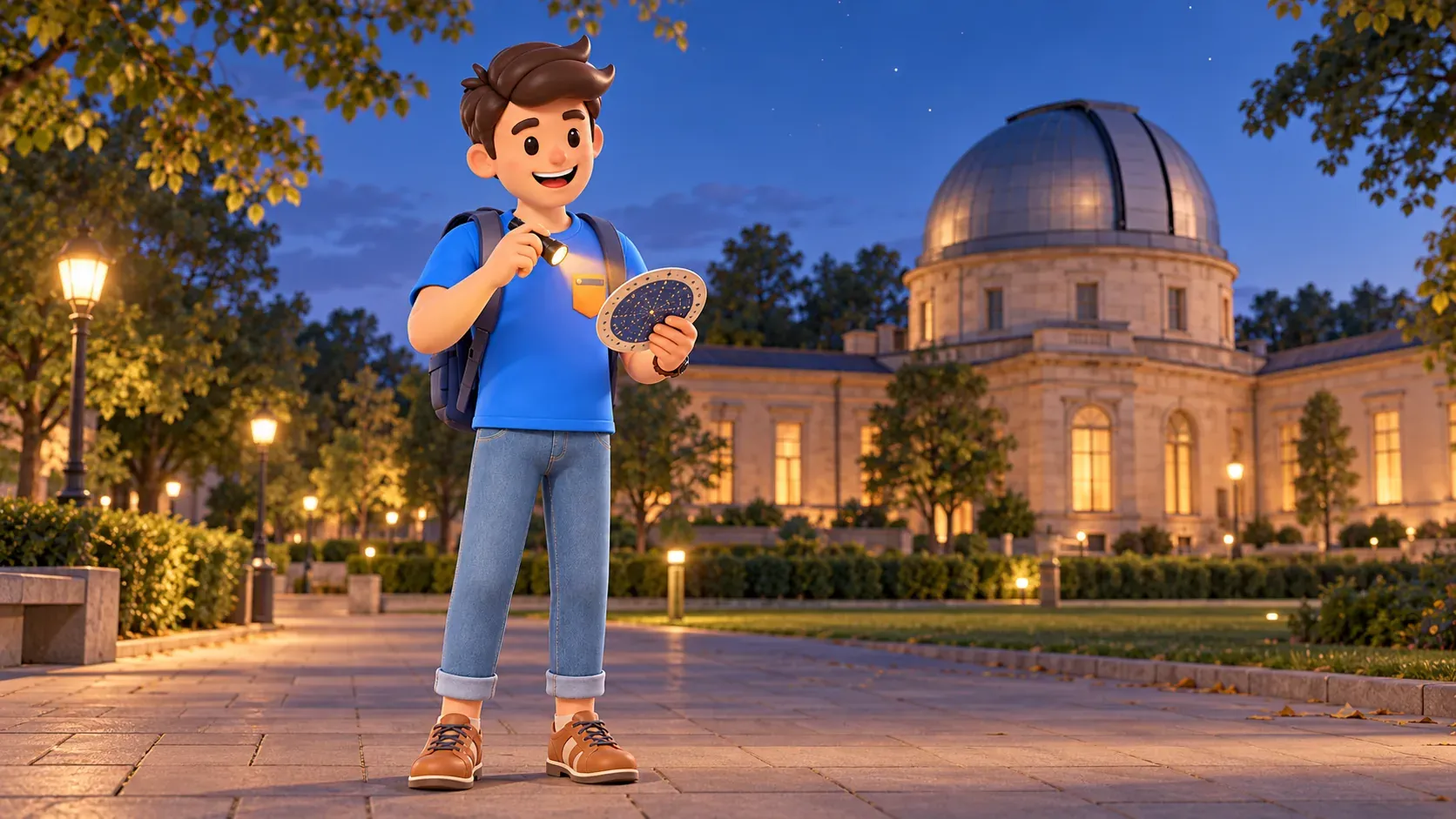
From an available outside position, consider the metal dome and connected wings. The dome is a technical enclosure for an instrument, though from a distance it can seem simply a striking roof. Compare it with the greenhouse: both forms relate to a task inside.
The historic large refractor recalls an era of intricate optics and mechanics. A short walk needs an understanding of the instrument's relationship with space more than a catalogue of technical dimensions. Observation depended on precision as well as an appealing sky.
The observatory remains a research institution. Access to collections and instruments belongs to a separate programme, with its own booking and participation arrangements. Match any guided tour to the ages and needs of your group before choosing it.
An evening exterior approach does not automatically become telescope viewing. The architecture introduction is sufficient for this walk; plan a scientific encounter through a genuinely advertised event. That distinction helps establish what kind of experience you are selecting.
Planetarium: another way to experience the sky
The Jardin des sciences planetarium is a separate destination from the historic observatory. In its new building, opened in 2023, projection creates the sky on a dome screen. Scientific explanation comes through imagery rather than a view through a historic instrument.
To include a show, first choose a programme by subject, audience age and language. Its time then becomes an anchor for garden time and connections. Tickets and availability need their own check; an ordinary campus walk does not include a seat.
The university advises buying in advance. Leave a margin for reaching the meeting place and a relaxed beginning instead of inserting several substantial visits between garden and show. One chosen scientific experience usually preserves the outing's coherence.
After the observatory, think of the campus as a set of different tools. A building, a planted collection and an optical instrument support knowledge in different ways. Keep one question that arose during the walk; it may suggest a future tour or a plant group to explore more closely.
Finish the university walk
Compare three ways of presenting knowledge. The palace makes it publicly important, the garden supports observation of living collections, and the observatory links an instrument with a research task. The sequence has a story of its own without requiring every interior.
For photographs, choose different scales: a complete university front, leaf patterns and the outline of a scientific dome. There is no need to collect similar views at every door. Communicate the transition from a substantial urban image to a particular observation.
RoadMe works out a personal route or full trip plan around your interests and available time. In the app, it is more convenient to connect the university district with other neighbourhoods, visits and rest in one considered programme.
After science, the Krutenau walk offers another story of work and creativity. Or finish the day with time to rest. University Strasbourg rewards the freedom to linger at whatever has awakened your own curiosity.


