
Strasbourg on a Hot Day: Shade, Water and Short Walks
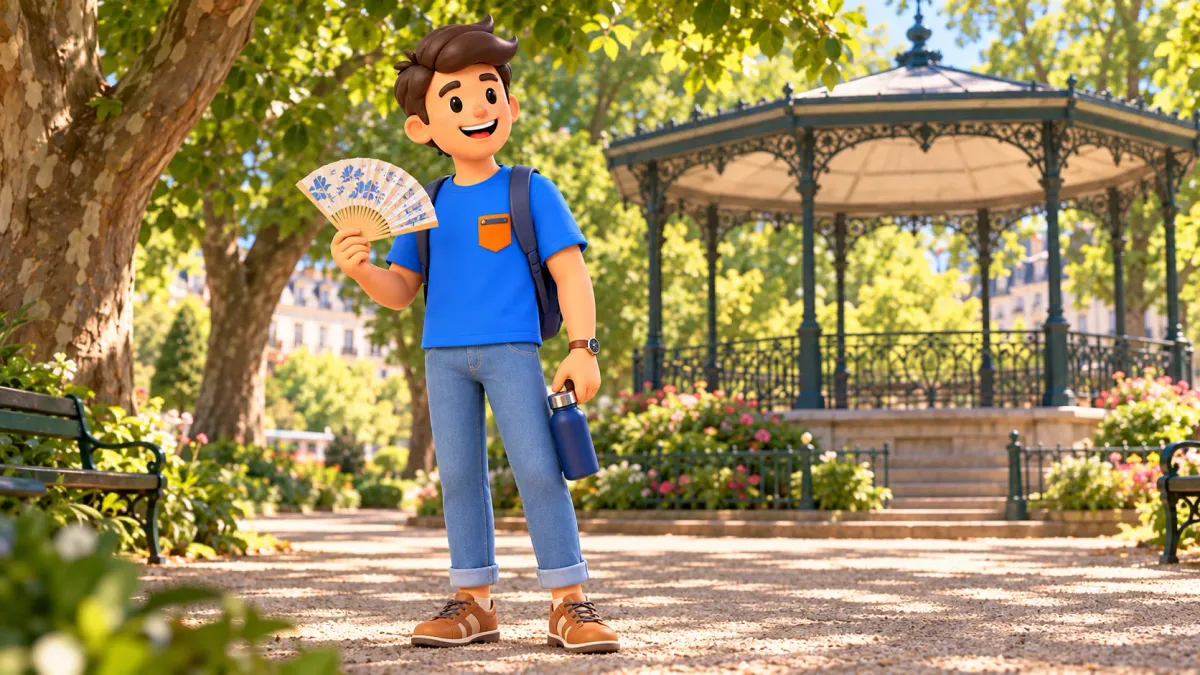
On a hot day, discover Strasbourg in smaller portions: a green corner, one piece of public art and a proper break somewhere cool. The outing keeps a story of its own without becoming a continuous journey between exposed squares.
The main option links Parc du Contades with the Janus fountain near the opera. Allow roughly sixty to ninety minutes for the short outing, including observations, ordinary connections and a brief rest. Approach and return are additional. Choose it only when conditions suit; the Orangerie below is a separate alternative if closer to where you are staying.
Choose cooler conditions and one leading interest
Begin with the forecast and official warnings for your date. Early morning or later in the day may suit better than midday, but neither automatically guarantees comfortable temperatures. If strong heat persists, shorten or postpone the outdoor section and spend time in a genuinely cool place.
Try RoadMe to have a personal route or whole trip plan worked out around your interests, dates, pace and budget. The app makes it much easier to connect short walks, selected visits and rest in a programme that fits your day.
Choose a leading interest: a historic garden, Tomi Ungerer’s public art or a quiet water view. One is enough. It helps to know where you can finish before leaving, rather than feeling obliged to reach the last stop regardless of the conditions.
French heat guidance recommends drinking water regularly before feeling thirsty, avoiding the hottest hours and favouring gentle activity with time somewhere cool. Tree shade does not replace a cool indoor refuge during severe heat. Let actual conditions and the needs of your companions determine the outing’s length.
This is not a fixed schedule for an entire day. A real rest separates two possible small outings, and the second can be dropped altogether. An attentive introduction to one place can be more rewarding than hurrying between many addresses in the sun.
A short sequence: Contades to Janus
Begin in Parc du Contades from the Avenue de la Paix side. Choose available paths that are shaded at that moment, with time near the bandstand. Then follow open public streets towards the République and opera area, finishing at the Janus fountain in Square Markos Botzaris.
| Part of the outing | What to choose | When to shorten it |
|---|---|---|
| Contades Park | A small walk, bandstand and seated pause | If the approach or available paths feel too hot |
| Connection to Janus | An open public route without extra detours | If continuing through city streets no longer appeals |
| A brief fountain stop | Two faces and the aqueduct image | If the viewing position is exposed to sun |
| Further rest | A genuinely cool place chosen beforehand | Keep this as a substantial part of the day |
Allow perhaps thirty to forty-five minutes in the park, with the remaining time for the connection and short sculpture stop. These are planning estimates, not measured walking times. The whole route is not beneath trees: ordinary urban stretches and street crossings separate the green space from the fountain.
The outing finishes near the opera rather than returning to your original park entrance. Think about the onward journey beforehand. If it adds a long exposed walk, keeping just the park or selecting a nearer outing may be the more useful choice.
Contades: an out-of-town promenade inside the city
The park’s story begins in 1764. Marshal de Contades created a promenade outside the city walls on a former firing ground. Military training space acquired another purpose, becoming a place for leisure, conversation and unhurried public movement.
The construction of the Neustadt later reduced its size, while incorporating the surviving section into the new urban plan. Along Avenue de la Paix, greenery meets substantial residential façades. Observe that relationship from a convenient shaded position: a once peripheral garden became part of the built-up city.
The cast-iron bandstand introduces a lighter scale. It first stood at Place Broglie in the 1880s and moved to Contades in 1900. Its delicate metal structure recalls public concerts and garden promenades. Its presence does not, of course, establish a performance on your visiting date.
Pick one detail, such as a support, roofline or repeated ornament. On a hot day, looking closely with a short pause can be better than setting out to cover the whole perimeter. The small River Aar recalls the district’s water geography without guaranteeing a cool temperature on every path.
Shade moves with the sun. A bench suitable earlier can become exposed later. Assess the actual place rather than relying on a park’s green colour on a map. If a useful resting spot is unavailable, keep the option of finishing early.
Janus: one sculpture instead of a long list
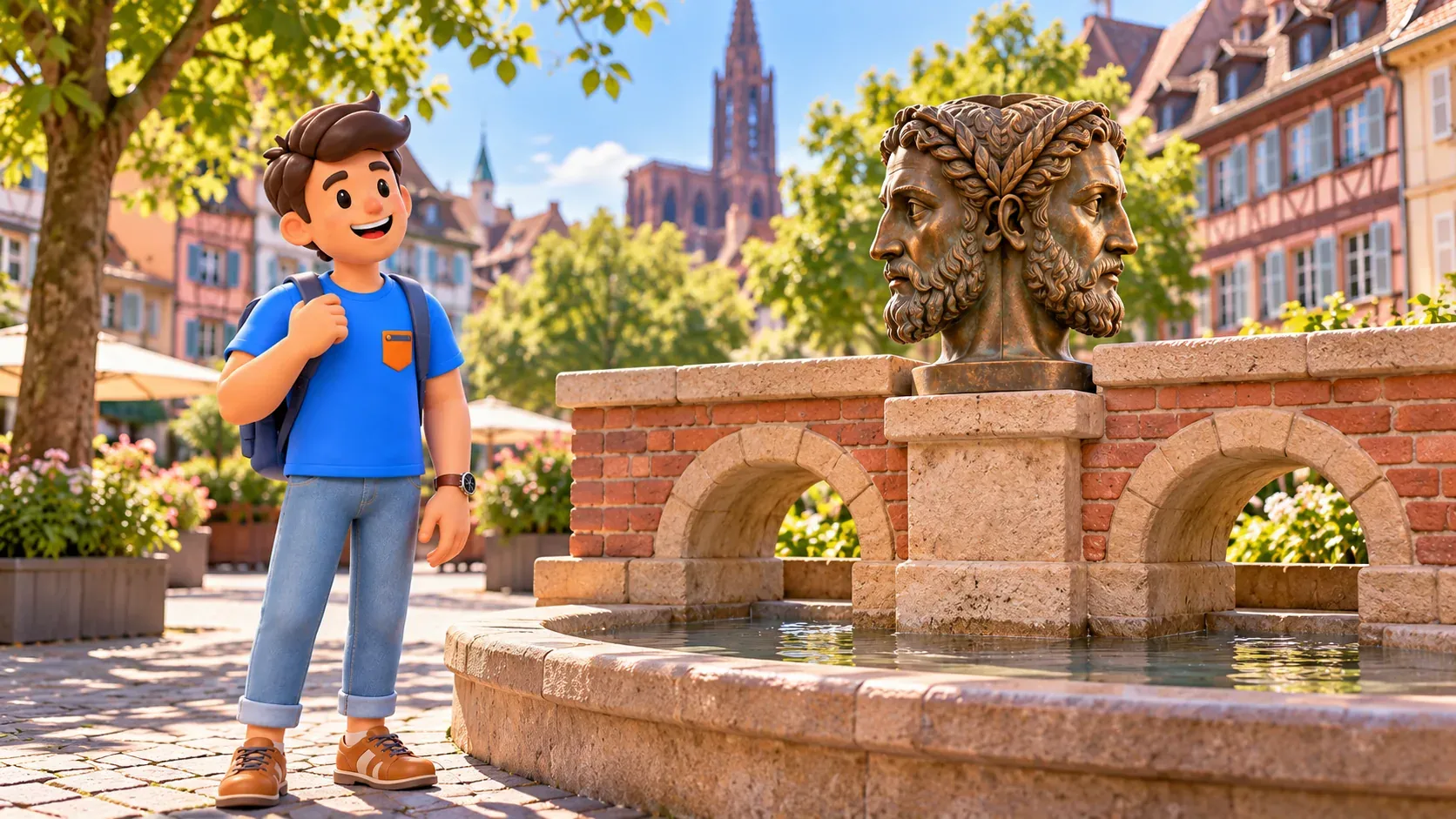
The fountain known as Janus is officially La Naissance de la civilisation. Conceived by Tomi Ungerer in 1988 for Strasbourg’s two-thousandth anniversary, it stands near the meeting of the old centre and Neustadt, beside the opera area. A short visit needs only one image to understand.
A double-faced head looks in opposite directions. The Roman Janus relates to beginnings and transitions; here the motif expresses Alsace’s dual identity and a view towards past and future. That theme suits a setting where different architectural layers stand close together.
The brick portion suggests an aqueduct and refers to Roman Argentoratum. This is a modern artistic interpretation, rather than a surviving ancient Roman engineering structure. Compare the weight of the brick form with the expression of the bronze faces.
If an available path allows an easy view of both sides, change position. If one side is exposed, a brief look is enough. You do not need to circle the whole work for a complete set of photographs; the essential idea survives a shorter stop.
Drinking water and ornamental water serve different purposes
Janus belongs in the route as public art. It is not an invitation to refill a bottle from an ornamental basin or cool yourself in it. Rivers and park ponds similarly remain part of the setting rather than substitutes for designated drinking-water points.
Bring water with you. To replenish it, look for a clearly identified drinking-water point and consult current city information. The municipal hot-weather map helps locate water points, parks, cool places and toilets, while the availability of an individual device still needs checking on arrival.
Ornamental installations may operate differently because of technical conditions or restrictions. Strasbourg restricted some fountains during drought in summer 2026, for example. That does not establish a permanent closure of every fountain; it means that running jets should not be a condition for enjoying your visit.
Janus keeps its artistic story even without moving water. Planning around that story is more dependable than relying on an unconfirmed opportunity for cooling or drinking.
Keep the middle of the day for real coolness
Choose a cool break before setting out. It might be a suitable room at your accommodation or an available public place with confirmed conditions. For a museum, first match its subject, opening arrangements and actual opportunity to rest somewhere cool.
The words “museum” or “pavilion” do not establish air conditioning, an available seat or entry at any time. Institutions can adjust arrangements in hot weather. Checking beforehand helps avoid a journey to an imagined refuge that becomes more tiring than the original outing.
Leave this part of the day without another compulsory list. Have lunch, read quietly or consider a few impressions. There is no need to compensate for a shortened route immediately with shopping and another walk through the most exposed streets.
In RoadMe, it is easier to create a personal plan for the whole trip, alternating shorter outings with chosen visits and rest. Set your interests and preferred pace so the app can work out a route with time for what you most enjoy.

Orangerie: a separate option if you are nearby
If starting near the European Quarter is more convenient, choose Parc de l’Orangerie instead of Contades. There is no need to connect both with a long walk in the same outing. Select a small shaded area with a water view and one story or architectural landmark.
The park’s name relates to citrus trees and the building constructed to house them in 1804–1807. Pavillon Joséphine recalls that history. You can appreciate it from outside without relying on a guaranteed cool indoor space.
Later development introduced winding paths and freer groups of planting in a landscape-garden tradition. Alternating open and shaded sections creates variety. For a hot-day visit, choose a path that is actually shaded, even when shorter than the loop you first imagined.
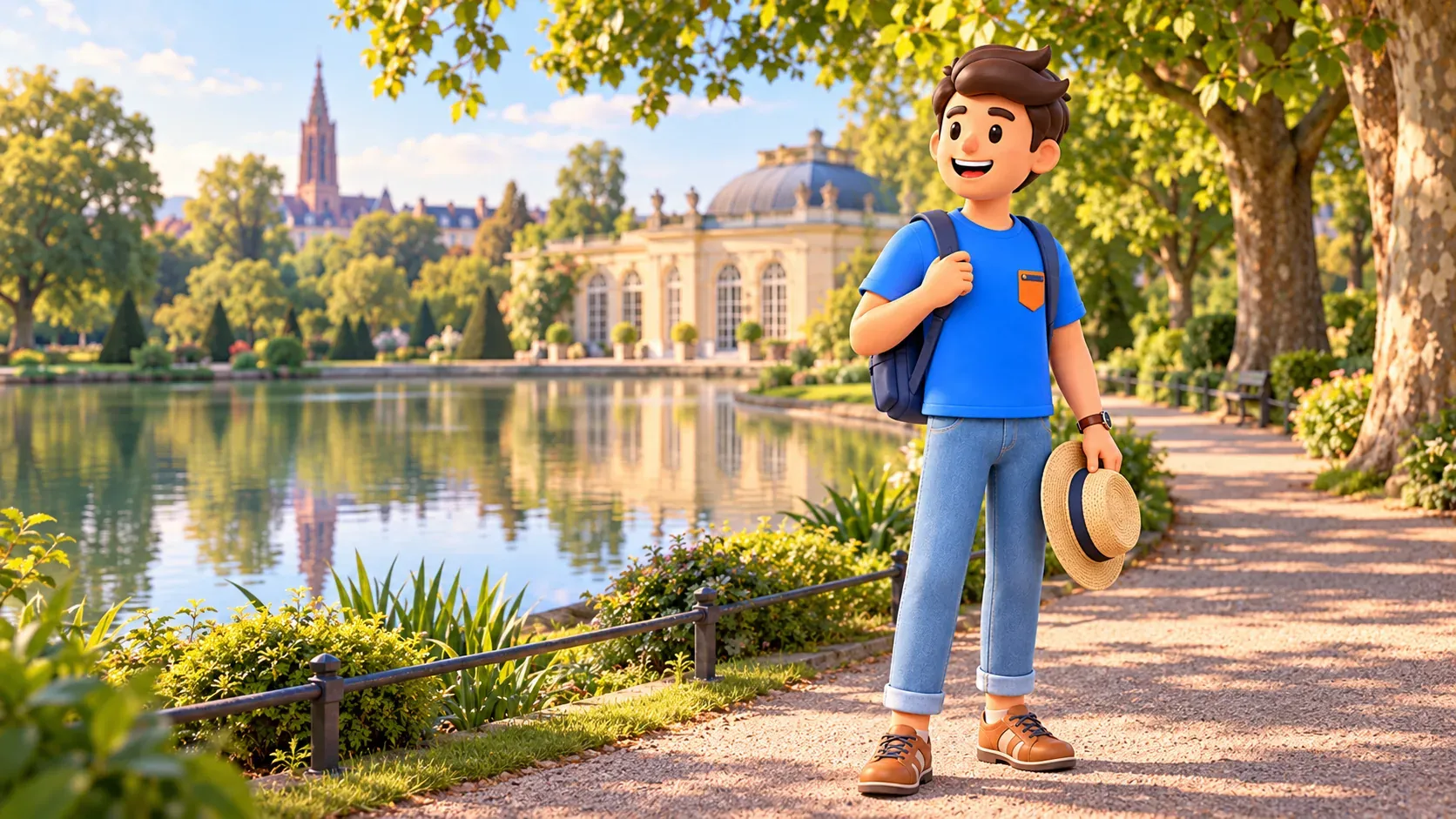
The pond provides a quiet view and reflections. Look from an available path, keeping a normal distance from its edge. Ornamental water does not establish a bathing place, and visiting the park does not guarantee that every separate activity or service is operating.
When conditions favour a longer outing, use the Orangerie pavilions and sculptures walk. For now, a small part of the garden can be enough: linger, notice something and return without completing every landmark.
Decide on a second outing from actual conditions
Later in the day, reconsider the weather and your wish to walk. If it has become more comfortable, select a short section of the Ill riverside quays near your onward route. The full walk is optional; an exposed riverside can remain hot too.
If heat persists, leave the second outing for another day. A garden and one public artwork already provide an experience with its own identity. Strasbourg is rewarding through what you notice and connect, rather than simply how many addresses you reach.
Keep one small note for tomorrow: the bandstand, Janus’s two faces or trees reflected in a pond. That memory can help choose the next interest in your trip. Art, Neustadt history or garden architecture can each become a reason to return at a suitable time.


