Strasbourg Cathedral: interior, clock or platform?

Choose Strasbourg Cathedral’s ordinary interior visit for Gothic space, stained glass and sculpture; the astronomical clock presentation for a timed encounter with its figures and mechanics; or the platform for a city panorama if a long staircase suits you. These are three distinct experiences with different entrances, times and admission arrangements.
For limited time, choose one. With a generous part of the day, two can fit, provided their actual schedules leave room for queues and rest. There is no need to turn the cathedral into a race through all three. Start with the experience that interests you most and let the rest of Strasbourg follow.
Decide what you want to see first
A cathedral visit can mean quietly following coloured light through the nave, waiting for a particular clock presentation, or climbing above the roofs. Choosing between them is easier when you picture the experience rather than treating the building as one combined attraction.
Think about your companions as well as your own curiosity. A timed programme asks you to organise part of the day around it; a staircase requires physical effort. An attentive interior visit can be a complete experience in itself. Your choice should leave enough energy to enjoy what comes afterwards.
RoadMe makes it much easier to build a personal Strasbourg plan around your interests, dates, pace and budget. Try choosing an architecture or panorama focus so the app can work out a route that gives the cathedral a useful place in your trip.
| Your main interest | Choose | Key distinction |
|---|---|---|
| Gothic space, glass and sculpture | The ordinary interior visit | Free entry within visitor hours |
| The timed clock presentation | The astronomical clock programme | Separate paid, same-day admission |
| Roofs and a broader city view | The platform ascent | Separate paid visit with stairs |
Begin with a few minutes outside
Approach the west front from the square and give the stonework a little attention before looking for an entrance. The tall façade becomes more legible when you notice the relationship between large openings, carved figures and fine layers of stone. The building then feels like a setting for your visit rather than simply its doorway.
A short exterior introduction can connect Cathedral Square with Place du Château on the southern side. Both the clock programme and platform are approached from that side, but they have different entry arrangements. Follow current signs and staff directions rather than assuming one queue serves everything.
Our walk around the cathedral quarter gives the surroundings more space. For this visit, a few observations outside are enough; another museum or a longer circuit is optional.
What each experience offers
The interior: space, light and a living church
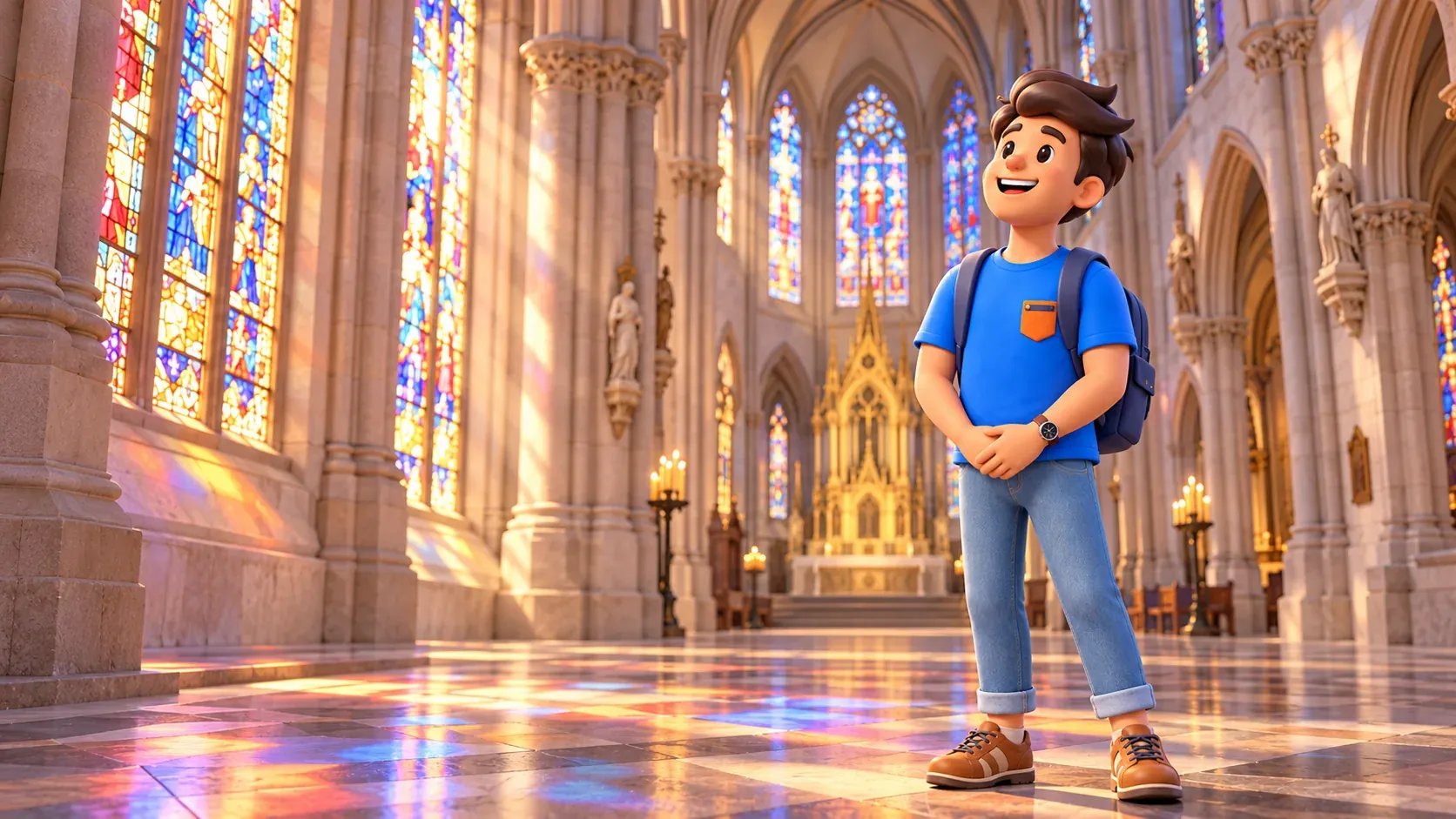
Inside, begin with the overall space. Notice how the stone supports rise, how the view changes along the nave and how stained glass gives daylight colour. Then choose one sculptural or architectural detail to consider more closely. You do not need to identify every figure for the encounter to be rewarding.
Ordinary tourist access is through the south portal. Entry is free and does not require a reservation. Security checks still apply, so free entry should not be read as instant entry. This is an active place of worship: permitted sightseeing follows visitor arrangements, services and staff instructions. An open church for worship does not automatically mean an ordinary tourist visit is available.
You may be able to see the clock as an object during a permitted interior visit. That is different from attending its full timed presentation. If architecture and coloured light are your main interests, it is reasonable to focus on them and leave the clock programme or climb for another occasion.
The astronomical clock: a presentation with its own timetable
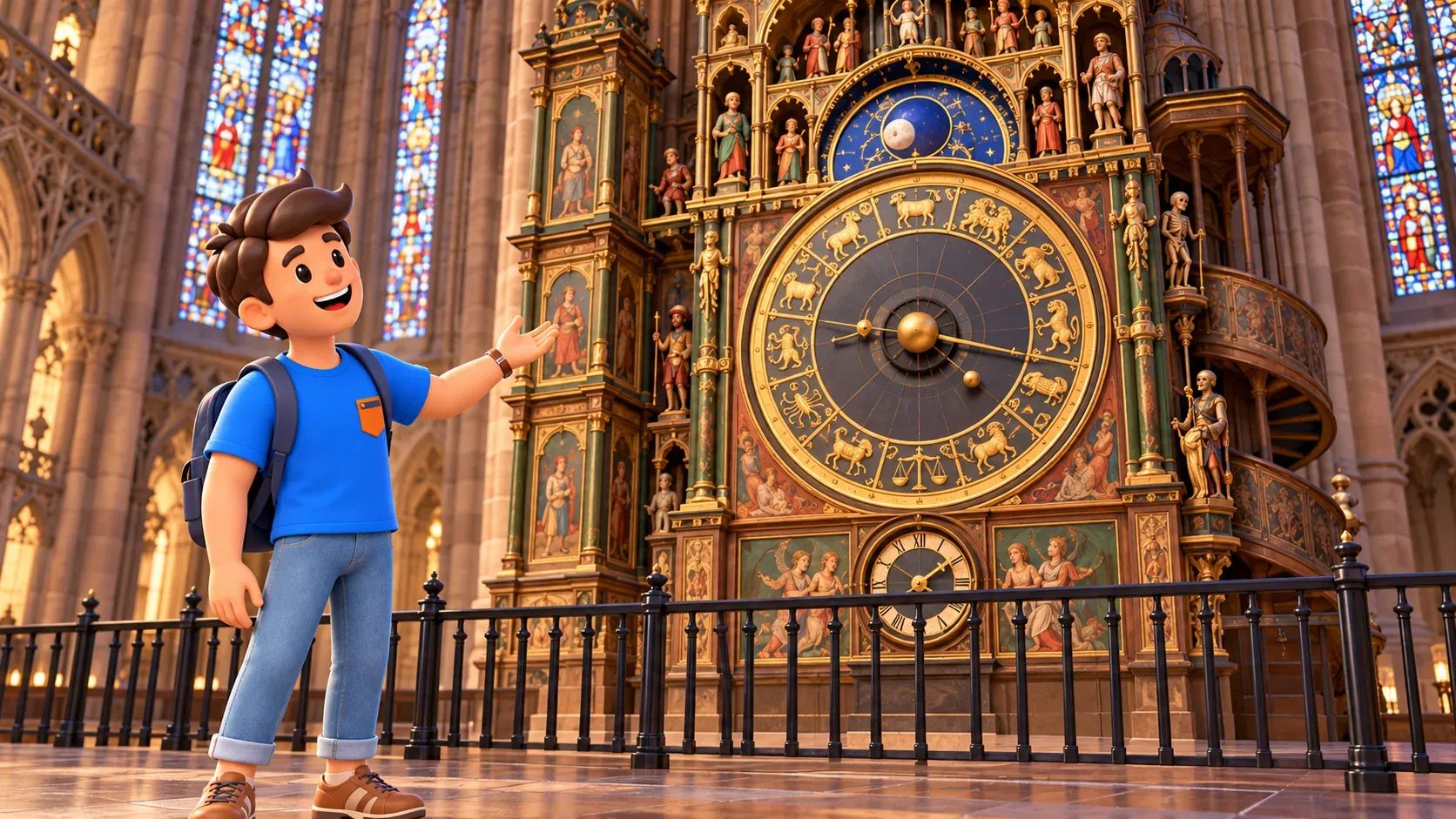
The clock combines calendar, astronomy, mechanics and moving figures. Its Renaissance case belongs to the sixteenth century, while the present mechanism was created by Jean-Baptiste Schwilgué in 1838–1842. That combination makes it worth understanding as a layered work of design, beyond a single moment of movement.
For the organised programme, admission starts at 11:30 through the Saint-Michel entrance reached from Place du Château. The film begins at 12:00 and is presented in French, German and English; the apostles’ procession follows at 12:30. Arriving just before 12:30 is therefore not the same as attending the full programme.
The ordinary presentation is not held on Sundays or feast days when the 11:00 Mass is celebrated. Current parish information also states that the show is suspended throughout the Christmas market period. Check the relevant season’s calendar and parish arrangements before making it the centre of your day. These notices concern the public presentation; do not infer a guaranteed alternative Sunday performance.
The platform: a different scale of Strasbourg
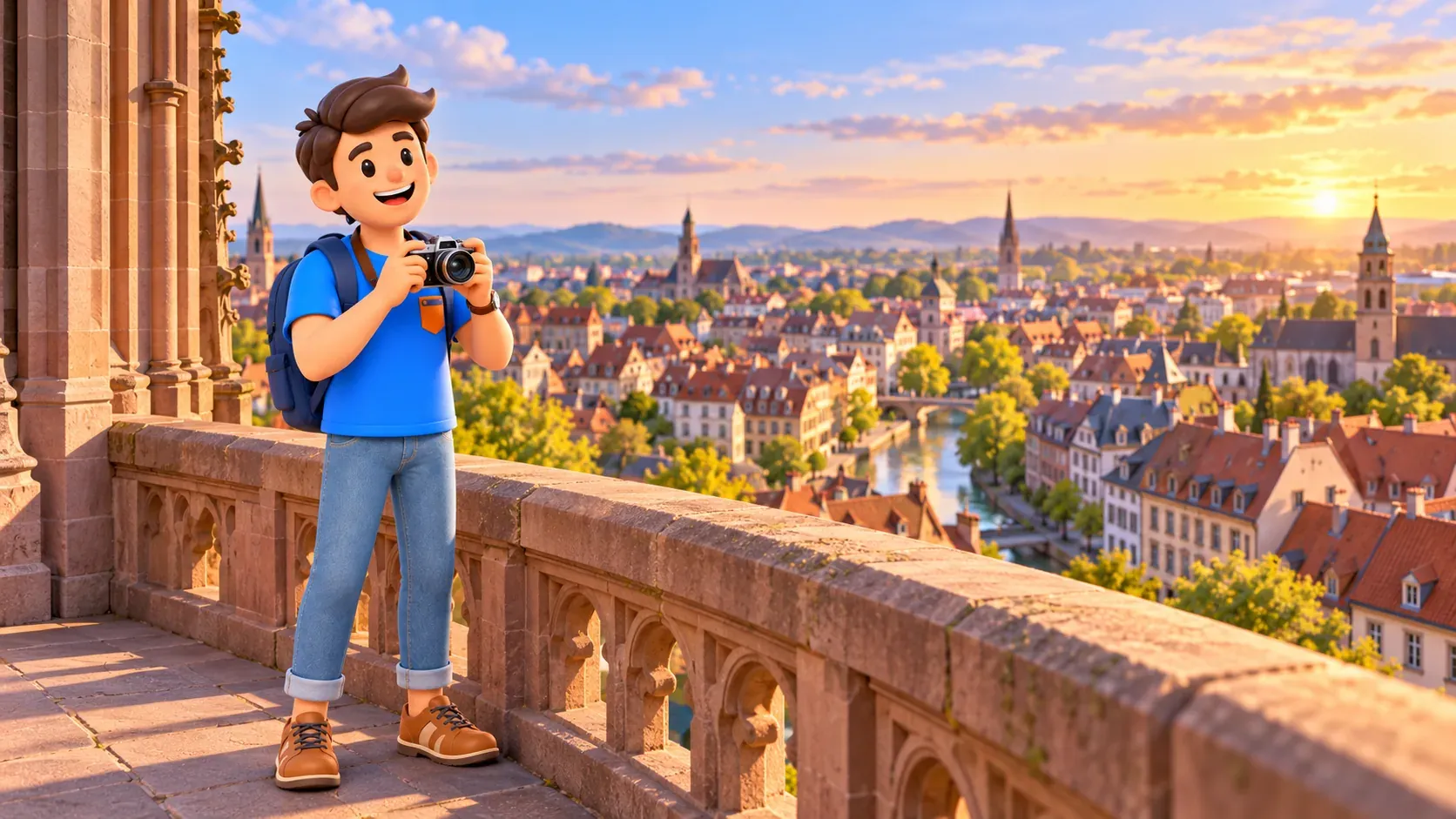
The viewing platform is 66 metres above ground, reached by 330 steps. It is well below the tip of the 142-metre spire. The experience combines a broad roofscape with a closer look at Gothic stone architecture, rather than access to the monument’s highest point.
The ascent is only on foot, requires suitable physical fitness and is not accessible to visitors with reduced mobility. Minors need an accompanying adult. Consider these conditions before making the climb a shared group plan. The ordinary cathedral entrance’s arrangements do not establish access to the platform.
If you mainly want a view but are unsure about climbing, our comparison of the cathedral platform and Vauban terrace helps with that separate choice. A lower viewpoint still needs its own current access check.
Keep ordinary entry and clock admission separate
The published ordinary visiting windows are Monday to Saturday, 08:30–11:15 and 12:45–17:45, with Sunday and feast-day access from 14:00 to 17:15. Check the current parish notice for your date. The midday break matters: arriving at the ordinary door at noon does not mean you have joined the clock programme.
Clock tickets are sold only for the day of the visit, without advance booking. The published arrangements list sales at the cathedral shops from 10:00 to 11:00 and at the Saint-Michel programme entrance from 11:30. Having bought earlier that day does not remove the need to follow the programme’s entrance and admission instructions.
For a Sunday or feast day, use the ordinary visitor timetable and confirm any specific programme separately. Do not assume a free 12:30 clock visit from older descriptions. During the Christmas market, the parish publishes special visitor arrangements while suspending the clock show, so ordinary interior access and presentation availability must still be checked separately.
Give the platform its own time and energy
Platform admission is separate from both the nave and clock programme. The operator states that there is no advance purchase or reservation and no official skip-the-line ticket. Weather or visitor numbers can temporarily stop admissions, and a clear distant horizon cannot be guaranteed.
The platform has its own seasonal hours. For October through March, the published schedule is 10:00–13:00 and 13:30–18:00, with the final ascent at 17:15. Summer hours differ. The final ascent is earlier than closing; do not treat the closing time as the moment you can still start climbing.
Large luggage is unsuitable and there are no luggage lockers for the ascent. Eating and drinking are prohibited throughout the circuit, so take your refreshment break before entry or after descending. These practical choices make the visit easier without requiring a detailed equipment list.
Build a relaxed plan around one experience
For the interior: roughly 40–60 minutes of focused looking, 20–30 minutes outside and 20–30 minutes of rest can form a visit of about an hour and a half to two hours. These are editorial estimates, excluding security queues, entry procedures and journeys to or from the start.
For the platform: allow an estimated 60–90 minutes for climbing, viewing and descending, with the queue additional. Adding a short exterior introduction and rest gives a planning frame of roughly two to two and a half hours. It is not a measured duration or a promise that everyone climbs at the same pace.
For the clock: an editorial allowance of about 75–90 minutes covers early programme admission through departure after the 12:30 procession. Unpredictable waiting is extra. With time outside and a break, roughly two to two and a half hours is a useful frame. Follow the actual day’s instructions rather than treating that estimate as an official programme length.
Combine two only when the day leaves room
Interior plus clock can work by using a permitted morning interior window or returning after the ordinary afternoon opening. Keep each entry arrangement distinct. Interior plus platform can also make a coherent architecture-and-city visit, with an independent ascent queue and rest after the stairs.
For two experiences, think in terms of roughly two and a half to three and a half hours or more, depending on waiting and your pace. A long meal and travel to or from the quarter come in addition. Avoid relying on a late morning climb followed immediately by clock admission: the proximity of the entrances does not make that a dependable connection.
RoadMe works out a complete personal route or trip plan around your interests and available time. The app makes it much more convenient to distribute cathedral experiences, other districts and rest across your days instead of squeezing everything into one visit.
If you want all three experiences, spreading them across different days can give each enough attention. Confirm the real visiting calendar first; a personal plan does not replace admission rules or the decision to suspend a programme.
Leave space for what interests you afterwards
After the interior, the square can look different because you have noticed the stone and light within. After the clock, a pause lets the mechanical story settle. After the platform, a nearby street returns the panorama to a human scale. None of these endings requires another attraction immediately.
If a museum is your preferred next substantial visit, our guide to choosing a Palais Rohan museum offers a nearby option for a suitable day. Choose it because the subject appeals to you, with its own calendar and time, and let one well-planned cathedral experience be enough for now.