Strasbourg from above: cathedral platform or Vauban terrace?
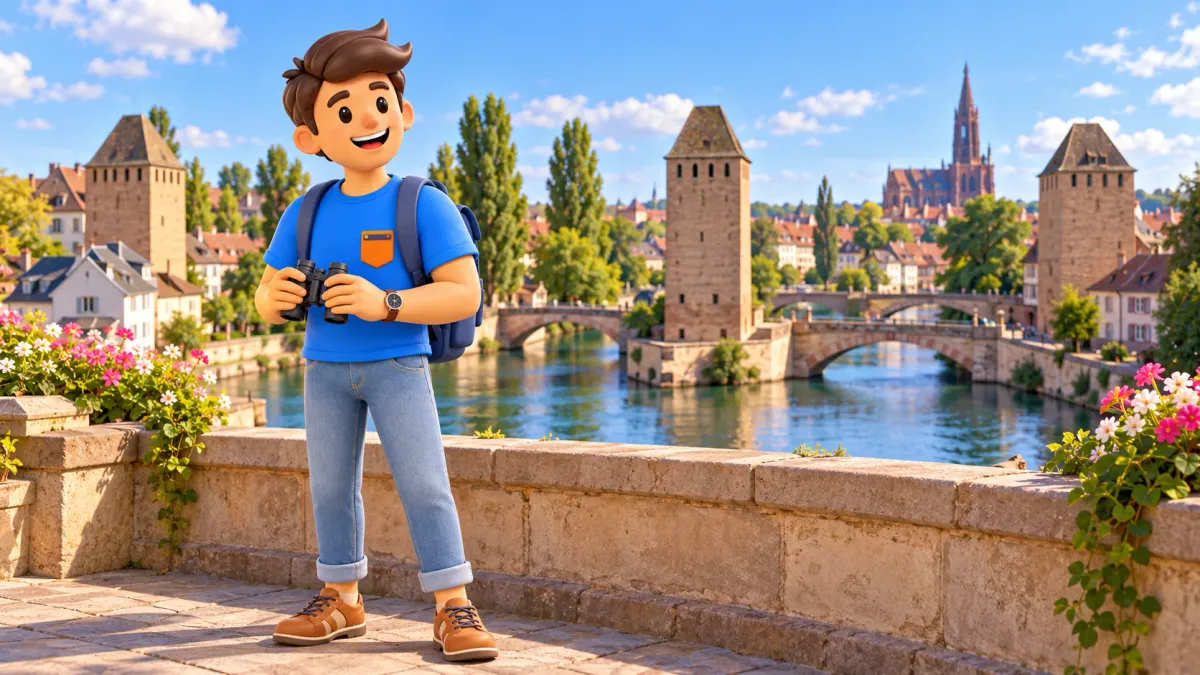
Strasbourg’s two familiar viewpoints offer different experiences. The cathedral platform lifts you above the old town’s roofs and brings you close to Gothic stonework. The Vauban Dam terrace keeps canals, bridges and houses near enough to understand how the riverside quarter fits together. If you have time for one, choose according to the view you want and your willingness to climb.
Consider the cathedral for a broad city panorama and Vauban for a more relaxed visit around the waterways. Seeing both can work, but make the cathedral ascent a main visit rather than a small addition between a museum and a train. These comparisons and walk ideas leave room to enjoy your choice.
Choose the picture you want to remember
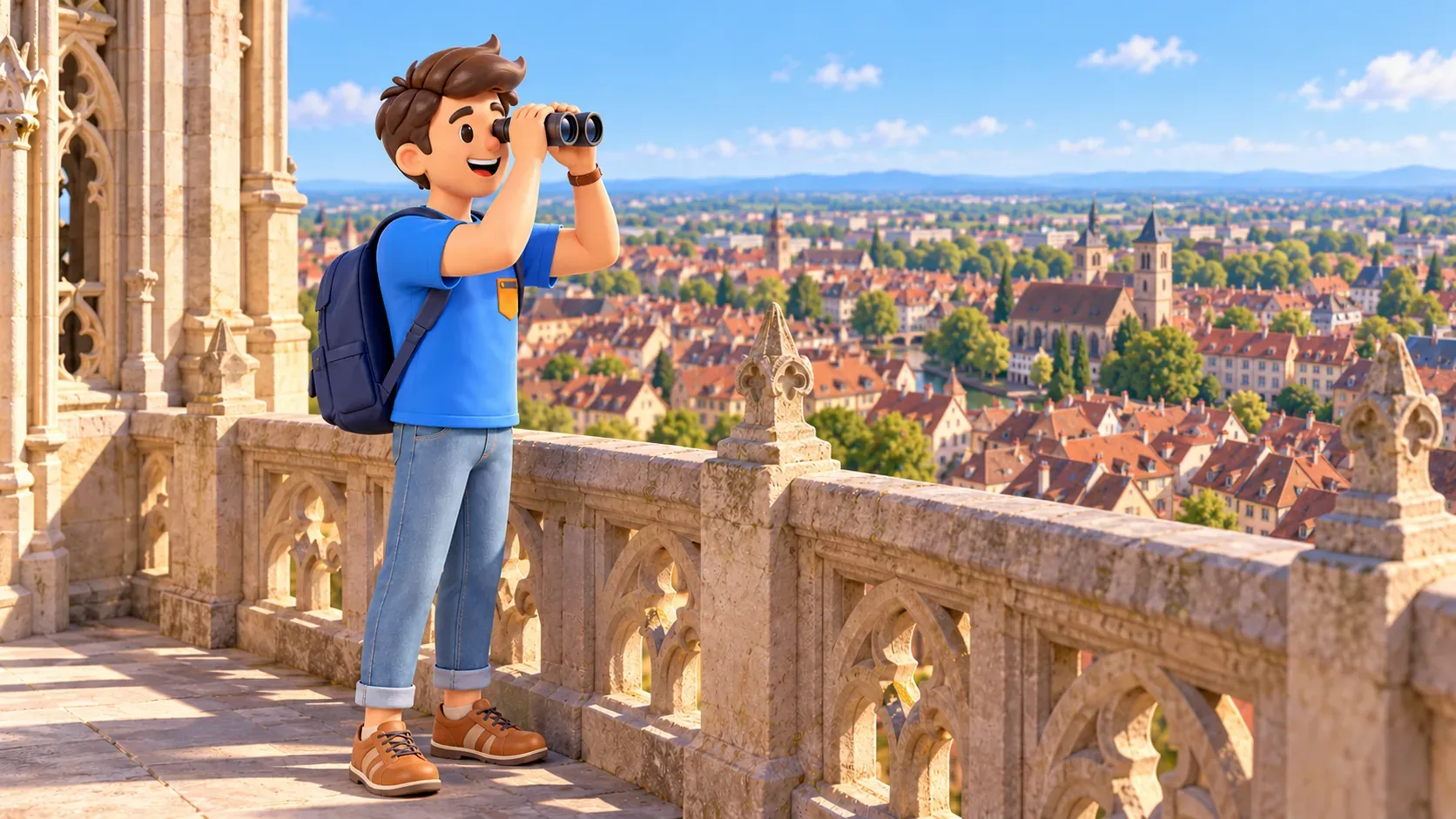
The cathedral platform suits a first encounter with the city as a whole: closely packed buildings, tiled roofs, church towers and a more distant horizon. Part of the pleasure is the change from narrow streets to a larger landscape. You are looking out from the monument that has been your reference point below.
Vauban gives greater importance to the foreground. Water separates small pieces of town, bridges connect the banks and defensive towers mark an older boundary. The cathedral remains within the skyline. This perspective works particularly well if you want an image of a city shaped by water, with its landmarks belonging to a wider scene.
RoadMe makes it much easier to turn your preferred view into a personal walk, working out a route around your interests, dates, pace and budget. Try an architecture or waterside focus to give the viewpoint a useful place in your day.
| Your priority | Consider |
|---|---|
| Wide roofscape and nearby Gothic architecture | The cathedral platform |
| Canals, Covered Bridges and the cathedral in the distance | Vauban’s terrace |
| Avoiding a long stair climb | The riverside quarter; confirm terrace access separately |
| A free viewpoint stop | Vauban’s terrace |
The cathedral: roofs and the work behind the stone
The platform is 66 metres above ground. That is well below the tip of the famous 142-metre spire, so do not expect to climb to its highest point. The appeal is being high enough for the city panorama while remaining close to architectural features that appear tiny from the square.
Notice the spaces between stone uprights and the way surrounding roofs gather into a dense pattern. You do not have to identify every building. Choose one landmark, then follow the rooflines around it. A few relationships give the panorama more meaning than trying to match the entire city to a checklist.
Generations of craftspeople shaped the cathedral. Its openwork spire was completed in 1439, and the platform also preserves the practical memory of that building effort: medieval lifting mechanisms are presented in the guardians’ house. They give a short visit another dimension. Elaborate stone architecture depended on moving heavy materials as well as designing beautiful forms.
In clear conditions, views extend towards the Vosges and Black Forest. Treat that as a possible bonus. Nearby roofs and the tower’s structure are still the reason to come, while distant visibility varies. Our walk around the cathedral quarter helps you understand the setting before going up.
Vauban: a lower view that explains the waterways
The dam stands towards the western side of the historic island, beside the Covered Bridges. Its roof terrace is much lower than the cathedral platform. That intermediate height lets you distinguish banks, crossings and towers without losing the feeling of a compact neighbourhood. Compare the overview with the details you have just noticed beside the water.
The name recalls military engineer Vauban, whose plans were carried out by Jacques Tarade in the late seventeenth century. The structure could use water to help defend the southern approaches to Strasbourg. It is more than an old crossing with a convenient roof: it belonged to a system that made the landscape part of the city’s protection.
The Covered Bridges and the dam represent different stages of that story. Keep them distinct, and do not expect wooden roofs over the bridges simply because their old name survives. From above, towers, crossings and channels become a set of lines leading your attention into the city.
The terrace is free, making it a useful single viewpoint on a modest budget. Free access does not mean access at every hour. The roof follows seasonal opening arrangements, while the lower passage through the structure is a separate space. That distinction matters when fitting the stop into the end of an afternoon.
Let stairs and opening times guide the decision
The cathedral ascent has 330 steps and is accessible only on foot. It requires suitable physical fitness and is not accessible to visitors with reduced mobility. Consider everyone’s preferences as well as their stamina. Someone who dislikes stairs or heights may enjoy a longer waterside walk much more.
The ascent is a separate paid visit entered from Place du Château. The ordinary church visit, astronomical clock presentation and viewing platform are different activities. The operator states that platform tickets cannot be reserved or bought in advance and that there is no official skip-the-line ticket. Avoid relying on a narrow window before a fixed appointment.
Under the winter timetable published when checked in October 2026, the platform closes at 18:00, with the final ascent at 17:15 and a break earlier in the day. Vauban’s roof has a 16:00 closing time from November through February. Use these as planning examples, then check the current arrangements for the upper viewpoints before travelling.
Weather or visitor numbers can temporarily stop cathedral admissions. A lower viewpoint also needs its own opening check. If you require a route without steps, establish current access to Vauban’s terrace separately: its lower height does not confirm a suitable entrance or functioning equipment. This comparison cannot replace that individual access check.
Take photographs without racing the view
At the cathedral, begin with the broad scene and then choose a detail: a cluster of roofs, a street line or part of the tower. Alternating between near and far makes the experience richer. A few minutes looking without a camera can be more memorable than immediately photographing the entire horizon.
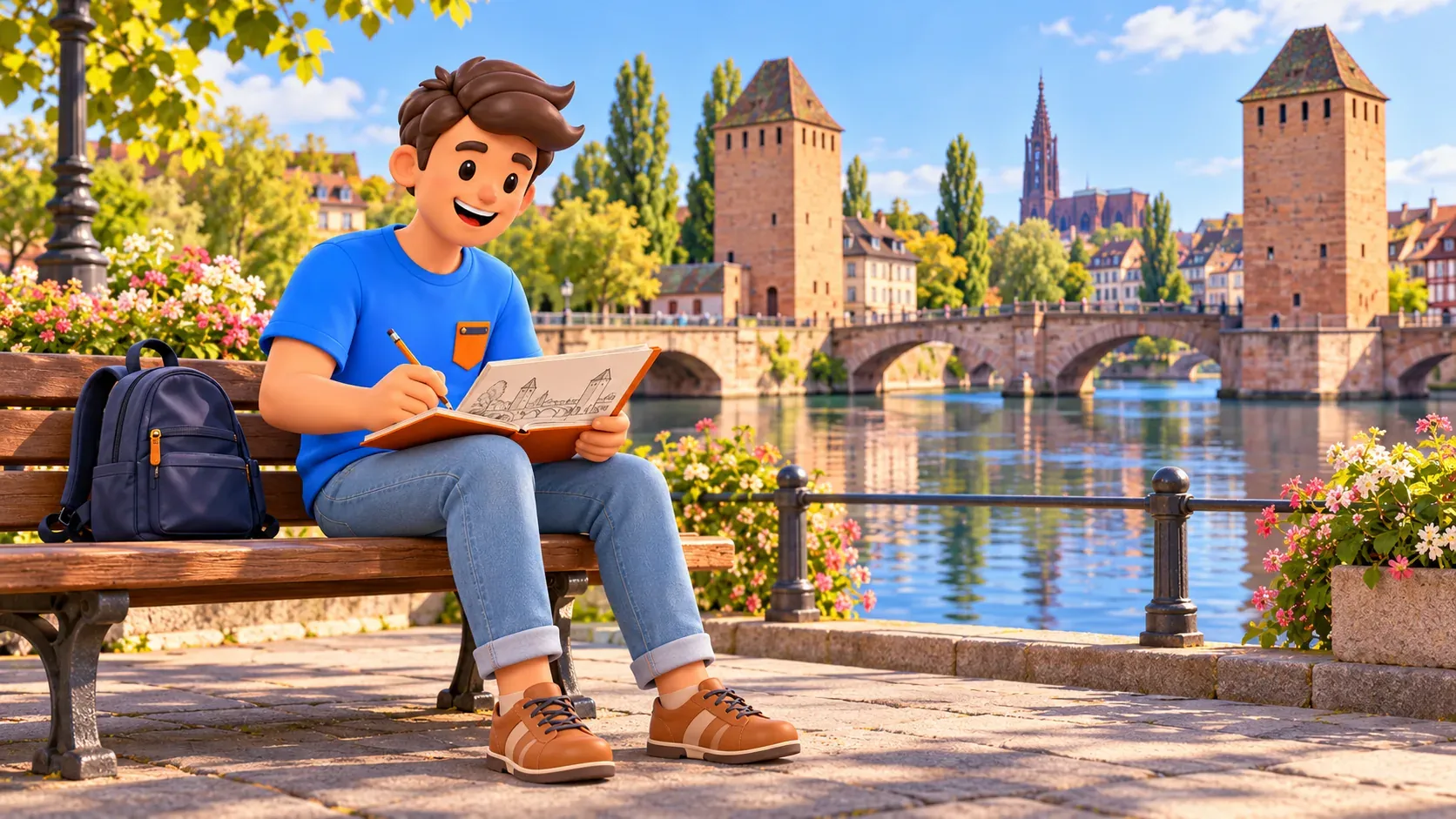
At Vauban, try including water in front of the bridges, a tower and the space behind it. The cathedral spire can be a distant reference rather than the centre of every frame. Afterwards, lower the camera and follow the connections between banks. That is an easy way to understand why this quarter looks as it does.
A phone is enough for a first visit. There is little reason to add heavy equipment just because the stop offers a panorama. Large luggage is unsuitable for the cathedral ascent, which has no luggage storage. Eating and drinking are prohibited throughout that circuit, so arrange refreshments before entering or after descending.
Gentle light can flatter roofs and water, but a hoped-for sunset should not override closing times. Vauban closes particularly early in winter. If the roof is unavailable, continue along the public riverside instead. It provides a different perspective and keeps the evening enjoyable without looking for a way into a closed level.
Two ways to build a walk around one viewpoint
Choose the cathedral: begin at Place du Château, spend a little time outside and ascend if conditions and your fitness allow. An estimated 75–90 minutes can cover the square, climb, panorama and descent. This editorial allowance excludes queues, travel to the start, the church interior, clock presentation and museums. Rest after coming down before adding another visit.
This suits a day when the cathedral is already your main interest. There is no obligation to cross the centre for another viewpoint afterwards. Stay nearby and compare façade details from below with what you noticed above. A connected encounter with one monument can be more satisfying than several unrelated stops.
Choose the waterways: start at Place Benjamin Zix, notice the houses beside the channels, continue towards the Covered Bridges and finish at Vauban’s terrace if open. Allow roughly 60–90 minutes for this short version, including 15–25 minutes on the roof. A long café break, detailed neighbourhood exploration and journeys to and from the walk are additional.
For a fuller introduction, follow our Petite France walking route and add the terrace separately. Do not combine estimates into a guaranteed finishing time: bridge stops and your own pace can change the duration. The aim is to notice how water and buildings relate.
Combine both views when you have a generous half-day
Begin with the cathedral platform, then head west through Place Gutenberg towards Pont Saint-Martin. Continue through Petite France to the Covered Bridges and Vauban. This gives the historic island a clear sequence, from its high architectural landmark to the place where its river structure becomes easier to read.
Allow an estimated three to four hours for the ascent, descent, both panoramas and brief pauses. Within that allowance, the walking connections between sections might take roughly 30–45 minutes. These are editorial estimates, not a measured route. Queues, meals, museums, the cathedral interior and the return journey are additional; shorten the walk if waiting becomes substantial.
RoadMe works out a complete personal route or trip plan around your interests and available time. The app makes it much more convenient to distribute viewpoints, walks and rest across your days in Strasbourg.
The reverse order can suit your accommodation and confirmed opening arrangements better. In winter, account for Vauban’s early roof closure and the cathedral’s final ascent separately. An open passage below does not mean access above. Leave enough room to finish the visit calmly rather than arriving at the last possible minute.

One well-chosen panorama can be enough
On an overcast day, think about what would still interest you nearby: the cathedral’s construction and neighbouring roofs, or Vauban’s water and crossings. If a distant horizon was your main reason to climb, postponing can make sense. The appearance of the sky does not replace the staff’s decision about admission.
Two views offer a satisfying comparison of scales, but the second is optional. After the cathedral you might prefer lunch; after Vauban you might simply want to stay beside the water. A well-timed pause often makes a short city visit feel more complete than another required stop.
For a family, agree on a small shared purpose: finding a familiar tower, looking at roofs or understanding the bridges. Minors on the cathedral circuit must be accompanied by an adult. Discuss individual needs before entering, so the view remains a pleasure for the group.
The choice is personal. The cathedral offers height, a broad horizon and close contact with Gothic stonework. Vauban brings waterways, fortifications and skyline together at a more intimate scale. Choose the perspective you actually want to see, then give yourself time to look.