
Around Strasbourg Cathedral: What to See Before Going In
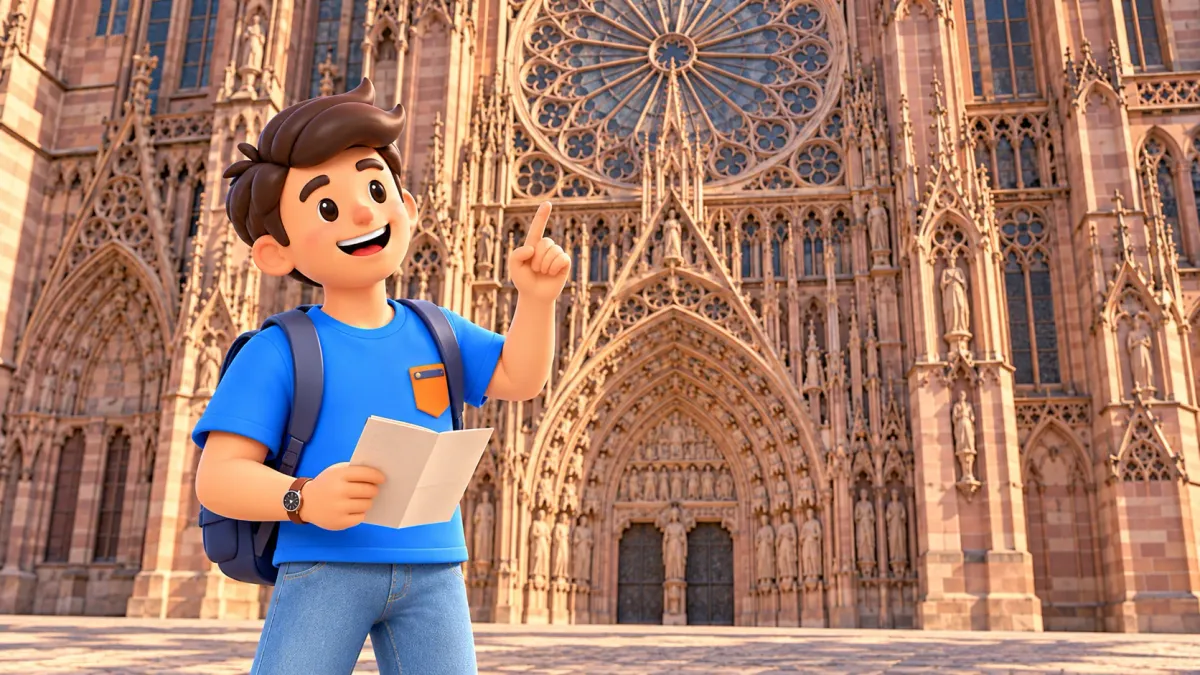
Before entering Strasbourg Cathedral, give its surroundings a little time. A short walk connects the west front, Kammerzell House, Place du Château, the Œuvre Notre-Dame buildings and Palais Rohan. The cathedral then becomes part of an urban story involving merchants, skilled craftspeople and the representative architecture of the prince-bishops.
Allow roughly an hour to ninety minutes for this outdoor introduction, excluding collections, the clock presentation and a platform climb. This is an unmeasured planning estimate for a relaxed walk. A useful start is the Rue Mercière approach to the west front, finishing around Place du Château or beside the water near Palais Rohan.
Decide what you want to notice outside
It is easy to arrive and immediately look for an entrance or queue. A few minutes in the square help explain the monument itself: how it appears from a narrow street, what changes as you approach and how it differs from neighbouring houses. The interior can then continue the introduction rather than becoming its only content.
Three questions are enough. How does a large building relate to smaller urban surroundings? How do stone and timber work in neighbouring monuments? Why do different architectural periods share one square? You do not need the complete building chronology to find meaningful answers.
It is easier to prepare a personal Strasbourg plan in RoadMe, which works out an itinerary around your interests, dates, pace and budget. You can connect the cathedral walk with an important visit and the rest of the day instead of organising separate places yourself.
If you already have a visit with a fixed starting time, protect that place in your programme first. The outdoor section can come before or after. There is no need to complete every neighbouring stop before entering; the walk still makes sense in a different order.
Leave passages clear and choose a comfortable place to pause. Looking attentively does not require standing directly in a doorway. A small step to one side may provide a better view and space to discuss what you see with companions.
Rue Mercière: the cathedral between the houses
Approaching from the west, use Rue Mercière as a short preparation for the front. The contrast works naturally: a narrow urban perspective followed by a large building at the end. You encounter the cathedral through Strasbourg's dense historic surroundings rather than as an isolated object.
Do not immediately try to squeeze its full height into a photograph. Notice how neighbouring house edges frame the stone surface. Move closer to the square and compare the sense of scale. A few steps can make the same monument feel surprisingly different.
This approach is not a required beginning for everyone. If you are already in the square, there is no need to retrace your way for the correct sequence. Look towards the street and understand how the surrounding buildings shape your view.
For a first photograph, keep some context: part of a street, a neighbouring front and the stone mass ahead. A detail of carving can come later. Two scales communicate the place better than several identical pictures from one position.
The west front: from silhouette to stone depth
First take in the silhouette with its single completed spire. The familiar asymmetry belongs to a long building history and changing designs. Avoid reducing the whole appearance to one simple legend or assigning the cathedral to one architect; generations of craftspeople contributed.
Then concentrate on the western stone surface. Its interest goes beyond an abundance of decoration. Openwork in front of a more substantial wall creates depth, gaps and shadows. What first looks like a plane becomes several related layers.
Notice the large rose window and neighbouring vertical lines. Compare the circular geometry with the elongated façade, then select one fragment for closer attention. You do not have to identify every figure and story to see how the composition works.
Some exterior sculpture has passed through damage, replacement and restoration. The visible front should not automatically be treated as a completely unchanged medieval collection. Original works preserved in the Musée de l'Œuvre Notre-Dame create an important connection between the square and a possible later museum visit.
If works cover a section or it looks different from a photograph, focus on accessible details. Restoration also belongs to the monument's life. An exterior introduction does not require seeing every element at once, particularly on a first visit.
Kammerzell House: another world beside the cathedral
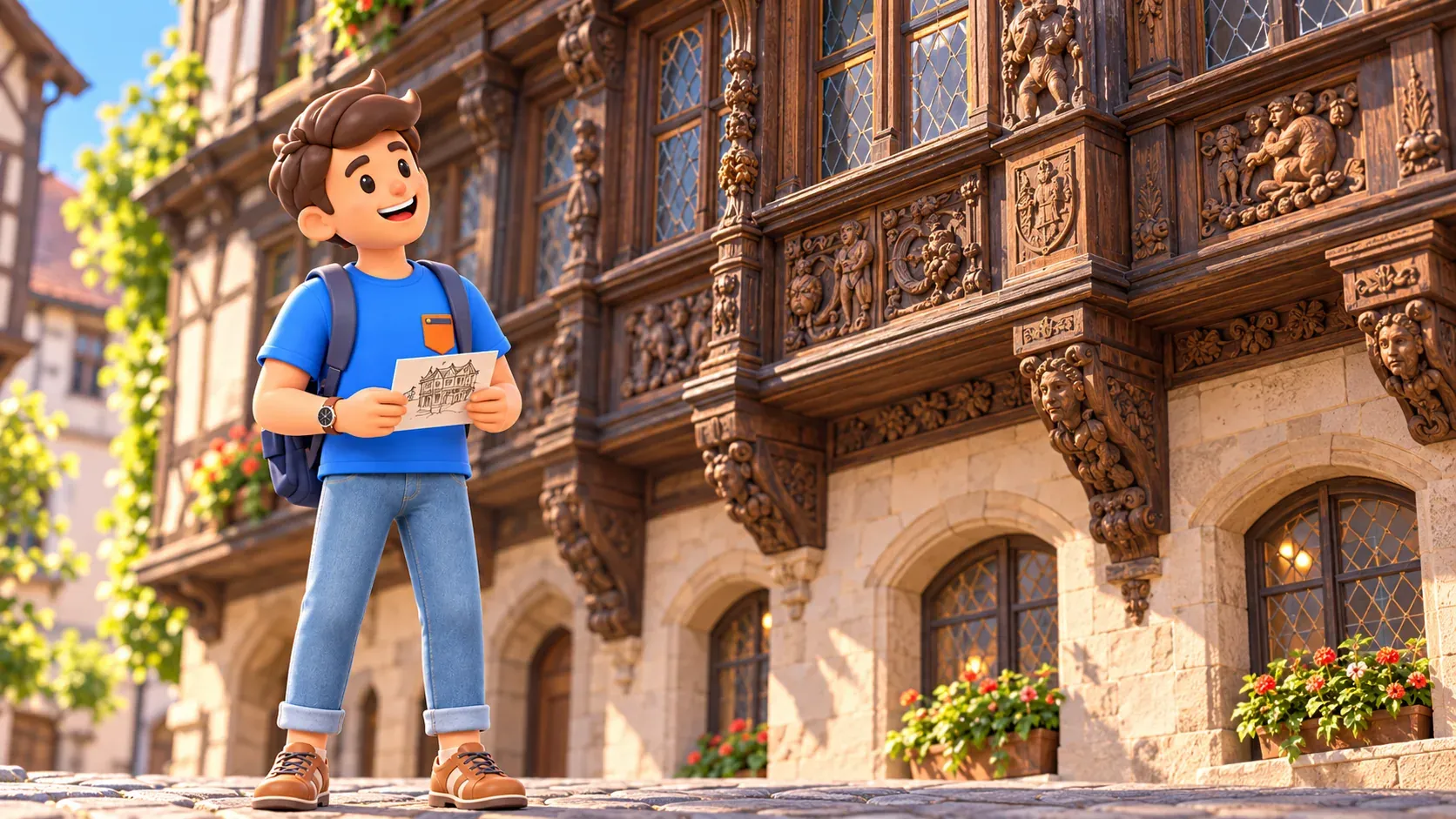
At Maison Kammerzell, the scale changes. Timber storeys, closely arranged windows and carving belong to a merchant house rather than a monumental church front. Material and detail size suggest a different way of looking, gradually reading smaller areas.
The name comes from a nineteenth-century owner, while the main recognisable appearance is earlier. Upper parts were transformed in 1589 under Martin Braun, retaining an older stone base. One building contains several layers of time, and its familiar name does not date its creation.
Religious, classical and allegorical decoration reflects the interests of a prosperous Renaissance patron. You do not need a complete catalogue of figures. For a short walk, notice that ecclesiastical and civic cultures existed side by side, using different artistic means.
Compare one carved timber element with a stone detail on the cathedral. What changes in depth, size and the repetition of motifs? The comparison connects neighbouring monuments without turning the house into a long separate tour.
The building has active uses, and an exterior look does not establish free entry to every room. If its interior interests you more, give it separate time and check arrangements. This walk remains complete through observation of the outside.
Place du Château: several periods in one space
Move to Place du Château on the cathedral's southern side. Step back from the wall and consider the surroundings together. The square compares ecclesiastical scale with the Œuvre Notre-Dame buildings and a quieter palace front.
Gothic, Renaissance and eighteenth-century French architecture appear around one space. Their relationship is easier to understand by looking than through a lengthy list of dates. Compare silhouettes, windows and horizontal lines: different periods organise space and represent their patrons differently.
The Œuvre Notre-Dame buildings connect the area with more than a museum. Their name also recalls the work through which the cathedral was made and maintained. Distinguish the collection, historic buildings and workshop activity: these are related subjects rather than one identical visitor experience.
If sculpture appeals, the Musée de l'Œuvre Notre-Dame is a separate next choice. It holds original works associated with the cathedral and art of the Upper Rhine. Give it its own time instead of treating it as a quick passage through a neighbouring building.
With family, try finding the square's most vertical and most horizontal fronts. The question reveals differences without requiring knowledge of style names. You can introduce periods afterwards if your companions are interested, rather than beginning with a long vocabulary lesson.
Stone and craftsmanship: a small modern stop
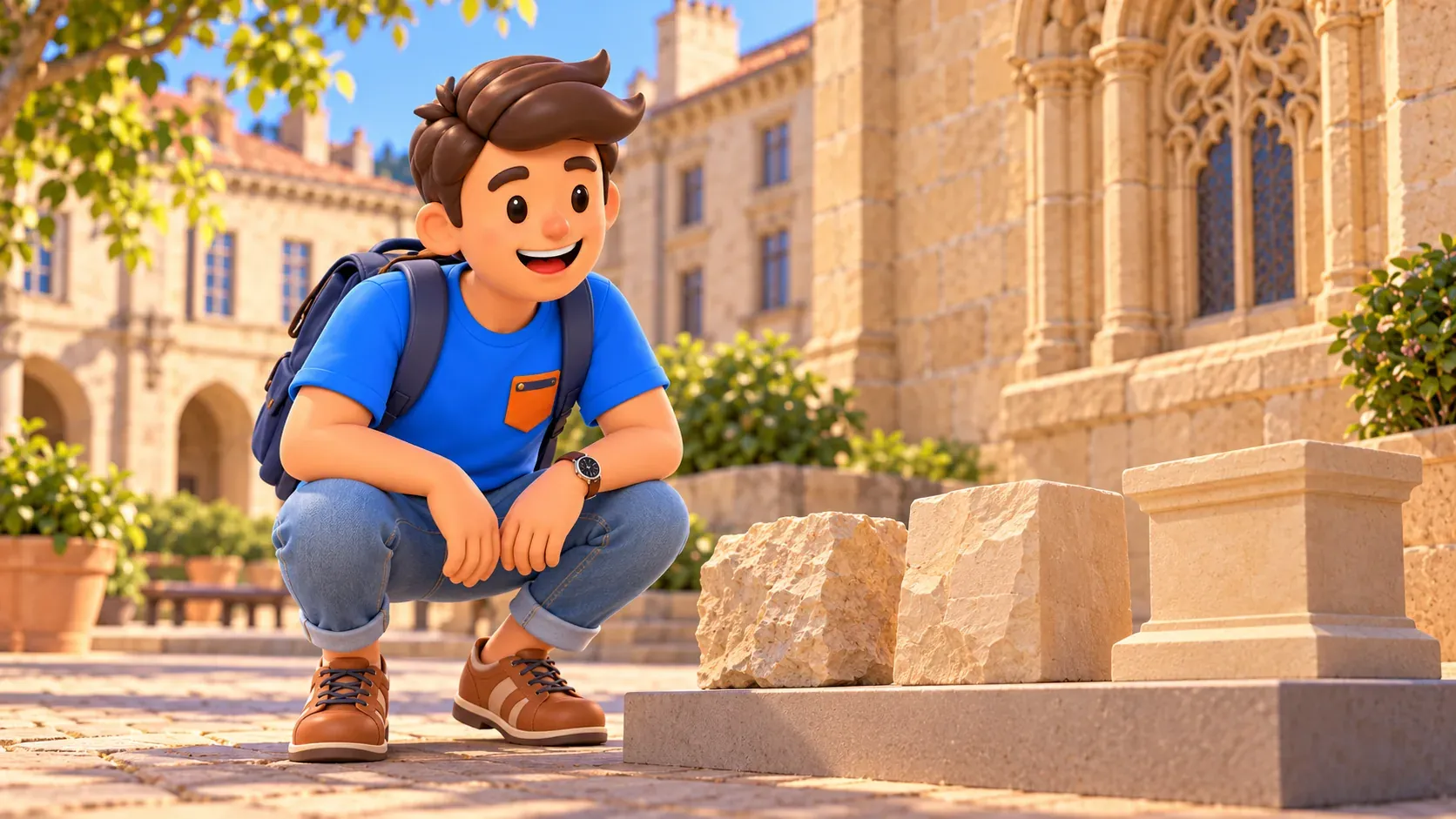
The square includes a chimera composition introduced in 2013. Its subject is the transformation of natural sandstone into a worked form. This is a modern interpretation of craftsmanship rather than a medieval figure that happened to survive at ground level.
Look at the movement from rough mass to more finished surface. After the cathedral's openwork, this small subject returns attention to material and labour. Stone architecture becomes more understandable when you consider the gradual task of shaping it as well as the completed image.
Observe without touching or treating the elements as play equipment. For a child, comparing the worked surface with the rough material is enough. For an adult, it offers a reason to look back at the façade and notice the familiar play of light in its recesses.
Palais Rohan and a short approach to the river
At Palais Rohan, the impression changes again. The eighteenth-century prince-bishops' palace, designed by Robert de Cotte, represents another architectural culture. After Gothic verticals, attention goes to regular windows, length and quieter horizontal relationships.
The proximity of cathedral and residence is itself interesting. One quarter combines religious life, representation of power, urban craft and art collections. An exterior walk reveals that connection without requiring several interior visits in succession.
To finish by the water, take an available public connection towards the river on the Rue de Rohan side. The change of scale after the enclosed square gives another view of the palace surroundings. Follow current signs and accessible streets when returning to the cathedral area.
The palace contains separate museums of painting, decorative arts and archaeology. These are different collections rather than one quick additional entrance. Select a subject that genuinely interests you and allow time after the outdoor section.

Pause before continuing and choose which material, building or subject has most caught your attention.
Choose what comes after the walk
For the cathedral interior, establish current entry arrangements and account for services. An ordinary church visit, the astronomical clock presentation and the platform climb serve different purposes. Avoid adding them all automatically because they belong to the same monument.
If art matters more, choose a museum; for more city discovery, continue on foot. The cathedral-to-Petite-France itinerary connects this quarter to waterways and craft streets, while the historic-centre day plan gives each part more room.
RoadMe works out a personal route or trip plan around your interests and available time. In the app, it is more convenient to choose what follows and combine important visits, walks and rest into one programme.
After this introduction, you enter with a few useful impressions: the depth of the stone front, neighbouring timber and stone, and changing periods around a square. That is enough to make the next visit more attentive without studying the whole monument beforehand.


