
Seochon and Tongin Market: An Art Walk with Lunch

Explore Seochon through a modest walk west of Gyeongbokgung: residential streets, one cultural visit and lunch at Tongin Market. Choose Yi Sang's memorial house for literature, or Park No-soo Art Museum for painting and domestic architecture. This gives the district its own subject instead of treating it as a passage between palaces.
Allow roughly three to four hours with unhurried food and a return to Gyeongbokgung station. This is an editorial estimate for the selected programme, excluding travel from your accommodation. Palace admission, an Inwangsan summit walk and distant literary museums are separate outings.
Choose the main experience first
Seochon combines everyday trade, small houses and memories of artists and writers. Choose one cultural focus, then give the surrounding streets some attention. A few considered stops reveal the district better than a compulsory list of dozens of cafés.
Working out this walk is much more convenient with RoadMe: the app creates a personal plan around your interests, dates and pace. Choose your balance of art, literature and local food to use time more effectively in Seochon and throughout the trip.
| Block | Planning guide | Decision |
|---|---|---|
| Street introduction | 30–45 minutes | A modest approach from the station |
| Cultural stop | 45–60 minutes | Yi Sang or Park No-soo |
| Tongin | 60–75 minutes | Market and a relaxed lunch |
| Return and reserve | 45–60 minutes | Pause and selected lanes |
Change the order around confirmed access. If the market lunchbox programme matters most, secure its availability first and place culture before or afterwards. The blocks allow attention to a place, rather than merely the walk between pins.
From the station to residential scale
Begin at Gyeongbokgung station and use public streets in the western neighbourhood. After major roads, slow down to notice modest frontages, passages between houses, everyday shops and the ways new uses occupy older buildings.
Seochon's name relates to its position west of the palace. Yet the walk offers more than proximity to a royal residence. The district has its own cultural memory, associated with people working in painting and literature across different periods.
Do not expect a single unchanged historic ensemble. Traditional forms, brick homes, contemporary commerce and alterations coexist within a living city. Their differences are part of the experience. One small frontage may say more about change than a perfectly uniform street.
Identify the return direction early instead of calculating energy only as far as the market. A compact district still contains slopes and turns. If avoiding stairs or steep gradients matters, check actual entrances and approaches beforehand.
The literary choice: Yi Sang's memorial house
Yi Sang's memorial house lies south of the market and can provide the first cultural focus if open. This small place commemorates a Korean modernist writer. It suits an interest in literature's relationship with a particular urban site rather than a large museum collection.
The important distinction is that the present building is not the actual house where the writer spent his childhood. It occupies part of a property connected with his youth. The value lies in preserving a biographical site and literary memory, without promising an entirely original domestic interior.
Yi Sang experimented with textual structure and viewpoints, writing about modern experience and urban life. A modest introduction to the author is enough to begin. You need not read every work beforehand to notice the scale of rooms and courtyard.
Check access arrangements and any break in opening. A closed door does not guarantee an imminent reopening. Continue along the streets or change the cultural focus according to a confirmed calendar. Seeing a location and entering an exhibition provide different experiences.

Tongin: first a market, then your chosen lunch
Continue towards Tongin Market. Its compact covered passage lets you see traders' different specialities: prepared food, side dishes, groceries and everyday shopping. Take a look before choosing, while leaving room for people using the aisle.
The market began in 1941 and changed with the surrounding district. Its interest today includes ordinary commerce and a visitor experience. Keep both functions in view: people work here, buy ingredients and pass through on daily errands.
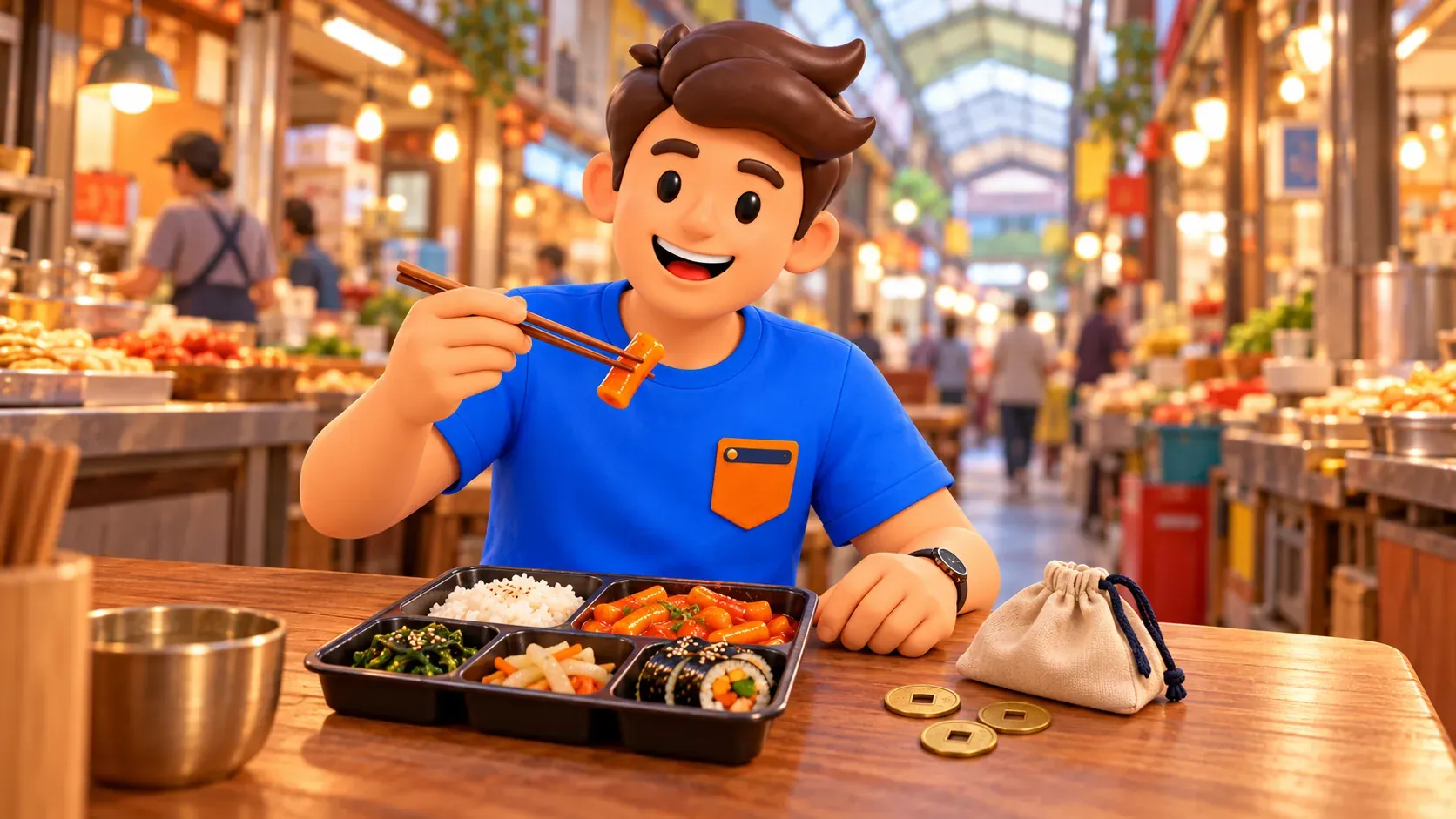
A familiar option is assembling lunch at participating stalls using metal yeopjeon tokens. This is a modern purchasing arrangement using the form of older coins. The tokens are not ordinary city currency and cannot be assumed valid at every stall or elsewhere in Seoul.
Choose several suitable portions instead of trying everything. Oil-fried tteokbokki is one characteristic possibility, but available dishes depend on the traders operating. With dietary restrictions, ask the seller about ingredients directly.
Approach the token lunch practically
If the programme operates on your date, begin by asking about current arrangements at the lunchbox café service area. Confirm how to obtain tokens, a tray and a place to eat. Then choose food from participating sellers following displayed information and staff instructions.
Not every stall accepts tokens. Other purchases require an ordinary payment method available to you, which you should confirm locally. Avoid buying extra tokens simply for a photograph. First understand which food and portions you actually want.
Market hours, individual traders and the lunchbox service differ. An open passage does not guarantee token sales. Published official materials contain conflicting information about the café's weekly closure, so confirm service for your actual date before travelling if this experience is essential.
Without confirmation, keep it as a possibility instead of the only condition for a successful outing. The market and a conventional meal nearby still give the walk purpose. Do not sacrifice lunch or wait indefinitely merely to resolve the token question.
The art choice: Park No-soo Art Museum
For a different cultural focus, choose Park No-soo Art Museum west of the market. Place it before or after lunch according to confirmed arrangements. The approach is part of the walk: consider the slope rather than treating straight-line distance as a comfortable path.
The museum opened in 2013 in the house where the artist lived and worked. Painting, personal surroundings and a home dating from the late 1930s combine here. House and garden offer their own subject alongside the displayed works.
Park No-soo helped renew Korean painting in the second half of the twentieth century. Expressive colour offers one possible theme for looking. Check the current exhibition rather than assuming a particular painting is on display because the museum carries his name.
In the art version, make this the principal visit and leave Yi Sang optional. To include both seriously, lengthen the outing and reduce other activities. Attention to a small museum is more useful than briefly entering for the sake of completion.
Leave some time for the streets after lunch
On the return, choose a few public lanes while keeping the general direction towards the station. There is no need to find a compulsory most beautiful house. Notice how a shopfront relates to housing, where streets narrow and how a courtyard boundary is expressed.
A quiet tea or coffee break can conclude the walk. Businesses have their own hours and seating, so avoid making the programme depend on a guaranteed empty table. Choose according to personal taste and actual availability rather than a photograph's popularity alone.
In residential lanes, speak quietly, leave entrances clear and stay outside private gates. Visitor interest does not change the status of someone's home. The street remains rewarding without looking into other people's daily lives.
Once you know whether art, literature or local food matters most, continuing with RoadMe is more convenient: the app develops a personal trip itinerary around your preferences and pace. Seochon can then receive the time and place that suit your wider Seoul experience.
Make three decisions before starting
What is essential? Choose the museum, literary house or lunchbox programme. Check that particular calendar and access first, then organise the rest. Several compulsory visits make a small district dependent on multiple schedules coinciding.
Where will you eat? If the token format is unconfirmed, retain an ordinary lunch option. With children or different appetites, discuss suitable food and breaks. Do not assume a market meets every dietary requirement without asking.
How much effort suits you? A neighbourhood walk does not include a mountain route. For Inwangsan, allocate a separate programme with preparation and time. Seochon reveals plenty through lanes, market and one cultural stop without a summit.
Fit Seochon into several Seoul days
Its own half-day is preferable when you want to eat without rushing. After a major palace visit, assess energy before committing and reduce the street portion. A full palace, market and two cultural interiors should not be promised as a quick, easy addition.
For a different historical subject, compare the Gyeonghuigung and history museum route. For a return trip, see new neighbourhood ideas. Choose according to the experience you want: Seochon suits a combination of art, ordinary streets and an unhurried meal.
Save the Korean names of the cultural places you select, not just the district name. A neighbourhood search can lead to a broad area, while a specific entrance determines your actual walk. A little preparation keeps decisions manageable once outside.
If a companion wants more food browsing and another prefers art, agree on one shared core and a flexible continuation. You can shorten a café stop or one group of lanes without losing the outing's logic. A useful programme leaves room for different interests.


