
Gyeonghuigung and Seoul Museum of History: A Half-Day Route
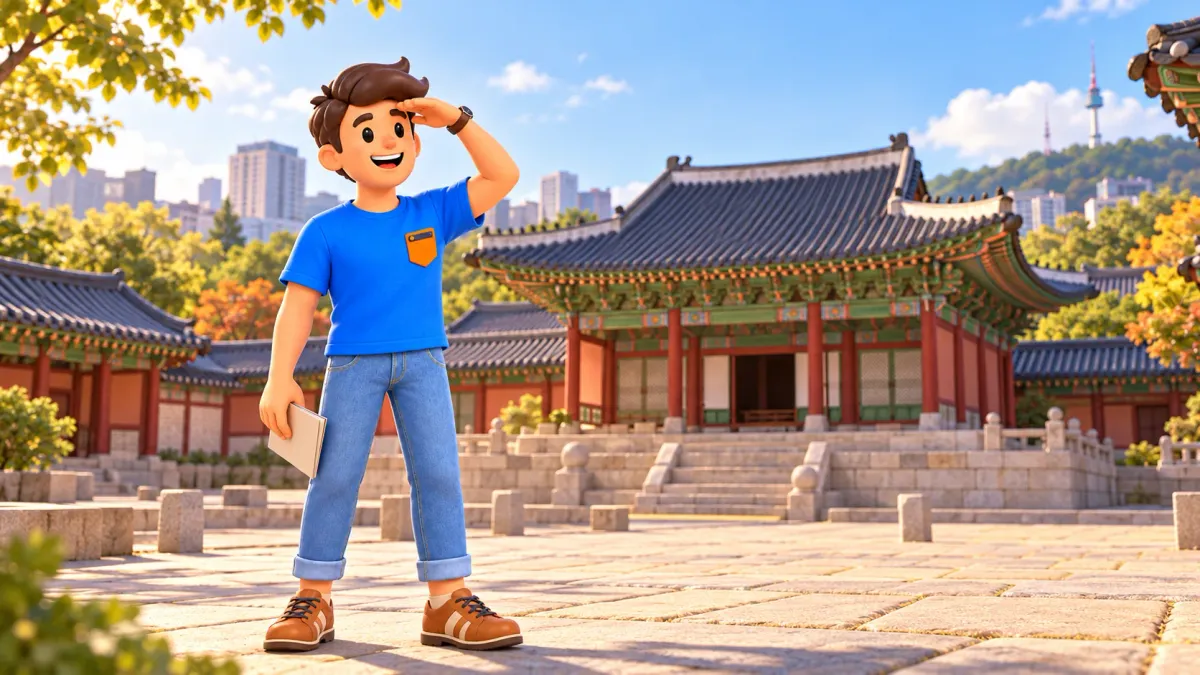
Gyeonghuigung and Seoul Museum of History make a useful half-day combination: see the restored ceremonial part of the western palace, then explore how a royal capital became contemporary Seoul. The sites are close enough to give your time to observation instead of a substantial transfer.
Allow roughly three and a half to four and a half hours including a short break. Add travel from your accommodation and a full lunch separately. The outing suits a first introduction to the city's history or a return visit when you want to connect places already seen.
Why combine a palace and a city museum?
The palace makes the scale of a courtyard, position of gates and role of a principal hall visible. The museum adds maps, objects and everyday urban life. Together they help you understand Seoul as a city of people and institutions, beyond individual handsome buildings.
Preparing this day is much more convenient with RoadMe: the app develops a personal plan around your interests, dates and pace. Choose whether palace architecture, urban history or museums deserve more attention to use your trip time more effectively.
| Part | Planning guide | Purpose |
|---|---|---|
| Gyeonghuigung | 60–75 minutes | Gate and ceremonial court |
| Break | 20–30 minutes | Rest before the galleries |
| History museum | 90–120 minutes | Selected themes and city model |
| Approaches and reserve | About 30 minutes | Entrances, movement and personal pace |
These are editorial estimates, not a measured tour. If the museum matters most, shorten the palace continuation and leave longer for the galleries. Having few destinations lets you change the depth of each visit while keeping the half-day understandable.
Check two calendars before leaving
The palace and museum have separate access arrangements. Both ordinarily close on Mondays; confirm holiday exceptions and temporary changes for your date. An open palace court says nothing about museum admission, or the reverse. Last admission matters particularly with an afternoon start.
General admission to the principal visits is free according to the institutions' published information. Check separate activities and services individually. Free admission does not remove opening times, gallery rules or conditions attached to a particular programme.
Save the names 경희궁 and 서울역사박물관 to distinguish the palace from the museum when finding approaches. Use visitor entrances. Neighbouring map pins do not imply a direct route through every wall or closed section of the grounds.
Begin at Heunghwamun
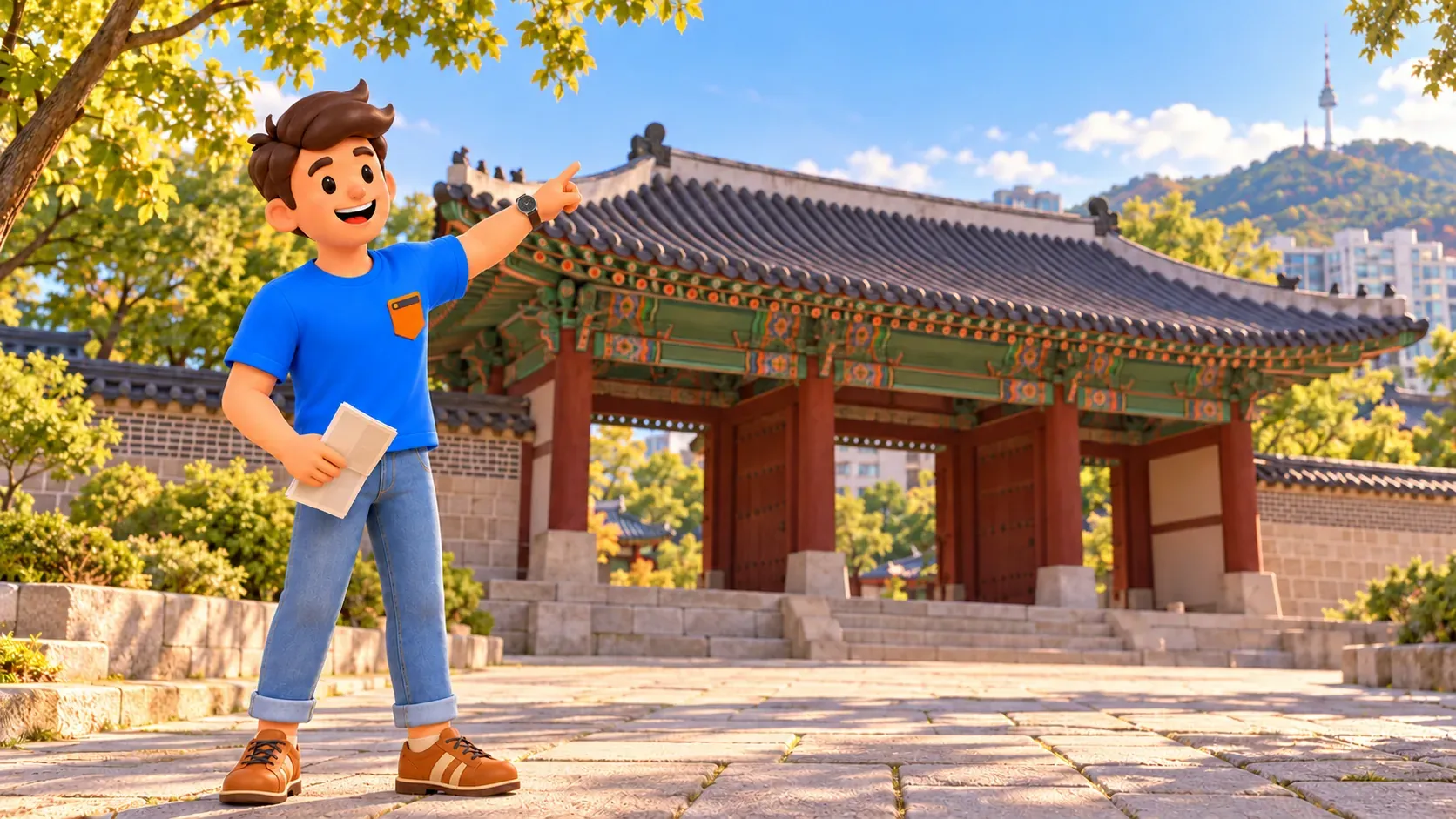
The first palace focus is Heunghwamun. Pause before heading straight to the principal hall: its low silhouette and timber structure provide a different scale from the large two-storey gates of better-known palaces. Notice the relationship between passage, roof and contemporary surroundings.
The gate has its own history of movement. It returned to the palace grounds in 1988, but not to its original position. Already, it is useful to distinguish the age of a structure, its placement and the modern attempt to recover a lost spatial relationship.
That is enough for an introduction. A short visit need not become an exercise in memorising every date. Keep one question in mind throughout: what survived, what moved, and what was reconstructed after loss?
The ceremonial court and Sungjeongjeon
Continue to the ceremonial area centred on Sungjeongjeon. Look at the open space before the hall, its platform, stairs and surrounding galleries. Architecture communicates the official character of the place before you read a detailed history.
Gyeonghuigung was constructed between 1617 and 1623 as a royal residence. Today's site does not represent the full original palace. Much of the ensemble disappeared, and the visible ceremonial composition results from research and reconstruction.
The historic Sungjeongjeon was moved elsewhere; the hall on the palace site is a reconstruction. That changes how you look without removing the visit's value. You can understand a lost spatial arrangement, rather than expecting a completely unchanged seventeenth-century building.
First take in the court as a whole, then choose one roof or timber detail. If interior access is restricted, the exterior composition still conveys the main idea. Stay on permitted paths rather than crossing barriers for a closer view.
Continue inside the palace according to interest
If energy and access permit, see how the main court connects to more intimate parts of the ensemble. Jajeongjeon relates to the monarch's working life, while Taeryeongjeon is associated with Yeongjo's portrait. Recognising ceremonial, working and commemorative space is enough for this route.
Do not automatically add every pavilion. Give the palace a clear ending and preserve attention for the museum. In heat, cold or with children, a meaningful half-day depends on what you notice rather than the number of names completed.
Before moving on, take a short pause. Recall one feature of the gate and one of the court. These observations become anchors when the museum expands the story from a single residence to the whole capital.
A pause between two ways of looking
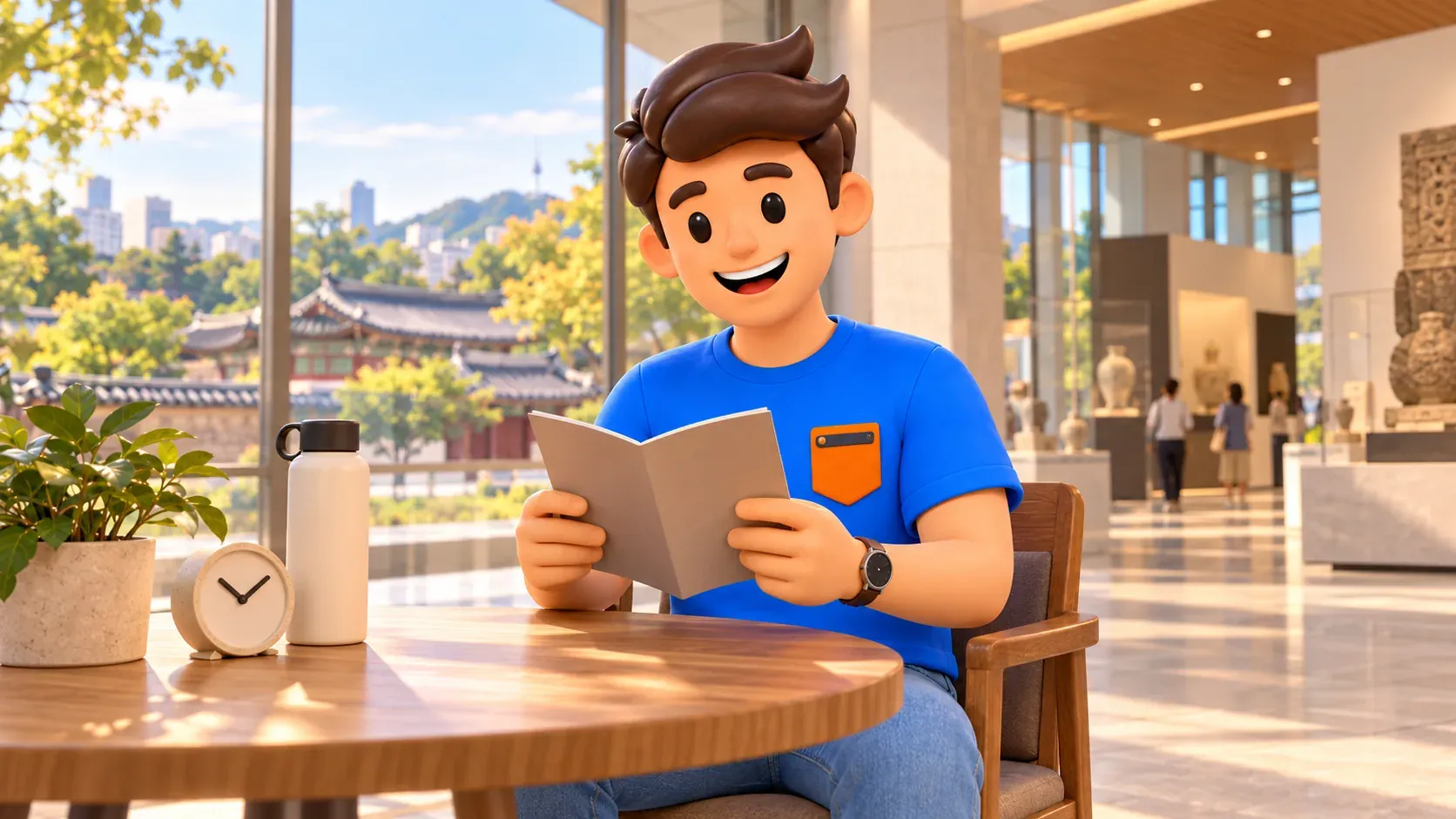
Give rest an actual block, rather than whatever remains after all the galleries. Sit briefly where allowed, drink some water and decide which museum themes interest you now. A full lunch requires a longer programme or a separate slot afterwards.
At the entrance, check exhibition locations and available visitor routes. Choose two or three questions instead of trying to find everything: how the capital was organised, how residents lived and how the city expanded beyond former limits.
The museum: from palace to urban structure
Seoul Museum of History opened in 2002. Its principal subject is the city itself: territory, institutions, trade, homes and changing everyday life. This is a place to connect familiar landmarks with a broader urban system.
In the Hanyang section, look at how mountains, walls, palaces and main streets formed the capital's structure. You do not need to learn every label on an old plan. Find a few places already encountered on your trip and compare their positions.
Then choose an everyday-life theme. Household objects, photographs or documents reveal people behind the architecture. Ask what an object says about work, home or movement. One carefully considered example often stays with you longer than a succession of quickly passed display cases.
Later periods show changes in scale and infrastructure. Compare what happened to a street, home or public building as well as the dates. The museum then continues the questions raised at the palace instead of becoming an unrelated indoor stop.
Use the city model as a conclusion
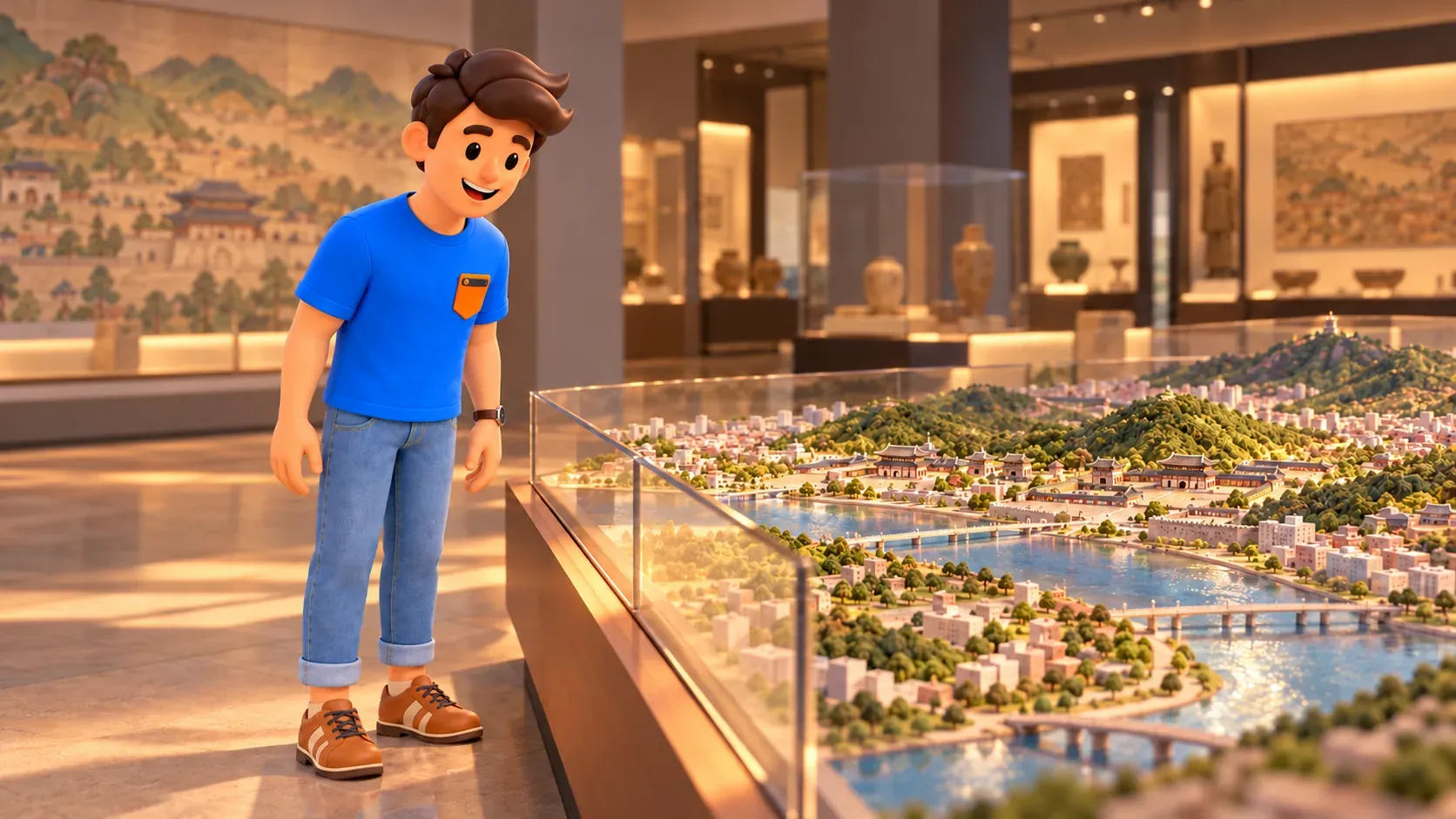
If its gallery is accessible, save time for the large Seoul model. After historic plans, it helps you see the river, dense development and relationships between districts. Treat it as a tool for comparison rather than simply the final compulsory photograph.
Find the familiar central area, then notice how far the city extends beyond it. Locate a district you have walked and relate it to river or mountains. Contemporary Seoul's scale becomes easier to grasp after a relatively small palace space.
The model does not replace street navigation. It does not provide current entrances, transport schedules or path accessibility. Its role here is to assemble an understanding of the city; practical journeys still require actual routes.
Change the order when weather changes
In rain, begin with the museum if its arrangements permit, leaving the palace for a better period. Do not expect the outdoor section to become completely protected. In severe weather, the museum alone can provide a sufficient programme.
In heat or cold, shorten exterior viewing. Historical value does not depend on completing every outdoor corner. With mobility requirements, consider actual stairs and entrances: an overall site plan does not confirm access to every pavilion.
Choosing a comfortable depth of visits is easier with RoadMe: the app prepares a personal trip plan around your preferences and pace. Set your main interest so museums, walking and rest receive suitable time within the wider itinerary.
Adapt the visit to your group
With children, choose a simple shared task: find the gate, compare the court with the city model and notice how people lived in different periods. Do not expect equal attention at every case. Fewer subjects and a proper break usually make a more comfortable visit.
On a first trip, this day supplies context for later walks. Walls, palaces and older neighbourhoods become easier to read as parts of one city. On a return trip, select a theme connected to somewhere familiar rather than repeating every gallery.
If interests differ, agree on the main part beforehand. An architecture enthusiast may want more palace time; someone drawn to urban history may prefer the museum. The programme remains coherent when changes concern depth instead of new transfers.
Continue after the half-day without overfilling it
The calmest option is lunch and a free continuation without another major museum. For a second short subject, consider the Jeongdong walk, adding its own programme and transfer time. Nearby districts do not turn two walks into one.
Within a longer trip, use the five-day Seoul framework and replace one museum block with this combination. The outing is complete once palace space and museum context have helped you understand the city better. Filling the remaining day with further pins is optional.
Before you leave, note one question the visit has raised. Perhaps you want to understand a particular neighbourhood, a building's former use or the relationship between river and city growth. This gives later walks a useful focus and lets the museum continue working outside its galleries.
For photographs, distinguish personal memories from records of individual objects. Follow displayed restrictions and avoid obstructing other visitors. A few considered images of the court, a permitted detail and an overall city view can be more useful than photographing every label without reading it.
Leave the afternoon flexible if the exhibition takes longer than expected. One rewarding gallery deserves its time. The advantage of this compact pairing is the ability to deepen attention without repeatedly repacking your day around long journeys.


