
A rainy day in Bruges: two museums with a short walk
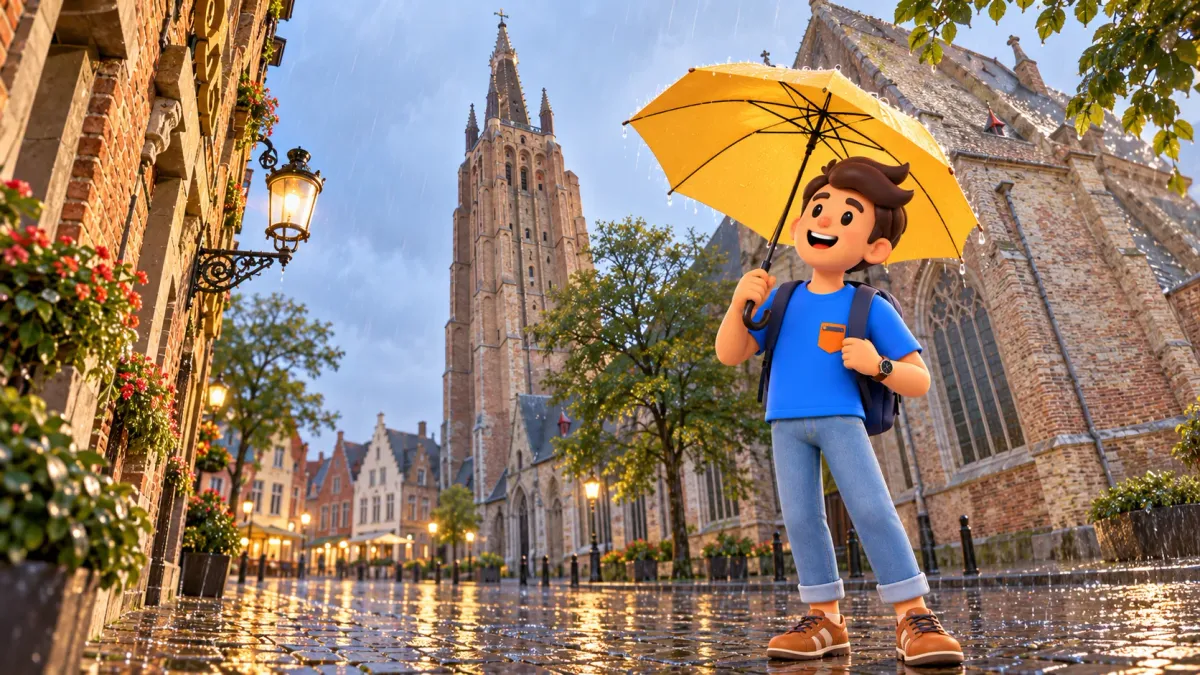
For a rainy day in Bruges, build a compact outing around the Gruuthusemuseum and the Museum of the Church of Our Lady. Start at Dijver 17C with a former city palace, then leave the building and make a short outdoor transfer to the church museum on the Mariastraat side. The appeal is simple: two substantial visits close together, with very little walking between them.
Allow roughly three to three and a half hours including coffee: 75–90 minutes for Gruuthuse, 45–60 minutes for the church museum, around half an hour to rest, and a buffer for entry. These are editorial planning estimates rather than official visit lengths. The outdoor section between nearby entrances is approximately 150–350 metres, depending on your approach and the public passages in use. Your journey to the first museum, return journey and a full lunch are extra.
Two interiors with different stories
This plan suits visitors who want a meaningful day while keeping outdoor stretches short. Gruuthuse gives you rooms, materials and objects through which to understand the city. The church brings art and remembrance into a larger sacred space. Their proximity makes the pairing practical, but it is not an entirely covered route: expect to go outside and enter the second museum through its designated visitor entrance.
RoadMe makes it much easier to develop a personalised plan for your whole trip around your interests, dates and pace. Try building your Bruges visit in the app, bringing museums, walks and breaks into a coherent itinerary without hours of manual planning.
If two interiors would be tiring, choose one and leave more time for a break. If the rain clears, there is no need to add every central landmark immediately. The pair already forms a complete outing. What makes it useful is the chance to look carefully at a few things, rather than treating bad weather as an invitation to buy the greatest possible number of museum tickets.
Decide which story matters most before leaving. Choose Gruuthuse for the house, materials and the expression of urban wealth; prioritise the church museum for particular artworks and their setting. The second visit can remain optional. This also gives a mixed group something clearer to discuss than whether everyone generally enjoys museums: the two places offer different ways into the same city.
Check Wednesday and Sunday first
Gruuthuse normally opens from 09:30 to 17:00 and closes on Wednesdays. Do not apply a blanket assumption that Bruges museums all close on Mondays. Monday can work for this pair, whereas Wednesday requires a different arrangement. Establish that your chosen museum is open before fitting coffee and the rest of the day around it. A close location cannot compensate for a closed door.
The church museum normally opens from 09:30 to 17:00, with Sunday opening from 13:30 to 17:00. On a Sunday, visit Gruuthuse in the morning, have lunch, and continue to the church museum in the afternoon. Starting both visits early is not possible just because the buildings are neighbours. For a later start on another day, leave enough time for the second interior before closing.
Catholic holidays and services, weddings or funerals can affect access to the church. Special museum calendars also apply: the ordinary plan does not work on 25 December or 1 January, and 24 and 31 December have shorter hours. Check your actual date before purchasing. Reaching the entrance just before closing is different from having enough time to enjoy the rooms once you are inside.
Gruuthuse: the city through its objects
The museum occupies the city palace of the Gruuthuse family, whose grandeur owes much to the fifteenth century and Lodewijk van Gruuthuse, associated with the Burgundian court. It offers a tangible introduction to prosperous Bruges. Wealth becomes something visible in rooms, materials and possessions rather than an abstract claim attached to a beautiful facade. Rain outside makes it easier to change the scale of your attention.
The displays span several centuries of city history, with tapestries, stained glass, wooden sculpture, lace, manuscripts and porcelain among the objects. You do not need to memorise the list. Pick two contrasting materials and consider the work, trade or tastes they suggest. A piece of cloth and an object made for a table can sometimes bring people closer than an uninterrupted sequence of grand rooms.
Keep the age of the house separate from the date of an individual exhibit. A palace does not mean every object comes from the fifteenth century, or that the present display has remained untouched since the family lived here. The museum's story extends from Burgundian prosperity through later changes and the city's renewed interest in its historic appearance. Read selected labels where an object has already caught your attention.
Within the suggested 75–90 minutes, alternate your way of looking. Take in a large textile from a distance, inspect a small detail, then notice the room containing it. This rhythm can feel more rewarding than reading continuously. If one section becomes absorbing, give it the time it deserves and shorten the second visit. The timetable is there to protect attention, rather than to hurry you past it.
A private oratory overlooking the church
One of the palace's most distinctive features is its late fifteenth-century oratory, overlooking the chancel of the Church of Our Lady. It makes the relationship between the neighbouring buildings tangible. When this part of the museum is accessible, notice the wooden surfaces, compact room and direction of the view. A great church is experienced through an intimate space belonging to a private house.
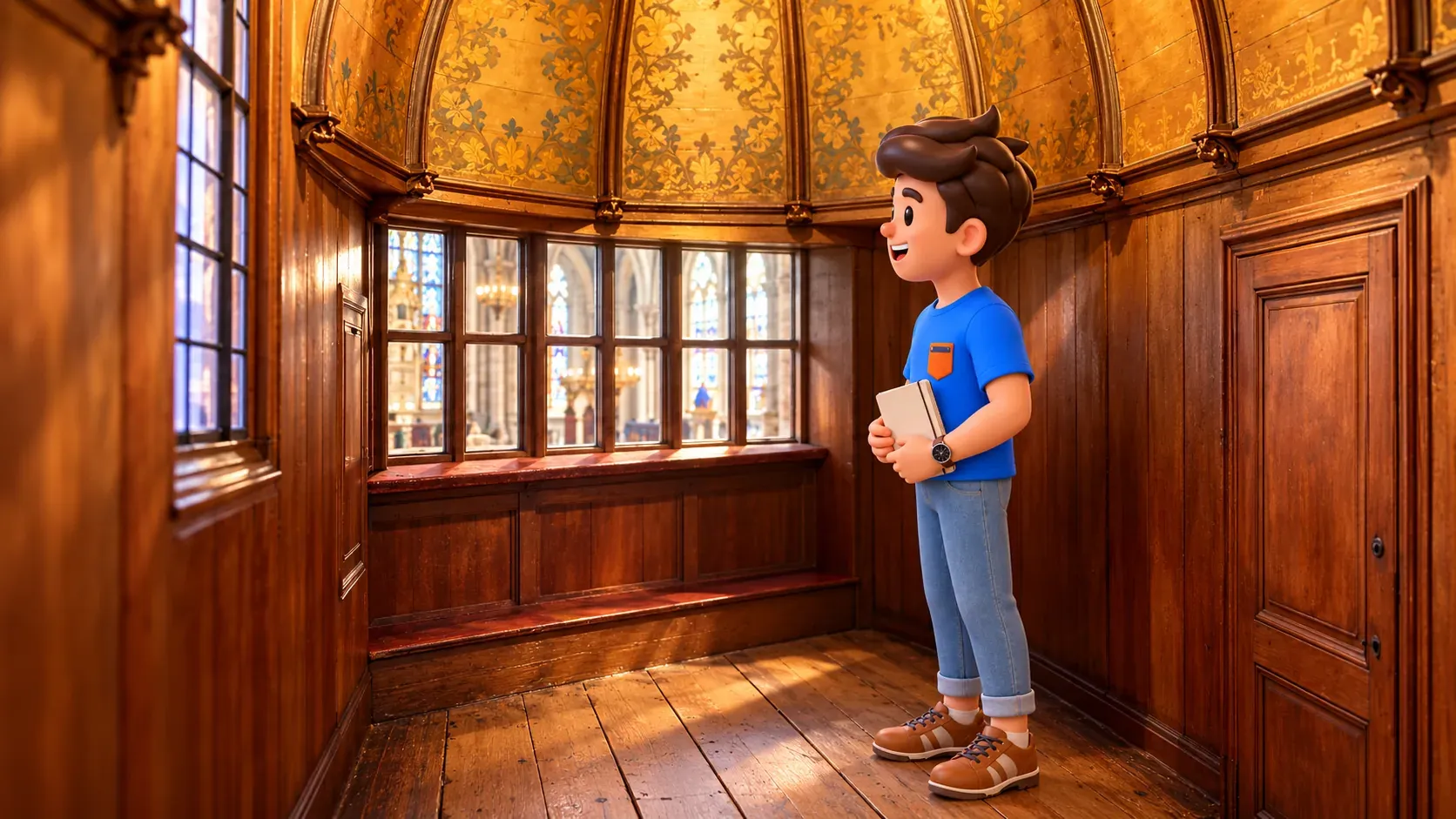
This historic connection is not a promise that visitors can walk straight from the palace galleries into the next museum. A viewing window and a modern circulation route serve different purposes. Use the marked public exit and enter the church museum from outside. If an individual room is unavailable or the visit route has changed, follow staff directions rather than trying a service door.
One thought is enough for this stop: the owner's position was expressed through arrangements of space as well as expensive possessions. You can sense the difference between a domestic setting and a public one without learning a long sequence of dates. Allow other visitors room to look, and avoid making the little window an extended compulsory photo stop. Its value lies in the relationship it reveals.
The courtyard and pavilion: a brief outdoor pause
Gruuthuse's contemporary visitor pavilion stands alongside the historic palace facade. Its dark folded steel and glass do not pretend to be another old turret. Even a short pause in the courtyard lets you compare materials and outlines. This is a small architectural moment within the rainy-day plan, rather than a reason to add a separate modern-architecture excursion while the weather is poor.
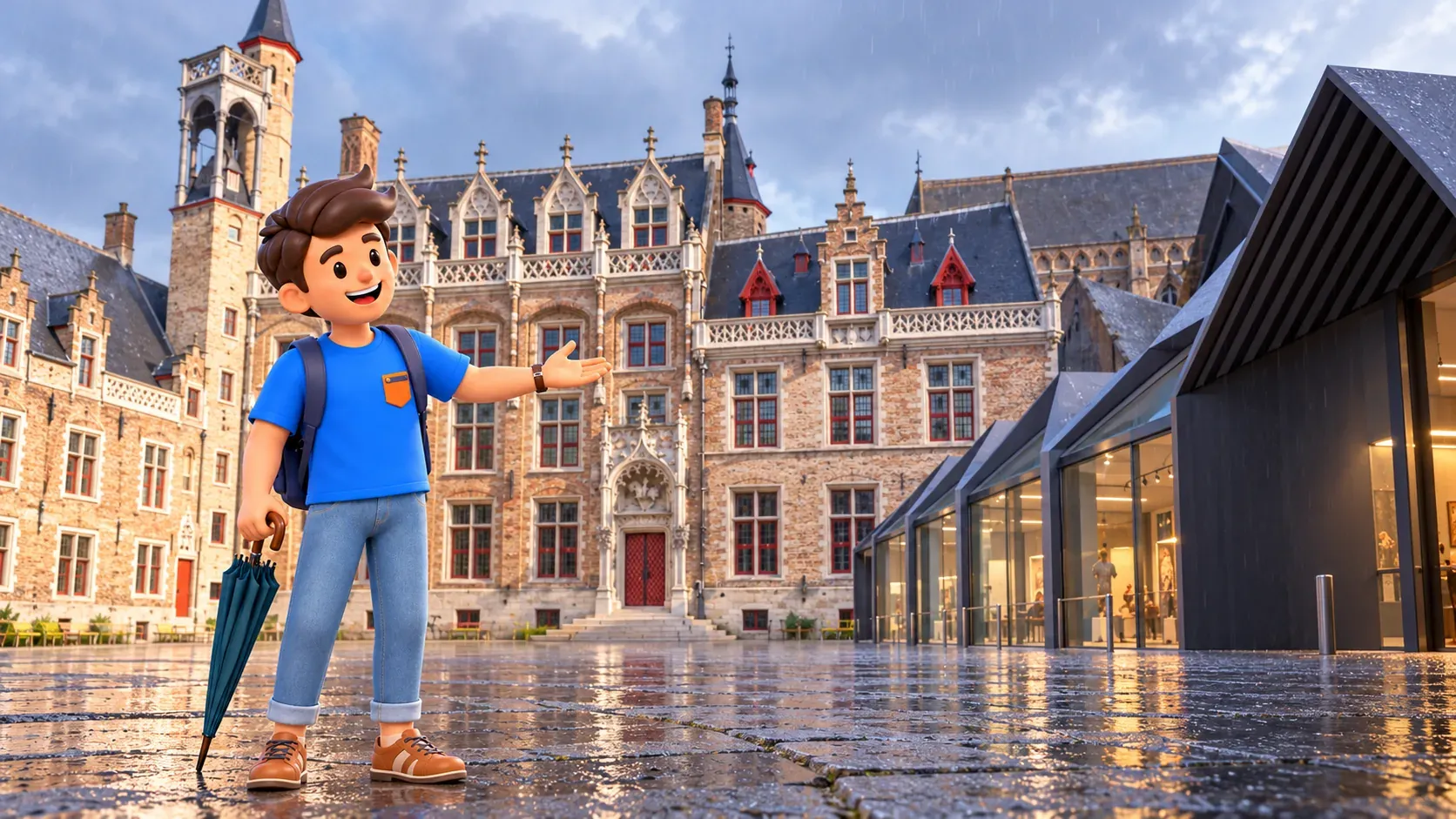
Continue by the marked public exit towards Gruuthusestraat and Guido Gezelleplein, then approach the church museum from the Mariastraat side. Follow the current visitor signs. The palace courtyard entrance, the freely accessible part of the church and the paid museum should not be treated as a single interchangeable doorway. There is no continuous covered corridor promised by this route.
Wet paving makes even a short transfer worth taking calmly. Close your umbrella before entering, keep doorways clear and handle wet belongings as staff request. If rain is heavy, skip an obligatory detour to Boniface Bridge. It can wait for a dry interval or another day without weakening the main programme. The distance estimate covers this compact connection, not an extra tour of canals and bridges.
The church museum: a few points of focus
The tall brick tower makes the Church of Our Lady recognisable from outside, but indoors the useful change is in how you look. After Gruuthuse's varied objects, choose a few works and consider their place within a much larger room. Free access to part of the working church is different from admission to the museum section. The works that motivate this visit belong to the museum experience.
The best-known piece is Michelangelo's Madonna and Child. Instead of approaching it simply to tick off a famous name, look first at the overall composition, then at the figures' expressions and positions. A quiet pause in front of one work changes the pace after the first museum. This article does not replace the display's interpretation: read more beside the sculpture when you have found a question of your own.
The tombs of Mary of Burgundy and Charles the Bold introduce remembrance and the material expression of status. They connect with the Burgundian history already encountered in the palace. You do not need an exhaustive family tree to appreciate the shift. The first museum has shown objects associated with living; here, attention turns to objects made to preserve memory. That connection gives the pairing more than geographical convenience.
For a 45–60-minute visit, use those works and the overall architecture as your anchors. Allow longer if you want to read widely and study other pieces. This remains a functioning church, so respect quiet areas, restrictions and services. The access available at the actual time of your visit takes precedence over an elegant sequence written down beforehand. If circumstances shorten the visit, keep its central focus.
Coffee, tickets and an easy finish
Leave around half an hour for a warm break in the Mariastraat area, either between museums or afterwards. Choose a cafe for available seats and the needs of your group. The itinerary does not depend on a particular table or a view of the tower. The illustration shows an imagined cafe pause, rather than a promised venue interior. Add a full meal separately to your overall time.
With RoadMe, it is much easier to turn these choices into a personalised plan for Bruges as a whole, shaped around your interests, dates and comfortable pace. Try planning the trip in the app so museum visits, walks and rest fit into a practical sequence across your stay.
A combined ticket exists for Gruuthuse and the church museum; check its current conditions and suitable opening times before buying. It does not make every room available at any hour or override the church calendar. Also consider the stairs at Gruuthuse: an accessible approach to the courtyard does not make the palace museum wheelchair accessible. Ask about the actual museum route if you have individual access requirements.
On Wednesday, make the church museum and a relaxed break your shorter plan, or move the full pair to another day. On Sunday, place the pause before the church visit. If you are tired, finish after the first museum. A clear way to shorten the day is more useful than naming several extra reserve interiors and then rushing between them under an umbrella.
Finish by Mariastraat and calculate your return to accommodation or onward transport separately. For dry weather, consider the walk through Gothic and Baroque churches; for a stronger focus on collections, use the half-day art museum plan. Today, two neighbouring places are enough to give Bruges depth and history, even when spending most of the day under a roof feels like the right choice.


