
Bruges for Art Lovers: A Half-Day Painting and Museum Route
For a half day devoted to painting in Bruges, pair the Groeningemuseum with the Museum of St John’s Hospital. Between them, take a short outdoor break through Hof Arents and over the Boniface Bridge. Allow around four hours for two substantial visits, a little greenery and unhurried transitions. The appeal is concentration: a manageable introduction to Flemish art that leaves room for the rest of your trip.
There is an important date condition. The main version works before the Groeningemuseum’s planned closure on 11 January 2027. Its collection is scheduled to be shown at BRUSK from 12 March 2027; do not assume a seamless transfer between the buildings during the intervening weeks. A short section below explains how to adjust an art morning around that change.
Two museums with a reason to visit them together
The Groeningemuseum offers an encounter with painting across different periods. At St John’s Hospital, Memling’s works gain another context: a place shaped by care, religious life and particular patrons. Together, the museums provide more than two collections of famous names. You can compare the experience of studying a picture in a gallery with encountering art associated with the institution around it.
With RoadMe, it is much easier to turn your interest in art into a personalised plan for the whole trip, shaped around your interests, dates and pace. Try planning your Bruges stay in the app so museums, walks and downtime fit together without assembling the entire schedule yourself.
A workable allowance is 75–90 minutes in the Groeningemuseum, 20–30 minutes for the garden, bridge and exterior stops, then 75–90 minutes at St John’s, with a buffer for admission and a short rest. Outdoor walking is roughly 600–900 metres, depending on the public approaches you use. These are editorial estimates, not a measured track. Getting to the start, returning afterwards and a full lunch are additional.
If you enjoy reading every label, allow longer. Choose a few works for close attention and treat the remainder as an overview. You do not need specialist knowledge to begin: notice how an artist makes a face convincing, separates two fabrics or lights a room. A question formed from looking often makes the interpretation more useful than reading it before you have noticed anything yourself.
The Groeningemuseum: a few paintings, seen properly
Begin at the Groeningemuseum, whose address is Dijver 12. Follow current visitor signs to the entrance; a photograph of a historic frontage does not necessarily identify the exact present admission route. Once inside, decide what deserves most of your time. The collection covers six centuries of Belgian art, so equal attention to everything would turn this half day into a much longer museum outing.
For many first visits, the natural starting point is early Netherlandish painting, often described here as the Flemish Primitives. This is an art historical term, not a judgement that the artists lacked skill. Their extraordinary precision is often the attraction: reflected light on metal, the weight of cloth, a face that seems physically present. Look at the composition first, then choose one small area to examine.
Jan van Eyck’s Madonna with Canon Joris van der Paele, completed in 1436, provides a strong focus. Two simple questions are enough for an initial encounter: how do the figures occupy the same space, and what makes their materials look different? Compare skin, fabric and armour. A large religious image becomes approachable without memorising every saint, attribute and historical reference before entering the room.
Then step back and look at the whole picture again. Close attention can become absorbed in the armour and lose the relationships between people; a distant glance can miss the surfaces that make the scene persuasive. Changing your viewing distance a few times is worthwhile. If visiting together, each choose one detail and explain why it held your attention. Different answers can make a familiar masterpiece feel less predetermined.
Memling and Gerard David also belong to the collection. There is no need to turn their names into a checklist. Choose another work for comparison: does a face seem more distant, does the landscape matter differently, does the room feel more open? This is a personal way of looking rather than a test of attribution. Labels can refine an impression after you have begun to form one.
The collection continues into later periods, including neoclassicism, Flemish Expressionism and twentieth-century art. If modern painting is your main interest, give it a deliberate share of the visit instead of treating it as whatever time remains. A broad chronology does not impose one correct personal route. Keep some energy for the hospital, however: a clear first impression is more rewarding than leaving the first museum completely exhausted.
Hof Arents: let the city back into the day
After leaving the museum, use open public connections towards Hof Arents. This small garden beside Dijver changes the scale of the experience: frames give way to trees, paths and the actual materials of Bruges. A few quiet minutes are enough. Talk about a painting, or simply let your eyes adjust to a different distance before seeking out another exhibition entrance.
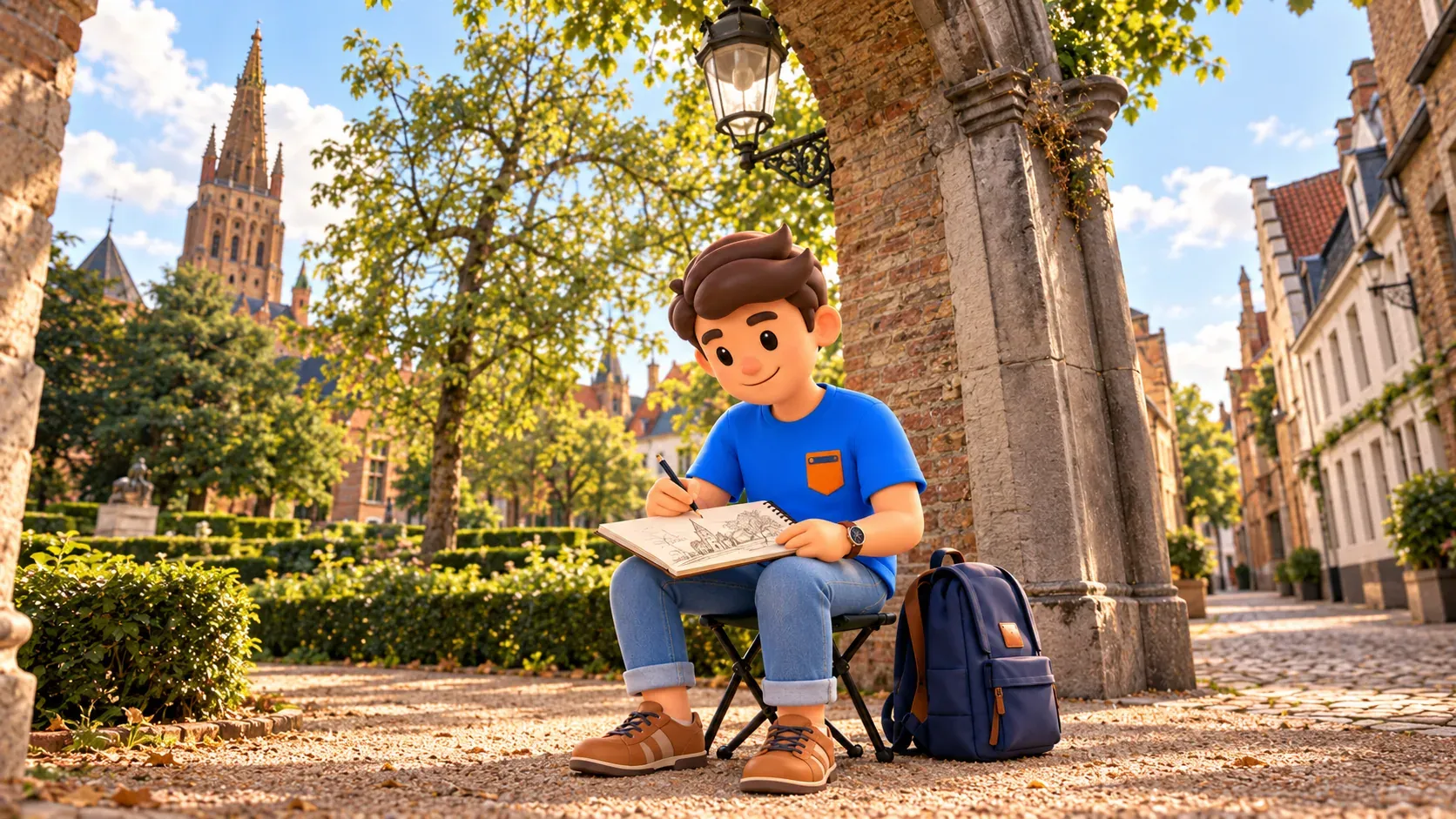
The garden and neighbouring approaches offer views of the museum quarter, including the Church of Our Lady’s tower. After looking at painted surfaces, you may notice how real brick and stone change with light. This does not mean the city has survived literally as a fifteenth-century painting. It is a useful small exercise in observing textures and spatial relationships with a little more attention.
Arentshuis is not a third compulsory interior on this itinerary. The purpose of the break is to change rhythm. If you like sketching, a few lines in a small notebook are enough to preserve an architectural impression. Keep narrow passages clear and sit only where permitted and convenient. The plan does not depend on finding an empty bench at a particular moment.
The Boniface Bridge and the outside of Our Lady
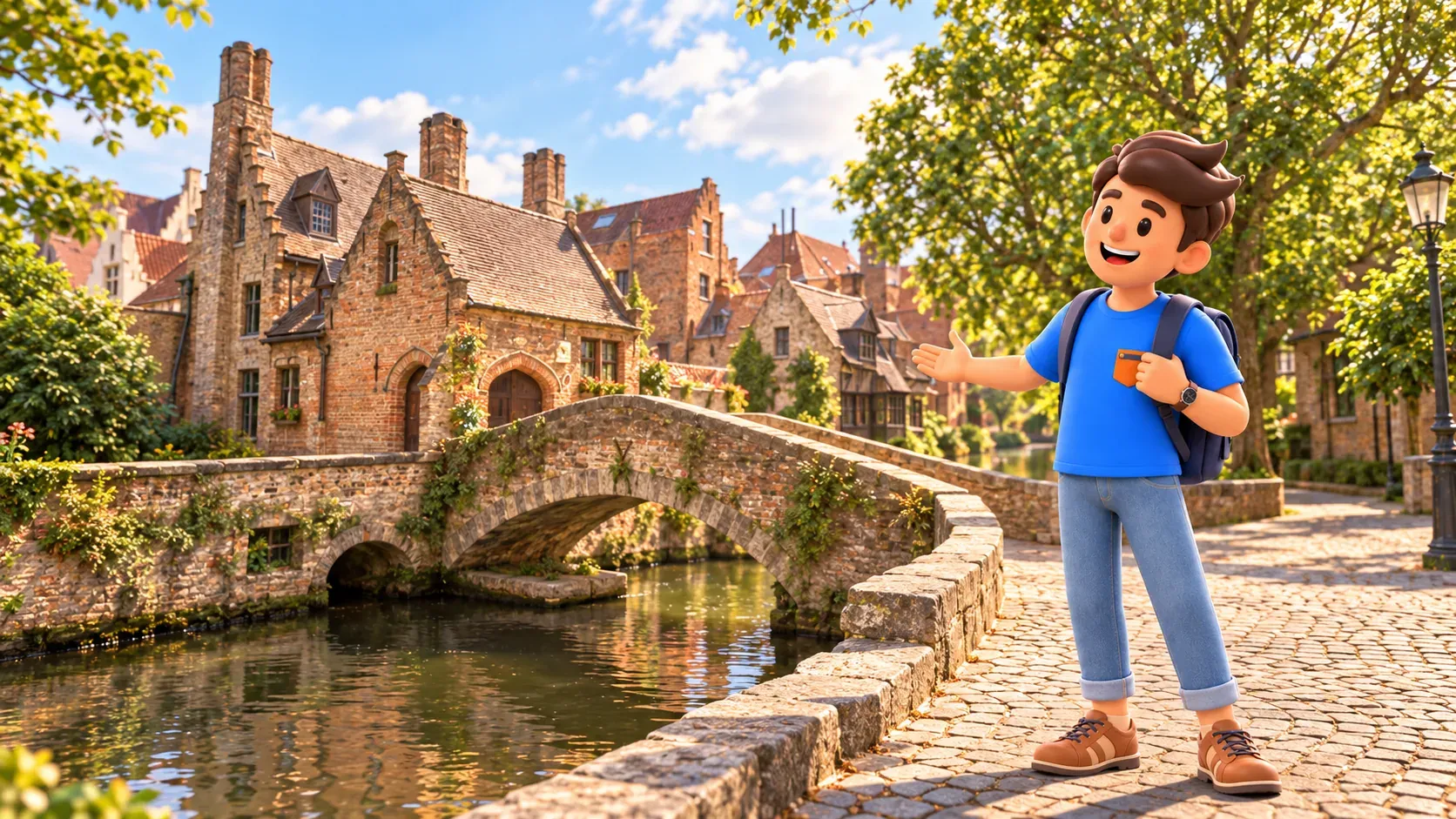
Continue towards Bonifaciusbrug, the Boniface Bridge. The small stone crossing brings water, brick walls and neighbouring buildings into a compact arrangement. Within this museum outing, it is a brief outdoor stop rather than a separate photography session. If the bridge is busy, use a broader approach for your picture and leave room for others. An empty photograph is not a condition for enjoying the setting.
From here, follow public approaches beside the Church of Our Lady towards Mariastraat. The church remains an exterior landmark in this version. Its proximity makes another art visit tempting, but an additional interior changes the balance of the day. If sculpture or church furnishings matter more to you, set aside time for them and shorten the original painting programme rather than quietly adding another full visit.
A short line between buildings on a map does not guarantee a public shortcut through their grounds. Use the permitted links through the garden, bridge and surrounding streets instead of searching for closed courtyard doors. This transition is also a good moment to assess your attention. If the first museum took much longer than expected, a proper pause before the hospital can help more than hurrying straight inside.
St John’s Hospital: Memling within a history of care
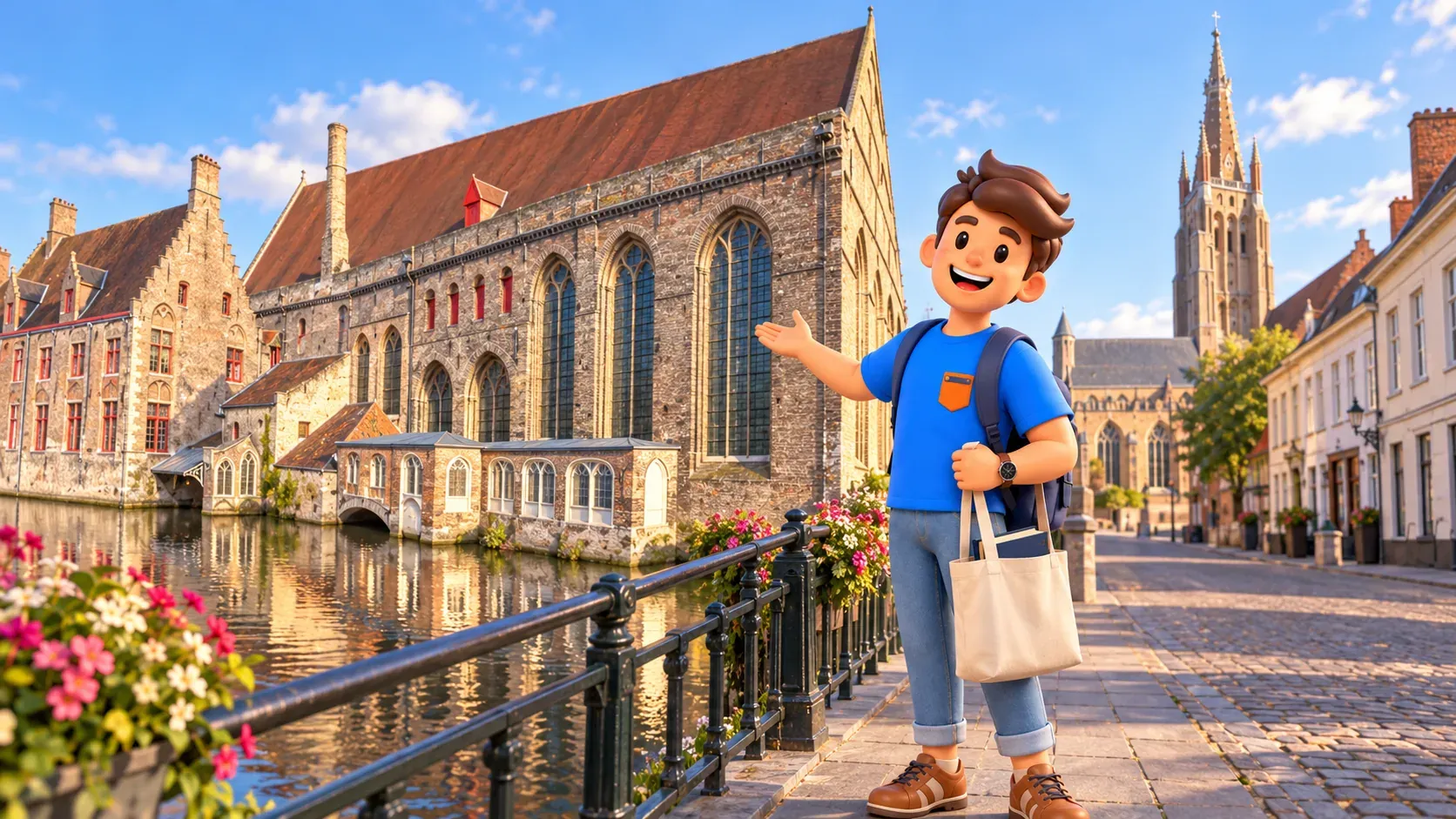
The Museum of St John’s Hospital, or Museum Sint-Janshospitaal, is at Mariastraat 38. The hospital was founded in the twelfth century; today the museum brings art into conversation with care, hospitality and the history of the institution. The setting changes the questions you ask. A work becomes something connected with particular people and purposes, alongside its qualities as a painting by a recognised master.
The museum holds seven Memling masterpieces, four commissioned for the hospital in the late fifteenth century. A half day does not require studying all of them equally. Choose one larger work and one different format. Comparing an altarpiece with a painted object makes the visit more varied and helps you notice how an artist’s approach responds to different functions.
The St John Altarpiece of 1479 is a useful anchor. It was commissioned by the hospital’s brothers and sisters. Begin with the open triptych as a whole, then consider individual figures and their relationships. The important point for this route is that the painting was made for a particular community. You do not have to decode every scene to recognise a different relationship between art and setting.
The Shrine of St Ursula offers another kind of encounter. It is a painted reliquary rather than an ordinary flat canvas: a small architectural object carrying images. Notice its form before choosing a single scene for closer attention, as viewing conditions allow. Treat its religious narrative within its historical context. Retelling every episode, or presenting devotional tradition as established historical fact, would add little to this short visit.
Later and contemporary works also form part of the hospital museum. They keep questions of the body, vulnerability and care from belonging to just one period. If that dialogue captures your attention, give it time. An itinerary that began with early Flemish painting can accommodate a personal discovery; there is no need to hurry towards the next famous name simply to complete the expected sequence.
The historic pharmacy belongs to the same complex and preserves an authentic seventeenth-century interior. Consider it an addition if you have energy and that part of the visit is available on your date. It should not become a third substantial museum hidden inside the four-hour estimate. Extend the outing if you want to linger; the two main art visits already make a complete programme.
Choose a date, and account for the 2027 change
Monday is the regular closing day for both main museums; check holiday exceptions for your exact date. The Groeningemuseum normally opens 10:00–18:00 from 1 April to 2 November and 09:30–17:00 from 3 November to 31 March. St John’s normally opens 09:30–17:00. Seasonal hours do not override the planned Groeningemuseum closure or other special calendar changes.
For autumn 2026, a morning start gives room for both visits. For a winter visit before the closure, avoid pushing the start too late merely because the buildings are close together. Check admission arrangements and what any existing ticket or pass includes. Two institutions being neighbours does not establish shared admission rights, and an itinerary cannot determine the terms of a pass you already hold.
Try RoadMe to work out a personalised Bruges trip around your interests and preferred pace, with art visits distributed sensibly across your days. The app makes it easier to give this half day the right place alongside walks and rest throughout your stay.
The Groeningemuseum building is scheduled to close for renovation from 11 January 2027. The collection display at BRUSK is announced for 12 March 2027 to 30 June 2031, leaving a gap that needs a different plan. During that interval, make St John’s your main visit with the garden and bridge as a short walk. Once the BRUSK display begins, build the museum pairing around that venue and its current calendar.
Finish without committing to another major interior. For a separate gentle outing, try the walk through Bruges’s white almshouse courtyards; to put different interests into a broader visit, use the one-day Bruges plan. This half day has already provided something useful: a few memorable ways of looking that can accompany you into the next streets.


