
Gothic and Baroque Bruges: A Walk Between Four Churches
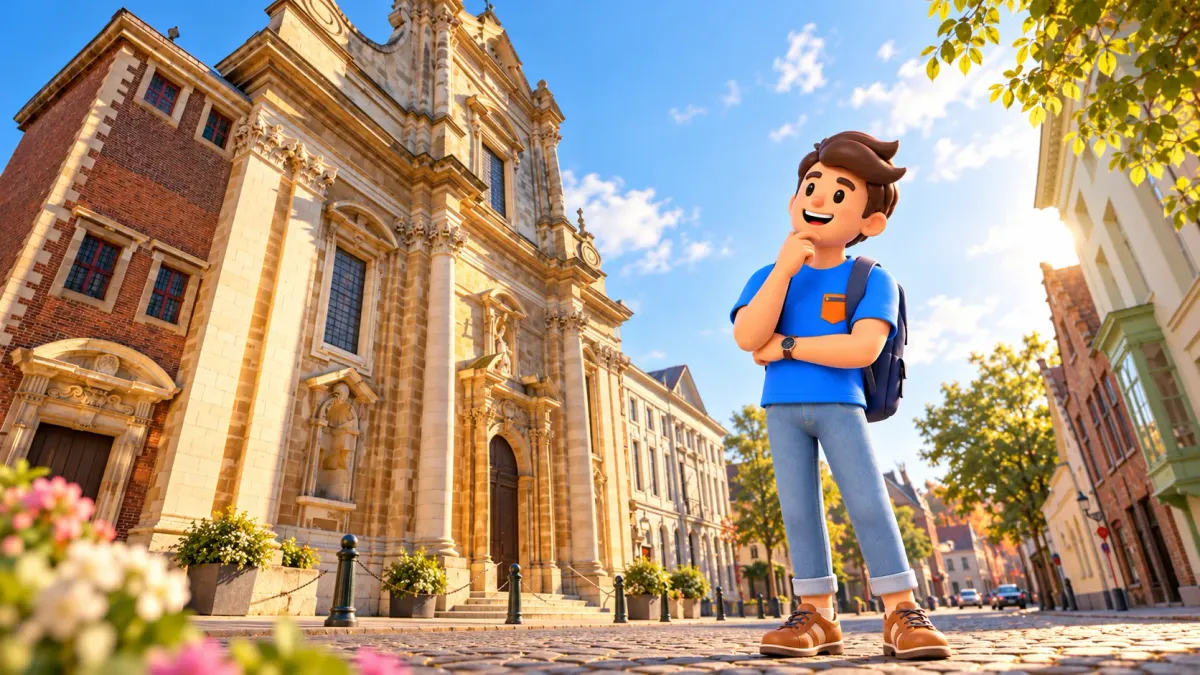
To see Gothic and Baroque Bruges together, walk from St Saviour’s Cathedral to the Church of Our Lady, then through the centre to St Walburga’s and St Anne’s. Allow around two and a half to three hours for exterior stops, two short interior visits when accessible and a break. The route covers roughly 1.8–2.3 kilometres on foot; getting to the start and returning afterwards are additional.
One current restriction shapes the plan. St Walburga’s is closed for interior restoration from early August 2026 until the end of March 2027, with dates subject to change. Treat it as an exterior stop. For a Baroque interior, concentrate on St Anne’s if visitor access is available on your date. The walk does not depend on all four churches admitting tourists simultaneously.
What to notice without an architecture degree
Three observations are enough to begin: the building’s silhouette, the arrangement of its facade and the feeling of the space inside. Start with what you see and use stylistic names as pointers. At a Gothic church, notice elongated windows, pointed forms and the upward movement of the eye. At a Baroque facade, look for projecting layers, columns, curves and the way light brings volumes forward.
With RoadMe, it is much easier to turn an interest in architecture into a personalised plan for your whole trip, shaped around your interests, dates and pace. Try the app to bring themed walks, major visits and downtime together without building the entire schedule yourself.
These clues help you look, but they do not replace a building’s history. A Gothic appearance does not always establish a medieval date, and a rich Baroque furnishing may stand within a much older structure. That mixture makes the walk interesting. You are not visiting four perfectly separated examples of four periods, but a city whose communities and craftspeople repeatedly changed existing places.
The estimate includes around 20–25 minutes inside the cathedral and a similar visit to St Anne’s, where opening arrangements and services permit. Our Lady begins as an exterior stop; its museum section is a separate decision. Walking, outdoor observation and a break fill the remaining time. For detailed art visits, extend the outing or divide it between two occasions.
St Saviour’s: a substantial tower and delicate windows
Begin at Sint-Salvatorskathedraal beside Steenstraat. Its large square tower provides a strong first landmark, different from the pointed tower of Our Lady later on the walk. Stand far enough back to see the tower and lower parts of the church together. Then shift your attention to windows and buttresses. The monument becomes an arrangement of different scales rather than one enormous vertical feature.
The present Gothic cathedral developed between the twelfth and fifteenth centuries and is Bruges’s oldest parish church. For this route, the layered building matters more than a complete construction chronology. Avoid assuming every visible detail belongs to its earliest phase. Compare the tower’s substantial mass with the more delicate window tracery: their relationship creates an impression that a close-up of either part alone may miss.
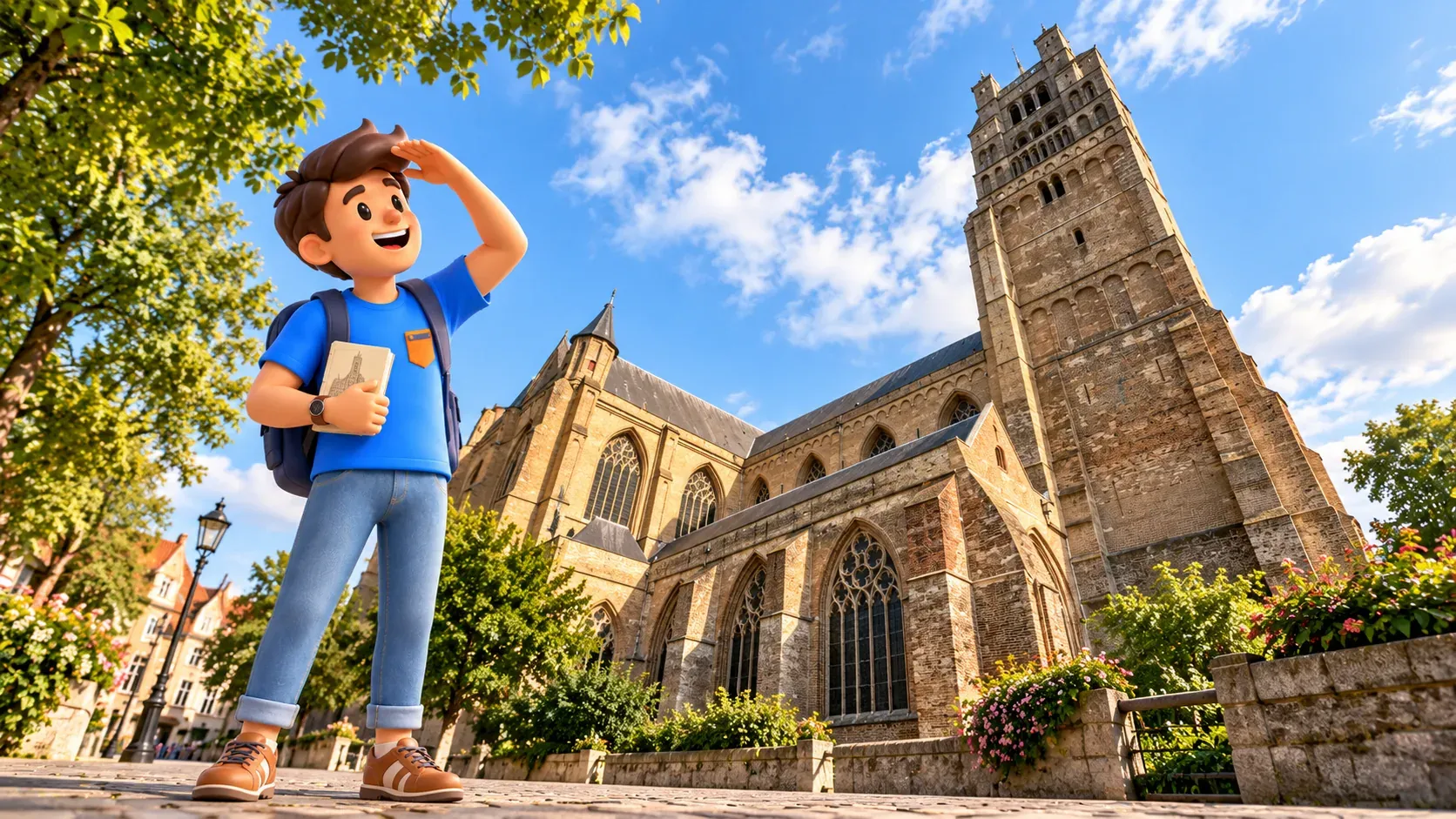
If the cathedral is open to visitors, step inside briefly. Let your eyes adjust to the light before heading for an individual artwork. Look along the space and notice height, distances between supports and coloured light. This is a direct introduction to architecture, leaving room for a personal response before you begin reading names and dates.
The furnishings include a Baroque rood loft with an organ, tapestries and historic painting. Already, the label “Gothic church” is clearly insufficient to describe everything within it. Choose one detail to compare mentally with St Anne’s: carved decoration, the relationship between timber and stone or the density of ornament. Do not quietly add a thorough treasury visit to the allowance for a short architectural stop.
A service or closed entrance need not make this first stop a failure. The exterior has its own subject, and an interior can wait for another opportunity. Avoid spending the whole morning at a door simply to complete a list. Continue by Heilige-Geeststraat towards Mariastraat and the Church of Our Lady. The short transition makes the contrast between the two large silhouettes particularly easy to notice.
Our Lady: compare two city landmarks
At Onze-Lieve-Vrouwekerk, begin with the tower. Its elongated outline ends in a pointed spire, giving a different impression from St Saviour’s heavier form. The tower is 115.5 metres high. You do not need a debate about world records to appreciate its role in Bruges. Compare the two shapes and notice how their endings change the buildings’ effect before you go inside.
Construction of the present church began in 1230. Stone, brick, different Gothic treatments and later changes belong to its architecture. For this walk, study one tall window and several adjoining volumes. Try seeing the building as a space that grew and adapted, rather than a single postcard dominated by a spire. Even an exterior stop then becomes a worthwhile encounter.
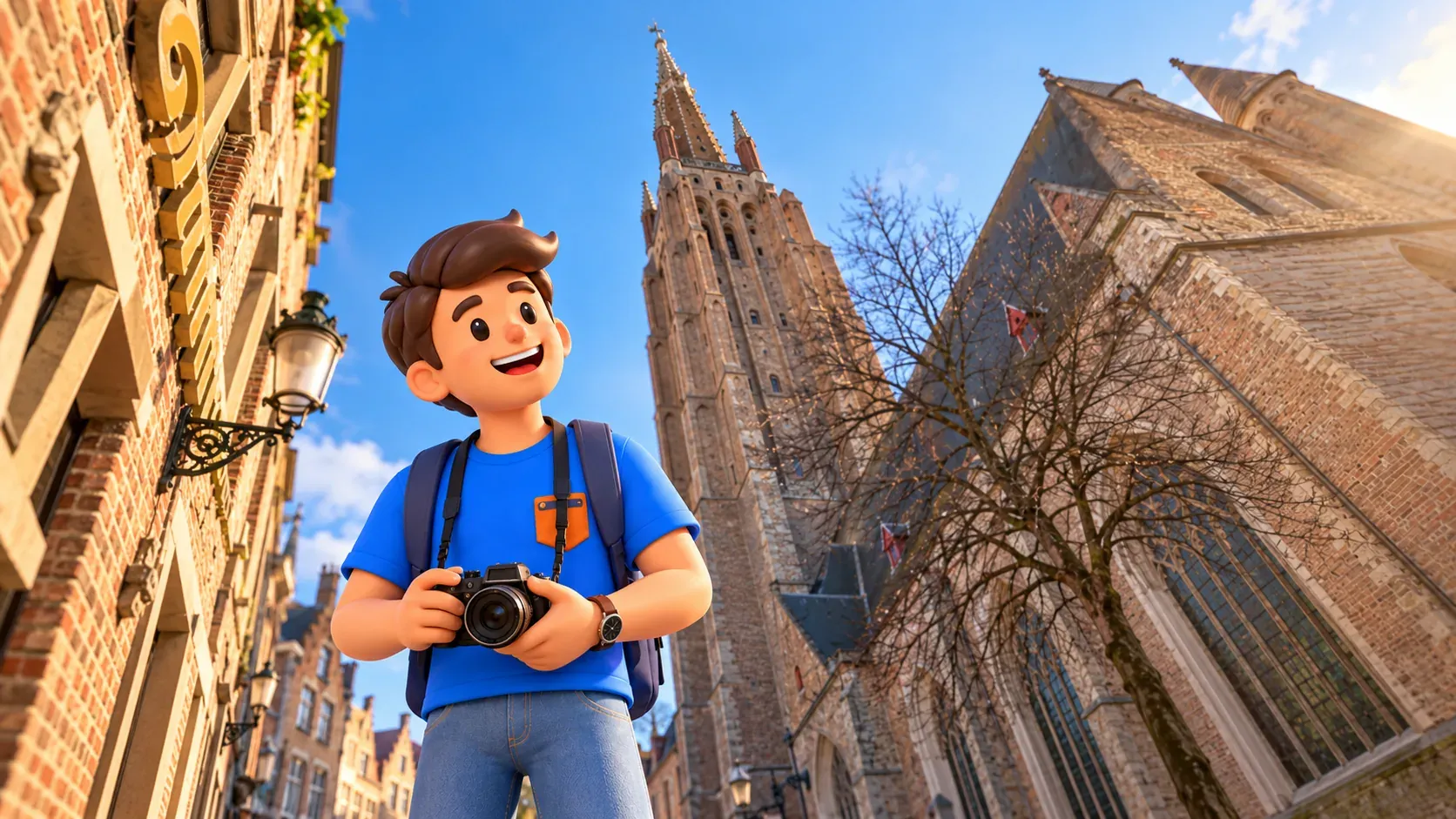
Inside, the church and museum sections have different admission arrangements. Visiting the church itself is free, while the museum section with Michelangelo’s Madonna and Child and the mausoleums requires a ticket. The famous sculpture is therefore not something to promise yourself as an incidental addition to a brief free entry. If it is your priority, allow separate time and change the balance of today’s route.
The museum normally opens 09:30–17:00, with Sunday hours of 13:30–17:00. Religious holidays, weddings and funerals can alter access. Exterior observation is enough for the core architecture walk. The nearby Groeningemuseum and St John’s Hospital need not become extra stops either: a dedicated half-day painting route gives them the attention that a succession of hurried entrances would lose.
Through Dijver and Burg towards a different Bruges
From Our Lady, head towards Dijver, continue to Rozenhoedkaai and Huidenvettersplein, then take Blinde-Ezelstraat to Burg. The canal and small passages change the scale after the large churches. There is no need to add a lengthy history of every square. Notice how towers remain useful landmarks even when their buildings disappear behind houses and turns in the street.
At Burg, the Basilica of the Holy Blood makes another church visit tempting. It is not a fifth compulsory interior here: its history opens a different architectural conversation. Pause on the square if you need a break, then continue by Hoogstraat towards Verversdijk. Streets and water connect the western pair of churches with the northeastern part of the walk.
From Verversdijk, head into Sint-Walburgastraat towards Sint-Maartensplein. On the transition, recall one feature of each of the first two buildings. This avoids becoming tired of names: a few memorable comparisons replace four disconnected church descriptions. If the weather calls for a sheltered break, choose one separately. An active church interior is not a guaranteed visitor lounge.
St Walburga’s: Baroque begins at the facade
Sint-Walburgakerk on Sint-Maartensplein offers a different treatment of the wall. Columns, projecting cornices, niches and curves hold the eye. Light meets successive layers, making the surface appear more animated. There is no need to look for an obligatory Gothic spire. At this stop, the principal subject is the facade directly in front of you rather than a landmark high above the city.
The church was built for the Jesuits in the seventeenth century to a design by Pieter Huyssens. The connection between period, patron and architectural expression is enough for a short introduction. An earlier legend involving St Walburga should not become the construction date of the present building. The history of a parish name and that of a particular church are different strands that eventually meet.
Do not plan to enter during the interior restoration announced from early August 2026 until the end of March 2027. Dates can move, and arrangements for works may affect exterior views. Observe from a permitted public approach and respect barriers. The illustration helps you imagine the architecture; it does not promise the absence of construction equipment on your own visit.
When visitor access resumes, the interior can add another comparison. For now, the facade and the next church retain the Baroque theme. There is no need to compensate for the closure with several unrelated museum stops. A short outdoor pause leaves time for a more attentive finish. Return towards Verversdijk and continue to Sint-Annabrug.
St Anne’s: Gothic appearance, Baroque richness
Cross Sint-Annabrug and follow Sint-Annakerkstraat towards Sint-Annaplein. Seen from the bridge, the tower gathers the street perspective together. After St Walburga’s broad stone facade, this approach feels more intimate. Look at the church among its neighbouring houses first. Its relatively restrained exterior prepares the comparison that may be possible inside.
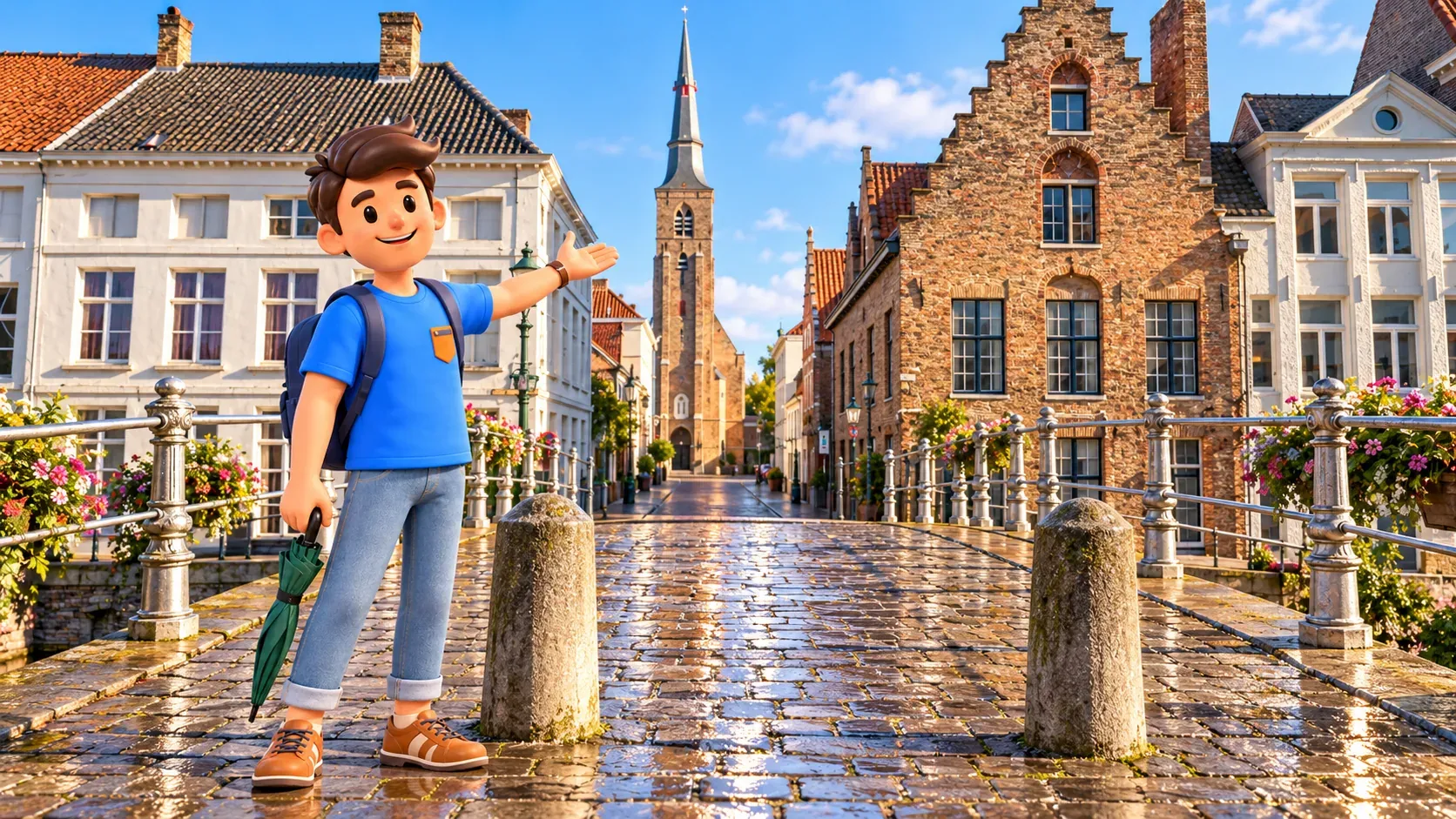
The present St Anne’s was built in the early seventeenth century using Gothic forms. That date alone shows why style is not an exact calendar. Its rich Baroque furnishings were made possible by donations from wealthy residents. Outside and inside, the building speaks differently, but both belong to the same church and the history of its local community.
If visitor access is available, allow time for a quiet look around. Compare the marble rood screen with oak panelling and integrated confessionals. You do not need to take in everything at once: choose a relationship between material and form. After the larger cathedral, this is a useful place to notice how furnishings affect the experience of a room without changing its exterior silhouette.
St Anne’s remains a parish church and is not open to tourist visits during services. Respect marked boundaries and people who have come to pray. If the entrance is closed, finish on the square and keep the interior for another day. Avoid relying on an old third-party timetable: at a small active church, the date and religious life matter more than a generic seasonal schedule.
Keep the walk comfortable
Two and a half to three hours means walking with short visits, not a detailed tour of four art collections. If a Baroque interior is the priority, first establish when St Anne’s can receive visitors and arrange the outing around that. If urban silhouettes interest you more, use an exterior version without waiting at closed doors. Both versions preserve the subject.
Try RoadMe to work out a personalised Bruges trip that distributes architecture, museums and walks across your days according to your interests and pace. The app makes it more convenient to give this themed outing the right place while leaving time for the other experiences you want.
In rain, shorten exterior pauses without adding visits during religious ceremonies. Cobbles, kerbs and individual entrances mean a fully step-free route cannot be promised. At Our Lady, museum access may require assistance on steep ramps; check arrangements for your specific needs. Comfort on an architecture walk depends on more than the short distance between spires.
Finish at Sint-Annaplein and decide how to continue your day. For a separate outing, use the Sint-Anna neighbourhood walk; for a different art focus, choose the half-day painting and museum route. Combining everything immediately is unnecessary. Four church silhouettes already show how much variety lies behind the familiar description of Bruges as medieval.


