Paris from above: choose a view worth changing your route for
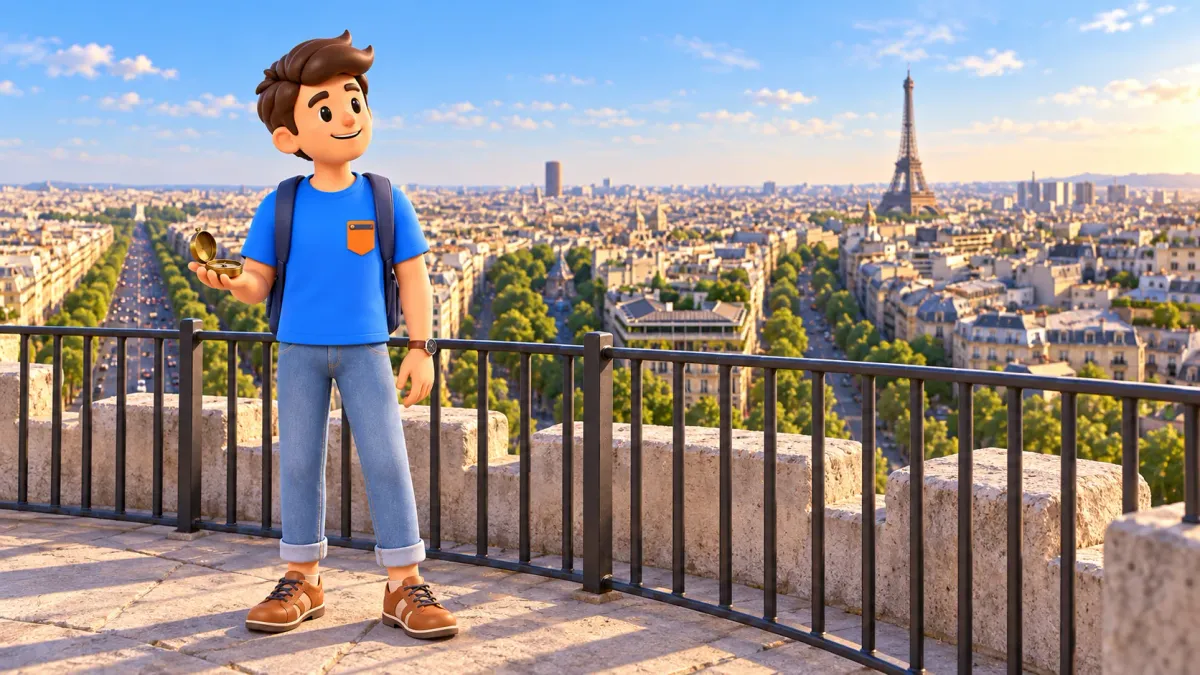
Choose a Paris viewpoint for the view you want, rather than the highest number. The Arc de Triomphe reveals the pattern of avenues, the Eiffel Tower’s second floor lets you experience the city from inside its best-known structure, and the Galeries Lafayette roof brings the Palais Garnier and neighbouring rooftops closer. Each is worth a different amount of time and effort.
These are three separate alternatives: allow about two and a half hours for the Arc, three and a half for the tower, or an hour and a half for the department store. Each budget includes the station approach, internal movements, checks where relevant, a break and the return to a station. Access conditions were checked on 14 October 2026; weather and temporary restrictions can still affect a visit.
Choose what you want to see before choosing a ticket
Choose the Arc if you want the Eiffel Tower in your city view, together with broad avenues and a sense of Paris’s layout. It is normally a paid ascent and currently requires stairs. Choose the Eiffel Tower’s second floor by lift if being inside the iron structure matters to you. The tower cannot also be the distant subject of your photograph from its own deck.
For a shorter, free stop, choose the public roof at Galeries Lafayette Haussmann. Its appeal is the nearby opera house and the scale of the roofs, rather than reaching the greatest height. These alternatives answer different wishes. Picking one leaves space for a neighbourhood walk, a meal and a slower moment instead of another cross-city transfer.
Try RoadMe to make your chosen view part of a personal plan for the whole trip, shaped around your dates, interests, pace and budget. Following that complete programme is a more convenient and effective way to use your time in Paris, with room for both major sights and real breaks.
The estimates below run from the named station back to the named station. They are editorial planning allowances, not measured walks or promises about queues. Hotel travel, airport journeys, full meals and extended shopping are extra. Leave spare time before your next fixed reservation.
The Arc de Triomphe: avenues, history and the tower in view
Twelve avenues radiate from place Charles-de-Gaulle. Seen from street level, the monument and traffic dominate; from the roof, the pattern becomes easier to understand. The historic axis linking the Carrousel arch, this monument and the Grande Arche gives the panorama an organising idea. Distant landmarks are visibility-dependent, so use the broad shape of the city rather than a compulsory spotting checklist.
Commissioned in 1806 under Napoleon, the roughly 50-metre-high Arc was inaugurated in 1836, after his death. Its construction continued through changing regimes. The climb combines a historical monument with a view explaining its place in the city.
Start at Charles-de-Gaulle–Étoile, served by Métro lines 1, 2 and 6 and RER A. Approach the monument using the Passage du Souvenir pedestrian underpass from the Champs-Élysées side. Follow the monument signs rather than trying to cross the roundabout’s traffic at street level. The Métro exit and the pedestrian underpass entrance are separate points, so include time to find the correct approach.
At the time of checking, the Arc’s lift is undergoing maintenance. The terrace is accessible only by stairs: 284 steps in total. Older accounts of a partial lift ascent are currently unsuitable for planning. Ask staff about access for your particular needs.
Ordinary admission to the monument and terrace is paid. Free access to the Tomb of the Unknown Soldier below is a different visit. Concessions require specific eligibility and documents; do not assume every young traveller or student qualifies.
From October through March, the regular opening pattern is 10am–10.30pm Wednesday to Monday, with an 11am opening on Tuesdays. Last admission is 45 minutes before closing. Official ceremonies, particular holiday dates and weather can cause partial or complete closures. A daytime visit with spare time is easier to plan than an arrival close to the last entry.
Allow 150 minutes: 20 for the station approach, 30 for entry and possible waiting, 35 for ascending and descending, 35 for the views, 15 for a break and 15 for the underpass and station return. Stair movement is counted separately from viewing time. A longer queue can push the finish later; these are estimates, not guaranteed passage times.
On the roof, follow one broad avenue, then look at the blocks between the major streets. Compare traffic, trees and pale façades. Find the Eiffel Tower within the wider skyline, allowing a few minutes without a camera.
Tripods, selfie sticks and glass bottles are prohibited under the monument’s rules. Stay inside the protective boundary and keep visitor circulation clear. Leave by the same underpass for the station. Lunch requires additional time.
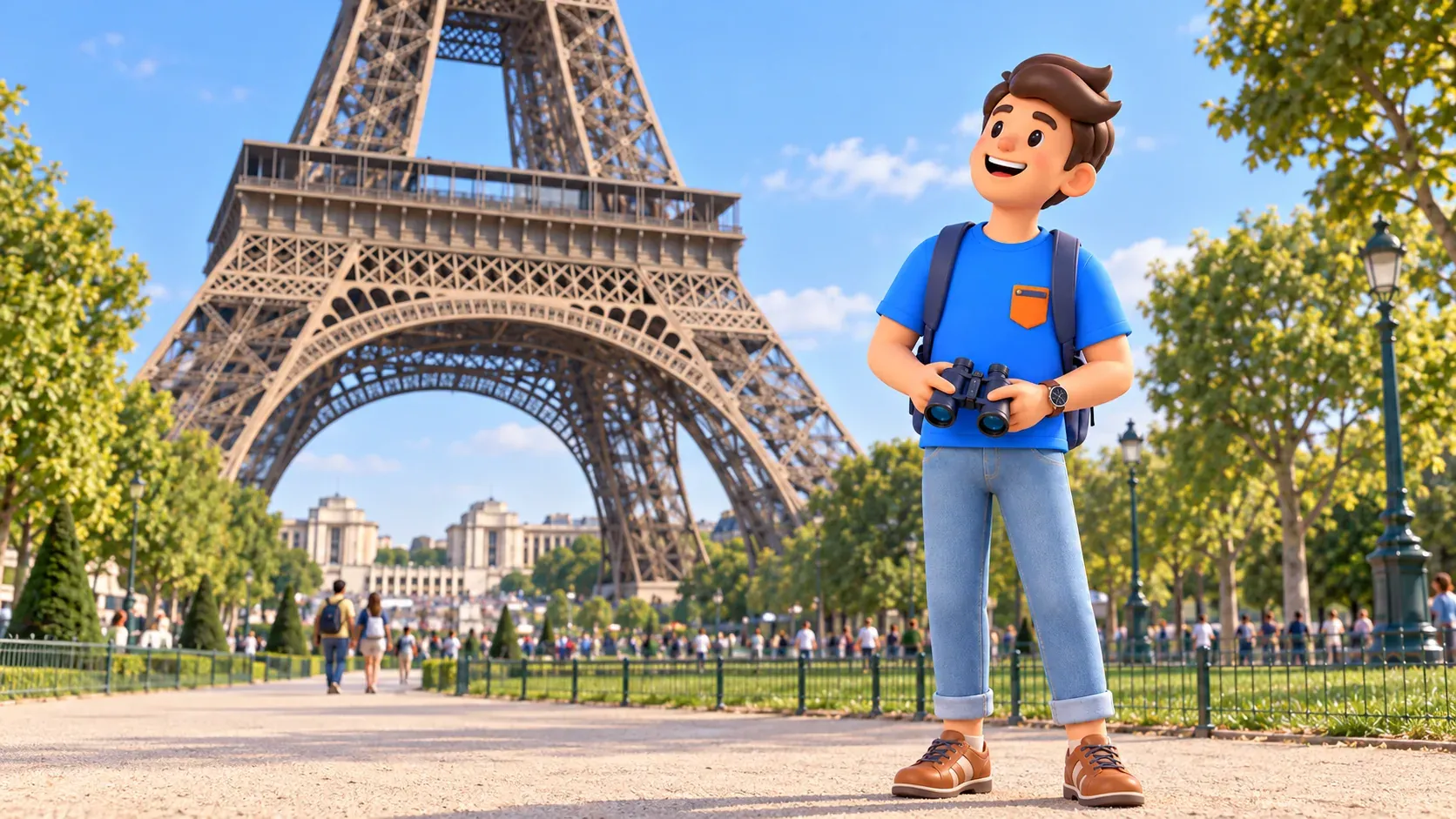
The Eiffel Tower: a deliberate second-floor visit
The Eiffel Tower offers both a city view and close contact with its iron structure. Built in 1887–1889 for the 1889 World’s Fair, it makes parts of its engineering visible through its open framework. Look at the connections and supports around you as well as the distant buildings. That combination distinguishes visiting the tower from simply taking its photograph from another viewpoint.
The second floor is about 115 metres above ground, offering views of the Seine and neighbourhood patterns. Greater height is not automatically better: if the river, layout and framework matter most, this level can be a satisfying visit.
Choose the second-floor lift ticket for this alternative. It includes the first and second floors, but not the summit. You cannot upgrade it to summit access by paying an extra charge on site. The visit normally begins at the highest level included in your ticket: go to the second floor first and leave the first floor for the descent.
A stairs ticket is a different choice: 674 steps lead from ground level to the second floor. Our plan uses the lift. Summit access requires the appropriate ticket and a further lift; there is no public staircase from the second floor to the summit.
Start at École Militaire on Métro line 8. Use public pavements along avenue de la Bourdonnais towards the tower’s north-eastern side and the signed Entrance 2 on allée Jean-Paulhan. This approach does not depend on cutting across lawns. Once through the site checks, follow the current signs for the lift pillar in use; operational directions determine the exact boarding point.
A timed ticket does not remove security checks or possible lift waits. Grounds security comes before the further approach to boarding. The ticket time does not mean you must already be standing on the second floor at that minute. Read the instructions for your booking and allow time for the approach and checks, rather than interpreting advance purchase as a promise of no queue.
Allow 210 minutes: 30 for the station approach, 30 for checks and waiting, 105 for the selected floors, lifts and descent, 20 for a break and 25 for leaving and returning to the station. Internal movements are included in the visit block. This three-and-a-half-hour allowance does not also contain the summit, a restaurant booking and a long shopping session.
For example, a 10am station start can work around an available 11am ticket: half an hour for the approach, then half an hour for checks and waiting. After the selected visit and break, the estimated station finish is around 1.30pm. This illustrates the arithmetic, rather than promising that slot or those queue conditions. Change the clock times for your actual booking while retaining spare time.
Opening times depend on the day, and individual levels can be affected by current conditions. For 14 October 2026, the calendar shows 9.30am–11pm; do not apply that single day’s timetable to every season or date. Check the calendar and ticket contents before buying. Ask staff about specific access needs.
To see the whole tower from the ground, consider the separate two-hour Trocadéro to Champ de Mars walk. Its route is additional to these 210 minutes. Neither an evening ticket nor an early start guarantees an empty deck or perfect visibility.
Galeries Lafayette: a short, free rooftop pause
The public terrace is on the eighth floor of the Coupole building at 40 boulevard Haussmann. This is Galeries Lafayette Haussmann, not neighbouring Printemps or an arts venue with a similar name. The terrace is free to visit: an ordinary visit does not require a purchase, restaurant reservation or paid panoramic ticket.
The nearby Palais Garnier is the main architectural pleasure here. Compare its large volume with the rhythm of surrounding roofs. The Eiffel Tower appears farther away when visibility allows; proximity and detail give this view its value.
The department store’s celebrated complex opened in 1912, and its stained-glass dome belongs to Art Nouveau. The dome and public roof are different parts of the building, a useful distinction for a short terrace visit.
Start at Chaussée d’Antin–La Fayette on Métro lines 7 and 9, then approach the Coupole building along boulevard Haussmann. Inside, follow the current Terrasse or Rooftop signs. The owner’s language pages describe the final access differently, so ask staff beforehand if step-free access is important. A free terrace does not mean that every internal route has the same access conditions.
The current terrace timetable is 10am–7.30pm Monday to Saturday, and 11am–7.30pm on Sundays and public holidays. Store hours and older references to an 8pm roof closing are not substitutes for the terrace schedule. Rain or strong wind can cause closure. For a short daytime visit, leave a comfortable margin before the stated closing time.
Allow 90 minutes: 10 for the station approach, 25 for finding the route and ascending with possible waiting, 25 for the views, 15 for a break and 15 for descending, leaving and returning to the Métro. A 1pm–2.30pm block is one possible example. Extended shopping and a restaurant meal are outside this allowance and need their own time and budget.
Try looking for one nearby detail, one broader roof pattern and one distant landmark. That sequence helps make the stop more than a hunt for the Eiffel Tower. Stay within the permitted public area behind the boundary. To explore the neighbourhood afterwards, use the separate Palais Garnier and department-store walk, accounting for its own duration.
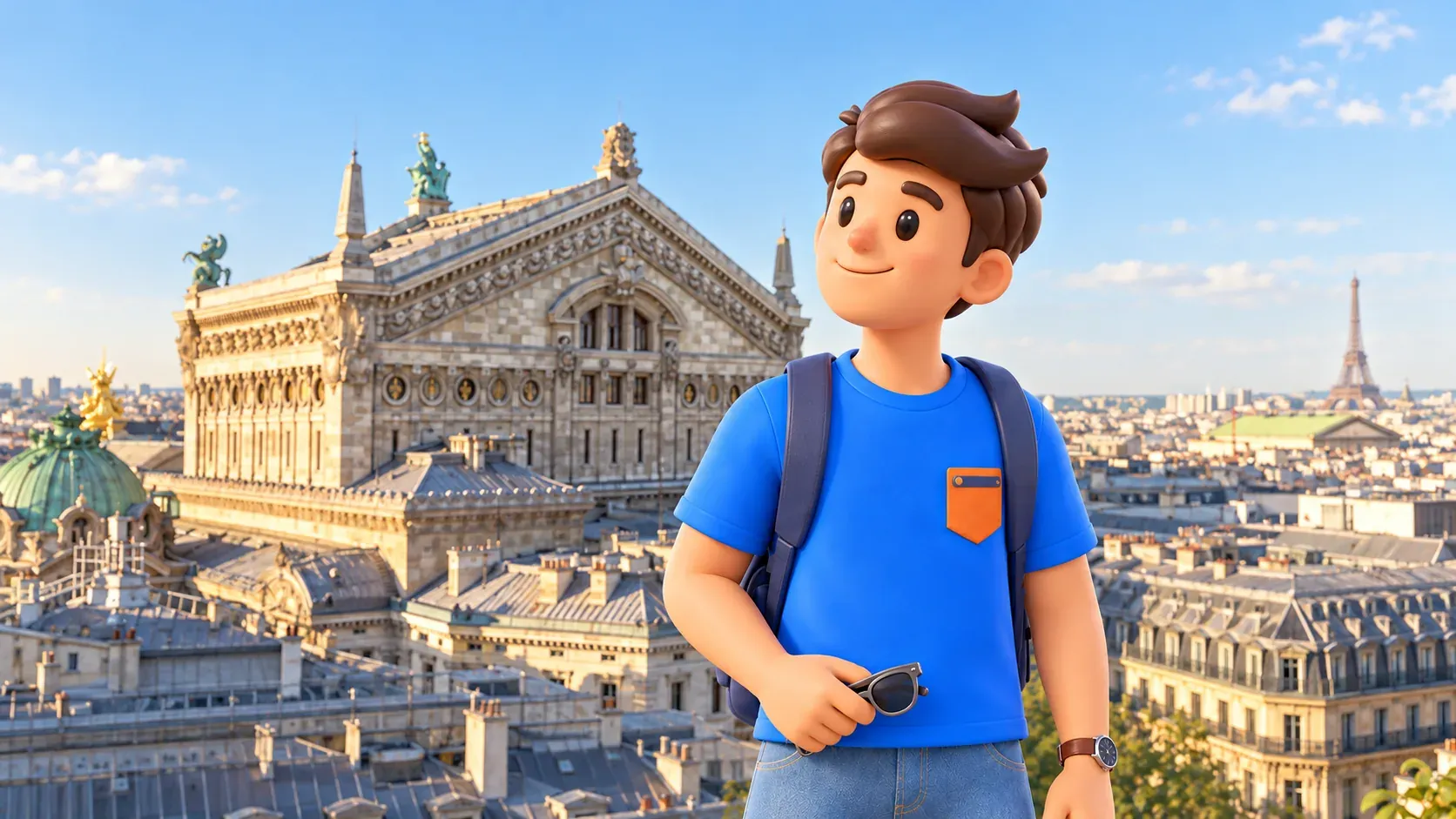
Give one chosen view a useful place in your trip
Decide which panorama is worth changing your route for, then find a suitable day and give it space. After the Arc’s stairs, allow a slower activity; after the tower, avoid an immediate reservation far from the station finish. The shorter department-store roof can fit alongside nearby plans. These choices concern your pace, rather than an objective ranking of the best viewpoint.
For a trip combining architecture, walking and your own favourite activities, use RoadMe to prepare a personalised day-by-day programme around your interests, dates, budget and pace. It makes following the whole trip plan more convenient and effective, with your chosen panorama given useful time alongside other experiences.
The Montparnasse observatory closed on 31 March 2026 for a multi-year renovation of the whole complex. Do not treat old photos, admission prices or fast-lift descriptions as proof it is a current option. For a different day, consider the Montmartre walk if you want a panorama alongside the hill and neighbourhood life; it is a separate programme, not a fourth ascent today.