
Around Palais Garnier in Two Hours: Squares and Department Stores
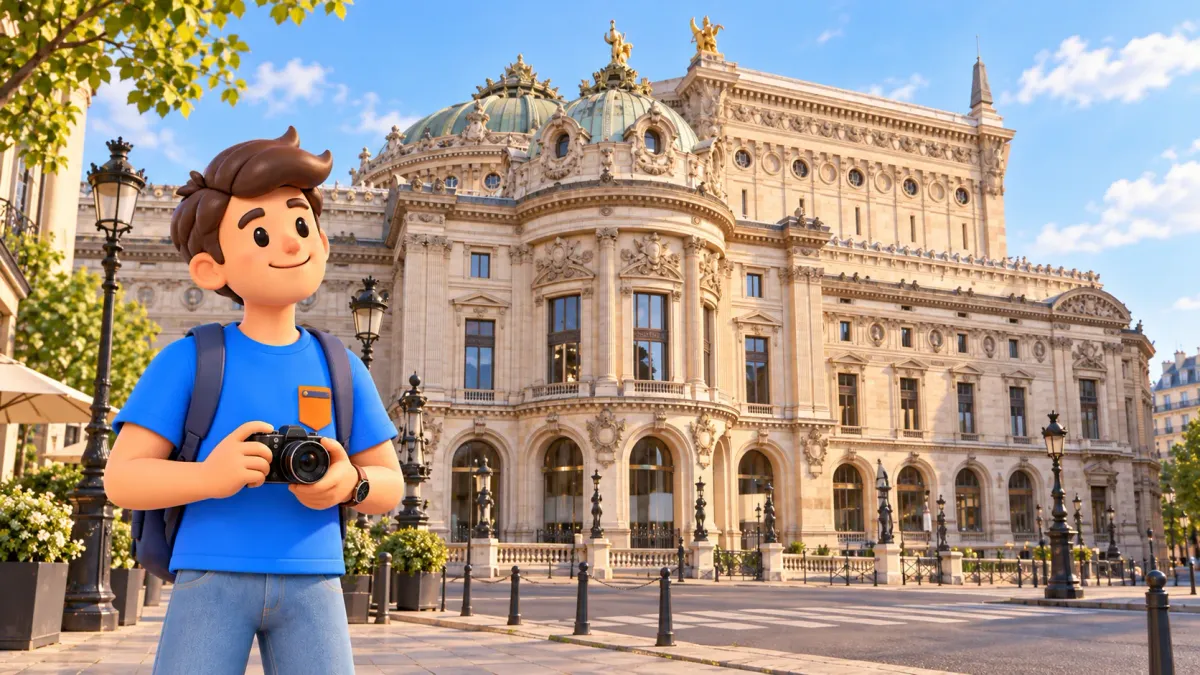
A short walk around Palais Garnier reveals a Paris that turns everyday outings into visual occasions. The opera house introduces theatrical architecture, a nearby square brings a more enclosed pause, and the department stores show how much attention was given to the beauty of commercial spaces. Between these stops, scale, light and atmosphere change without requiring a long journey across the city.
Allow around two hours: begin outside the opera house, visit Place Édouard VII, examine the Printemps façades and finish beneath the Galeries Lafayette dome if the store is open. This is an architectural neighbourhood walk with room for looking and resting. Extensive shopping, an interior opera visit and a rooftop excursion are separate additions that deserve extra time.
Connect the stops and give the walk two hours
Start on a public pavement at Place de l’Opéra, where you can view Palais Garnier. Continue west along Boulevard des Capucines and enter the Édouard VII square area through an open passage from the 16–18 Boulevard des Capucines side. Leave the square westwards on Rue Bruno-Coquatrix towards Rue de Caumartin, then follow Caumartin north to Boulevard Haussmann.
Printemps Haussmann comes first in the department-store sequence. After looking at its frontage, walk east along the boulevard towards Galeries Lafayette. For the dome, choose the Coupole building at 40 Boulevard Haussmann. Other buildings of the same store are nearby, so the building name is more useful than “Lafayette” alone. The interior finish depends on store opening and access to the relevant public area.
Allow approximately 30 minutes for walking and another 90 for architecture, photographs, a rest and a brief look at the dome. This is an estimate, rather than a measured journey. Adjust it for your pace and chosen stops. Arrival, the opera house interior, shopping, a meal and the rooftop ascent are additional commitments; trying to include all of them would substantially change the outing.
To fit this walk, museums and other neighbourhoods into your dates, interests, pace and budget, try RoadMe. The app develops a personal plan day by day, making the whole trip much easier to organise while retaining time for the activities you enjoy.
Access to the Édouard VII passages follows the arrangements of the site. If the entrance you need is closed, stay on Boulevard des Capucines westwards to Rue de Caumartin, then continue north towards the department stores. Leave the square for another occasion. This public-street alternative preserves the main direction of the walk without requiring you to find a way through closed entrances.
Palais Garnier: see the building as part of a city stage
At the opera house, begin with the overall composition: a broad lower level, the rhythm of columns and arches, and the elaborate roofline. Then choose one detail for a closer look. This sequence helps you understand the scale. Concentrating immediately on individual sculptures can turn a rich decorative scheme into attractive fragments without a clear relationship to the whole building.
The palace is named after architect Charles Garnier and was inaugurated in 1875. It offers an engaging example of how a theatre could become a city occasion before the performance even began. Entrances, ornament and architectural scale prepare a visitor for something special. You can appreciate that theatrical approach while remaining outside and reserving a more detailed interior exploration for another part of your trip.
Notice how the opera house relates to its square and the streets approaching it. Move a little further away on a permitted pavement to compare near and distant views. Close up, stone textures and decorative forms become clearer; from further back, proportions dominate. The square is busy, so use marked crossings and choose a stopping place that leaves the pavement available to other people.
Restoration can affect the appearance of the façades, and the view may differ from familiar photographs. If construction structures conceal part of the building, examine an accessible side and the roof silhouette from public space. Its overall volume and relationship with the street still provide an interesting architectural stop. Assess the available view on the day and follow the current barriers rather than expecting an unobstructed photograph.
The opera interior needs a separate allocation of time. Ordinary sightseeing admission is paid; check the visit calendar and online booking before arriving. The auditorium is regularly unavailable because of theatre activity, and other spaces may close. If seeing the interior is the main purpose of your day, choose that visit first, then add the neighbourhood walk with a pause between the two.
Place Édouard VII: find a smaller scale behind the boulevard
After the open opera square, Place Édouard VII feels more enclosed. Surrounding façades frame a compact space, arcades repeat at ground level, and an equestrian statue occupies the centre. Notice how the same stone city changes character when broad traffic routes give way to a more contained composition. A few minutes here can make that shift in scale particularly easy to recognise.
The name refers to Britain’s King Edward VII. The square ensemble developed in the early twentieth century, and the nearby entertainment venue initially showed films before becoming a theatre. That brief history adds character: Parisian entertainment grew beside the grand opera house while offering a different scale and evening experience. You do not need a full theatre chronology to understand why the stop belongs in this neighbourhood.
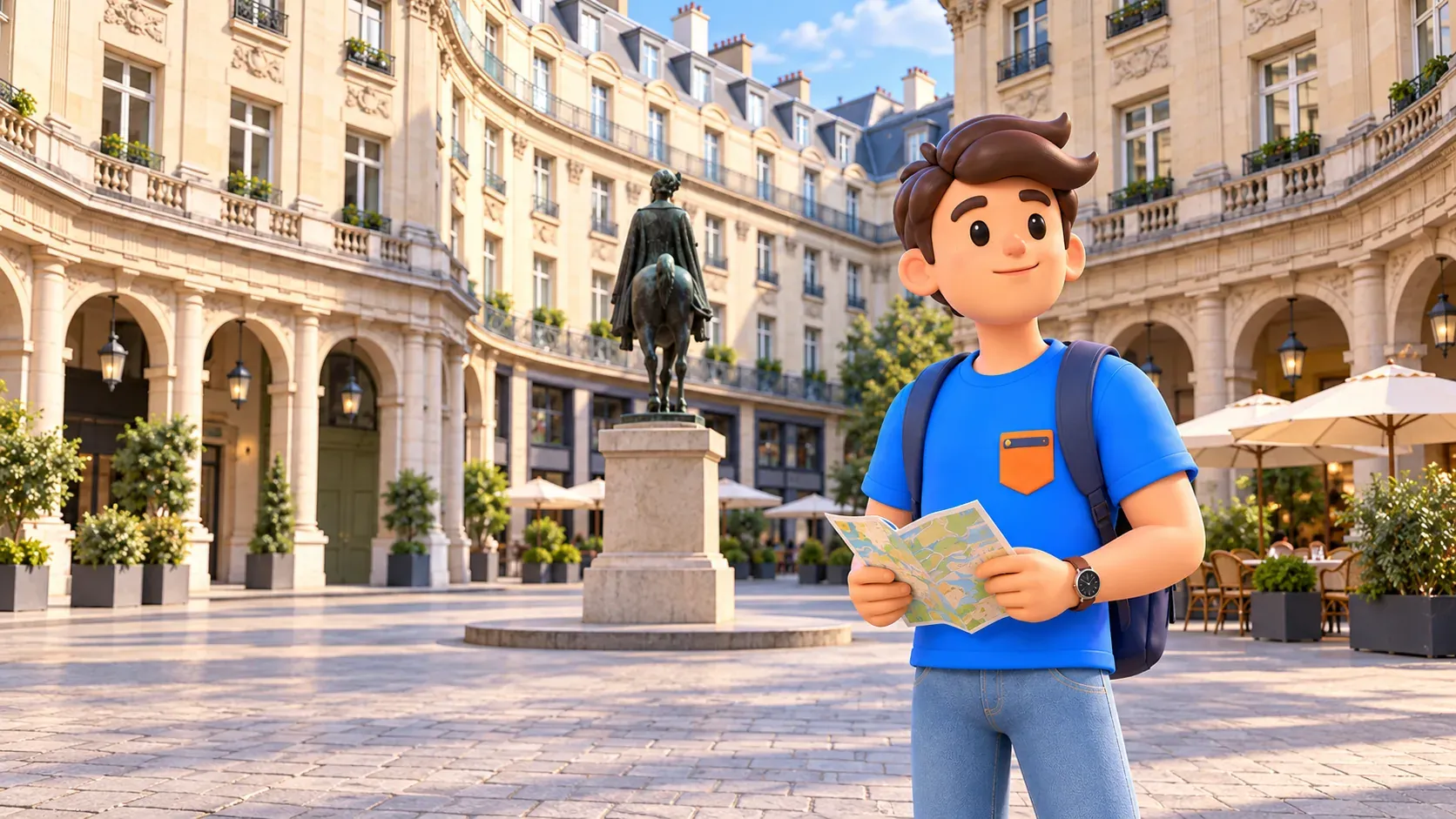
Choose one simple way to look: follow the ground-floor arches, compare window shapes, or find a position that connects the statue with the façades around it. Each approach helps you see the whole place. For a photograph, leave some surrounding space so the image communicates the square’s setting. Café tables, entrances and passageways remain part of an active place, with their own uses.
A café pause is an optional expense and takes its own time. Walking through the open square does not establish free access to the theatre auditorium or neighbouring private interiors. For a performance, select the programme and appropriate ticket separately. After looking around, continue towards Rue Bruno-Coquatrix and Rue de Caumartin; the next section brings you back to a larger boulevard and a different architectural purpose.
Printemps: read a department store from the street
At Printemps, start with the corner volumes and roofline. Domed towers, pale stone, gilding and repeated windows give the commercial building a presence from a distance. Then bring your attention down to the shop windows. The upper architecture addresses the boulevard as a whole, while the display at pavement level addresses an individual passer-by. Looking between the two makes the frontage more engaging.
The history of Printemps began in 1865. For this walk, the useful context is the department store becoming an urban destination for purchases and for the experience of its space. An impressive frontage helped make a visit feel like an event. A short stop can explore that idea without listing every reconstruction or trying to identify every surviving historical feature in the complex.
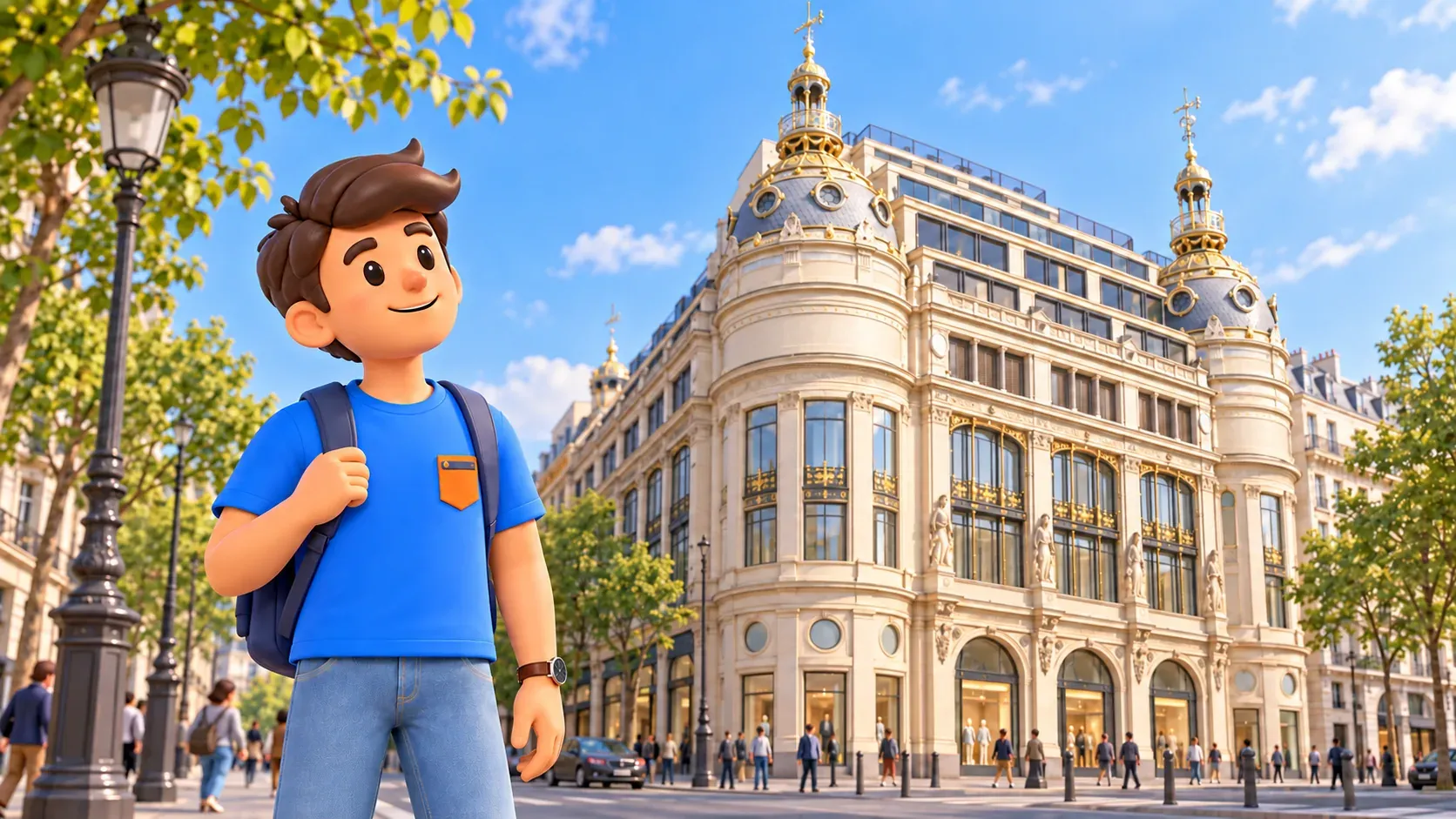
Compare Printemps with the opera house: where is decoration concentrated, how are the corners handled, and what happens along the roof? You do not need architectural vocabulary to answer. Choose two details you like and compare their material or the way they catch the light. For a wider view, cross only at a marked crossing; for a close look, remain on a comfortable part of the pavement.
If the store is open, a brief visit to its normal public retail spaces can add another perspective. Printemps is an active department-store complex with several buildings and its own signs. Historical rooms, areas behind the scenes and special guided visits have separate arrangements. An attractive photograph of a dome or terrace does not mean that every pictured space is freely available at the moment of your visit.
Shop windows can make time pass quickly. Decide whether your immediate priority is the architectural walk or shopping. For the first, an exterior stop and a small pause are enough. If you want to explore the merchandise thoroughly, give that a separate period after the route. Otherwise, several unplanned store floors can leave very little time or attention for the final architectural stop.
If your trip combines architecture, art and time for shopping, prepare it in RoadMe. Its personal plan reflects your interests and rhythm, making it easier to distribute different activities across days and keep each day comfortably balanced.
Galeries Lafayette: look up towards the stained-glass dome
Continue east on Boulevard Haussmann to the Coupole building. Inside, find a suitable place in the accessible retail area where you can look up comfortably. The dome transforms ordinary movement between departments into an architectural stop. Coloured glass, decorative metal and the open space beneath them offer a very different impression from the exterior façades you have just examined at Printemps.
The dome dates from 1912, and its stained glass is associated with artist Jacques Gruber. A little context is enough: early twentieth-century decorative art became part of a commercial interior. Notice how light passing through the glass changes the feeling of the space. You do not have to interpret every pattern to appreciate the value of this part of the building.
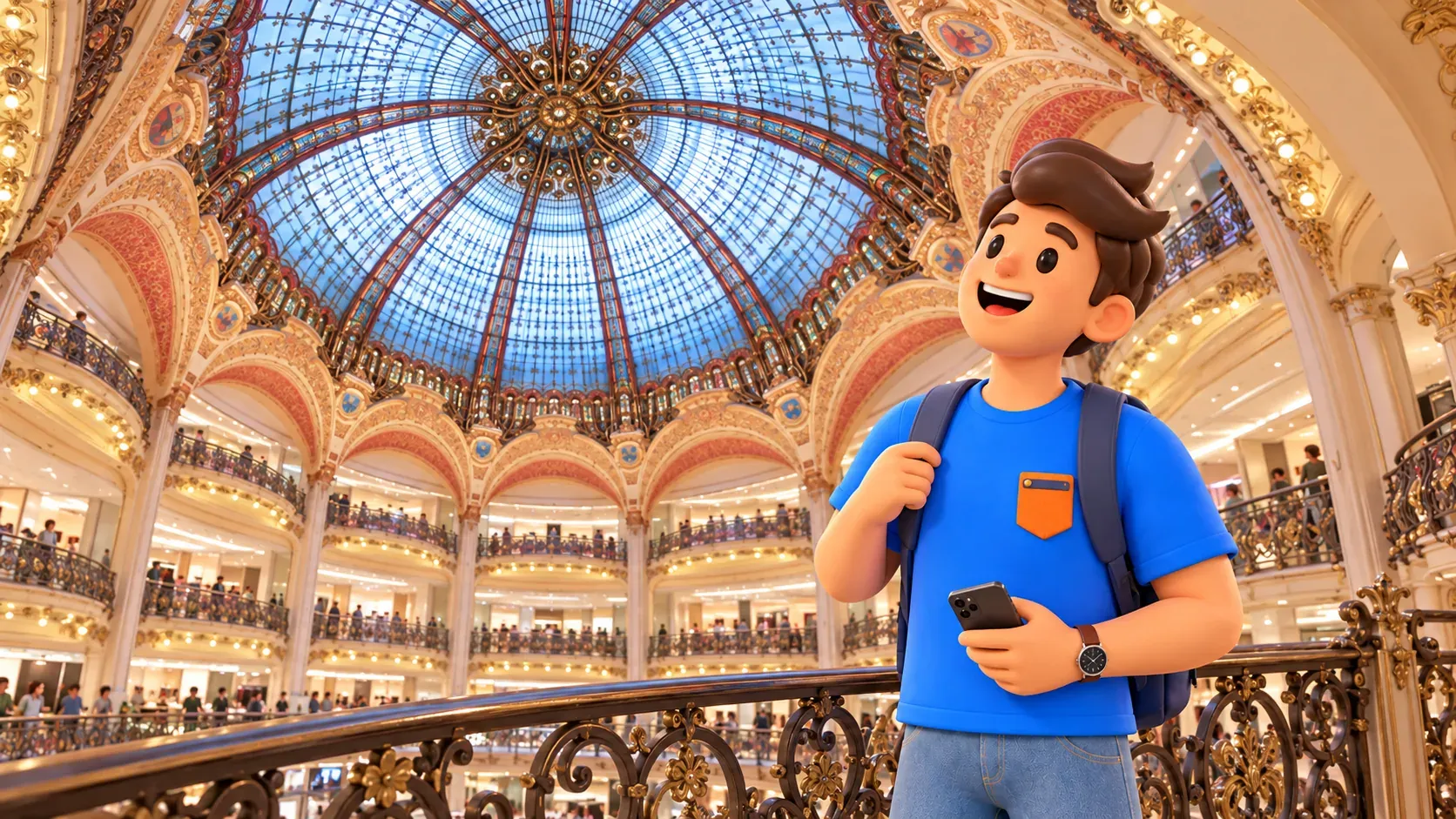
Begin with the dome’s overall arrangement, then examine one patch of coloured glass. This lets you recognise both the large volume and the work of individual details. When photographing it, avoid stepping backwards while watching your screen: other visitors are moving nearby. Find a stable position, take the photograph, then put the phone away for a moment to enjoy the space without framing it.
Entry to normal public retail spaces is free during opening hours. That does not establish access to every special platform, activity or event. Signs for Coupole, Homme and Gourmet distinguish the different buildings; the historical dome belongs to the first. If the store is closed or the relevant area temporarily unavailable, finish outside and choose another day for an interior look.
The terrace and the rest of the day: choose one continuation
The Galeries Lafayette roof is a possible addition after the dome. Access to the panoramic terrace is free, but its arrangements differ from movement around ordinary store floors, and weather can affect opening. Follow current Terrasse or Rooftop signs and ask staff for the route. The final section may involve steps, so check the practical access for your particular needs.
Going upstairs, waiting and spending time on the roof requires an extra allowance. If the panorama interests you more than shop windows, make room for it when planning. If you feel tired, finish beneath the dome: the walk already connects a theatre, a small square and two commercial ensembles. Compare them from memory and decide where you would like to return for a longer encounter.
For a separate architectural outing, consider our walk around the Louvre and Palais-Royal. Reaching its start and completing that route need their own time. Rest before deciding whether you want more walking. A neighbourhood seen with enough attention can leave a clearer impression than several routes joined together without a break, and the remaining day can follow your energy rather than a growing checklist.


