
A Paris Day Without Admission Fees: Gardens, Squares and the Seine
A day in Paris can be rewarding without an admission ticket. Start in the public courtyard and garden of the Palais-Royal, continue through the Tuileries, look across Place de la Concorde and finish by crossing Pont Alexandre III. Contemporary art, historic garden design and the Seine provide several different experiences within one connected outing.
Allow about six hours, including lunch, all the main connections and proper breaks. Begin above ground at Palais Royal–Musée du Louvre metro and finish at Invalides metro. The public spaces in the main programme require no admission fee. Food, transport, shopping and any extra attraction are separate expenses. Museum galleries, monument ascents and guided tours are outside this day's scope.
Plan a complete day with room to pause
A useful outline runs from 10am to 4pm, measured in planning terms from the first metro's above-ground exit to the approach to the last. Lines 1 and 7 serve the starting station; lines 8 and 13 serve the finish. Getting from your accommodation to the start and travelling back afterwards need additional time. Lunch and rest already have a place within the six hours.
The allowance is 10 minutes for the initial approach, 20 for the courtyard, 40 for the Palais-Royal garden including 10 seated, and 35 for the complete connection to the Tuileries. Give its selected paths 60 minutes, including a 20-minute seated break. Keep 15 for reaching lunch, 60 for eating and 15 for returning towards the garden and Concorde exit. Then allow 25 at the square, 25 for the route to the bridge, 30 to look and cross, and 25 to reach Invalides metro. The total is 360 minutes: an editorial estimate to adapt to your pace, not a measured trip.
To fit this day into a whole trip shaped around your dates, interests, pace and budget, try RoadMe. Its personal day-by-day plan makes it much more convenient to organise walks, substantial visits and time to rest together.
Choose what deserves more attention before leaving. Contemporary art, formal gardens and river views need not receive equal minutes. Save the French place names and both stations so the next connection stays clear. The aim is to enjoy a few related spaces; adding every nearby museum would create a different day and a different timetable.
Palais-Royal: begin with a courtyard
From the station, head towards Place Colette and the domain's public access on Rue Montpensier. Its official address is 8 Rue Montpensier. Follow marked visitor passages into the courtyard and towards the garden, respecting local signs. Public access to these spaces does not extend to the working institutions occupying the palace buildings.
The palace was created for Cardinal Richelieu as the Palais-Cardinal, then acquired its royal name after passing to the royal family. This small historical change gives the setting more meaning. You are entering a palace ensemble that also forms part of the everyday city. Begin by noticing how the façades surround an open space rather than treating them only as a backdrop.
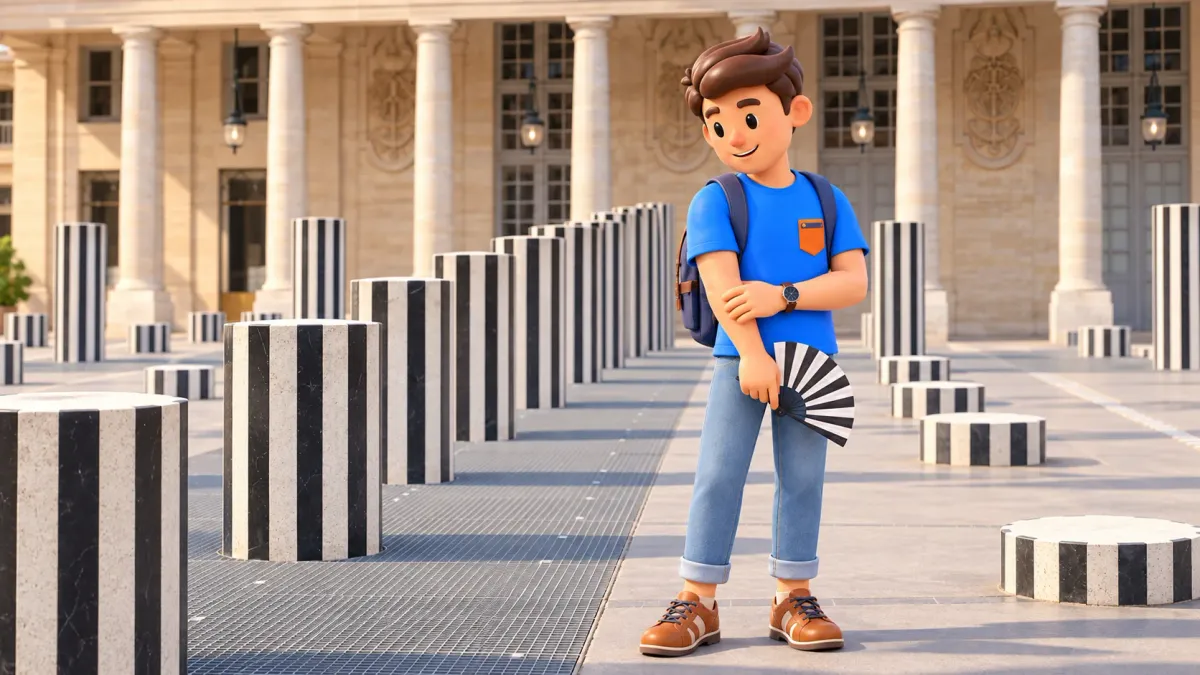
Daniel Buren's Les Deux Plateaux introduces black-and-white striped columns at different heights. Look along a row, then change position to see how the cylinders overlap against the building's own columns and windows. Their repeating pattern makes contemporary art part of an architectural encounter. You can understand that relationship without examining every element or recreating a familiar photograph.
Choose a viewing position that leaves paths clear. If taking pictures, include some façade so the modern work retains its setting. A striped column seen alone tells less of the story than the relationship between the courtyard and its edges. Continue north through the public ensemble towards the garden when you are ready, rather than adding a complete gallery-by-gallery circuit.
The Palais-Royal garden: notice its enclosed scale
The garden changes the mood after the stone courtyard. Choose a short stretch beside the trees, look across the open centre and sit if a bench is available. Galleries frame the green space, keeping architecture close at hand. The stop is an opportunity to experience the place, rather than investigate every shop beneath the arcades.
In the late eighteenth century, development of the surrounding galleries by Victor Louis strengthened the ensemble's relationship with commerce and city life. The useful detail today is its organisation: paths within, regular façades around and several directions for looking. Compare this with the courtyard you have just left. Stripes guided your attention there; trees and the spaces between them now provide another rhythm.
Entry to the domain's public spaces is free. Official hours are 8am–8.30pm from 1 October to 31 March and 8am–10.30pm from 1 April to 30 September. The suggested daytime start leaves a comfortable margin, although temporary changes should still be checked before setting out. This garden is not a round-the-clock shortcut across the neighbourhood.
Keep at least ten of the forty minutes for resting. If no seat is available, shorten the looking time and move the seated pause to the Tuileries. A satisfying day depends on your interests and energy. For a different short architectural outing, our walk around the Louvre and Palais-Royal has its own time allowance and courtyard conditions.
Connect the gardens on public streets
Return through the available public exit to Rue Montpensier and Place Colette. Continue towards Rue de Richelieu, south to Rue de Rivoli, using marked crossings. Follow Rivoli west to the northern Tuileries entrance opposite Rue du 29-Juillet. This connection does not require entering museum rooms or crossing the Louvre's internal courtyards.
The walk between gardens is part of your encounter with Paris. Notice the scale of the street, the arcades and the change at the garden boundary. Keep it as one connection instead of turning every doorway into a new stop. The 35 minutes include leaving the first ensemble, street crossings and reaching the next garden: they are a planning allowance, not a walking-speed promise.
At the Tuileries entrance, choose a manageable portion of the garden. Gradually work west along available paths towards Concorde. If barriers alter a connection, use the signed public route. A clear exit and a proper pause are more useful than insisting on a line remembered from an old photograph. You can enjoy the overall design without covering every path.
Tuileries: a royal garden becomes a public pause
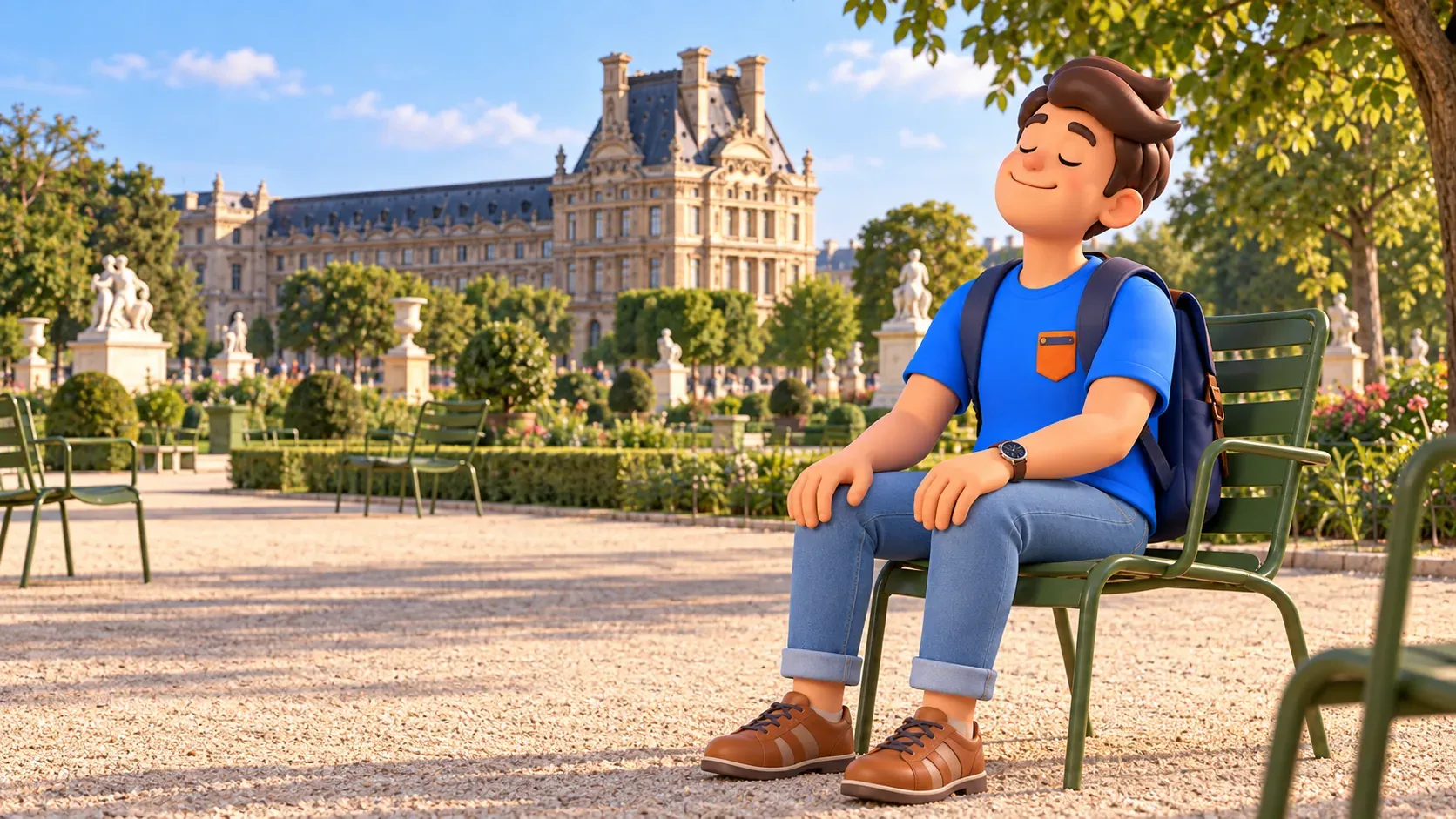
The garden's history begins with Catherine de' Medici in the sixteenth century; André Le Nôtre later transformed its design. Regular paths and open perspectives make that history visible without a long list of dates. See how a path directs your gaze, then select one sculpture or compare the trees with an open part of the layout.
The Tuileries Palace burned in 1871 and was never rebuilt. The familiar garden therefore preserves the memory of a building that is no longer there. This is enough history for a useful first encounter: the setting contains both surviving architecture and a meaningful absence. You need not locate evidence of every period to understand why the space has more depth than a convenient green corridor.
In October the garden is free, with official opening hours of 7am–9pm; evacuation starts thirty minutes before closing. Louvre gallery hours apply to a different visit. This programme uses the public garden and needs no museum ticket. If gates are temporarily closed, follow signs and retain the option of ending the walk earlier.
The sixty minutes include a twenty-minute seated break if a place is free. Choose part of the paths and give yourself time simply to look around. Two free accessible toilets are listed near the Concorde gate and the Rivoli entrance opposite Rue du 29-Juillet. These facilities help with planning, but the complete outing, including metro entrances, has not been verified as a continuous step-free route.
Give lunch its own part of the day
Lunch has a full hour, with fifteen minutes each for reaching it and returning towards the garden. Pick a convenient place near Rue de Rivoli according to your budget and menu preferences. A famous restaurant is unnecessary; knowing which garden gate you will use afterwards matters more. If service takes longer, shorten the later stops so the finish remains comfortable.
Meals and purchases do not become free because you avoid admission tickets. Check the price of the food you actually choose before ordering. This walk promises no particular overall spending total. Afterwards, return through an open public entrance, such as the one by Rue de Castiglione if appropriate for your lunch location, and make your way towards the Tuileries' western Concorde exit.
For a whole Paris trip combining free walks with selected paid visits, prepare a personal programme in RoadMe. Its plan follows your interests and travel rhythm, helping you use the days more effectively while keeping room for real breaks.
Concorde and Pont Alexandre III: reach the river
Look across Place de la Concorde from permitted public edges and use marked crossings. The Luxor obelisk was erected here in 1836; the two monumental fountains belong to the square's nineteenth-century development. Those landmarks already make a worthwhile stop. There is no need to approach every ornament or cross traffic diagonally to gain an impression of the ensemble.
Current signs and barriers take priority over a general description. Proposed garden redesigns do not establish that their lawns have already been built or that every path is open. The 25-minute stop includes viewing from an available place. If traffic arrangements alter the convenient approach, allow more walking time or finish at Concorde after checking current metro entrances and service.
Continue through permitted crossings to the upper public pavement of Cours la Reine on the river-facing side. Head west towards Cours Albert-Ier and the northern approach to Pont Alexandre III. Descending to the lower riverbanks is unnecessary. The Seine now becomes the walk's main open space, following the more enclosed galleries, garden paths and square.
The bridge opened for the World's Fair of 1900. Its low arch, elaborate lamps and gilded figures on tall pylons create a distinctive composition even during a short stop. Begin with the whole view, then pick one detail. For a separate outing around the neighbouring palaces and domes, our Pont Alexandre III walk provides a different programme with its own duration.
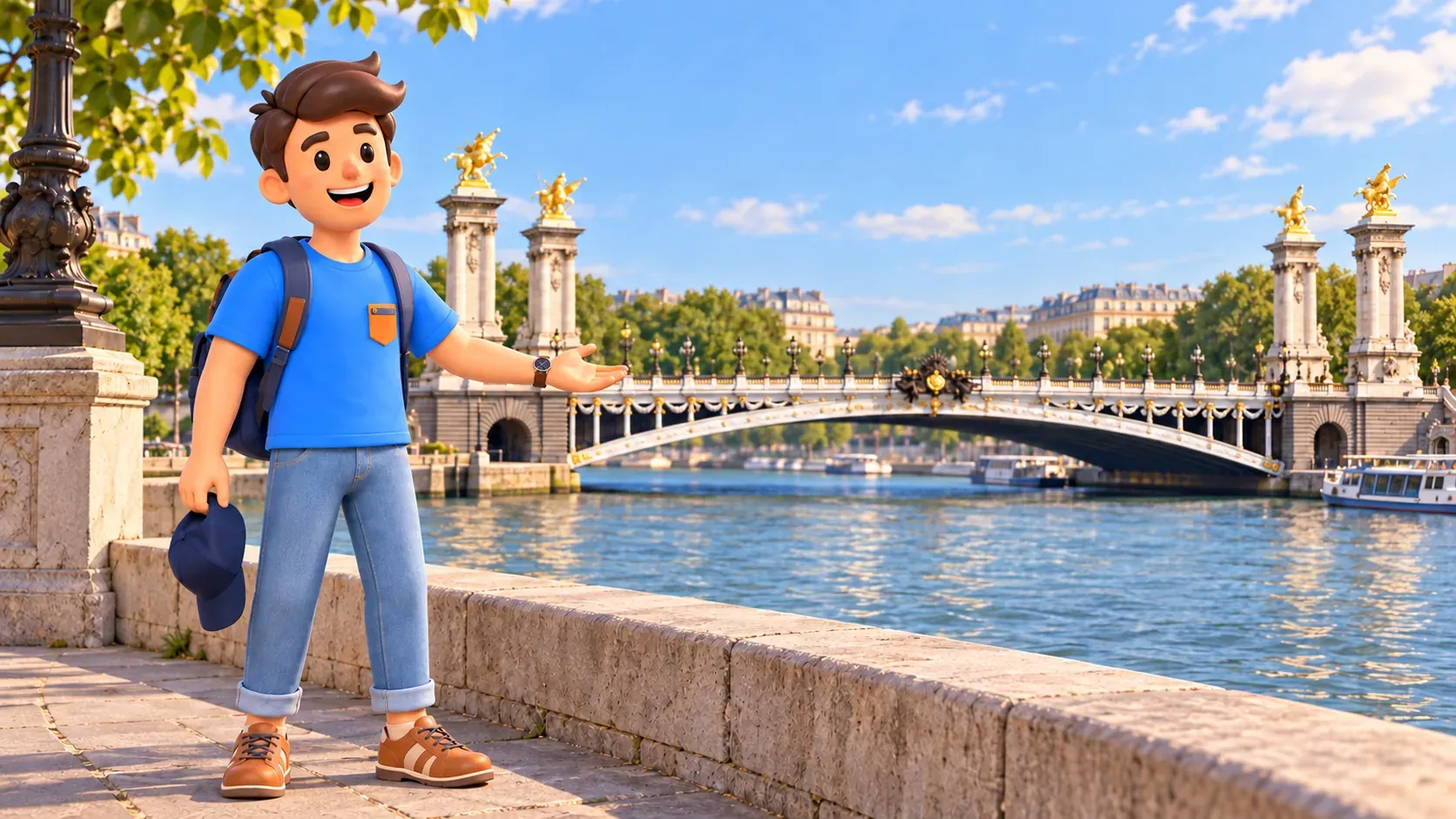
Cross on the pavement from the northern Right Bank to the southern Left Bank. Use a marked crossing over Quai d'Orsay, then follow public streets east towards Rue Robert-Esnault-Pelterie and signs for Invalides metro lines 8 and 13. Nearby RER entrances do not replace the metro sign you need. The final 25-minute approach is included in the day's estimate.
Choose another day for this outdoor programme in strong wind or persistent rain, or end after the garden section. If a garden is closed, stay on open public streets and shorten the plan rather than expect the same six-hour experience in every condition. For a separate river theme, our central Paris bridge walk deserves its own time.


