
A Central Paris Bridge Walk: Four Crossings of the Seine
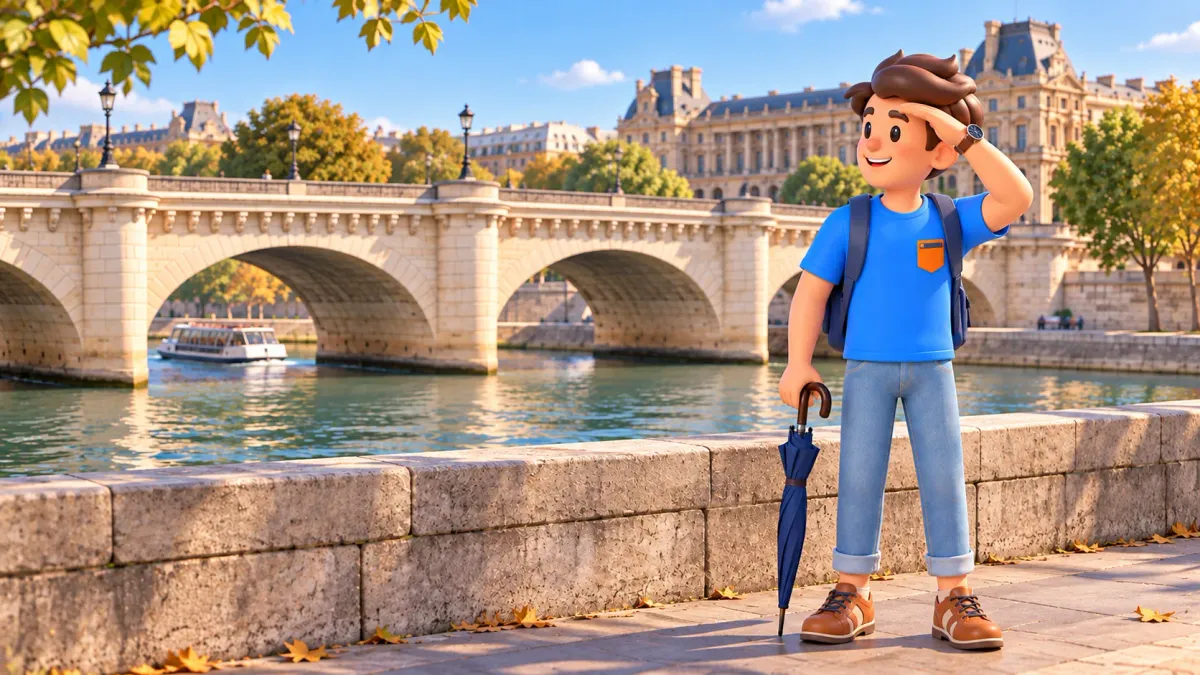
A central Paris bridge walk can give the Seine a clear shape without filling your day with museum visits. Cross Pont Neuf, Pont des Arts, Pont du Carrousel and Pont Royal, alternating between the riverbanks. Begin at Pont Neuf metro and finish at Louvre–Rivoli. Allow around three hours for the crossings, looking at the buildings and a proper break.
The interest lies in changing your viewpoint and comparing stone, steel and concrete. Short histories explain what you see; museum visits, a cruise and a substantial meal need additional time.
Plan four crossings and a clear finish
Start at Pont Neuf station on metro line 7, on the Right Bank. Cross the whole bridge: pass over the first arm of the Seine, the platform at the western end of Île de la Cité, then the second arm to the Left Bank. Head west along the upper Quai de Conti towards Pont des Arts, and cross that pedestrian bridge back to the Right Bank.
Continue west on upper Quai François-Mitterrand to Pont du Carrousel. Cross to the Left Bank and follow upper Quai Voltaire west to Pont Royal. After crossing it, turn east along upper Quai François-Mitterrand towards the Louvre. Eventually turn north into Rue de l’Amiral-de-Coligny, continue to Rue de Rivoli and finish at Louvre–Rivoli station on line 1. This final stretch deliberately retraces the riverfront; the finish is east of Pont Royal.
A suggested three-hour allowance is 30 minutes for looking around Pont Neuf, 25 at Pont des Arts, 15 at Pont du Carrousel, 20 at Pont Royal and 20 for a break. Keep another 70 minutes for all movement, including the initial approach, every bridge crossing, the connecting streets and the return to the final metro. That makes 180 minutes. These are editorial planning estimates, rather than timings measured on the ground.
To fit a bridge walk into a trip built around your dates, interests, pace and budget, try RoadMe. The app works out a personal day-by-day programme, making it much more convenient to organise neighbourhood walks, museum visits and time to rest together.
Stay on the bridges and upper-level public pavements. The main itinerary does not depend on descending to the water, using Tuileries garden gates or entering museum courtyards. Choose daylight to see the architectural details, and save the four French bridge names before leaving. Walking across these public structures does not require an admission ticket; any paid activity added nearby is a separate choice.
Pont Neuf: understand the two parts of the crossing
Approach from the Right Bank and take a moment to look along the stone structure before crossing. Pont Neuf uses the western tip of Île de la Cité to connect the banks in two sections. At the island platform, pause near the equestrian statue of Henri IV, then continue over the other river arm. Reaching this central platform alone does not complete the first crossing of the walk.
Henri III laid the first stone in 1578; Henri IV inaugurated the bridge in 1607. Its name means “New Bridge”, a description that made sense when it was built. Today it is Paris’s oldest surviving stone bridge. Unlike many older Paris crossings, it did not carry houses across the river. Its pavements and open views made room for people to look at the Seine and the city around them.
The twelve stone arches belong to both sections, so one viewpoint need not reveal the complete number. Begin with their repeating shapes, then pick a smaller feature to look at. Sculpted faces known as mascarons sit below the cornice. They give a long piece of infrastructure a more personal scale, without requiring you to examine every face or turn the stop into an architectural inventory.
The present statue of Henri IV adds another historical layer. The original monument was destroyed during the Revolution; François-Frédéric Lemot’s replacement was erected in 1818. It therefore belongs to a later period than the bridge. This brief distinction makes the familiar scene more meaningful: features that look like one settled composition can have different ages.
Remain at the upper level for this route. Square du Vert-Galant lies below the platform; its stairs and garden add a separate episode. Continue over the second arm to the Left Bank, then turn west.
Quai de Conti: let the river connect the landmarks
Follow the upper public pavement of Quai de Conti towards Pont des Arts. Alternate between looking along the water and across it. The Louvre occupies the opposite bank; as you approach the next bridge, the dome of the Institut de France becomes a useful reference on your own side. Their relationship explains why this pedestrian crossing offers more than an isolated river view.
The upper quay is a city street, with pavements and junctions. Use marked crossings wherever needed and follow local signs if a section is affected by temporary barriers. This programme does not require a continuous path at water level. Keep the practical distinction clear when looking at pictures taken from lower embankments: their position may involve a different approach from yours.
Pont des Arts: wood, steel and a different perspective
At the approach to Pont des Arts, look towards the Institut de France, then towards the Louvre. The bridge connects the two ensembles. Its wooden deck and metal structure create a different experience from the massive stone crossing you have just left. Transparent side panels keep much of the river visible. Looking in both directions helps you notice that the surroundings are part of the bridge’s appeal.
The first crossing here was built between 1801 and 1804 as Paris’s first iron bridge. Its name came from the Louvre, then known as the Palais des Arts. The structure you cross today is a later steel rebuilding, undertaken between 1982 and 1984. The early nineteenth-century idea and the age of the present bridge should therefore be kept separate.
Old photographs may show railings crowded with love locks. In 2015, glass panels replaced the mesh to prevent further attachments and their damaging load. The wooden deck was renewed in 2023, with additional consolidation completed in May 2026. Those completed spring works are not an ongoing October closure. The bridge remains a pedestrian crossing.
Cross from the Left Bank to the Right Bank, leaving room for other walkers. Where stopping is comfortable, look back: the Institut’s dome brings the perspective together. Then turn towards Pont Neuf and recognise the first part of your route across the water. If a bench is free, you can move some of the planned break here instead of treating every pause as a separate destination.
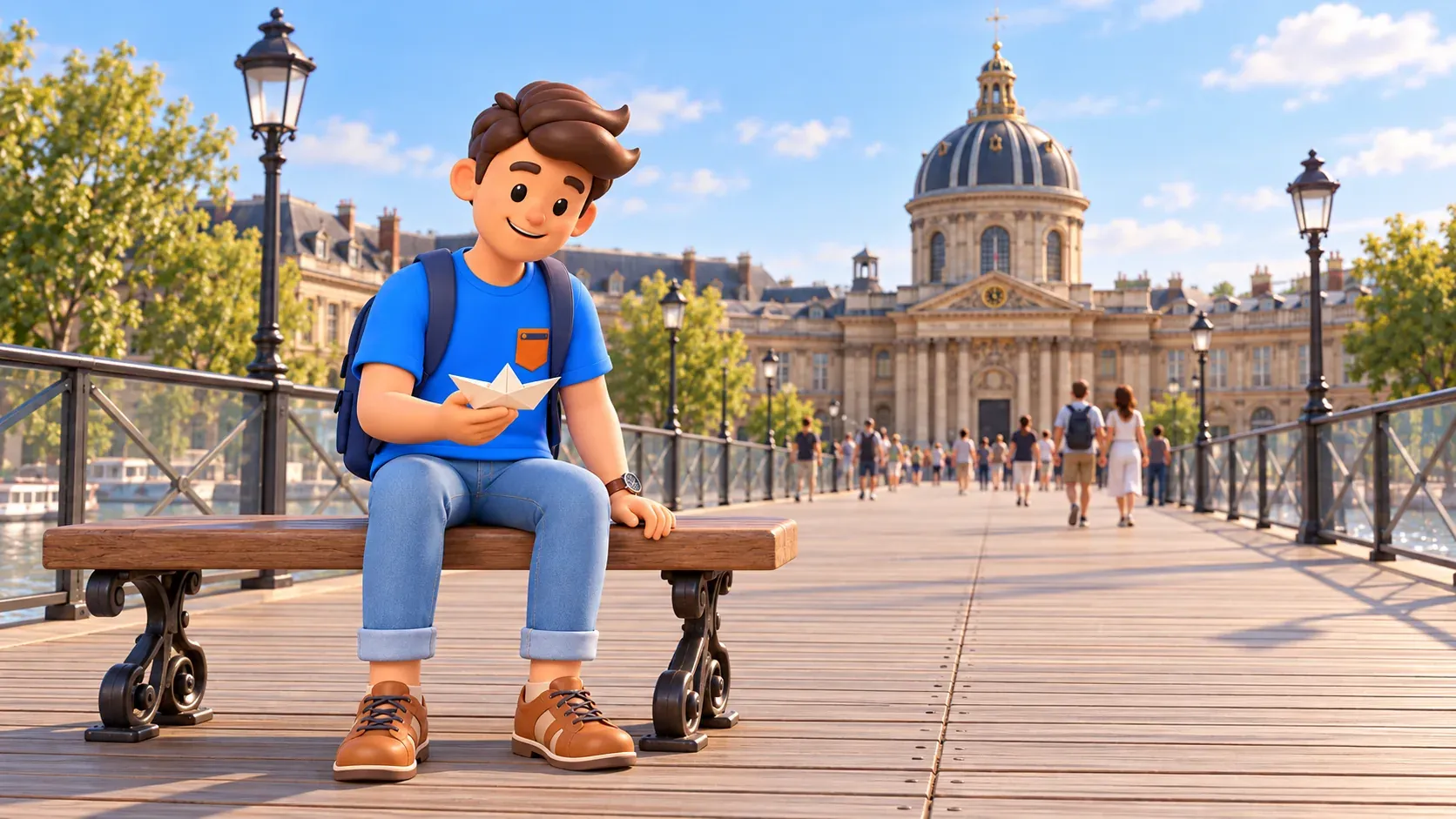
Use the 25-minute allowance for the experience you prefer: looking, photography or a seated pause. Musicians may appear, but the itinerary promises no concert. Keep time for the remaining crossings.
Pont du Carrousel: concrete beneath a stone surface
On the Right Bank, head west along upper Quai François-Mitterrand. The Louvre now accompanies your own side of the walk. At Pont du Carrousel, compare the bridge’s low outline with Pont des Arts. It carries a roadway and has pavements for pedestrians. Use those pavements when crossing, and choose a viewing position that does not require stepping into traffic.
An earlier Pont du Carrousel was built in the nineteenth century. The current bridge dates from construction between 1935 and 1939. Its main arches are reinforced concrete faced with stone, helping it harmonise with the Louvre’s surroundings. A stone appearance does not by itself make the bridge the same age or type of structure as Pont Neuf.
Look for its three broad, low river arches and the strongly horizontal line of the deck. Smaller side openings serve the lower quays; they are not additional main arches across the Seine. You can understand the overall form from available public approaches. There is no need to descend beneath it or stop in the roadway to complete this brief architectural comparison.
Cross to the Left Bank at Quai Voltaire and look back. The Louvre is once again on the other side of the river, even though you were walking beside it a few minutes earlier. That repeated change of viewpoint is a good reason for choosing several crossings rather than one uninterrupted bank. Continue west on the upper pavement towards Pont Royal.
Pont Royal: five stone arches from the seventeenth century
As you approach Pont Royal along Quai Voltaire, notice its stone shape and gently raised centre. The contrast becomes clearer after the low line of Pont du Carrousel. Five arches form a regular pattern, with the central arch larger and higher than its neighbours. You can see that distinction without knowing the technical vocabulary of bridge building.
The bridge was built from 1685 to 1689 on the initiative of Louis XIV, who financed the work. Jules Hardouin-Mansart, Jacques Gabriel and François Romain took part in its design and construction. The royal commission explains the name. Pont Royal and Pont Neuf are both stone bridges, but their different dates and arrangements give you two distinct encounters with older Paris.
Cross back to the Right Bank on the pavement. This is an ordinary working city crossing, so choose somewhere to look without obstructing other people. A suitable approach can provide a useful wider view; you do not have to reproduce a photograph taken from directly opposite the middle of the road. The short history and the visible shape already make this a worthwhile final bridge.
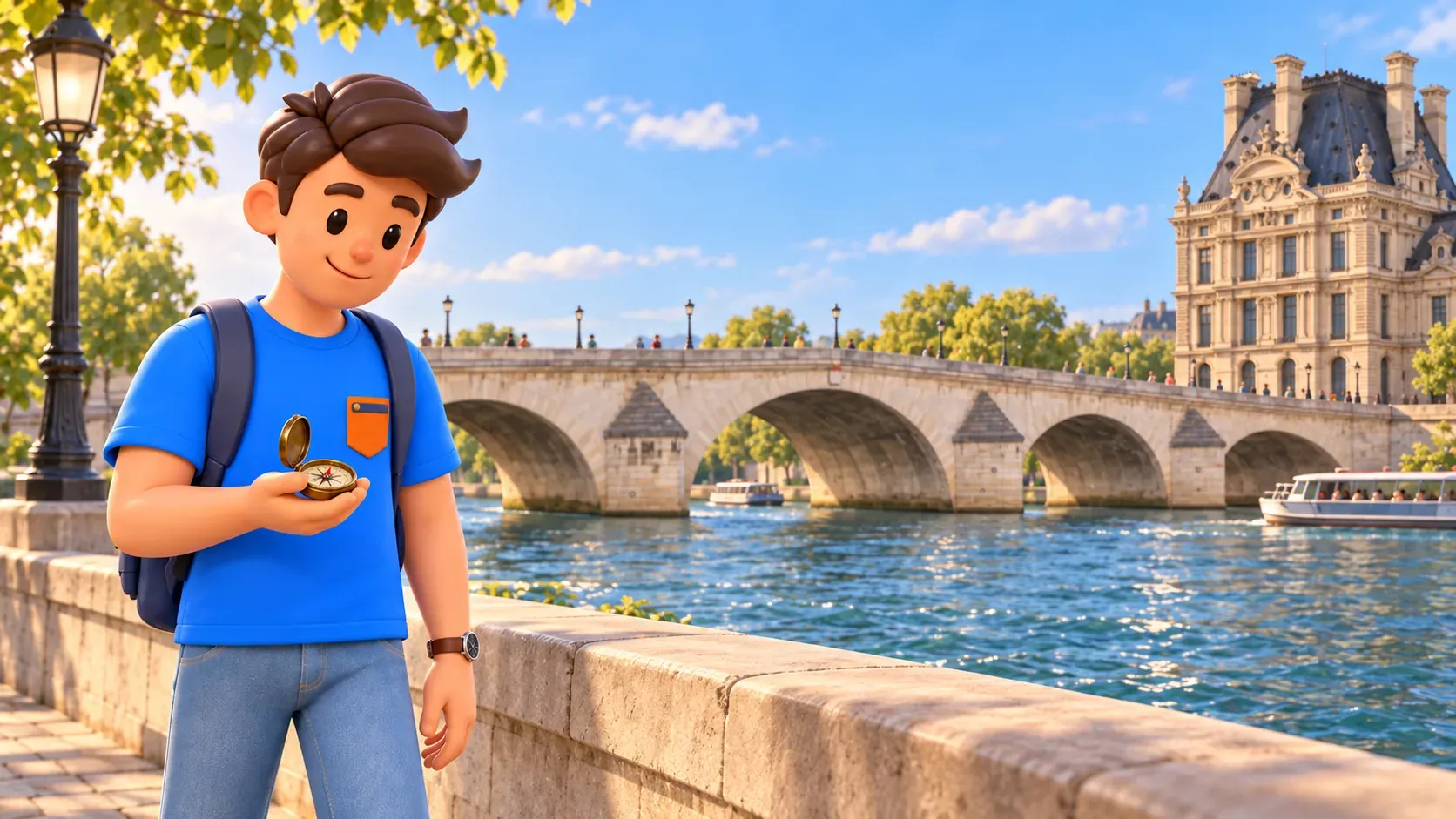
Consider which crossing you preferred and use that interest to shape another day. A trip can give art, historical detail and time beside the water different amounts of attention.
For a Paris trip with your own balance of history, art and walking, prepare a personal programme in RoadMe. Its day-by-day plan takes your interests and travel rhythm into account, making it easier to organise substantial visits and smaller walks without assembling the entire schedule by hand.
Return towards the Louvre and choose what comes next
From the Right Bank end of Pont Royal, turn east along upper Quai François-Mitterrand. Return towards the Louvre, passing the approach to Pont du Carrousel and continuing towards Pont des Arts. Then turn north into Rue de l’Amiral-de-Coligny, reach Rue de Rivoli and finish at Louvre–Rivoli metro. The finish uses public streets.
If three hours are unavailable, choose a shorter outing focused on Pont Neuf and Pont des Arts, finishing on the Louvre’s bank. Reducing the number of crossings gives you a different, manageable programme. Trying to retain four bridges and every pause in a much smaller allowance can make the walk feel rushed. Strong wind or persistent rain may be a reason to choose another day for the river.
Pay attention to deck surfaces, street crossings and bridge approaches. The entire itinerary, including the metro, has not been verified as a continuous step-free route. Check specific entrances and access arrangements if that matters for your visit. Keeping to upper quays avoids optional descents to the water, but does not establish that every part is level or accessible.
For a separate architectural outing, our walk around the Louvre to the Palais-Royal explores courtyards and a garden. Give it its own ninety minutes and check the access hours. Choose it separately or after a proper rest.


