
Around the Louvre in 90 Minutes: Courtyards and the Palais-Royal Garden

You can get to know the Louvre as a city palace before entering its galleries. Walk from the glass pyramid to the Cour Carrée, then continue to the Palais-Royal and its garden. In an hour and a half, the setting changes from an open museum courtyard to enclosed historic façades, contemporary art and green paths framed by arcades.
This route suits a day when you want architecture and a short rest in central Paris. It does not include the Louvre collections or restricted rooms inside the Palais-Royal. Its purpose is to connect a few spaces that make more sense together, showing how historic buildings, modern design and everyday city life share the neighbourhood.
Where to start and how to use ninety minutes
Begin in the Cour Napoléon beside the Louvre pyramid, keeping the museum entrance routes clear. Continue through the public passage beneath the Clock Pavilion into the Cour Carrée. Leave through its northern arches towards rue de Marengo and rue de Rivoli. Follow rue de Rivoli west towards the Palais-Royal; the domain’s official access address is 8 rue Montpensier, near place Colette.
At the Palais-Royal, look at the courtyard with Buren’s columns, then continue through the Galerie d’Orléans area towards the garden. Finish with a quiet pause there. Allow about ninety minutes, with roughly 25 for walking and 65 for looking around and resting. These are planning estimates, not measured timings; travel to the start, a serviced café stop and shopping take additional time.
Choose daytime and start after 8:00, when the Palais-Royal opens. You do not have to spend equal time at each sight. Give the pyramid longer if photography interests you, or focus on the Cour Carrée if you enjoy historic building details. Keep a little time for the garden, so it becomes a change of atmosphere rather than another pin reached in a hurry.
To fit neighbourhood walks into a personal trip built around your dates, interests, pace and budget, you can try RoadMe. The app works out a day-by-day plan, helping you organise architecture, museum visits and time to rest.
Keep the names Cour Napoléon, Cour Carrée and Jardin du Palais-Royal handy. They distinguish the two Louvre courtyards and prevent confusion about which palace contains the garden. The complexes are close, but a city street separates them: crossing rue de Rivoli is part of the walk, rather than a hidden internal connection between buildings.
The pyramid: a modern entrance to a historic palace
In the Cour Napoléon, find a comfortable position where the pyramid and surrounding façades appear together. Standing right against the glass can hide the main contrast between the light, transparent structure and the substantial stone palace. Begin with that wider relationship before looking at an individual panel or choosing a familiar photograph.
I. M. Pei designed the pyramid, which was inaugurated in 1989 as part of the Louvre’s renewal. It marked a central entrance and connected modern visitor organisation with the historic building. This small piece of history explains its role: it is a design solution for a large museum as well as a symbol that visitors recognise immediately.
Move around the accessible part of the courtyard and compare the glass against different walls. Light and reflections can change the impression during a short stop. The background matters as much as the pyramid: leaving some of the palace in your photograph makes the relationship between architectural periods easier to see.
The entrance area is used by museum visitors. You do not need to join a gallery queue or descend inside to continue this exterior walk. Leave routes clear and choose a place where you can step away from the main flow. Going into the museum is a separate decision, with its own time commitment and admission arrangements.
The Cour Carrée: see the Louvre’s architectural setting
From the pyramid, head east towards the passage beneath the Clock Pavilion. The Cour Carrée lies on the other side. The transition is more than a change of location: the open perspective gives way to a space enclosed by façades on all sides. Pause just after the arches before choosing where to look more closely.
The Louvre developed from fortress to royal palace and museum. You do not need to identify every phase in one visible section, but that history provides a useful starting point. The building changed over a long period. In the Cour Carrée, you can concentrate on walls and proportions that might have seemed like background at the pyramid.
Start with the wider pattern of windows, arches and decorative elements, then choose one section of façade and approach it. Changing distance helps separate the overall order from individual stonework. For a short introduction, this way of looking is often more rewarding than trying to make a complete inventory of sculptures and royal monograms.
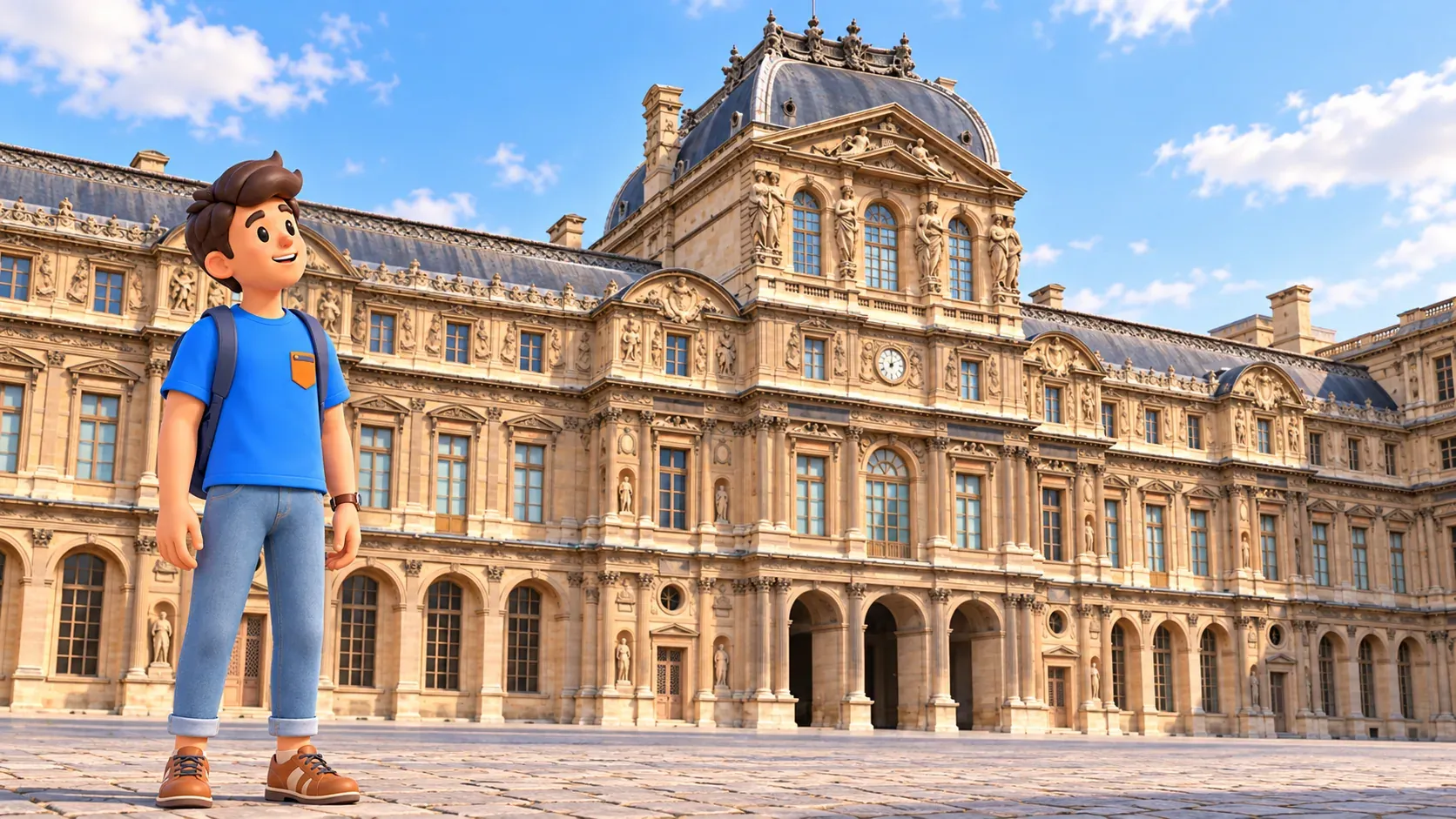
Compare the impression with your first stop. Which stays with you more: glass geometry in an open courtyard or the space between historic façades? Your own interests determine the answer. The pause can guide what you want from the rest of the day, whether that is more architecture, art or simply a comfortable garden.
The courtyards have their own access hours. At the October 2026 check, the Louvre lists the Cour Napoléon as open 7:30–21:00 and the Cour Carrée 7:30–19:45. They are not round-the-clock spaces. If a passage is temporarily closed, follow the local signs and use available public streets; do not seek a shortcut through museum rooms.
Continue to the Palais-Royal through the city
Leave the Cour Carrée through the northern arches towards rue de Marengo. Rue de Rivoli separates the Louvre palace from the Palais-Royal neighbourhood. Cross at a pedestrian crossing and head west towards place Colette and rue Montpensier. Use the marked public entrances to the domain; its official address is 8 rue Montpensier.
This short connection is a change of urban setting. You leave the museum complex and arrive at another ensemble with its own galleries, courtyard and garden. Resist adding several other famous addresses between them if you want to keep the walk short. Otherwise the final rest is likely to become the first thing squeezed out of the programme.
The Palais-Royal’s name has a small historical twist. The palace was created for Cardinal Richelieu as the Palais-Cardinal, then became the Palais-Royal after passing to the royal family. Today the public areas are especially useful for an introduction. Access to a courtyard or garden does not mean free access to working institutions behind the façades.
If you want to combine palaces, contemporary art and major museum visits, you can prepare the trip in RoadMe. Its personalised plan by days uses your interests and pace to help organise different Paris districts together while leaving room for breaks.
Buren’s columns: notice the rhythm of the courtyard
In the Palais-Royal’s main courtyard, Les Deux Plateaux is Daniel Buren’s work of black-and-white striped columns at different heights. Their arrangement relates to the geometry of the surrounding ensemble. That is the central idea to notice on a short visit: contemporary art enters into a conversation with the architecture around it.
Look along one row, then change your position. Lower and taller cylinders overlap differently, with the regular rhythm of palace columns and windows behind them. You need no advance knowledge of art theory to see that relationship. A few steps and a second viewpoint are enough to begin understanding how the work changes the space.
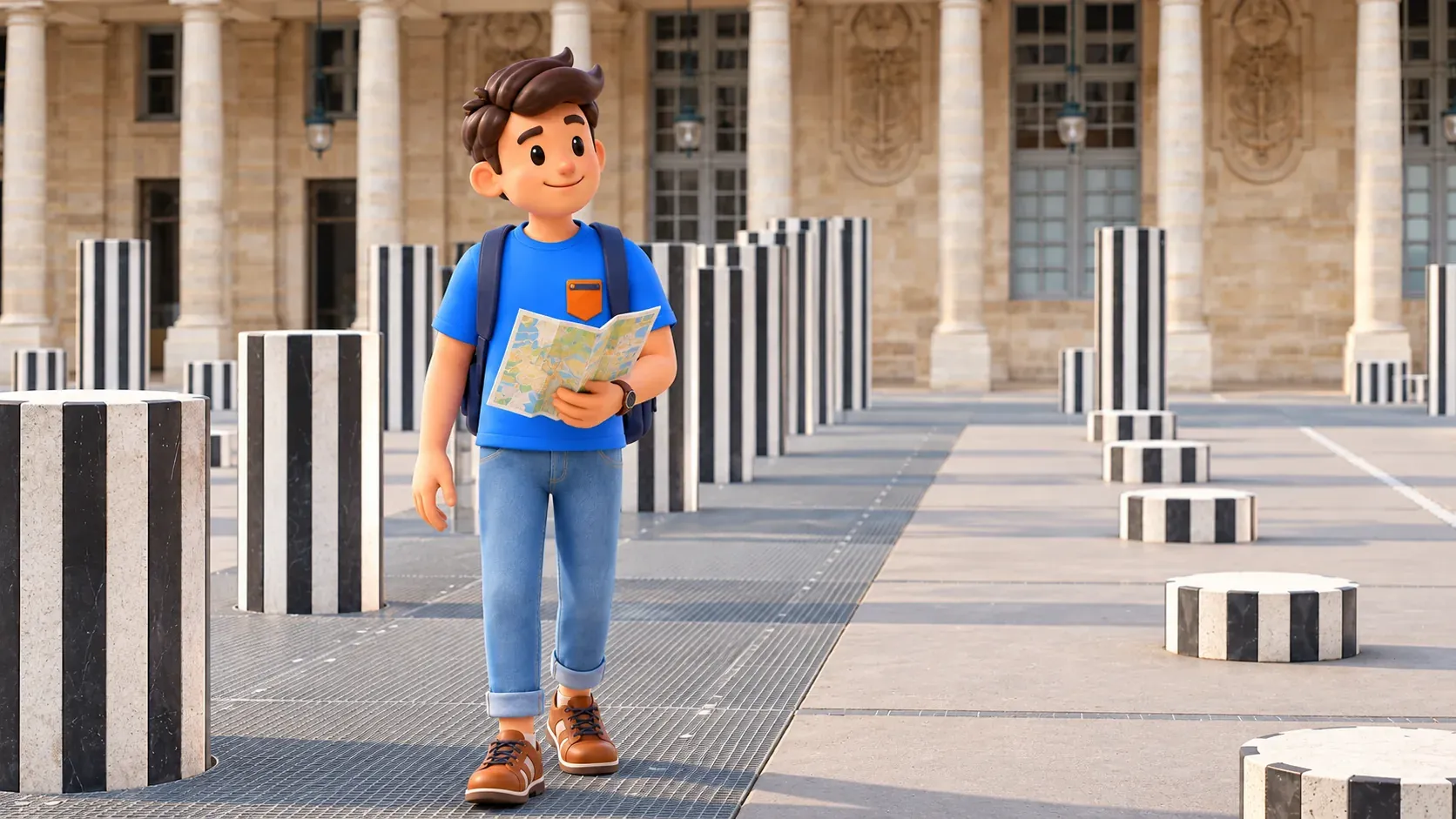
Choose one clear photographic idea: the wider courtyard, repeated stripes or a person in relation to the columns. Trying several ideas in the same frame can obscure the composition. A view from the walkway can be enough, allowing you to continue without spending the whole stop searching for one particular popular angle.
The ground surfaces change here too, including paving and metal grilles around the work. Walk attentively and choose a comfortable passage, particularly if standing for a long time is difficult. This entire outline is not a separately verified step-free itinerary; check specific access arrangements according to your own requirements.
The Palais-Royal garden: finish with a pause
Continue from the courtyard through the Galerie d’Orléans area towards the garden. After the stone spaces, the rows of trees, paths and open centre make a noticeable change. The surrounding galleries keep the garden connected to the city’s architecture. You are resting inside an ensemble, rather than heading into a large park beyond the district.
The galleries historically linked the palace’s setting with urban life and shops. That brief context helps explain the arcades: they organise movement around the green space and make it a place for encounters. On a first visit, you do not need to examine every gallery or investigate every establishment beneath it.
Choose an available path, walk a short section beside the trees and stop where it feels comfortable. If a bench is free, a few minutes sitting may complete the route better than another full circuit. You can compare the four spaces you have seen without immediately deciding where the next walk should begin.
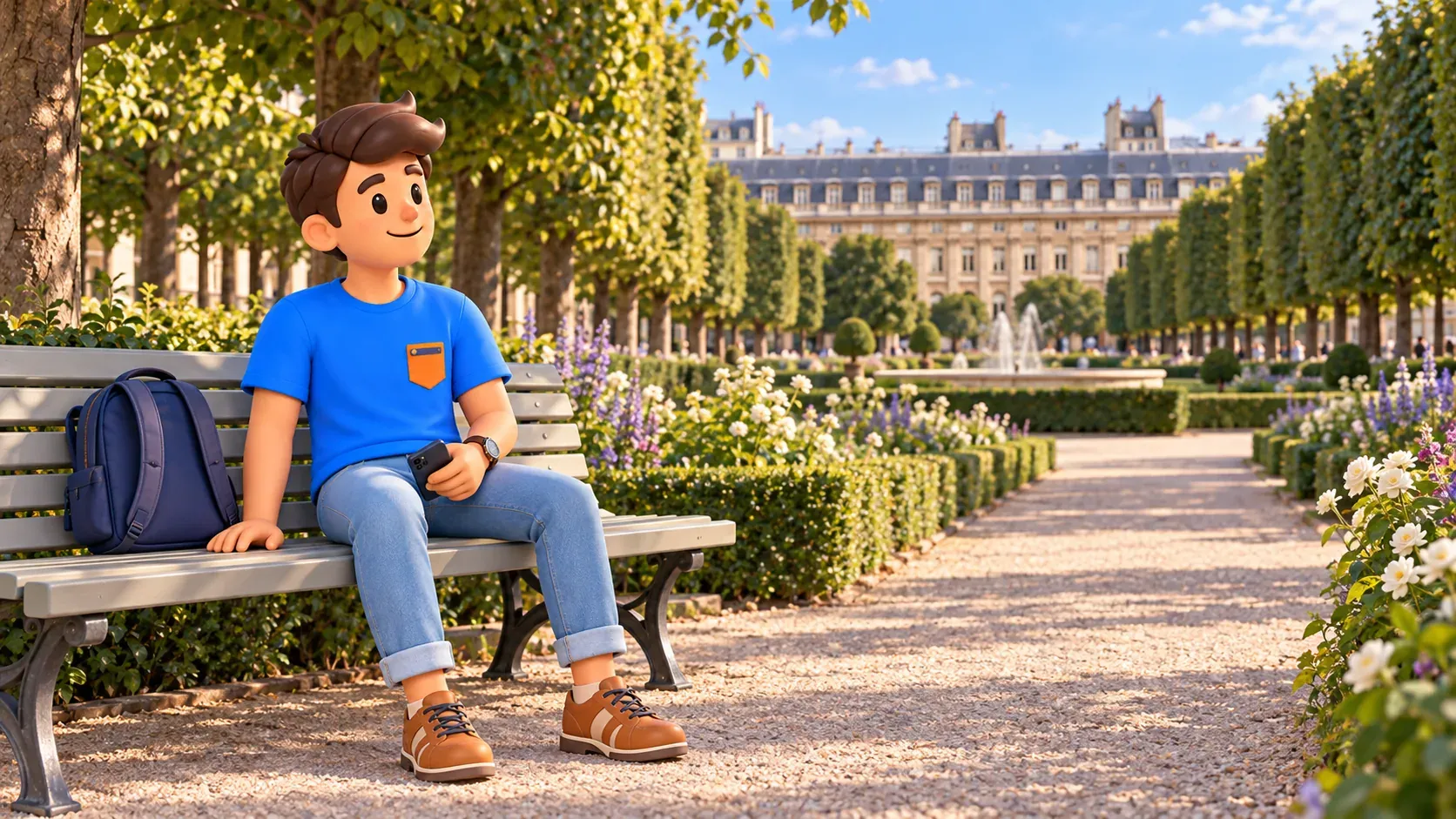
Entry to the domain’s public spaces is free. The official Palais-Royal hours are 8:00–22:30 from 1 April to 30 September and 8:00–20:30 from 1 October to 31 March. For the daytime route, leave a comfortable margin before closing and check possible changes before setting off. Louvre courtyard and Palais-Royal hours differ, so a late start needs particular attention.
If the walk accompanies a museum visit
Give the Louvre galleries a separate part of the day and decide which collections interest you. This walk’s duration excludes entrance checks, museum connections and time in the rooms. Tickets, concessions and reservation requirements apply to the interior visit. For 17 October–1 November 2026, advance reservation is announced as mandatory, with exemptions for certain access cards.
After a substantial museum visit, you can use just part of this route and finish in the garden if you need a rest. For another independent Left Bank walk, our Saint-Germain-des-Prés route between squares offers a different atmosphere. Allow its own time and the connection across the city; choose it after a pause rather than attaching it automatically.
This short walk has a complete outcome: the familiar museum becomes a palace with contrasting courtyards, contemporary art gains an architectural setting and a garden rounds off the experience. Even without entering the collections, you can decide which space you would like to explore more closely on your next visit.


