
Myeongdong Beyond Shopping: Cathedral, Theatre and Money Museum
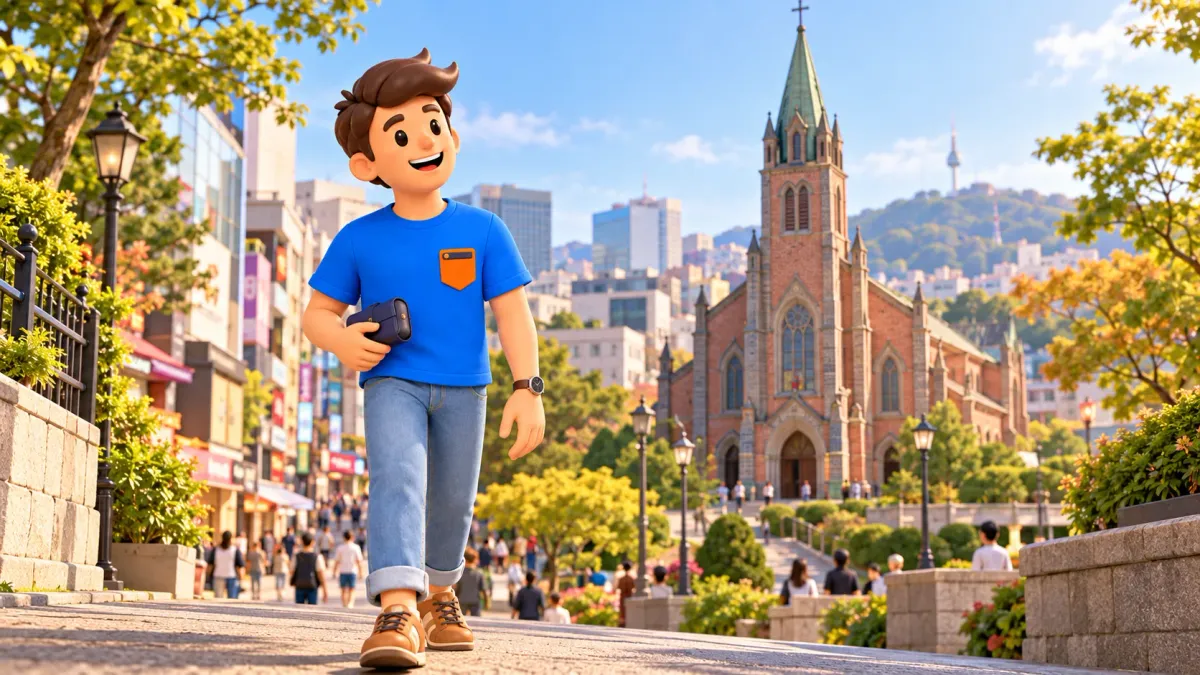
Myeongdong offers a substantial three-to-four-hour cultural walk without compulsory shopping. Connect its cathedral, Myeongdong Theater's facade and the Bank of Korea Money Museum. Religious community, stage life and a financial institution's history emerge inside a district often remembered mainly for shop windows.
Begin at Myeongdong station and finish towards Hoehyeon. Add accommodation travel, a proper lunch and any full performance separately. The museum is the main timing anchor because its day ends earlier than the shopping streets' evening life. For a late start, visit it first and reverse the sequence.
Build the walk around different functions
The route has three aims: examine the cathedral's brick Gothic Revival architecture, notice the street's theatrical history and understand money as historical objects. That selection removes any need to enter every doorway. Exterior viewing is enough for the theatre in the main programme; a performance is a separate choice.
Working through this day is much more convenient with RoadMe: the app prepares a complete personal plan around your interests, dates and pace. Choose architecture, culture and the breaks you need to distribute Myeongdong and the remaining trip more effectively.
| Stop | Planning guide | Main purpose |
|---|---|---|
| Myeongdong Cathedral | 45–60 minutes | Exterior and permitted quiet viewing |
| Myeongdong Theater | 20–30 minutes | Facade and stage history |
| Connections and pause | 40–60 minutes combined | District streets and rest |
| Money Museum | 75–90 minutes | Selected permanent-display themes |
These are editorial estimates, not a measured tour. A service, detailed exhibition or long meal changes duration. With less time, reduce museum themes while preserving a comfortable margin before closing. Late admission is not a promise of enough time for everything you hope to see.
The cathedral rises above the shopfront flow
Follow the permitted approach, allowing for a small climb. The change of position already alters the district's impression. The brick tower offers another kind of landmark, connected with an active religious community.
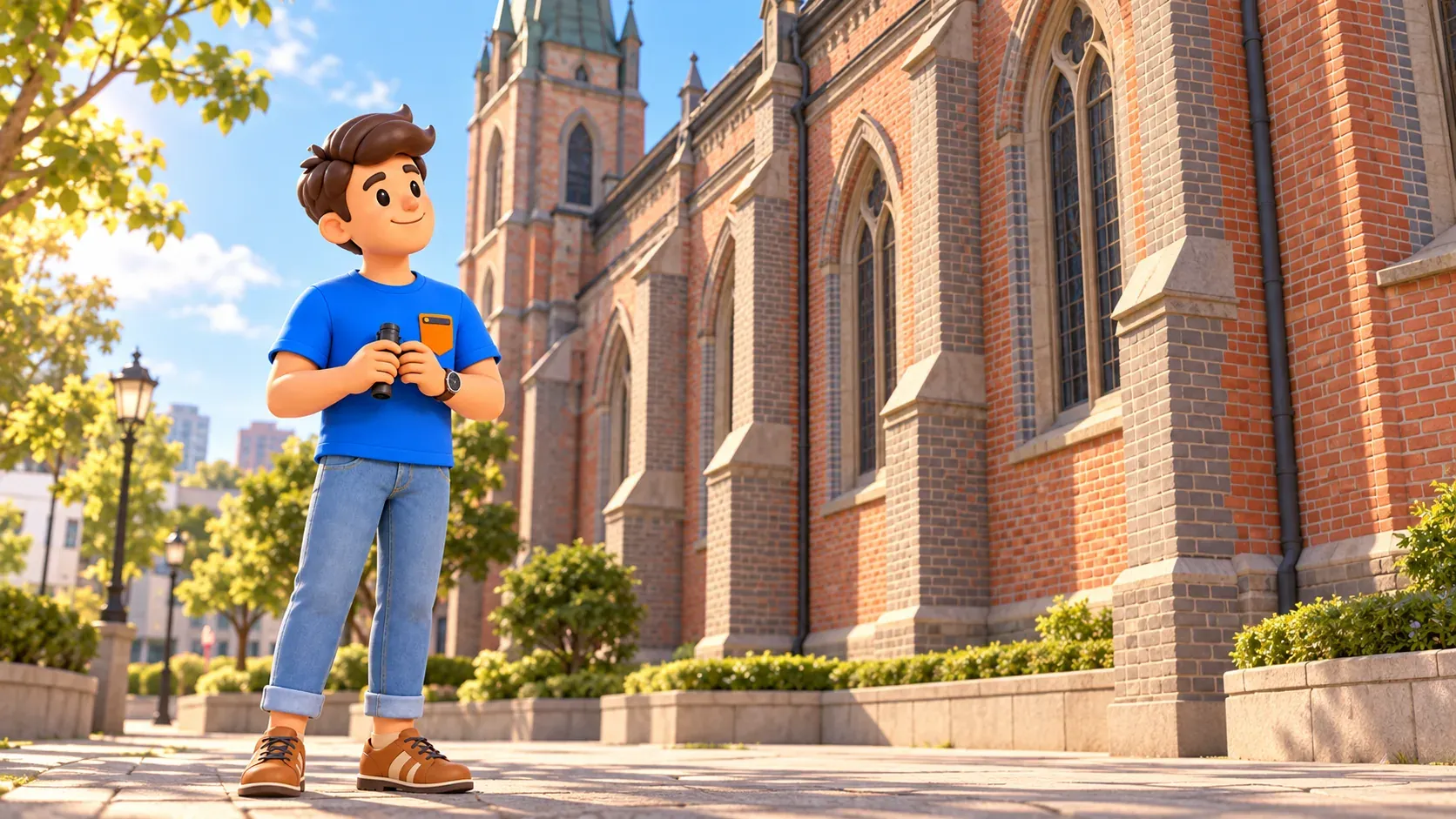
Completed in 1898, the cathedral expresses Gothic Revival forms through brick. Red and grey pieces articulate arches, openings and supports. Look at the central vertical line, then the repeated side windows. Material helps explain the architecture without requiring specialist vocabulary or a complete stylistic comparison with European churches.
High windows and buttresses organise the building's length. The front gathers attention towards the tower while the side reveals the extended church space. Compare those two impressions instead of taking only one entrance photograph. Both silhouette and the rhythm of smaller details reward attention here.
An active church and its community
The place connects with a Korean Catholic community formed before the present building. Lay participation, restrictions and later church development provide deeper context than simply finding a European architectural style in an Asian city. The community's history explains why the site mattered before its tower appeared.
In the later twentieth century, the cathedral also became an important public symbol associated with democracy and civil rights. For a short walk, retain the relationship between religious space and urban public life. A full political chronology is unnecessary to recognise that broader meaning.
If interior viewing is permitted without interrupting worship, move quietly through available areas. Stained glass and arches continue the vertical theme. Services, prayer and ceremonies take priority. An open door does not make every moment appropriate for sightseeing or photography; follow indications and the actual use of the church.
Keep the crypt as a separate possibility
The crypt connects the church with the memory of Catholic martyrs, adding an earlier religious layer to the building's history. Its access should not be promised as a compulsory part. Confirm the current arrangement on site and follow signs rather than assuming all subsidiary spaces share the main entrance conditions.
A closed part does not make the cathedral a missed attraction. Exterior, public role and available architecture already provide substance. Visitors especially interested in religious history can allocate a longer programme instead of rushing through every area before another museum. A selected visit can still be complete in its purpose.
Before leaving, compare the pace around the cathedral with the shopping street. The difference explains the neighbourhood through real functions. Prayer, purchases, work and evening culture can exist close together. That observation is a useful connection to carry towards the theatre.
The theatre facade preserves stage memory
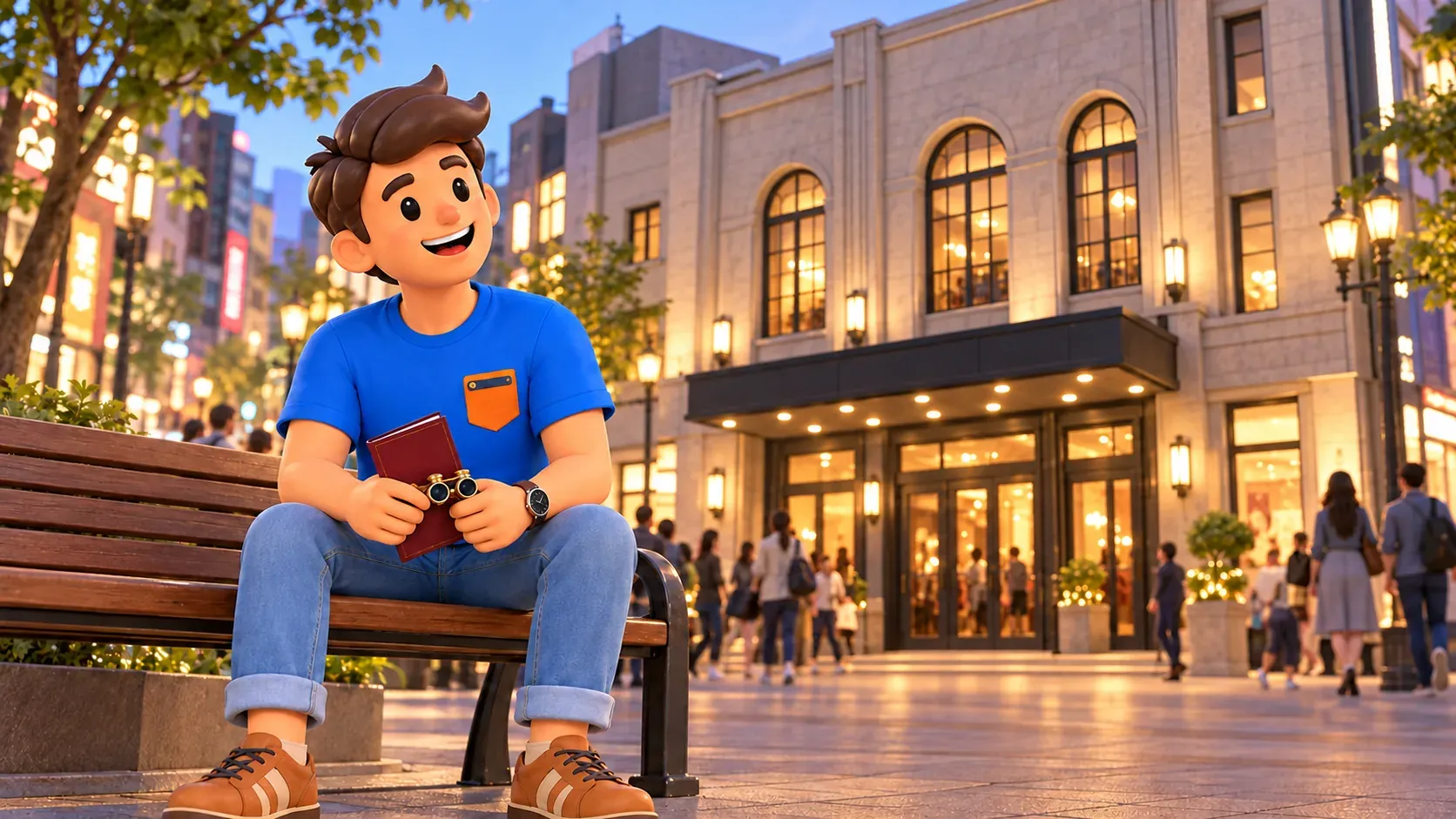
Continue to Myeongdong Theater on Myeongdong-gil. The building began as a cinema in the 1930s and later became an important performance venue. It recalls Myeongdong as a meeting place for actors, directors and writers as well as commerce. The street's identity developed through several kinds of gathering.
Following closure and changed use, restoring a cultural function required substantial work. The theatre reopened in 2009, bringing a historic facade together with a modern auditorium. A familiar old exterior therefore does not mean the entire interior survived unchanged. The return of use is part of the story.
Notice symmetry, pale surfaces and vertical divisions among shop windows. The facade gives a stable landmark and shapes a small space before the entrance. This is enough for the basic walk even without a ticket today. An operating performance venue need not become a freely accessible architectural museum.
A performance needs its own evening
The venue is associated with the National Theater Company of Korea. Do not confuse it with any other show promoted in the district. Check address, date, language, understandable surtitles if offered, duration and ticket conditions for the actual production. The word theatre does not establish a universal format for international visitors.
If interested in a performance, finish the daytime walk, eat and leave a reserve before curtain time. A full production cannot fit inside a twenty-minute facade stop. It can be a good continuation of the cultural day while changing its total length. Treat the transition as real time rather than a gap to fill.
For different interests, shared exterior viewing remains practical. Individual evening attendance is optional rather than making the whole group an accidental audience for an unchecked production. Street and building already tell an important part of the history.
Change material and scale at the Money Museum
Follow public streets to the Bank of Korea's historic building on Namdaemun-ro, allowing for crossings and the actual visitor entrance. The museum is a separate banking building with its own admission arrangements. A central location does not make it interchangeable with nearby retail interiors.
Compare granite with the cathedral's brick and the theatre's more intimate entrance. Stone blocks, symmetry and substantial corner volumes express the reliability expected of a financial institution. Architecture works with trust and stability here, introducing the subject of money through the building before individual objects appear.
The building was completed in 1912 and became a museum in 2001. Institutions changed, war damaged spaces and restoration reshaped them. Do not treat all interior finishes as untouched early twentieth-century work. Adaptation matters alongside the date, making the museum a building history as well as a collection.
The museum calendar matters more than shopping hours
The museum normally opens Tuesday to Sunday from ten to five, with last admission earlier. Mondays and particular holiday periods are excluded. Arrive with a substantial viewing reserve. Permission to enter late is not a comfortable starting time for an extensive programme, whatever the surrounding streets are doing.
The current Korean visitor page describes ordinary individual viewing as unrestricted by advance admission booking, while groups and guided explanations have separate reservation conditions. English information still contains different weekend wording. Confirm the latest arrangements for your date, especially when a guided programme is important.
Admission itself is free. It does not guarantee a tour in your language or participation in a class. Independent viewing of selected galleries suits this route. A special explanation can become another anchor after its conditions are confirmed, without being confused with access to the museum as a whole.
Three questions instead of every currency
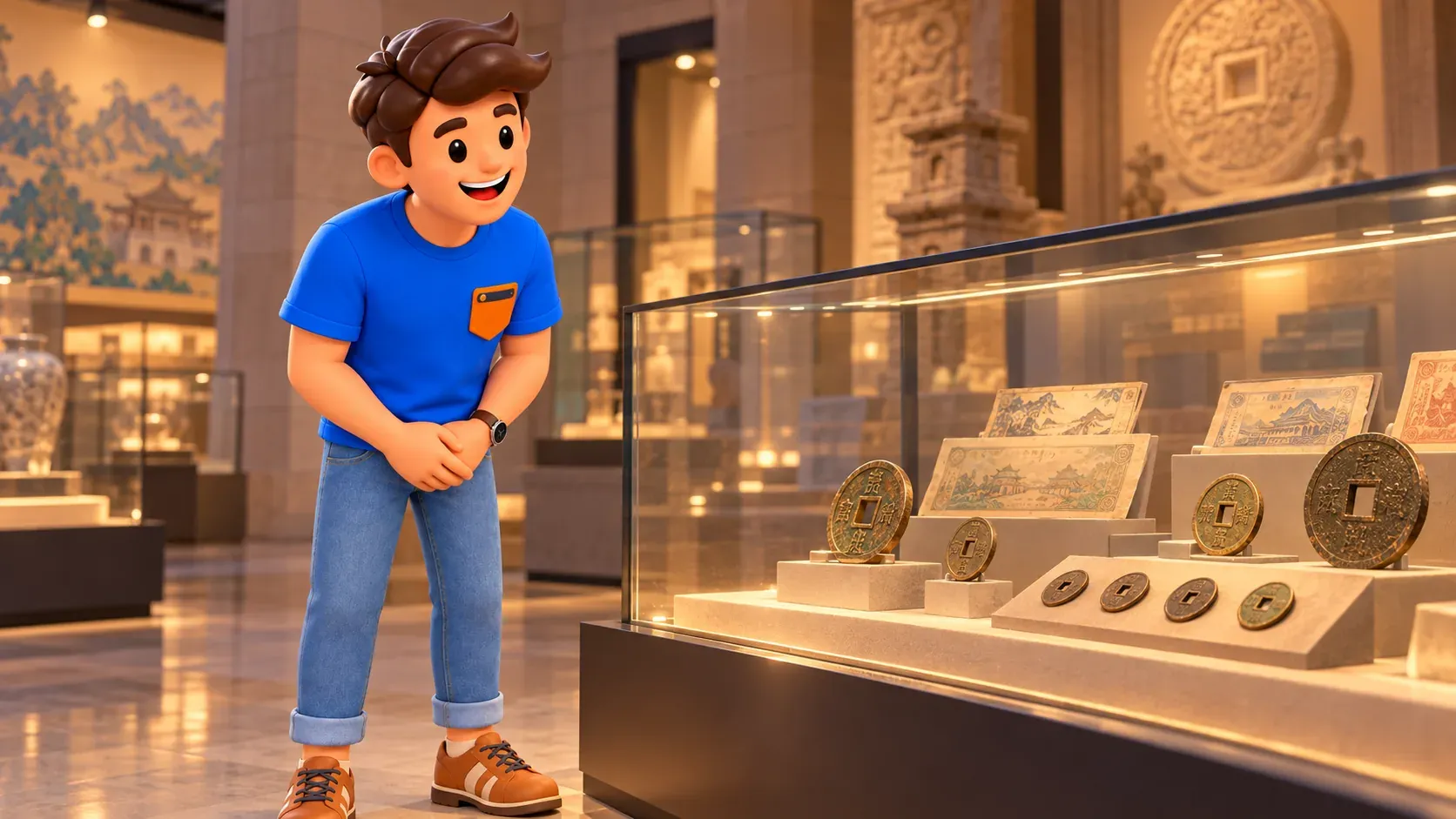
First, choose a coin as an object: what do material, size and inscription communicate? Joseon-period coins can be read as historical documents rather than only purchasing tools. Compare the form with a familiar banknote without trying to memorise all denominations. Let physical details introduce a different monetary world.
Second, consider a monetary object's life cycle. Production, circulation, protection and withdrawal connect an attractive artefact with institutional work. Read a few chosen explanations instead of moving rapidly along every case. Following one process can be more useful than recognising many unrelated pieces.
Third, consider trust. Memorial banking rooms, documents and photographs reveal people and organisations behind abstract ideas. This is institutional and social history. The visit does not need to become personal financial advice or discussion of today's exchange rates. The question is how an institution presents its role through objects and spaces.
Adjust museum depth to your interests
For objects, allow more attention to coins and banknote imagery. For architecture, compare the facade with restored rooms and the building-history explanations. With children, choose one understandable question, such as why monetary designs need recognisable details, rather than requiring every economics text. Shared observation can keep different ages engaged.
Do not promise an interactive session, souvenir printing or every room from an old photograph. Programmes and individual areas can change. Selected themes make independent viewing useful without an extra activity.
Leave rest between longer blocks. Cathedral and museum demand different attention, but both become tiring when every explanation feels compulsory. A short pause helps reveal relationships between buildings rather than the repeated sensation of entering another interior. Food and water belong in appropriate breaks outside exhibition spaces.
Connecting these interests is much more convenient with RoadMe: the app develops a personal plan for the whole trip around your preferences and pace. Cathedral, museums, evening culture and rest receive suitable places in an itinerary that is easier to use on the ground.
If one place is unavailable
For a closed museum, choose another date for the full route or shorten the programme to cathedral and theatre facade. Exterior museum viewing is a different depth, rather than an equivalent exhibition. The freed time can be rest instead of a search for random open doors. A smaller programme remains a deliberate choice.
During a church service, begin with permitted exterior areas or change the sequence. Check that the museum still has enough time to receive you properly. A linear walk has a clear basis, but institutional calendars and active functions matter more than rigid obedience to a table.
In rain, the museum offers a long covered block, but connections and the cathedral approach remain outdoors. For mobility needs, confirm actual entrances, slopes and available levels. Nearby objects do not establish a uniformly flat route. Choose the practical version rather than assuming a short distance resolves every requirement.
Finish the cultural walk
After the museum, choose a practical approach towards Hoehyeon or suitable transport for your next direction. A cafe or lunch can finish the half-day. With an evening performance, preserve a real break so you return attentive. Additional time is more useful than immediately adding another full neighbourhood circuit.
For another story of everyday central Seoul, consider Jongno and Gwangjang Market. For contemporary architecture, use Dongdaemun with DDP. Give complete routes separate blocks rather than compressing them into the same afternoon.
Myeongdong can then remain in memory beyond shopping: a brick tower, a returned stage and an old bank offer three urban lives. A few attentive observations deepen the district while preserving energy for the rest of Seoul.


