
Half a Day in Dongdaemun: Old Gate, History and DDP
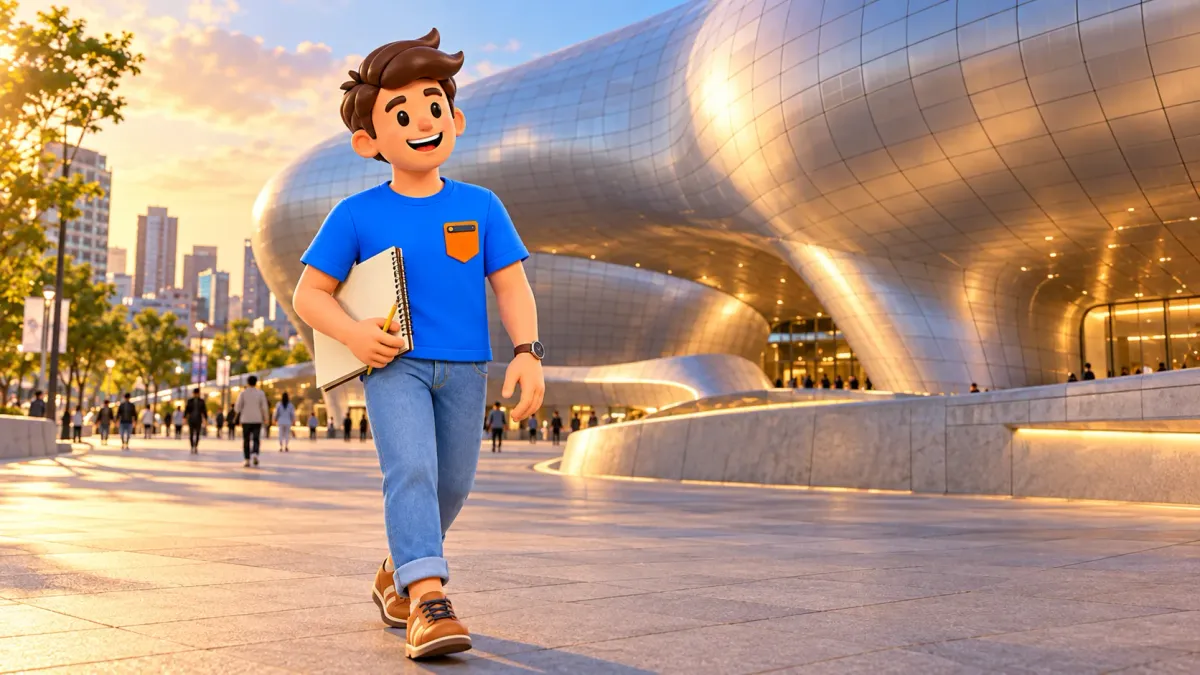
Explore Dongdaemun through three urban layers in half a day: the old capital's eastern gate, the former stadium site and DDP's contemporary architecture. Begin at Heunginjimun, then move south to the park and design complex. The sequence connects places that can otherwise become two unrelated photo stops.
Allow roughly three and a half to four and a half hours with a pause and one small museum. A major exhibition, shopping and a detailed market visit need extra time. Start at Dongdaemun station and finish at Dongdaemun History & Culture Park. These are different stations; returning to the start is not automatically included.
Choose one principal interest
The route combines history and architecture. For the old city, give more attention to the gate and archaeological traces. For design, keep a generous DDP block. One emphasis is enough: half a day need not become a complete catalogue of everything in the district.
Organising this combination is much more convenient with RoadMe: the app develops a complete personal plan around your interests, dates and pace. Choose history, architecture and the breaks you want to distribute this district and the remaining trip more effectively.
| Block | Planning guide | Purpose |
|---|---|---|
| Heunginjimun | 30–40 minutes | Gate and outer defence |
| Connection to DDP | 20–30 minutes with orientation | Public streets and crossings |
| History park and one museum | 60–75 minutes | Choose archaeology or stadium |
| DDP architecture | 60–90 minutes | Overall form and details |
| Pause | About 30 minutes | Rest between subjects |
These are editorial estimates rather than a measured tour. Extend them for detailed museum viewing or an event queue. A useful plan leaves time to look and discuss, not merely to move physically between a gate and another building. The approach from accommodation comes separately.
Heunginjimun: the substantial eastern gate
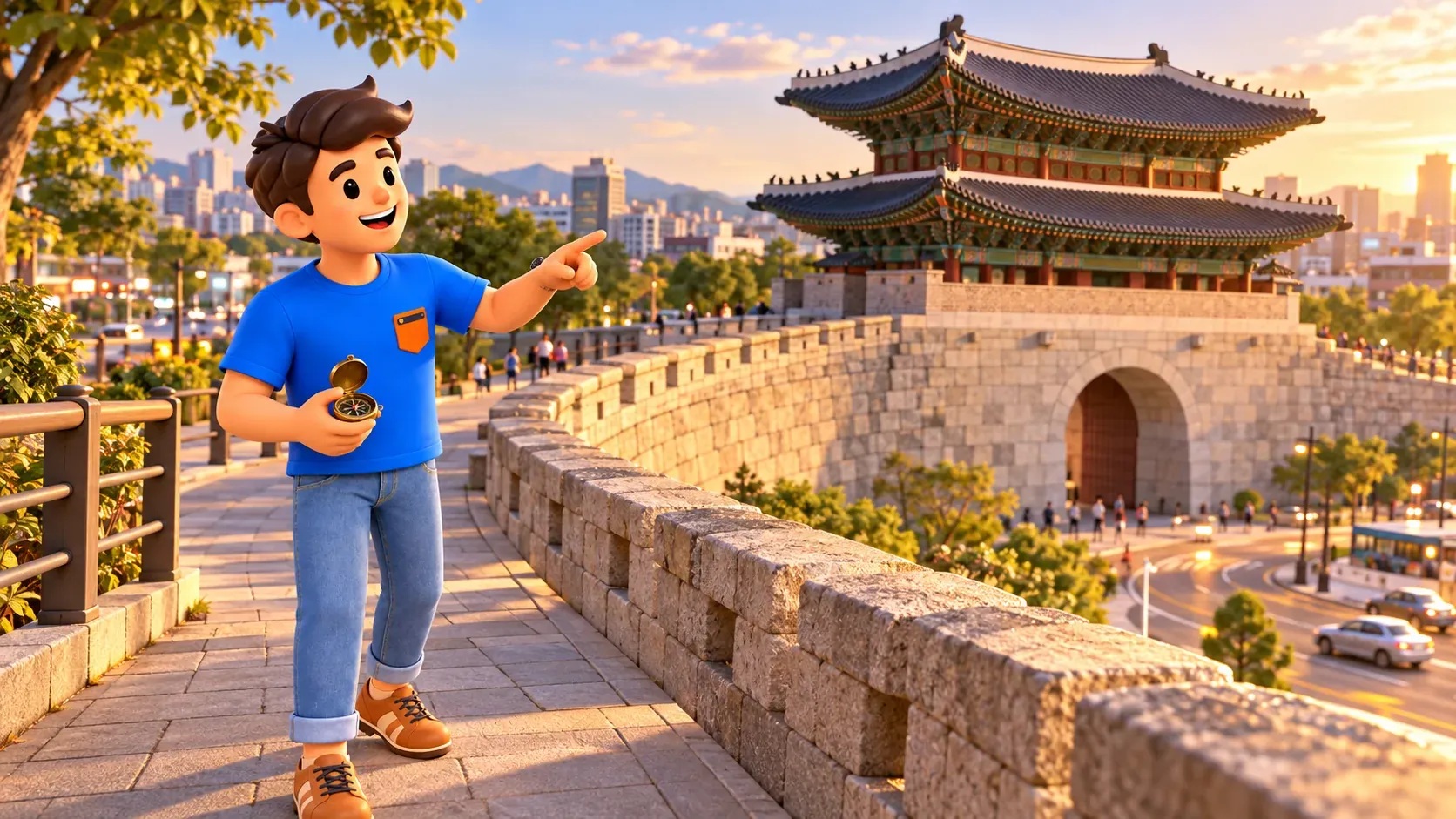
The gate is widely known as Dongdaemun, meaning East Gate. It belonged to the capital's defensive system rather than beginning as an isolated decorative monument. The present structure dates from 1869. Adjoining wall sections were later removed, while surrounding roads changed how visitors perceive the entrance.
Compare the heavy stone base with the more articulated timber upper part. Arch, gatehouse and roof worked together as an urban threshold with defensive and representative meaning. You do not need every structural name to notice the relationship of materials and scale.
Start from a permitted public viewpoint and spend a few minutes with the whole. Do not promise entry into the tower or free passage beneath every arch. Accessible surrounding streets do not mean that every part of the historic structure is open to visitors.
Why the outer wall curves
The curved defensive outwork is a significant feature. The lower eastern side was considered vulnerable, so an additional wall protected the approach. Its bend prevented a simple direct movement to the passage and made defence visible through form. That is a useful detail for a first visit.
Trace an arriving person's route in your imagination. Compare the turn with the straight approach you might otherwise expect. The observation makes architecture understandable without a long list of dates and links the gate to its terrain. Look at space as well as decoration.
Then consider the modern surroundings. The old entrance now stands inside an expanded capital. Roads and buildings do not need to disappear from your perception for the monument to have value. They reveal the change in urban scale, which becomes another subject of the walk.
Move south towards DDP
Continue along public streets and marked crossings towards the design complex. The general direction is south, but the actual line depends on accessible exits and junctions. Do not cross a multilane road by the shortest apparent route between two map pins. The street connection deserves a realistic allowance.
DDP has different levels, entrances and open spaces. A pin at the centre does not necessarily lead to the museum or event you want. Decide what you are visiting first, then identify the relevant approach. Entering the nearest door is not the same as reaching the right destination.
If the history museum matters, place it in the daytime part. An evening view of DDP does not establish the small museums' hours. You can reverse blocks to fit your day while remembering that each institution has its own conditions. Nearby places do not share one operating calendar.
The stadium and an earlier history
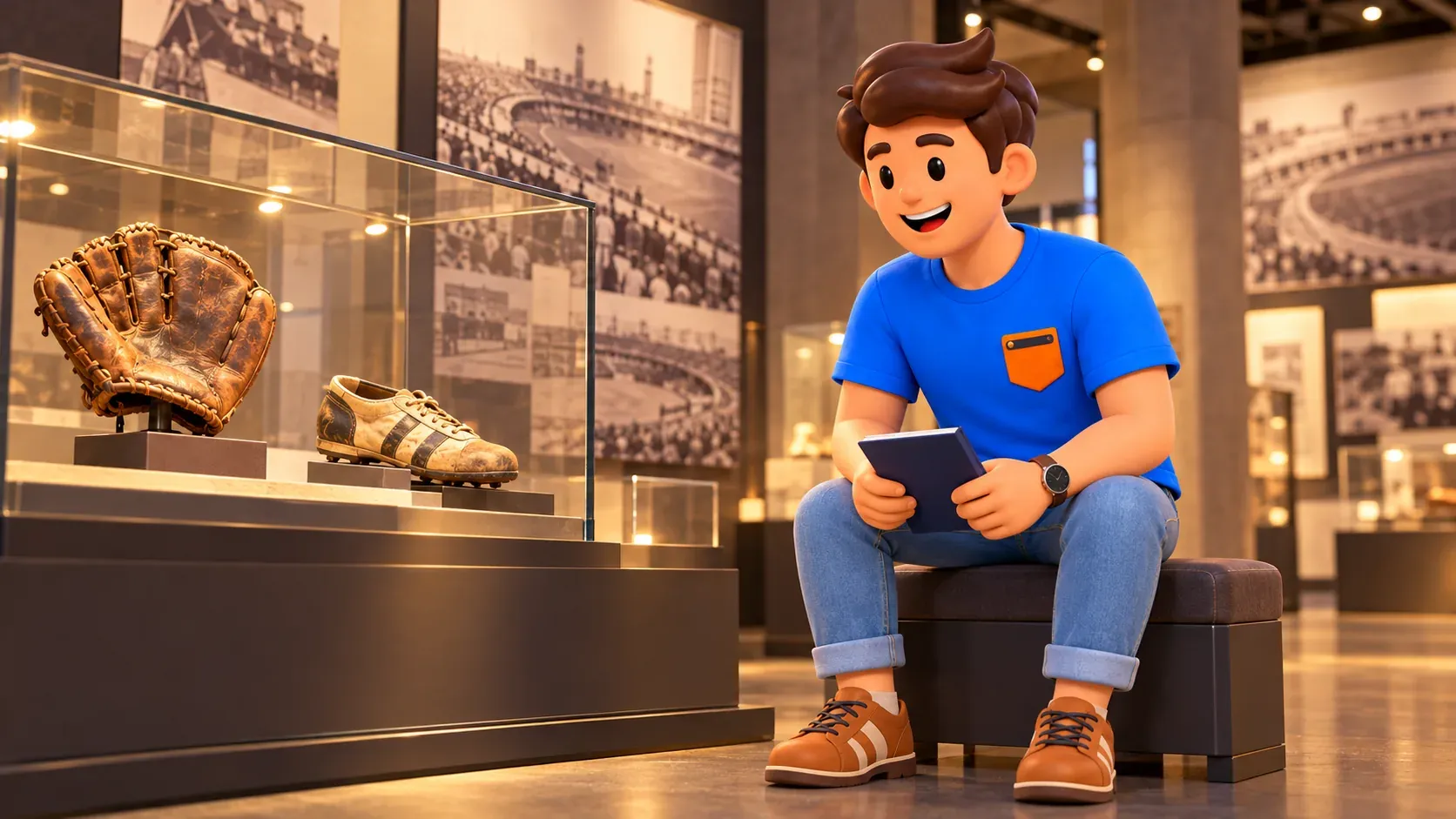
Before the contemporary complex, a stadium built in 1925 occupied the site. Its long city life left memories of sporting events and people. Redevelopment uncovered earlier fortifications and other structures. The place consequently tells several periods of history rather than one simple story of a new building.
Do not regard the history park as merely green space beside Zaha Hadid's architecture. Archaeological areas reveal history hidden beneath later planning. The stadium was not the first layer and DDP is not the only current subject. The spaces between buildings help explain what came before them.
From permitted paths, examine foundations and interpretation. Not every low stone line is a decorative wall intended for sitting. Distinguish excavated remains, reconstructed parts and the modern means of displaying them, following signs on site. That difference matters more than collecting every ancient-sounding name.
Choose one small museum
Dongdaemun History Museum focuses on finds and the site's development. The Stadium Memorial presents events and everyday life connected with sport. For a short visit, choose archaeology or twentieth-century urban memory. Both museums need not become a compulsory pair just because they are nearby.
They normally close on Mondays, with holiday closures and a midday break from noon to one. Confirm the calendar and last admission before visiting. General DDP hours cannot replace these conditions. Adjacent spaces can follow different rules, and a short closure can materially affect a tightly planned half-day.
These museum exhibitions have free admission, which does not make every exhibition in the design complex free. Distinguish a small municipal museum, common spaces and a particular event. Your budget and schedule should not rely on the mistaken idea of one ticket covering everything around the park.
DDP: understand the whole form first
DDP was designed by Zaha Hadid and opened in 2014. It is associated with design, exhibitions, fashion and cultural events. It is an active multipurpose setting, beyond an unusual object requiring only one photograph from outside. Different programmes give people different reasons to use the same architecture.
Start from an accessible external viewpoint and trace the shell's continuous curves. Unlike the gate's clear base and tower, the boundaries between volumes appear more fluid here. Comparing the two buildings shows how differently architecture can meet an urban pedestrian. You can understand that without technical training.
Move between several permitted positions rather than searching for one correct facade. Eye level, relation to the ground and surface impression change. Movement explains the building more effectively than a single stationary postcard view. Leave time for that experience rather than rushing to the first available entrance.
Aluminium skin and human scale
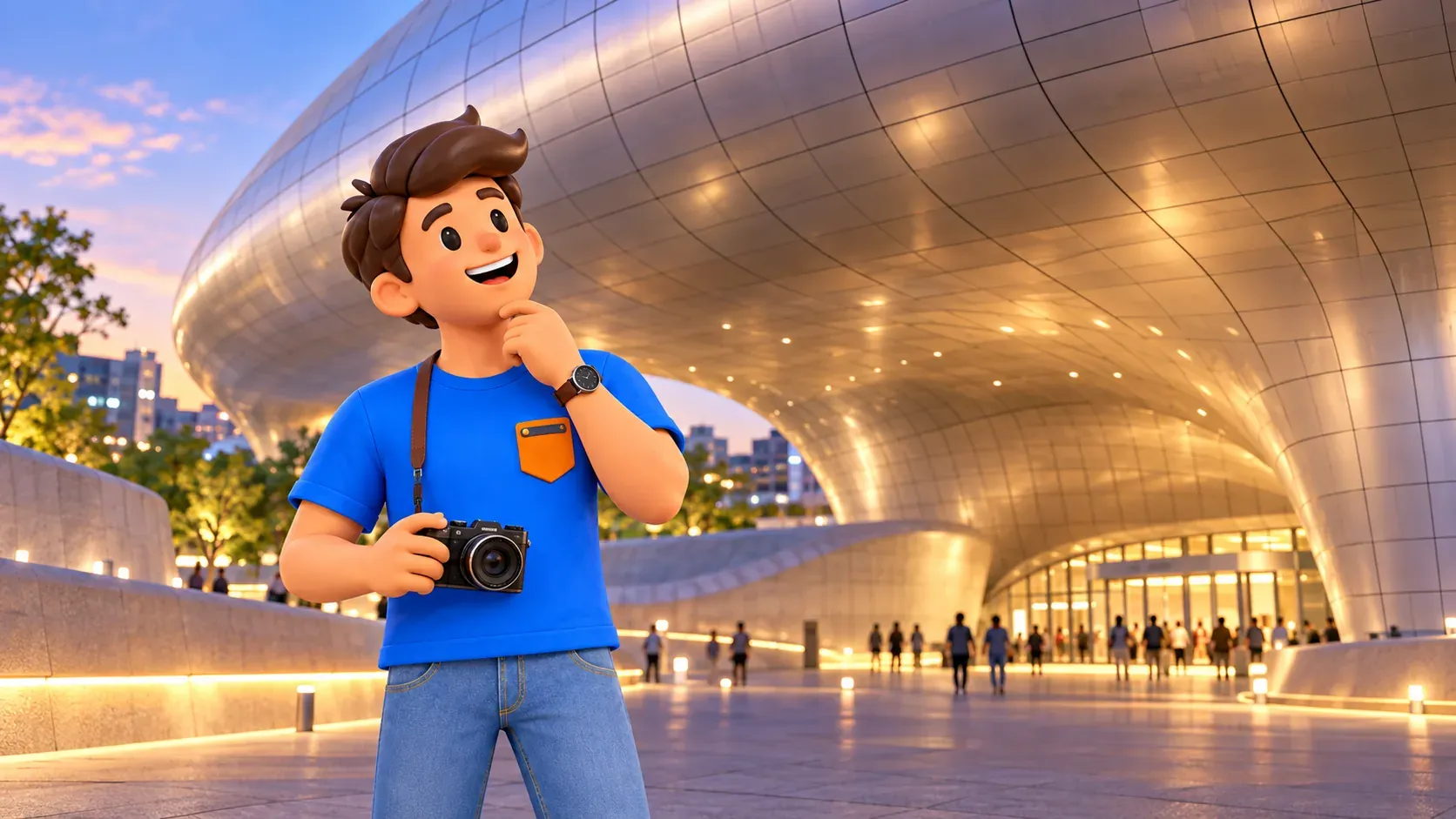
Approach an accessible facade section and examine panel joints. From a distance, the shell appears continuous; close up, the rhythm of individual elements becomes visible. Light makes curves softer or more pronounced. Compare a surface detail with the overall silhouette rather than treating them as unrelated photographs.
You do not need to count panels or find exact dimensions. For a first encounter, it is more useful to see how small elements assemble a large continuous volume. Then notice passages, plazas and places for people to move at its base. The exterior is a setting for use, not only a distant outline.
Include accessible common spaces according to current arrangements. Roof access, a special architecture programme and individual halls can have their own rules. A smooth surface is not an invitation to climb where there is no permitted visitor route. Follow the public approaches that are actually available.
An exhibition is a separate decision
For a specific exhibition, check date, admission and duration first. Then decide which block to shorten or how much to extend the outing. Promising to pop in briefly works poorly when the content matters and you want to examine it properly. Give the principal interest the time it needs.
An exhibition is not compulsory for the architecture walk. Several external views and the site's history can provide a complete visit. If an exhibition becomes the main attraction, make it the day's anchor rather than attaching it to an already full plan. That is a legitimate change of emphasis.
A family with different interests can share the exterior, one museum subject and a break. Additional events depend on age and enthusiasm rather than the number of open doors. A useful programme lets everyone understand something without a continuous sense of being late for the next place.
Day and evening reveal different architecture
Daylight makes panels and the relationship with archaeology easier to examine. Evening light changes the volume's impression. Choose according to the main interest: small museums require their operating day, while an exterior evening view needs suitable remaining time and weather. Trying to optimise both can extend the outing.
Projection shows and seasonal light events are not guaranteed daily extras. Check the particular calendar if they motivate the trip. Old photographs of temporary installations likewise do not confirm permanent presence. The architecture remains a worthwhile subject when no scheduled spectacle takes place.
Connecting history, design and your preferred time of day is easier with RoadMe: the app develops a personal trip plan around your interests and pace. This district, other walks and rest receive suitable places in an itinerary that is more convenient to use on the ground.
Keep shopping as its own choice
Dongdaemun is known for commerce, but detailed shopping changes the day's purpose and duration. For clothing or markets, allocate a separate block. The architecture programme does not automatically cover every neighbouring retail space. Decide what you want before turning a short connection into several hours indoors.
One comfortable break is enough without requiring the most famous address. After the gate and museum, a change of subject can restore attention for DDP. Treat a proper lunch as real time, rather than hiding it inside an estimate for a short walk. Hunger is not solved by a full itinerary.
Rain makes outdoor sections less comfortable even with indoor spaces nearby. Do not promise an entirely dry route between every stop. For important mobility requirements, check specific entrances, levels and accessible connections. A central map pin gives little information about the practical route through a complex.
Finish at Dongdaemun History & Culture Park
Choose a convenient station approach for your next direction. Returning to the gate is unnecessary merely because it was the start. The linear walk lets you discover the district progressively and finish near the contemporary complex. Leave the remainder of the afternoon responsive to the group's energy.
For a longer fortification walk, use the separate Naksan itinerary. For another architectural and historical combination, consider Gyeonghuigung and the history museum. Give every complete route its own time rather than treating proximity as a guarantee.
The principal impression is understanding changing urban purposes. The gate controlled entry, the stadium gathered people around sport, and DDP works with design and culture. One district reveals that sequence at close range. A few considered stops can make the relationship clear without exhaustively describing every place.


