
Gwangjang Market and Old Jongno: a Walk with a Food Stop
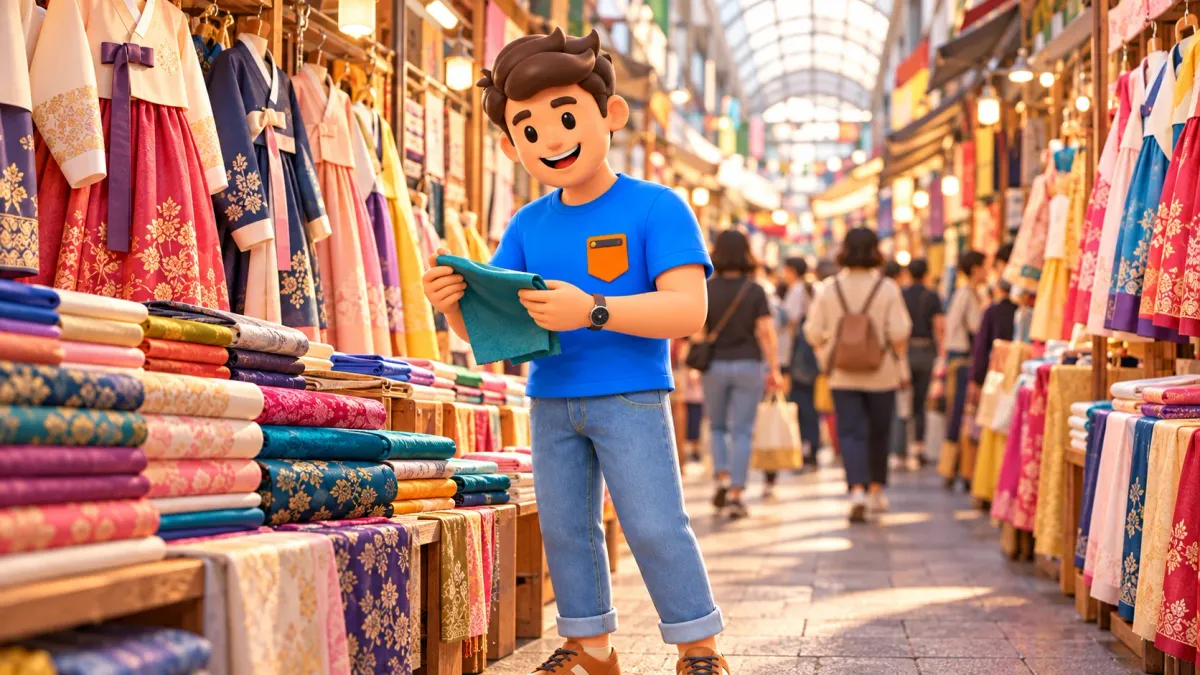
Gwangjang becomes more interesting within an old Jongno walk than as a trip for one dish. Start at Bosingak's bell pavilion, visit Tapgol Park and continue east to the market. In three to four hours, urban order, memory and trade form a connected story.
Begin at Jonggak station and finish near Jongno 5-ga. The estimate includes connections, a small rest and eating time, rather than extended shopping or participation in a separate ceremony. Choose daylight for the complete version: street, park and trading lanes follow different calendars.
Decide which market experience you want
Gwangjang is more than food counters. Fabric, traditional clothing and everyday goods reveal another rhythm. For this side, choose the trading rows' operating day and time. For a meal, plan around the food section and individual open stalls. The choice changes what the walk can realistically include.
Preparing this walk is much more convenient with RoadMe: the app develops a complete personal plan around your interests, dates and pace. Choose history, everyday city life and food breaks to organise this day and the whole trip more effectively.
| Part | Planning guide | Focus |
|---|---|---|
| Bosingak | 25–35 minutes | Public bell and city time |
| Tapgol | 35–45 minutes | Pagoda and memory of 1919 |
| Connections and short pause | 45–60 minutes combined | Jongno's public streets |
| Gwangjang | 75–90 minutes | Trading lanes and one unhurried meal |
These are editorial estimates rather than a measured tour. Queues, purchases and detailed reading add time. Do not leave the market as the last ten minutes before another fixed admission. A meal needs its own pause, and finding a suitable seat is part of the visit rather than an invisible extra.
Bosingak: imagine public time
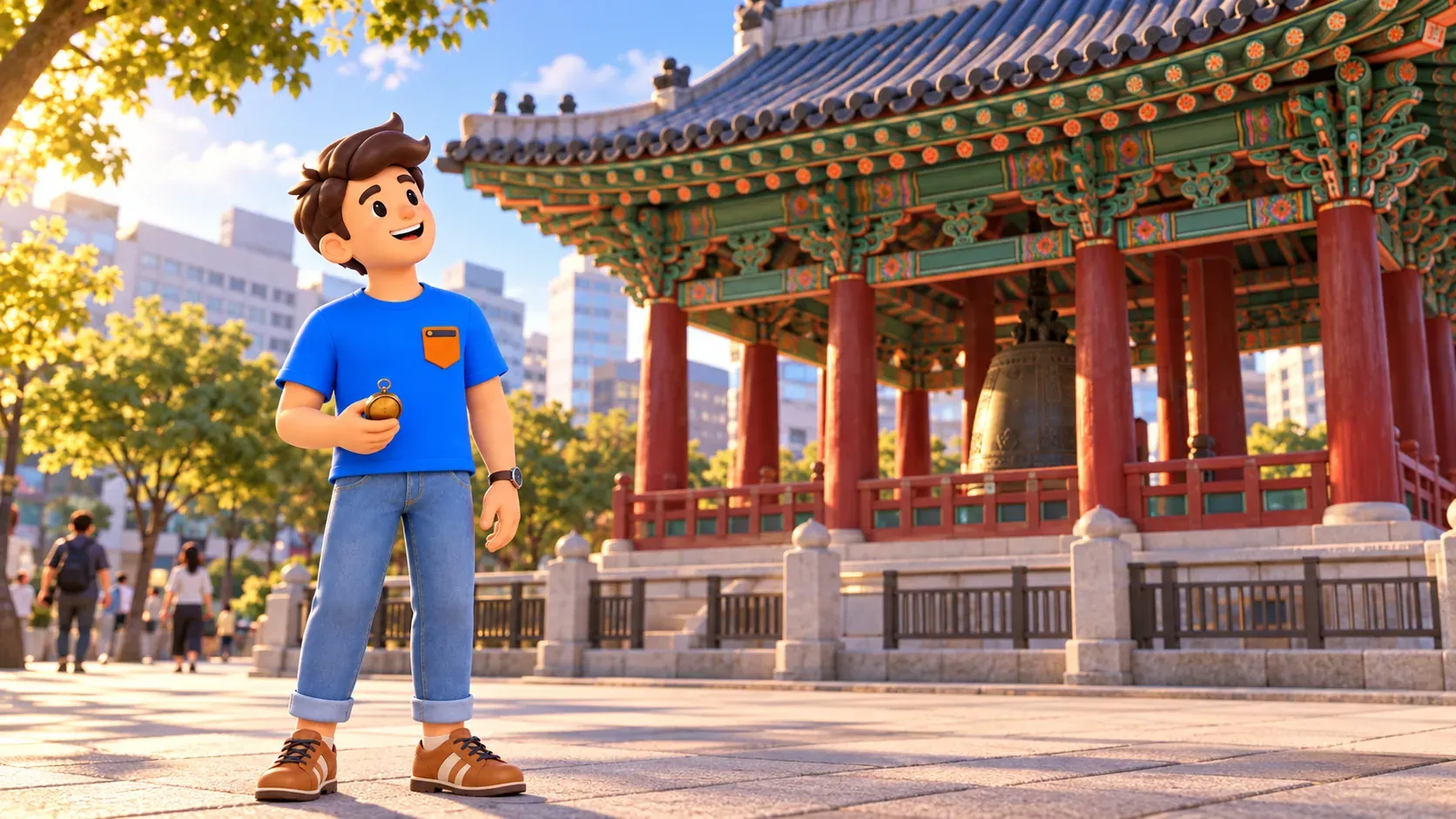
At Bosingak, begin with a question: how did residents learn the city's shared routine before personal watches and electrical signals? The bell was associated with opening and closing gates and the beginning and end of night restrictions. It communicated order across the city rather than merely decorating a square.
The present pavilion was reconstructed in 1979 and its current bell installed in 1985. The historic fifteenth-century bell is kept separately at the National Museum of Korea. The age of the place, building and instrument are different. Holding that distinction makes the stop more informative without requiring a long chronology.
Look at the open upper level and the architecture framing the large bell. Even without hearing it, you can understand why the pavilion connects with the street rather than an enclosed private court. Other signals shape contemporary city rhythms, but its earlier function remains legible.
A ceremony is a separate possibility
Bosingak hosts ringing programmes, but exterior viewing and participation are different arrangements. For an event, check the current day, weather changes and reservation requirements. Do not promise everyone a turn at the bell simply because the pavilion stands beside an accessible square. Public space does not establish programme eligibility.
The basic walk only requires viewing from public space and understanding the urban role. That preserves flexibility before park and market. If you choose a particular programme, organise the rest around its confirmed timing. A special experience can be the anchor, but should not appear accidentally inside a tight plan.
Do not confuse an ordinary daytime arrangement with New Year's Eve and large crowds. Their organisation differs. Today's aim is a considered street walk; a separate event can provide a reason to return. You do not need a performance to make the bell meaningful.
Follow Jongno towards Tapgol Park
Move east on public pavements towards the park's visitor entrance. Jongno remains a working urban artery. Crossings, lights and noise belong to the outing. The old centre is not entirely a quiet pedestrian stage, and the experience becomes more understandable when you include its current use.
Notice shop scales and changing frontage without making every business compulsory. Jongno connects different urban activities. The transition matters between a public bell, a small park and a dense market. You can understand the street through a few observations rather than a complete inventory of its shops.
Tapgol has access hours and closes at night. Open surrounding streets do not mean the park is available around the clock. For an evening version, leave it to another day or visit during the open part first. Keep the distinction clear when fitting the walk around other plans.
Tapgol holds several histories
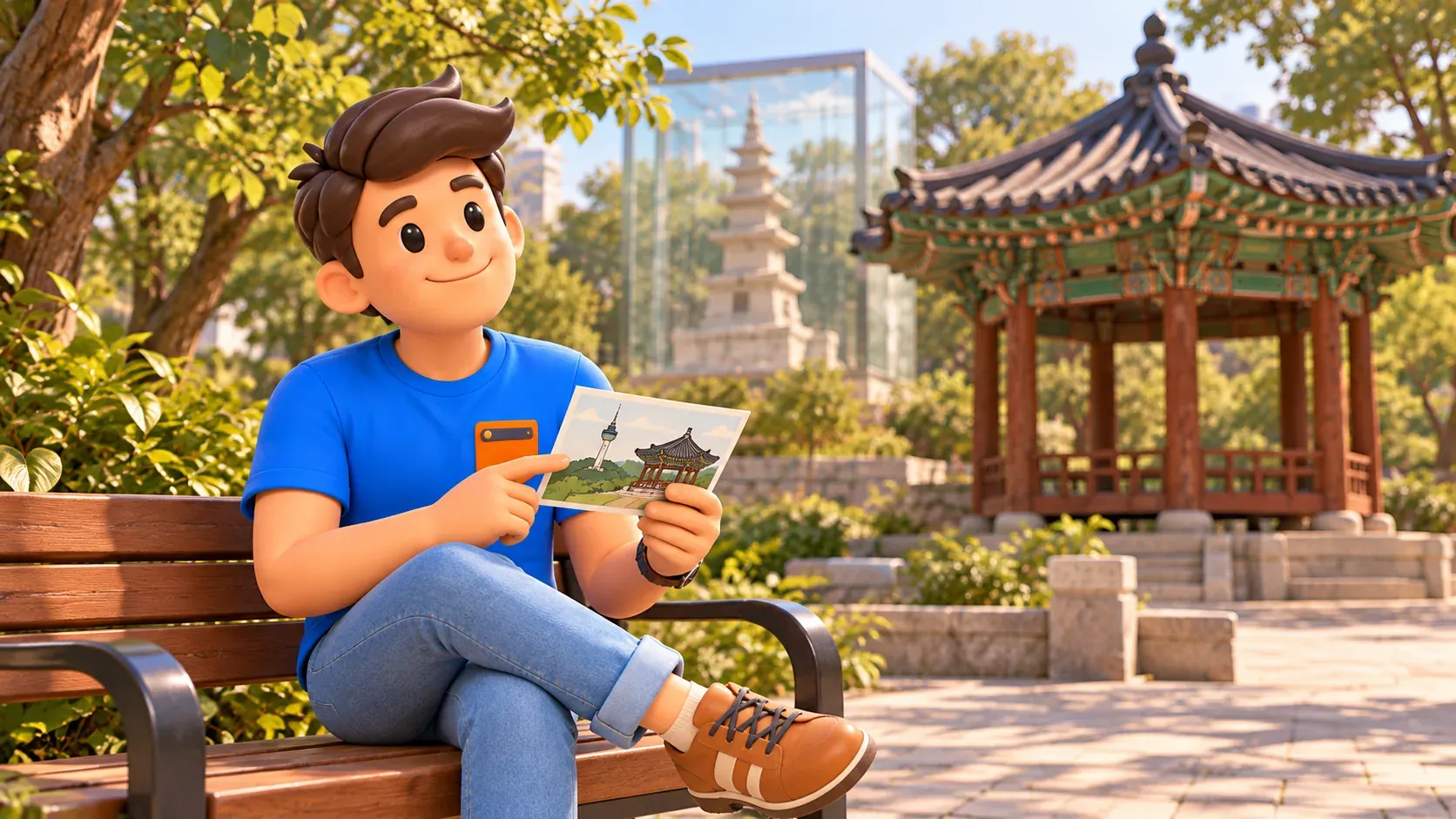
Tapgol brings together temple heritage, the development of urban public space and memory of the March First Movement in 1919. A public reading of the independence declaration and gatherings against colonial rule took place here. That context explains its memorial character without reducing the visit to a list of monuments.
The place also predates that event. Wongaksa Temple stood here, leaving significant monuments after its disappearance. Later public and memorial uses added further layers. Materials and forms help distinguish them. The park's small area can therefore contain several ways of preserving history rather than one uniformly old ensemble.
For a short visit, choose the pagoda, pavilion and one understandable memorial feature along an available path. Reading every text is unnecessary. Seeing religious heritage beside twentieth-century remembrance already gives substance to the stop. Let one clear connection matter more than the number of photographed objects.
Look closely at Wongaksa's pagoda
The ten-storey pagoda was completed in 1467. Pale marble and rich carving distinguish it from the familiar image of a plain granite tower. Stone reproduces details of timber architecture, making the small levels interesting as complex architectural images rather than simply a vertical count of floors.
Begin with the silhouette, then choose one visible detail. Do not promise unrestricted close access: protective structures and display arrangements can affect viewing. Follow current signs instead of attempting to enter a barrier for a photograph. The building's importance does not depend on touching its surface.
Compare the pagoda with later memorial structures. They preserve the past differently: an ancient temple remnant, an event location and subsequent commemoration. Notice the distinction without turning the pause into a full catalogue of Buddhist imagery. That leaves attention for the next part of the walk.
Continue east to Gwangjang
After the park, follow public streets towards the market and the particular section you want. A general map pin can place you within a large trading area without reaching food counters. An entrance convenient for fabric is not necessarily the most useful approach for the meal you intend.
Do not add another detailed palace, temple and museum on the way. The main market would become a tired last stop. A small number of subjects gives each enough room. If you expand the programme, expand its duration first and preserve a sensible eating time rather than postponing it repeatedly.
Before entering dense rows, agree on a meeting point and what the group wants. Arrange bulky belongings so they do not obstruct neighbours. This brief organisational pause is more useful than immediately taking the first empty seat without knowing what you are ordering or whether it suits everyone.
A working market with trading history
Gwangjang's history is associated with a trading company founded in 1905. Behind its food reputation are fabric, hanbok, bedding and goods for family occasions. The market continues as a system of independent sellers and customers, beyond a scene arranged for tourism. That work is part of what makes it interesting.
In textile rows, compare rolls of material and finished clothing. Colour, texture and decoration show how fabric becomes part of festive culture. Buying is not necessary to notice this. Walk attentively through an accessible row while allowing sellers and customers to complete their own business.
Covered passages connect small trading units. Notice neighbouring specialisms and where movement changes character. This organisation explains the market more effectively than listing all products or finding one supposedly essential shop. The whole remains meaningful even when individual businesses differ from those in older photographs.
Choose a meal, not a compulsory food marathon
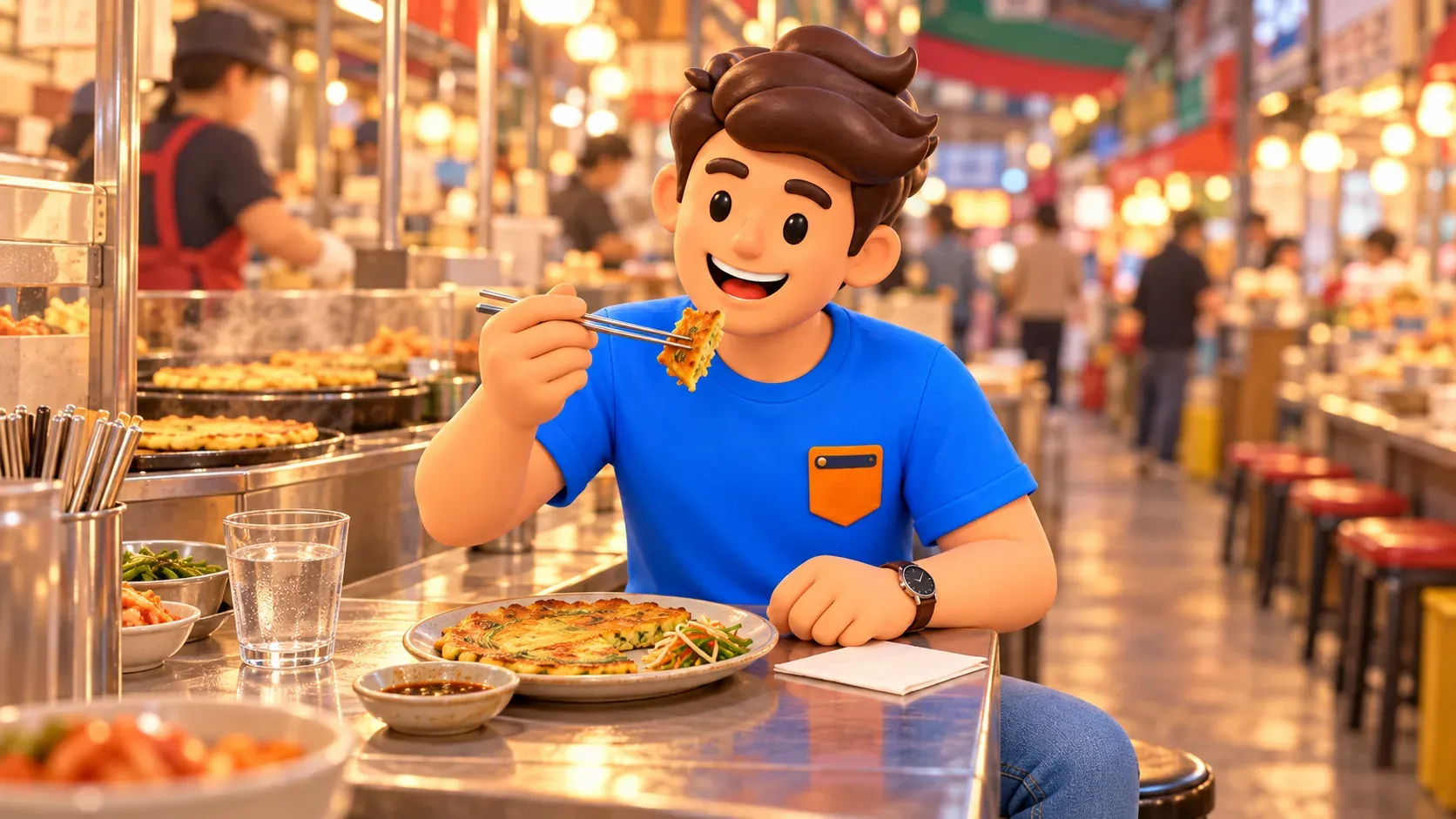
For a first encounter, one principal dish and perhaps a small addition are enough. Bindaetteok, fried mung-bean pancakes, is associated with Gwangjang. The point is not collecting food names, but sitting comfortably, understanding the portion and trying something that suits you. Appetite is more useful than an exhaustive checklist.
Before ordering, confirm price, ingredients, portion size and payment with the particular seller. Do not assume one menu arrangement or method applies throughout the market. For important dietary needs, ask about ingredients rather than drawing conclusions from appearance. Choose a stall where you can understand what is offered.
Do not occupy several seats for a photograph or stop in a narrow passage before a working cooking station. The market feeds people while selling goods. If a selected counter is overwhelmed, look for a suitable open alternative instead of waiting solely for a recognisable name. The visit belongs to your needs.
Trading rows and food street keep different hours
General shops and food counters follow different arrangements. Official tourism information lists ordinary shops as normally closed on Sundays, while the food street operates daily. Individual sellers keep their own hours. An open market does not guarantee that every particular stall is serving at the same moment.
For fabric and a meal, choose an overlap when both parts are available. Arriving on Sunday for food does not make the whole visit pointless because shops are shut. It is simply another market experience and should be planned that way, without promising the same range of activities.
Allow room to find a seat and order. Late evening is not always suitable for understanding trade, even if food remains available. A daylight base is clearer for the park-and-market route, reducing dependence on closing gates and counters. Your main purpose should determine the timing.
Choose the depth for your group
History enthusiasts can lengthen Tapgol while keeping the connection with Bosingak's public time. For everyday culture, give more attention to trading rows. For a gentle outing, reduce interpretive reading and keep a real eating break. Different emphases can use the same sequence without pretending to be identical visits.
With mixed interests, agree on a small shared core: pavilion, one park subject and a meal. Additional shopping is optional. That preserves a common walk without demanding the same enthusiasm for every historical detail or product. A few shared observations can be more memorable than a crowded programme.
Connecting those priorities is easier with RoadMe: the app prepares a personal plan for the whole trip around your interests and a comfortable pace. History, markets, other neighbourhoods and rest receive suitable space in an itinerary that is much more convenient on the ground.
Finish near Jongno 5-ga
Leave the market towards a practical public approach to Jongno 5-ga. Do not return to Bosingak simply to close a loop. The linear route moves through different urban subjects and ends where the main break concludes. You can leave the remaining day free rather than immediately beginning another full circuit.
For a different trading and craft character, use Insadong with a tea pause. For an architectural continuation, keep the separate Dongdaemun and DDP walk for its own block. Each complete programme needs real time.
The day's principal impression connects public rhythm with everyday life. The bell organised the capital's time, the park preserves memory and the market continues through exchange, work and food. Three clear stops reveal an old centre that remains active rather than requiring an exhaustive directory of places.


