
How Milan’s Former Factories Became Spaces for Art
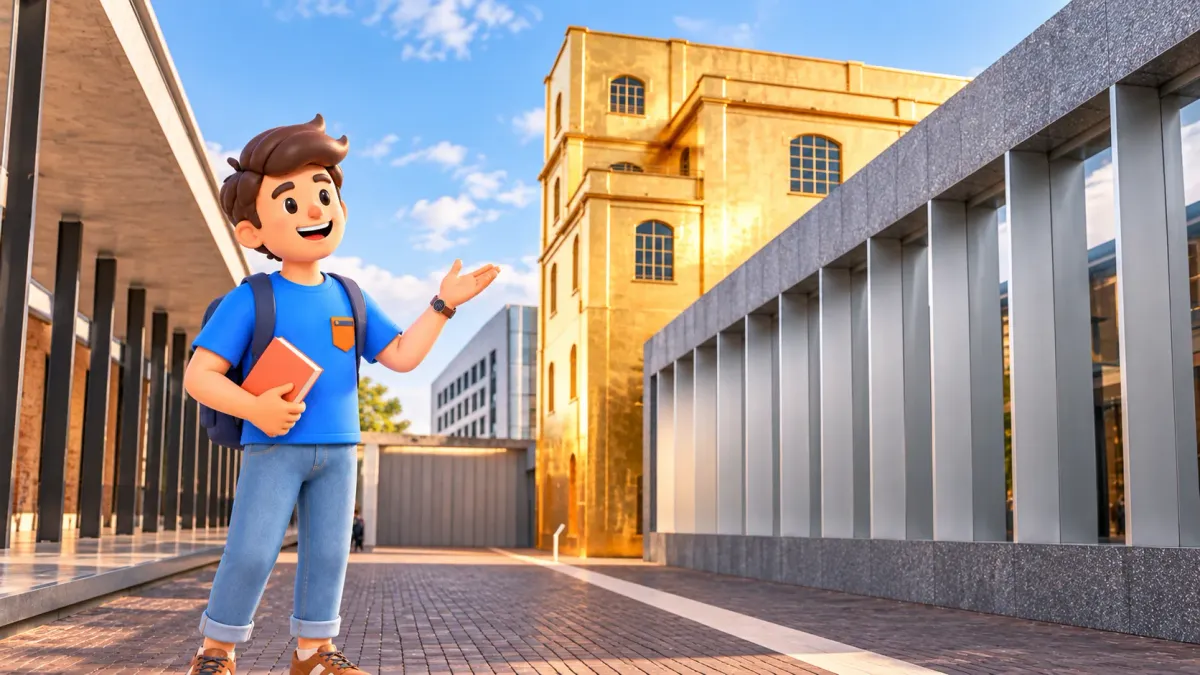
Milan’s industrial buildings became cultural places in several different ways. At Pirelli HangarBicocca, huge working halls give contemporary installations an unusual scale. Fondazione Prada combines a former distillery with deliberately new architecture. BASE Milano puts cultural production into an old Ansaldo setting, while Fabbrica del Vapore connects former tram works with a changing public programme. Choose one for a substantial visit rather than treating the four as stops on a short walk. Their shared history is a way to understand the city, not evidence that they are neighbours.
Look for what the new use makes possible
Industrial reuse becomes interesting when you ask more than whether the brickwork looks attractive. What was the space built to accommodate? What does it allow an artist, exhibition or audience to do now? A high hall, a courtyard or a sequence of different rooms can shape an encounter as strongly as a display label. You do not need architectural training to begin with those visible relationships.
Try RoadMe for a personal Milan trip plan based on your interests, dates, pace and budget. Preparing the whole stay in the app is more convenient and helps give contemporary art, neighbourhood walks and rest enough time together.
Start with one question rather than a demand to see everything. Perhaps you want to feel the scale of an industrial hall, compare old and new construction, or attend a public cultural event. Those interests lead to different choices. An architecture photograph alone cannot tell you whether the experience you want is available on your date. A good visit connects the building, the programme and the time you can actually give them.
HangarBicocca: the room changes your sense of scale
The building’s industrial history belongs to Breda. Parts of the older Shed produced components for locomotives and agricultural machinery. The large Navate were built between 1963 and 1965 for a transformer department, where powerful electrical machines were assembled and tested. These were different industrial spaces with different jobs, rather than one undivided train workshop. The Pirelli name today does not make the complex a former tyre factory.
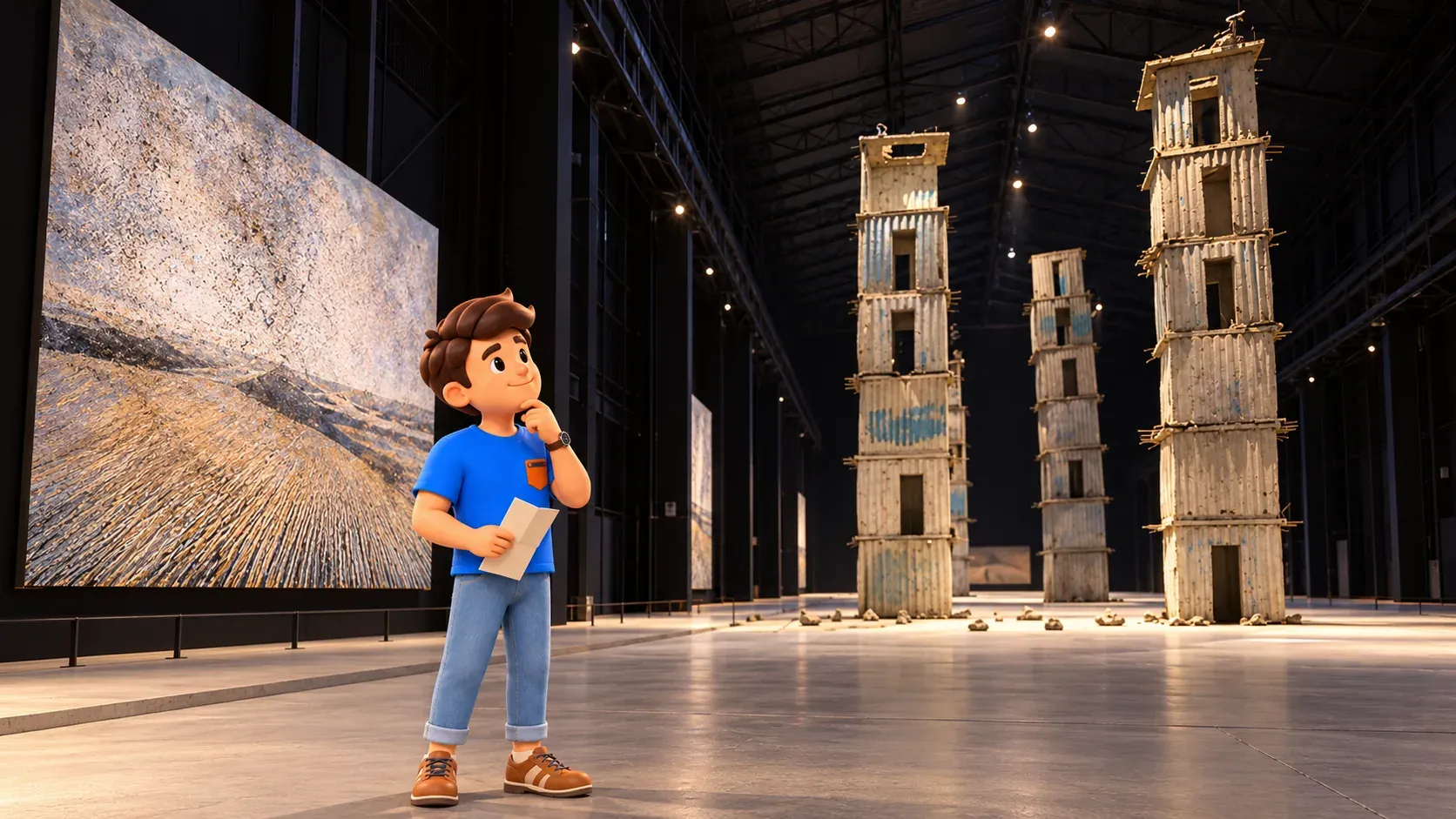
Its conversion into a contemporary art space began in 2004. The inherited volume gives installations room to establish a relationship with architecture and with the visitor’s body. Before concentrating on a single work, look at the distance to the roof and the rhythm of the structure. Then notice how much floor seems empty. What might resemble unused space can become important to seeing an artwork from different positions.
Anselm Kiefer’s permanent installation The Seven Heavenly Palaces 2004–2015 is a useful example of art that makes scale part of the experience. The towers are artworks, not surviving factory structures or buildings visitors can climb. Follow the permitted viewing area and the institution’s interpretation. You can appreciate the contrast of installation and hall without inventing a former industrial function for every object that looks heavy or weathered.
At the check on 17 October 2026, the operator announced that Kiefer’s installation would be inaccessible on Saturday 24 October. That notice concerns the installation, not a stated closure of all exhibitions. More generally, choose from the programme actually available. Our Bicocca half-day develops a longer district outing; this article uses the building to explain a broader Milanese story rather than repeating that route.
Fondazione Prada: preservation meets new construction
At the main Milan venue on Largo Isarco, OMA, led by Rem Koolhaas, transformed a distillery dating from the 1910s. The design combines seven existing buildings with three new structures: Podium, Cinema and Torre. That distinction matters. The complex is not simply an old factory tidied up and filled with pictures. Different kinds of space are deliberately placed in conversation, so contrast is part of the visit rather than an interruption to it.
In the courtyard, compare a low building with a taller volume, then consider how the next entrance changes your sense of enclosure. Notice material, light and proportion before trying to decide which part is your favourite. A contemporary addition does not need to imitate an older building to make you look at it more closely. Equally, an old surface does not explain the whole history of the people who worked there.
Choose a small number of art projects to connect with that architectural observation. The institution describes preservation and new architecture as distinct conditions interacting. You can test that idea through your own attention: does moving between rooms change the way you approach a work? Leave time to look again after reading its information. A courtyard photograph and a thoughtful gallery visit offer different kinds of satisfaction, and neither needs to replace the other.
Use the main venue at Largo Isarco 2 for this industrial-history theme. Osservatorio in the Galleria Vittorio Emanuele II is a separate Milan address with its own programme. The cinema also has its own tickets and schedule. A familiar foundation name does not turn all its buildings, screenings and exhibition spaces into one interchangeable visit. Decide on the actual experience before you choose an arrival time.
BASE: culture is still being made
BASE opened in 2016 in the former Ansaldo industrial setting in Tortona. Its identity is a hybrid cultural centre, bringing together contemporary culture, art, design and experimentation. This offers a different reuse story from a museum collection. The new purpose is not only to display things that have already been made, but also to support projects, discussion and encounters. The building is part of an ongoing cultural workplace.
Look at the public agenda before travelling. An exhibition, talk, performance or workshop gives a reason to come at a particular time, with its own participation conditions. A public bistro pause offers another kind of encounter. Neither guarantees access to artists’ workspaces, residences or every adjoining hall. Respect the difference between a welcoming cultural address and a building whose every door is open to casual exploration.
The visitor address is Via Bergognone 34. Choose BASE when a real item in its programme interests you, or when an available public-space pause fits a Tortona visit. Do not expect a permanent Design Week installation on an ordinary day. Our Tortona half-day explains how to combine the district with a principal museum; here the important point is how production and social activity continue in an industrial setting.
Fabbrica del Vapore: read the calendar as well as the façade
The former Carminati & Toselli tram works now house a municipal cultural centre managed by Milan’s Culture Directorate. At Via Giulio Cesare Procaccini 4, Fabbrica del Vapore connects industrial heritage with youth creativity, entertainment and social activity. The programme includes free and paid events. Its name is a reminder of production, but it is not a promise of steam machinery operating for visitors or a conventional transport museum inside.
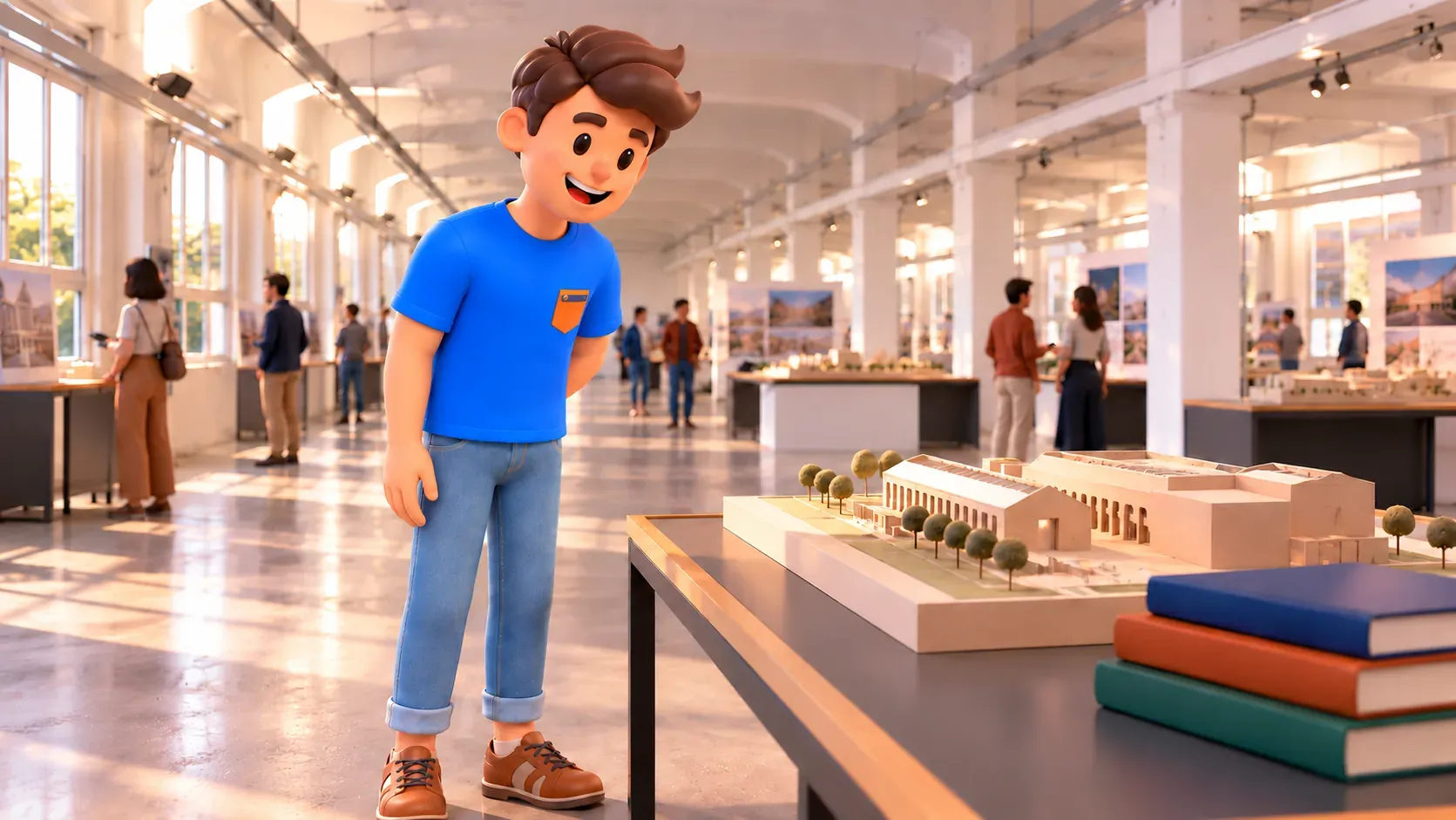
The municipality asks visitors to consult the events calendar for the opening hours of each individual space. Take that distinction seriously when choosing what to do. A photograph of a large hall says little about which exhibition occupies it today, when access begins or whether a separate ticket is needed. Start with an announced event that interests you, then make the building’s history part of that encounter.
This is also a useful reminder that industrial reuse is not one architectural formula. Some places support substantial exhibition visits; others invite you to a particular performance, meeting or temporary project. A working cultural venue can have pauses between programmes. Its value does not disappear because an old photograph shows a more spectacular installation. Visit the present activity rather than expecting every past exhibition to remain permanently in place.
Choose the part of Milan that fits your interest
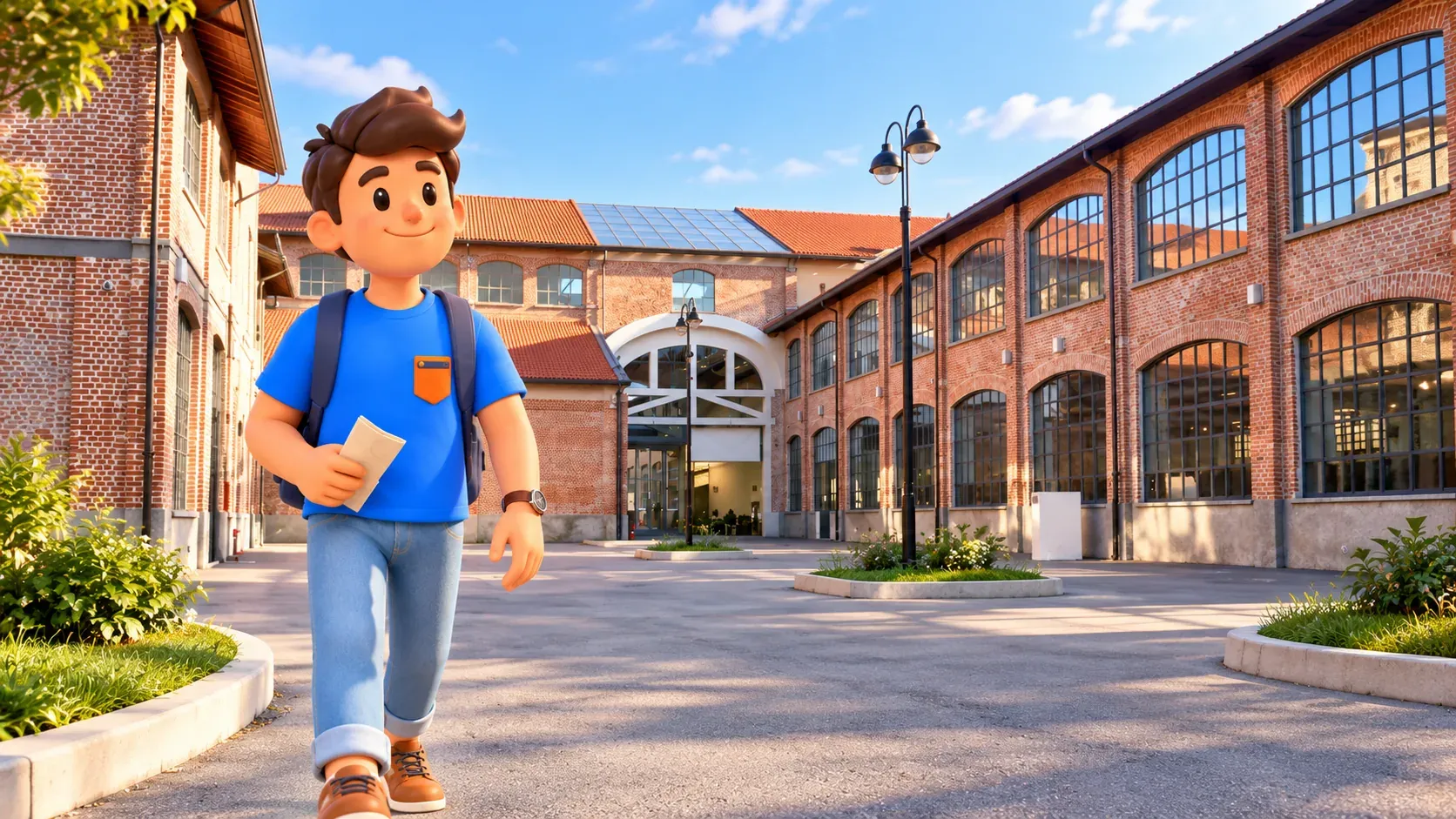
These four addresses sit in different parts of the city. HangarBicocca is to the north, Fondazione Prada’s main venue to the south, BASE in Tortona to the southwest and Fabbrica del Vapore to the northwest of the historic centre. Plan one substantial choice for a half-day. Crossing between all four requires real transport and attention; a shared industrial theme does not make that journey a compact neighbourhood walk.
For an architectural comparison with selected art, one possible three-hour version starts and finishes at Fondazione Prada’s main entrance at Largo Isarco 2. Allow 15 minutes for entry and orientation, 100 for selected art projects, 25 for courtyard observation, 20 for a short pause and 20 for flexibility. That totals 180 minutes. A 10:00–13:00 outline is illustrative on an ordinary opening day, subject to your actual ticket and current access.
Expect roughly 0.4–0.8 kilometre outdoors as you move through the courtyard areas, with walking inside additional. These are planning estimates, not a measured navigation route. Arrival and onward travel are extra. A film, a restaurant meal or an exhaustive visit to every project needs more time. If a room has limited capacity, use the available programme or arrange another visit rather than treating admission as a guarantee of every space.
Use RoadMe to turn your interest in architecture, design or contemporary art into a personal plan for the whole trip. Preparing the days together in the app is more convenient and efficient than collecting separate addresses, with time for the subjects and pace you enjoy.
Check the conditions, then leave room for looking
HangarBicocca’s regular exhibition hours are Thursday to Sunday, 10:30–20:30, last admission 19:30. Permanent installations and temporary exhibitions are free; a free online reservation is recommended and gives priority in the selected slot. On-site booking depends on availability. Fondazione Prada’s main venue normally opens 10:00–19:00 and closes Tuesday. Its art projects require admission tickets, while outdoor areas can be accessed without an exhibition ticket. Check exceptional changes separately.
BASE and Fabbrica del Vapore require programme-specific choices rather than a single museum timetable. For any gallery visit, follow the current rules on bags, photographs and distance from artworks. Keep food and drink outside exhibition rooms and use lockers where required. Do not assume that a new cultural use makes every industrial threshold, stair or adjoining workspace available. Ask about your particular route if access requirements affect the choice.
Conditions were checked on 17 October 2026. Once the practical choice is made, return to the reason for coming: how an inherited space makes a new encounter possible. Look at structure, light and the relationship between people and rooms. Milan’s industrial past then becomes more than an atmospheric background. It helps explain why one cultural visit feels monumental, another deliberately contrasting, and another shaped by the activity taking place that day.


