
Bicocca: Contemporary Art and a New Life for Industrial Milan
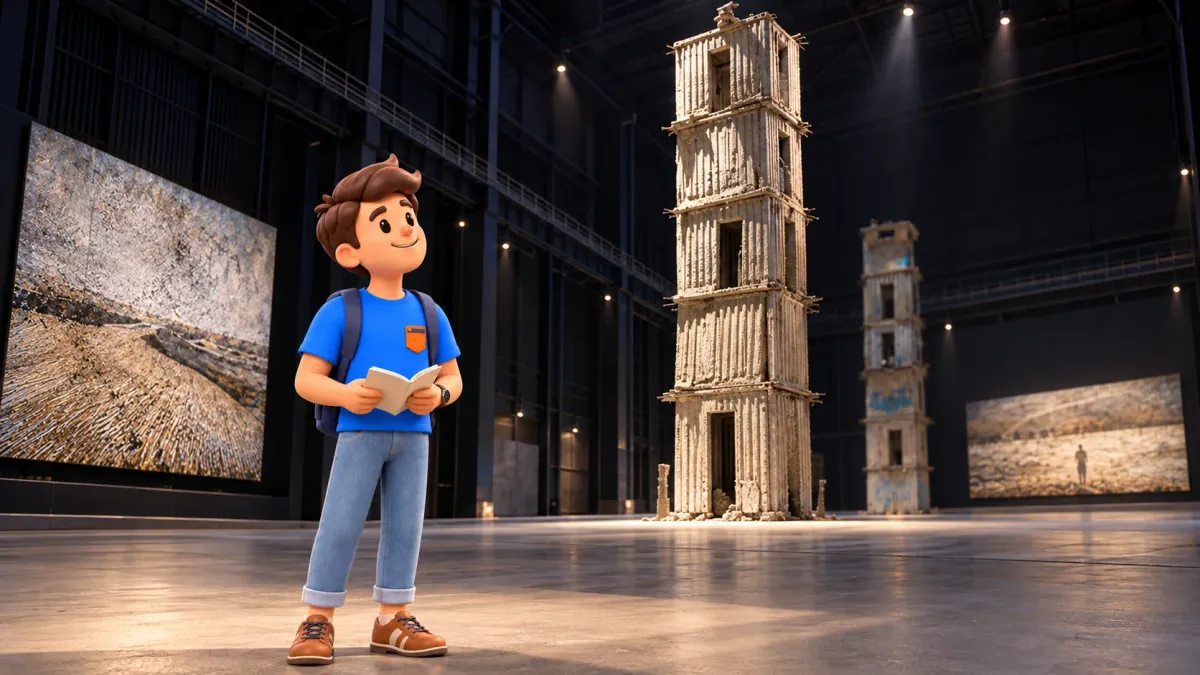
To see how industrial Milan became a place for art, study and performance, give Bicocca a half-day. Start at Pirelli HangarBicocca for Anselm Kiefer’s permanent installation and one temporary exhibition, then walk through the district towards Piazza dell’Ateneo Nuovo and the exterior of Teatro degli Arcimboldi. Allow about four hours locally, with travel added separately. The art space is the main visit; the university setting and theatre give it an urban context rather than becoming two more compulsory indoor attractions.
Build the half-day around HangarBicocca
A practical budget is 120 minutes for arrival and the chosen art visits, 30 for a break outside the galleries, 60 for the district walk and 30 of spare time. That totals four hours. An illustrative ordinary opening-day sequence starts at 10:30 and finishes around 14:30. Expect roughly 1.5–2 kilometres on the outdoor section, with gallery walking additional. These are planning estimates, not a surveyed track; travel to Via Chiese and onward transport from the theatre come on top.
If large installations, industrial history and contemporary architecture are what you enjoy, try RoadMe for a personal trip plan shaped around your dates, interests, pace and budget. Planning the whole Milan stay together makes it more convenient to give Bicocca enough time without overcrowding the days around it.
Check the actual programme before fixing a date. At the research check on 17 October 2026, the operator announced that Kiefer’s The Seven Heavenly Palaces 2004–2015 would be inaccessible on Saturday 24 October 2026. This concerns that installation, not a stated closure of the whole institution. If it is your main reason for coming, choose another suitable date. If the temporary programme interests you more, select what is actually available and rebuild the two-hour art block accordingly.
The main version works on an ordinary Thursday-to-Sunday opening day. It does not depend on a performance at the theatre or an appointment inside a corporate headquarters. For another district where former industrial spaces support cultural visits, our Tortona half-day offers a different combination. Keep the two outings separate: their shared theme does not make them adjoining neighbourhoods or a sensible single short walk.
Use the real entrance and distinguish free entry from booking
HangarBicocca’s public entrance is at Via Chiese 2, Milan. Save that address rather than assuming the M5 station named Bicocca is the doorway. The operator identifies M5 Ponale and M1 Sesto Marelli among useful approaches, with a further connection to Via Chiese. Check the current journey from your own starting point and leave time for that last stage. The district’s name covers more ground than the exhibition entrance, so a generic pin can create avoidable extra walking.
The published regular exhibition hours are Thursday to Sunday, 10:30–20:30, with last admission at 19:30; the galleries are normally closed Monday to Wednesday. Admission to both the permanent installations and temporary exhibitions is free. Free online reservation is recommended and gives priority access in the selected slot. On-site booking depends on availability and may involve waiting. It is useful to reserve, but the published condition is not an absolute requirement that every independent visitor book in advance.
Services follow separate hours. A bistrot being open on a Monday does not make the exhibitions open that day. Likewise, a late closing time does not create extra viewing time if you arrive at last admission. The proposed 10:30 start is meant to protect the art visit before the outdoor walk. If a temporary notice changes access, choose the actual available art first rather than preserving a timetable that no longer fits the institution’s programme.
Breda’s industrial spaces before the contemporary art
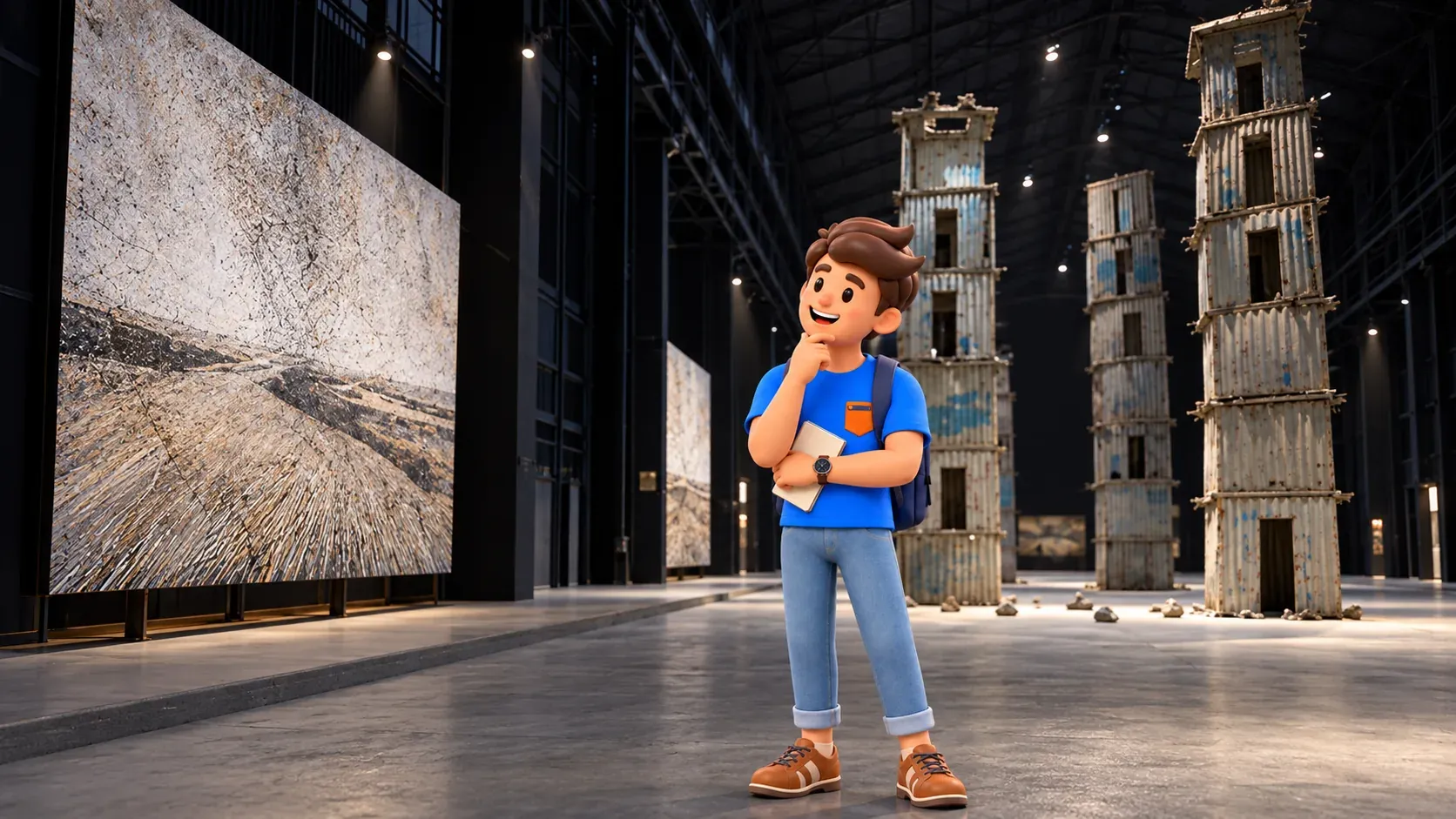
The building history belongs to Breda, whose activities helped make Bicocca an important industrial district. Components for locomotives and agricultural machinery were produced in the older Shed. The much larger Navate were built in the 1960s for the transformer department, where powerful electrical machines were assembled and tested. That distinction matters: the whole former complex should not be reduced to a single room where trains were supposedly built. Different spaces had different purposes before becoming exhibition settings.
The conversion to contemporary art began in 2004. The scale was inherited from industrial work, while the programme gave the buildings a new use. Before focusing on an artwork, take in the floor, structural rhythm and distance to the roof. The room itself helps explain why large installations are at home here. This is a useful first observation even for someone who rarely visits contemporary art exhibitions; you can begin with spatial relationships before reading a detailed interpretation.
Bicocca’s wider redevelopment also introduced university buildings, offices, homes and a theatre into the former industrial territory. The transformation was a district-scale process associated with the Bicocca project and Vittorio Gregotti’s work, rather than the result of one museum opening. Remember that wider picture for the later walk. Looking at the art space and then the university area makes the change more legible than viewing the institution as an isolated attraction detached from its surroundings.
Kiefer: give the scale time to register
The Seven Heavenly Palaces 2004–2015 combines seven reinforced-concrete towers with large paintings added to the installation in 2015. The towers use angular modules derived from shipping-container forms, with lead books and wedges among their structural elements. They are artworks, not ruins to enter or viewing towers to climb. Their apparent fragility is part of the visual experience, but it does not give visitors permission to approach, touch or move between restricted parts of the installation.
Start with a view that lets you compare a tower with the industrial hall around it. Then move along the permitted visitor route and observe how distance changes the relationship between towers, paintings and empty floor. You do not have to decode every reference immediately. A few deliberate changes of viewpoint can make the work more approachable than trying to read everything first. Keep time for a second look after consulting the exhibition material, rather than making the first photograph the end of the visit.
The title and imagery belong to Kiefer’s wider interest in architecture, books, memory and spiritual ideas. Treat the museum’s guide as a way into those layers, not an exam you need to pass. Around 45 minutes can be a useful planning allowance for one substantial installation, but your attention may call for more or less. Within the two-hour art block, leave room for orientation and select the temporary exhibition you most want to experience instead of attempting every show at the same pace.

Choose one temporary exhibition and follow its conditions
Temporary exhibitions change, including their relationship with sound, movement, light and the industrial rooms. Choose one from the current programme rather than travelling for a past installation pictured in a guide. Read its actual access notes. A performance, talk or guided activity may have a separate time or booking arrangement from general admission. The existence of a show does not promise that every element involving a live performer will happen throughout every opening hour.
The institution provides exhibition guides and visitor support to help with looking. Use a small number of questions: what changes when you move, which part of the room matters, and how does the material affect the experience? Those are optional ways to engage, not a prescribed answer. The main value of keeping to one temporary exhibition is attention. If it becomes the highlight and takes longer, shorten the later district walk before rushing out merely to preserve an arbitrary checklist.
The operator describes the public and exhibition spaces as free of architectural barriers, while individual artworks can impose specific restrictions. Check the chosen show’s conditions. A wheelchair or folding chair can be requested at the Info Point. Children under ten must be held by the hand by an accompanying adult. Keep food and drink outside exhibition areas and do not touch works unless staff explicitly permit it. These practical details help make a large, sometimes unfamiliar space easier to use.
Walk south towards the university square
After the art visit and a short break, continue through the district using public streets towards Viale Sarca and Piazza dell’Ateneo Nuovo. The university’s own neighbourhood itineraries connect HangarBicocca, the university square and the theatre as parts of an art route. Our shorter version concentrates on those anchors rather than adding every mural and historical building. Use the actual public crossings and open routes, without treating a corporate gate or university interior as a necessary shortcut.
At the square, notice how the red-brick university buildings and pedestrian space organise a different rhythm from the exhibition hall. The university’s account describes the reuse of industrial structures in this setting. Study, work and passing through now shape the area. You can understand that shift from outside; no assumption about open classrooms or libraries is needed. If you notice sculpture along the way, give it attention within the walk rather than expanding the half-day into a complete catalogue of public art.
The Pirelli Foundation is a distinct institution from HangarBicocca. It is located within the corporate headquarters at Viale Sarca 220 and normally receives the public Monday to Friday by appointment. A company name shared across the district is not a shared entrance ticket or visiting schedule. If industrial archives, the historic villa or headquarters architecture are your priority, arrange the appropriate separate visit. Do not add an unbooked Sunday headquarters tour to the current route simply because you are nearby.
Use RoadMe to prepare the rest of your days around the mix of art, industrial heritage and walking that suits you. A personal trip plan makes it easier to give each district its own time while organising the whole Milan stay more efficiently.
Finish at the Arcimboldi theatre, outside unless you have a plan
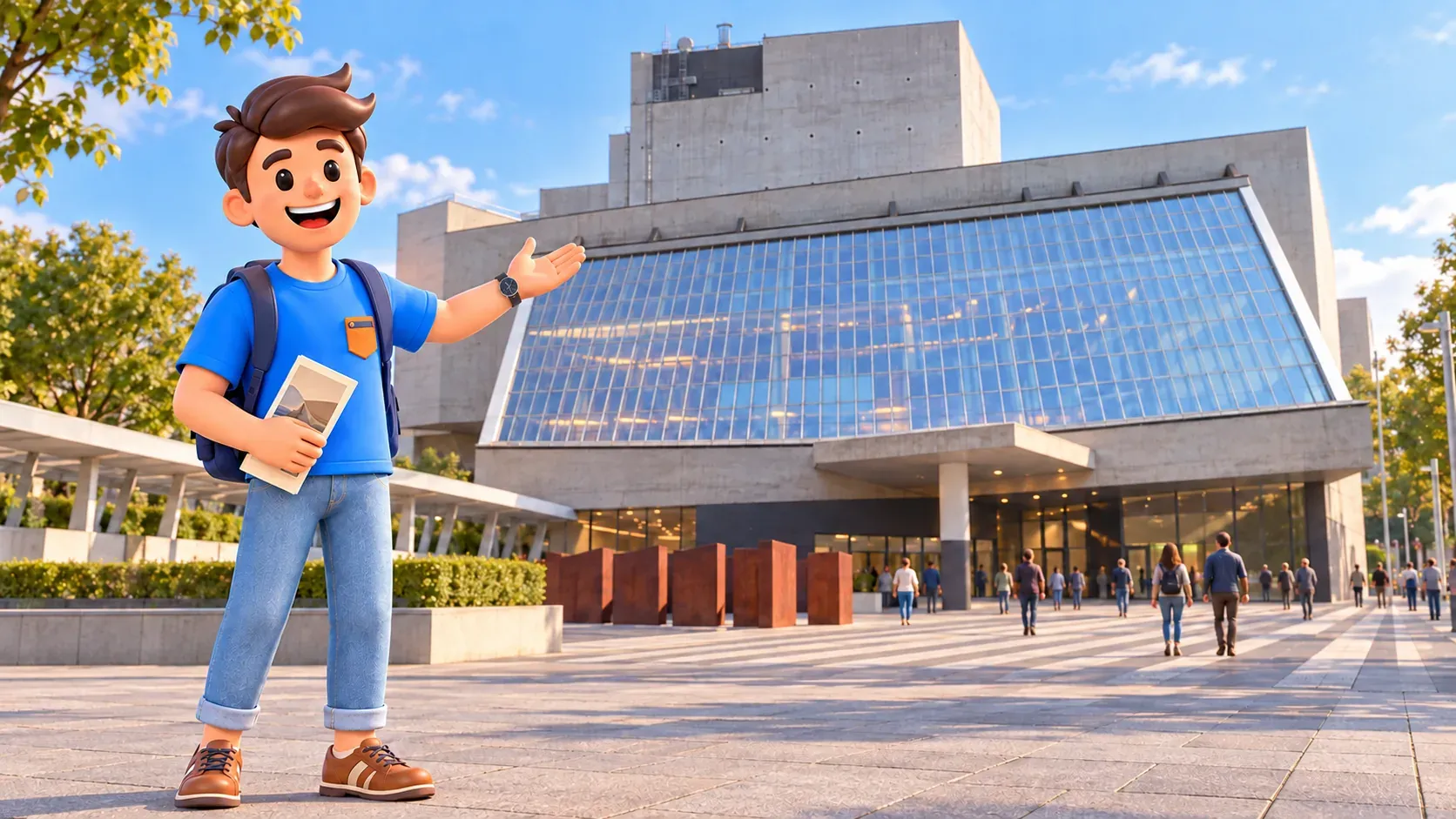
End the district section at Teatro degli Arcimboldi, Viale dell’Innovazione 20. Designed by Vittorio Gregotti and built between 1997 and 2002, it is another part of Bicocca’s cultural transformation. Look at the large geometric volumes and sloping glazed front from the public space. The exterior stop is included in the hour’s walk; an auditorium visit or performance is not. A daytime façade view should not be described as access to the stage, foyer or seating.
If a real performance interests you, check the current programme, ticket conditions and timing, and allow a separate evening or a longer day. Keep the 30-minute reserve for slower viewing or an outdoor pause, then add your onward connection. M5 Bicocca is an option from the theatre area with an additional walk, not a station inside the building. For another day of contemporary city design, the CityLife architecture walk explores a different transformation. Here, an art hall, university setting and theatre already give Bicocca a clear half-day story.


