
Milan’s Collectors’ Houses: A Four-Hour Museum Route
Give Milan’s collectors’ houses a four-hour morning built around two visits: the Museo Poldi Pezzoli at Via Manzoni 12, followed by the Museo Bagatti Valsecchi at Via Gesù 5. The short street connection leaves most of your attention for interiors, paintings and decorative objects. Choose a normal Wednesday-to-Sunday opening day, check both calendars and treat Villa Necchi Campiglio and Casa Boschi Di Stefano as alternatives for another day.
Two houses, two ways of living with art
The useful question is how a personal collection shapes a home. At Poldi Pezzoli, different historical references and varied collections create a sequence of changing atmospheres. At Bagatti Valsecchi, two brothers pursued a particularly coherent vision of a Renaissance-inspired residence. You do not need to recognise every painter or furniture type to compare those approaches. Start by noticing what each room asks you to look at first.
Try RoadMe to develop a personal trip plan around your interests, dates, pace and budget. Organising the whole stay in the app is more convenient and efficient when you want substantial museum visits to fit naturally with neighbourhood walks, meals and rest.
Allow ninety minutes in each museum for entry, orientation and a selection, not an exhaustive inventory. Plan approximately 0.5–0.8 kilometres outdoors for the connection and small viewpoint changes; this is an estimate, not a measured navigation track. Walking inside both museums is additional. The four-hour clock starts at Poldi Pezzoli and finishes near Via Gesù, with your arrival and onward journey outside the allowance.
| Example time | Plan |
|---|---|
| 10:00–11:30 | Poldi Pezzoli: entry and selected visit |
| 11:30–11:50 | All outdoor connections and crossings |
| 11:50–13:20 | Bagatti Valsecchi: entry and selected visit |
| 13:20–13:40 | Short drink or seated pause near the finish |
| 13:40–14:00 | Flexibility |
That totals 240 minutes: 90 plus 20 plus 90 plus 20 plus 20. The last twenty minutes are a reserve, not another attraction. A full lunch or an organised tour may need a longer allowance. If one collection absorbs you, reduce the other visit deliberately or keep it for another day instead of racing through its final rooms.
Poldi Pezzoli: begin with the collector’s choices
Start at Via Manzoni 12. The museum normally opens Monday and Wednesday to Sunday, 10:00–18:00, with last entry at 17:30; Tuesday is closed. Scheduled holiday closures and special arrangements still require checking for your date. This combined morning uses Wednesday to Sunday because Bagatti Valsecchi normally closes on both Monday and Tuesday.
Gian Giacomo Poldi Pezzoli formed his collection and developed his house in nineteenth-century Milan. The museum opened to the public in 1881. Painting was only part of his interest: arms, textiles, glass, porcelain, clocks and other decorative arts also matter. Thinking of the place merely as a small painting gallery would miss the relationship between collecting, craftsmanship and the domestic setting.
The rooms were conceived with references to different periods, working with decorators including Giuseppe Bertini and Luigi Scrosati. Medieval, Renaissance and later styles became material for a nineteenth-century imagination. An apparently old atmosphere does not mean that every decorative element was created in the period it evokes. That distinction will also help you understand the next house.
Begin by looking across a room before moving towards an object. Which feature establishes the atmosphere: a doorway, a decorated surface, the arrangement of pictures or the contrast between solid furniture and delicate materials? Then choose one painting and one crafted object to examine more slowly. The museum’s labels provide identification; your own comparison gives the visit a manageable thread.
You might compare the way a painted fabric is represented with the surface of an actual decorative object. Alternatively, follow a recurring shape through a frame, a vessel and a piece of furniture. These are suggestions for looking, not promises that particular works will always occupy particular positions. Check the current display if one masterpiece is your main reason for visiting.
A house museum can also tell a story of reconstruction
Poldi Pezzoli should not be presented as a perfectly untouched nineteenth-century home. Bombing in 1943 caused severe damage to the building and its decoration. Reconstruction allowed the museum to reopen in 1951, with different approaches to surviving details and lost rooms. The present experience includes the collector’s taste and later decisions about how that taste could remain understandable.
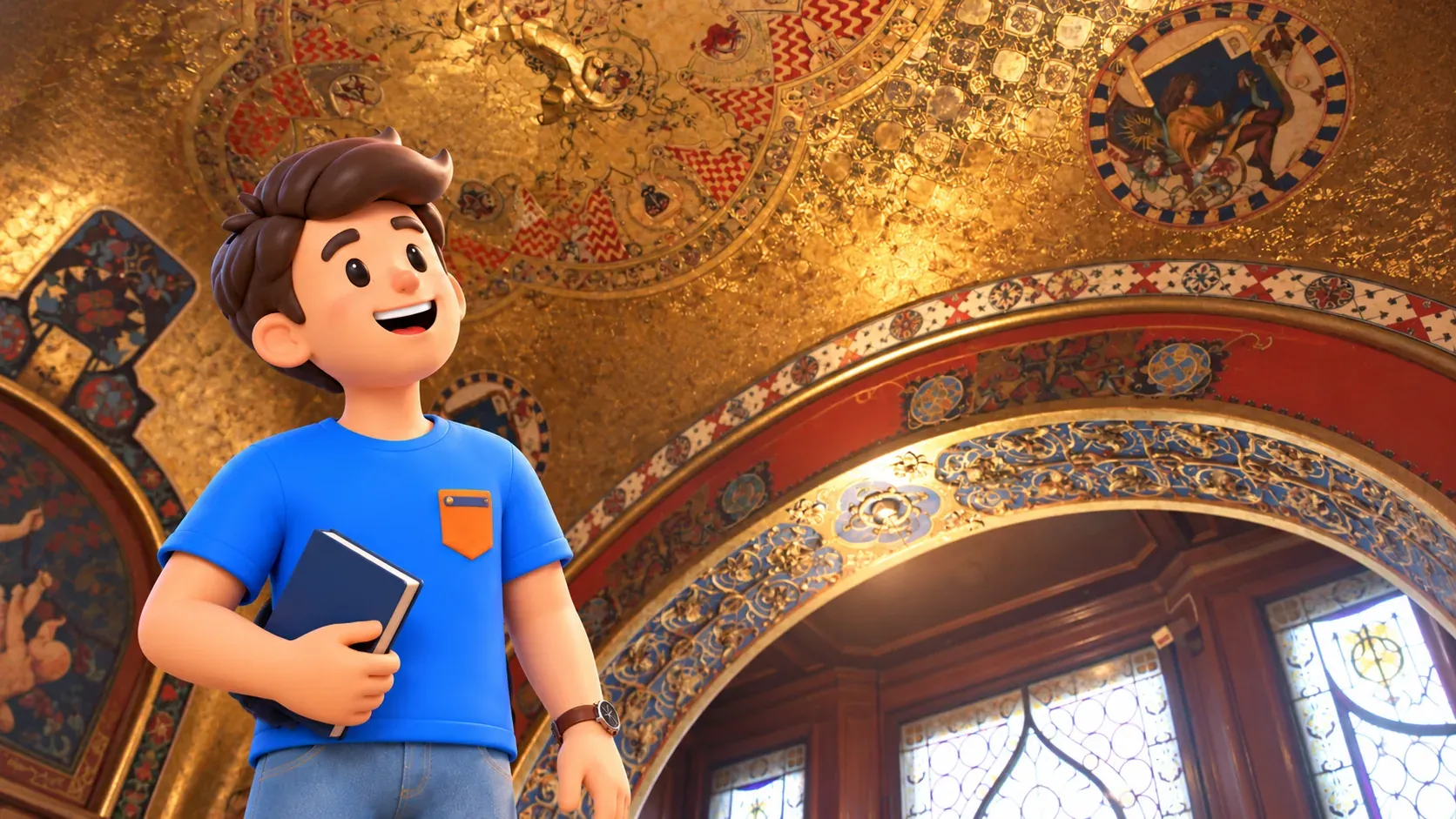
The Golden Room offers a recent example. Its recovery project brought the large marble window back into full view and restored the room’s volume, with reopening in September 2026. This does not mean that all the original decoration lost during the war has been recreated. The interest lies in seeing several historical layers together, rather than imagining a single unchanged moment.
Keep that distinction in mind when a room looks more restrained than you expected. A museum house can preserve, reconstruct, reinterpret and adapt. Those actions are part of its history. You can enjoy the atmosphere while also asking which features survived and which belong to a later arrangement, without needing to turn the morning into a detailed conservation study.
A short street connection through the fashion district
Leave Poldi Pezzoli and use the public streets via Via Manzoni and Via Montenapoleone to reach Via Gesù 5. Save the museum’s visitor address, rather than following a photograph of another side of the palace. The building also faces Via Santo Spirito; that façade is not a reason to replace the stated entrance for this itinerary.
The twenty-minute connection allowance covers the outdoor walking, crossings and small changes of viewpoint throughout the programme. It is not a claim that the two buildings are twenty minutes apart at a fixed walking speed. Follow the current street arrangements and keep shop visits separate. The purpose of the connection is a change of atmosphere between two demanding indoor experiences.
Notice how display works outside as well as inside. A shop window and a museum room both direct attention through selection and spacing, although they have different purposes. You do not need to shop to enjoy that observation. Give your eyes a brief rest from close looking, then arrive ready to consider a house whose rooms and objects were planned as a particularly unified whole.
Bagatti Valsecchi: a Renaissance imagined in the nineteenth century
The Museo Bagatti Valsecchi normally opens Wednesday to Sunday, 10:00–18:00, and closes Monday and Tuesday. The museum recommends online booking. Check its special-closure calendar and the conditions of your selected admission before fixing the morning. An old guide listing afternoon-only weekday opening should not determine your plan when the museum’s current information says otherwise.
Fausto and Giuseppe Bagatti Valsecchi reshaped their family home in the late nineteenth century, taking inspiration from Lombard Renaissance residences. They collected fifteenth- and sixteenth-century paintings, furniture and decorative objects to create a coherent domestic environment. The house is therefore a nineteenth-century collecting project inspired by an earlier age, rather than an unchanged sixteenth-century household.
There is a useful twist in that story. Behind the historical appearance were modern comforts, including heating, running water and electric lighting. The brothers wanted to live with their version of the past, not simply abandon the conveniences of their own time. The family continued to inhabit the house until 1974, and the museum opened to the public in 1994.
Look first at a room as a composition. How do the ceiling, walls, doors and furniture establish a shared visual language? Only then select a smaller object. The effect comes from the relationship between the collection and its surroundings. A beautiful item is not merely displayed against a neutral background; it helps complete the brothers’ chosen setting.
Keep a comfortable distance from furnishings and follow the museum’s visitor route. Historic chairs are not automatically visitor seating, and a table is not somewhere to put your bag or notebook. At the entrance, lockers are available for backpacks and bags; pushchairs and suitcases are not allowed through the museum rooms. Follow staff instructions rather than planning to carry travel luggage through the collection.

Tickets: a museum network is not a timetable
Both main visits ordinarily require paid admission. Compare current individual tickets with the Case Museo Card if several houses genuinely interest you. The network links Poldi Pezzoli, Bagatti Valsecchi, Villa Necchi Campiglio and Casa Boschi Di Stefano. The card is personal, valid for a year from purchase and provides one entry to each participating house under its terms.
It does not turn four houses into a sensible four-hour programme or remove the need to check reservations and exhibition conditions. Casa Boschi Di Stefano is already free to enter, so do not count it as a fourth paid ticket when comparing value. Base the decision on the visits you actually want, not on a determination to use every possible admission immediately.
Use RoadMe to turn your interest in collectors’ homes into a personal plan for the whole trip. Preparing the days in the app makes it easier to give each chosen collection enough attention while keeping space for the rest of Milan.
Two other houses for a different day
Choose Villa Necchi Campiglio at Via Mozart 14 if twentieth-century domestic architecture is your stronger interest. The 1930s villa normally opens Wednesday to Sunday, 10:00–18:00, with last entry at 17:00. Its visit and garden have their own admission arrangements. The café at a different Via Mozart number has different hours; its opening does not prove that the villa is open.
Casa Boschi Di Stefano at Via Giorgio Jan 15 offers another direction: twentieth-century Italian art collected by Antonio Boschi and Marieda Di Stefano, presented in their former apartment. The current installation is a selected museum display, not every original furnishing preserved unchanged. Entry is free; normal opening is Tuesday to Sunday, 10:00–17:30, last entry 17:00, with booking recommended but not compulsory.
Keep those as separate choices, and finish this morning with a short pause near Via Gesù. Conditions were checked on 17 October 2026; verify current calendars before booking. For another outing, the Quadrilatero del Silenzio walk explores streets around Villa Necchi, while our Brera, Ambrosiana or Novecento comparison helps choose a different kind of art visit.


