
Medieval-Looking Bruges: Why the Buildings Are Not All the Same Age
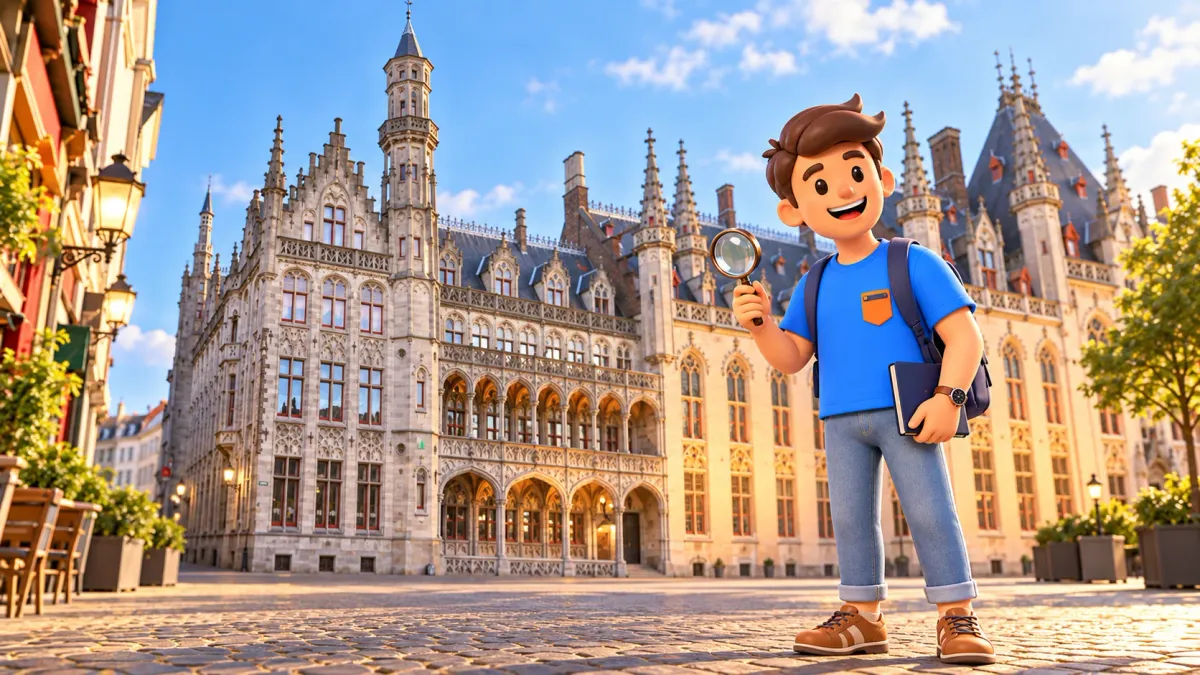
Bruges' medieval appearance does not mean every visible building survives entirely from the Middle Ages. Old structures, repeated restorations and later buildings in historical styles stand together. That need not reduce the pleasure of its streets. Understanding the layers makes a walk more interesting and prevents assigning the same age to every attractive façade in a photograph.
Begin with four examples: the Historium building on Markt, Boniface Bridge, St Anne's Church and Gruuthuse palace. They are not a compulsory short route. Choose a small central area or a separate neighbourhood and distinguish three questions: when the place originated, when the visible structure was built and how it changed afterwards.
Ask about several ages, rather than one
Instead of asking how old a house is, be more specific. When did a first structure occupy the site? How old is the present building? When did the façade or interior change? Which period does a modern display represent? Answers can differ without contradicting one another. A single number rarely describes the whole history of a building used over several centuries.
RoadMe makes it much easier to develop a personalised plan for your whole trip around your interests, available time and pace. Try planning Bruges in the app so architectural curiosity finds a suitable place alongside walks, museums and rest.
This is not a style-identification test. Notice a pointed window, stepped gable or brick pattern and let it raise curiosity. A feature does not become an exact date without information about the particular building. Similar forms continued later; an old structure could be altered, while a newer one deliberately referred to the city's past.
Avoid dating by wall colour or wear. Material, exposure, care and restoration all affect a surface. A fresh patch does not necessarily make a whole house new; dark stone does not prove antiquity. Observation produces a useful question without replacing researched history. It preserves curiosity without turning a visual impression into an unsupported claim about a building's construction.
Why the city looks so coherent
The historic centre retains old relationships between streets, squares and canals. Later changes also belong to its history: UNESCO recognises chronological layers as part of Bruges' character and authenticity. A coherent appearance does not mean one construction date.
Space makes that difference easier to grasp. A street can lead to a square according to an old urban pattern even if some façades changed much later. A recognisable skyline depends on relationships between heights, plots and lines, rather than one identical material. Preserving an urban structure is different from retaining every individual board without replacement.
Nineteenth-century interest in old architecture strongly influenced the cityscape. Neo-Gothic forms supported the historical image, while municipal policy encouraged restorations of private façades. These were not one identical event for every house. They left a layer that now has an age and history of its own.
That is no reason to be disappointed. It adds another question: how did later residents imagine their past, and what did they want to preserve? Alongside medieval history appears a history of care, taste and decisions. Looking becomes more interesting than dividing the city into things that are extremely old and things supposedly unworthy of attention.
Historium: historical forms in a later building
The Historium building on Markt dates from the early twentieth century. Architect Jules Coomans used historical forms, with the stair tower inspired by the Burghers' Lodge. Its Gothic silhouette therefore does not establish a thirteenth- or fifteenth-century construction date.
Look from the square first. The point is not to catch the building out, but to see how it participates in Markt's image. The slender tower, gables and arcades connect a later structure with familiar local forms. That architectural choice also describes the period in which it was made and its relationship with the city's traditions.
Distinguish the building's age from the time evoked by a modern historical experience inside. A story about the past does not date the walls containing it. The same distinction helps elsewhere: a museum or immersive programme can present a period much earlier than its building, and earlier still than the exhibition itself.
An exterior view is sufficient for today's subject. You do not need tickets to every part of the complex merely to consider architectural age. If a visit appeals, choose it by interest and programme. From the square, the essential point is already visible: a later building can contribute convincingly to a historic setting while remaining a later building.
Boniface Bridge: neighbours do not share one birthday
The official city guide describes Boniface Bridge as one of Bruges' youngest bridges. Yet water, brick buildings and nearby views of the Church of Our Lady and Gruuthuse palace create a powerful old-city impression. The surroundings make it easy to assign the same age to the entire scene.
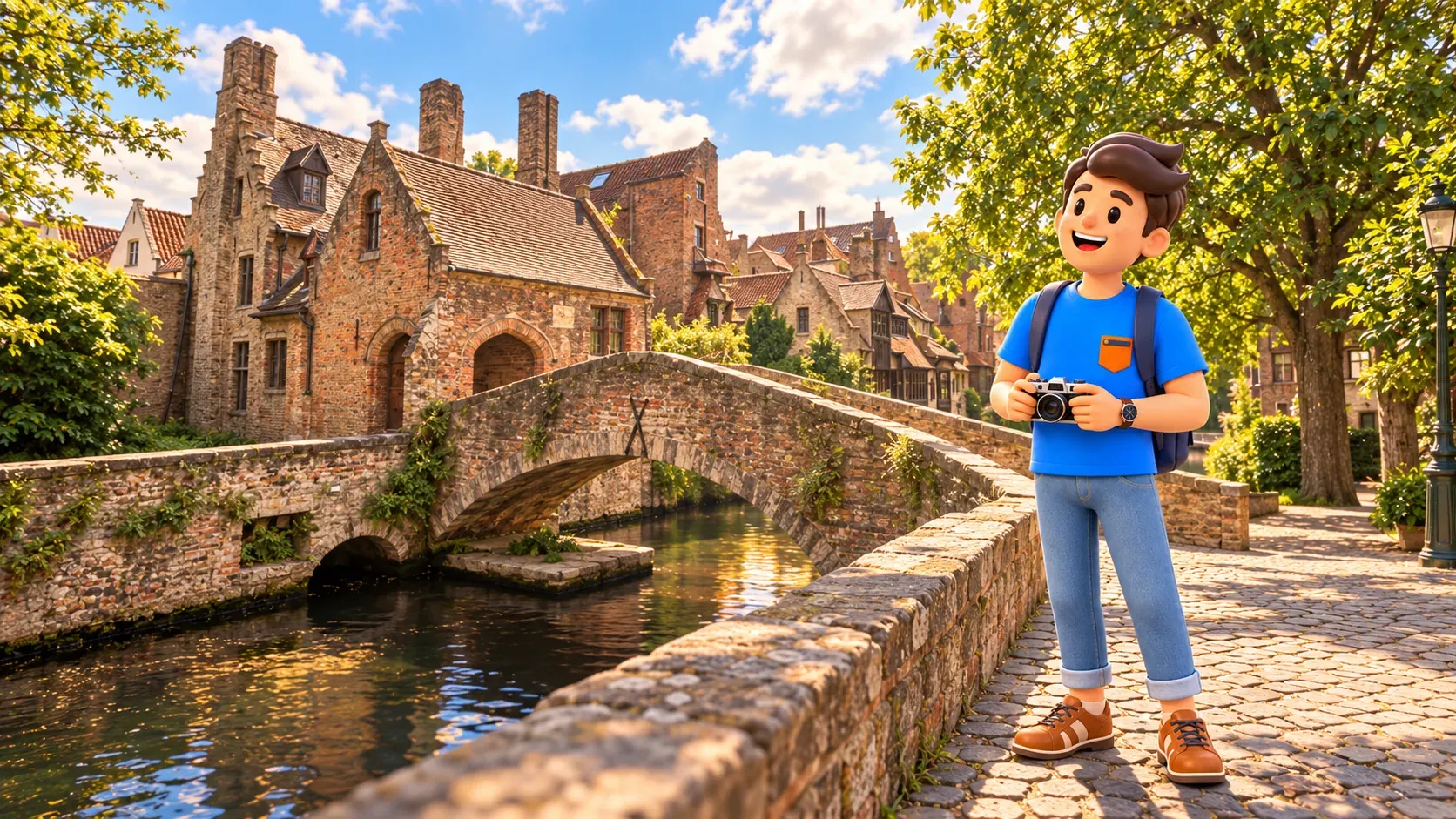
Consider the bridge separately, then return it to the wider composition. Knowing it is relatively young does not remove the pleasure of the view. It changes the explanation: this is a combination of elements with different histories, rather than an accidentally untouched fragment of one period. A photograph unifies them visually without cancelling those differences.
Do not demand an exact year for every object before enjoying it. One reliable reference point is enough here: the bridge is comparatively recent. Detailed history can follow if it particularly interests you. During a short outing, one example already encourages more care with phrases suggesting everything has survived unchanged from a single distant time.
The bridge has steps and the passage can feel tight. Do not make crossing necessary to explore this subject, or obstruct others while comparing photographs. A suitable public place beside it can work. Historical curiosity does not require occupying the centre at any cost or approaching private houses merely because they contribute to a successful picture.
St Anne's: Gothic appearance need not mean medieval
The present St Anne's Church dates from the early seventeenth century. Its Gothic brick exterior connects with a rich Baroque interior supported by wealthy parishioners. Style, date and furnishings therefore do not all describe a single period.
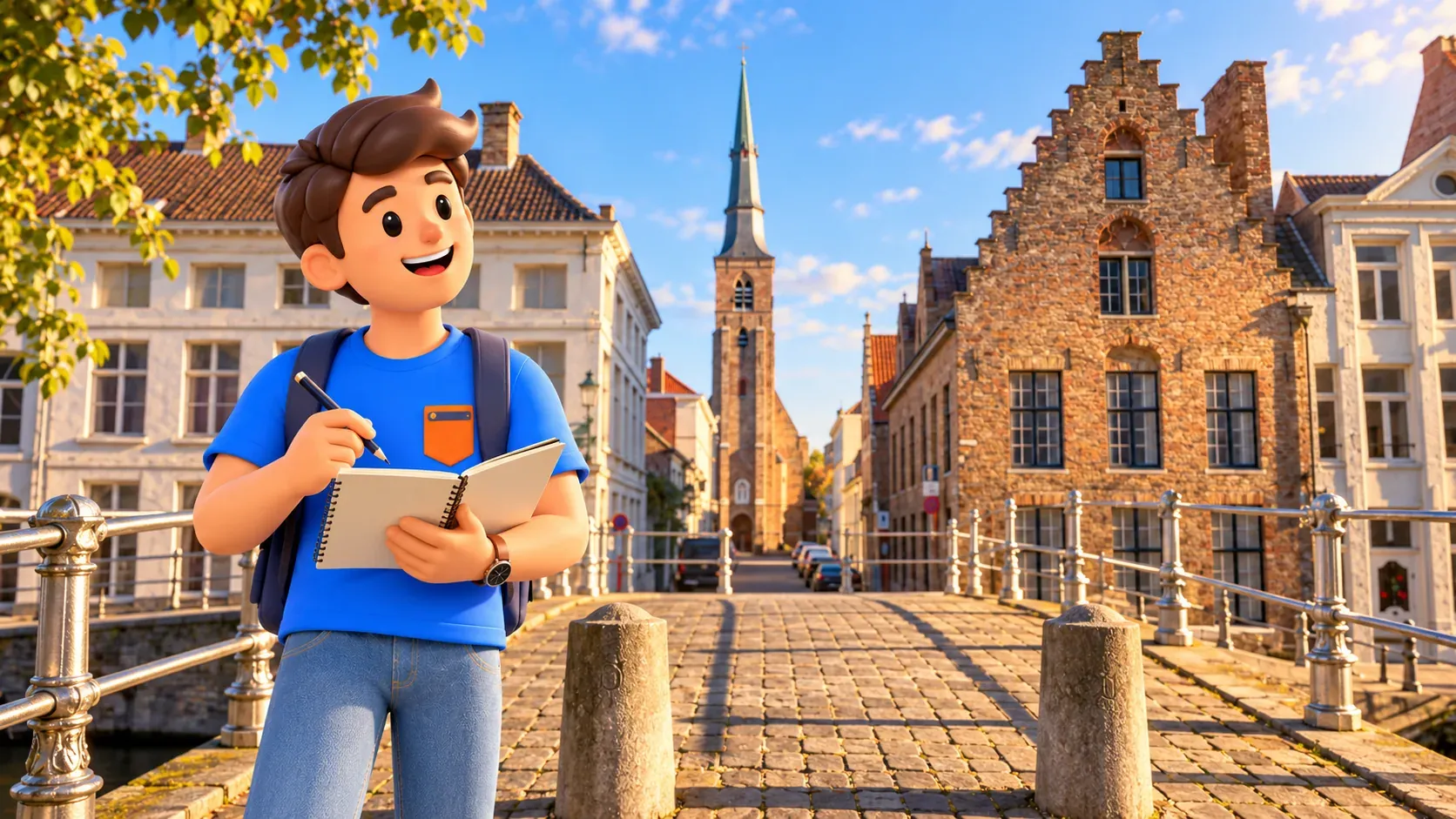
The street approach already offers a subject: the church tower organises the view among houses. It does not need to be medieval to fulfil that spatial role. Separate the impression from the date. If the view appeals, learning about the seventeenth century adds knowledge rather than reducing its value or requiring you to replace the church with an older attraction.
When visiting is possible, the interior offers another change of perspective. However, this is a working church, with services and local arrangements taking precedence over sightseeing. Do not promise yourself guaranteed entry for a comparison. An outside pause already answers this article's central purpose; the interior can wait for an appropriate time and a particular interest.
Nor should St Anne's become a rule for all Gothic buildings. Its actual history is what matters here. Elsewhere, periods combine differently. This approach teaches more precise questions and awareness of the information needed for an answer, rather than instant certainty from one stylistic feature. A successful walk can end with a better question as well as a remembered view.
Gruuthuse: an old palace also has later layers
Gruuthuse palace is closely associated with the fifteenth century, but its current museum appearance does not belong entirely to that period. Later Neo-Gothic interpretation and restorations changed the building. The campaign completed for the 2019 reopening addressed exterior and interior elements.
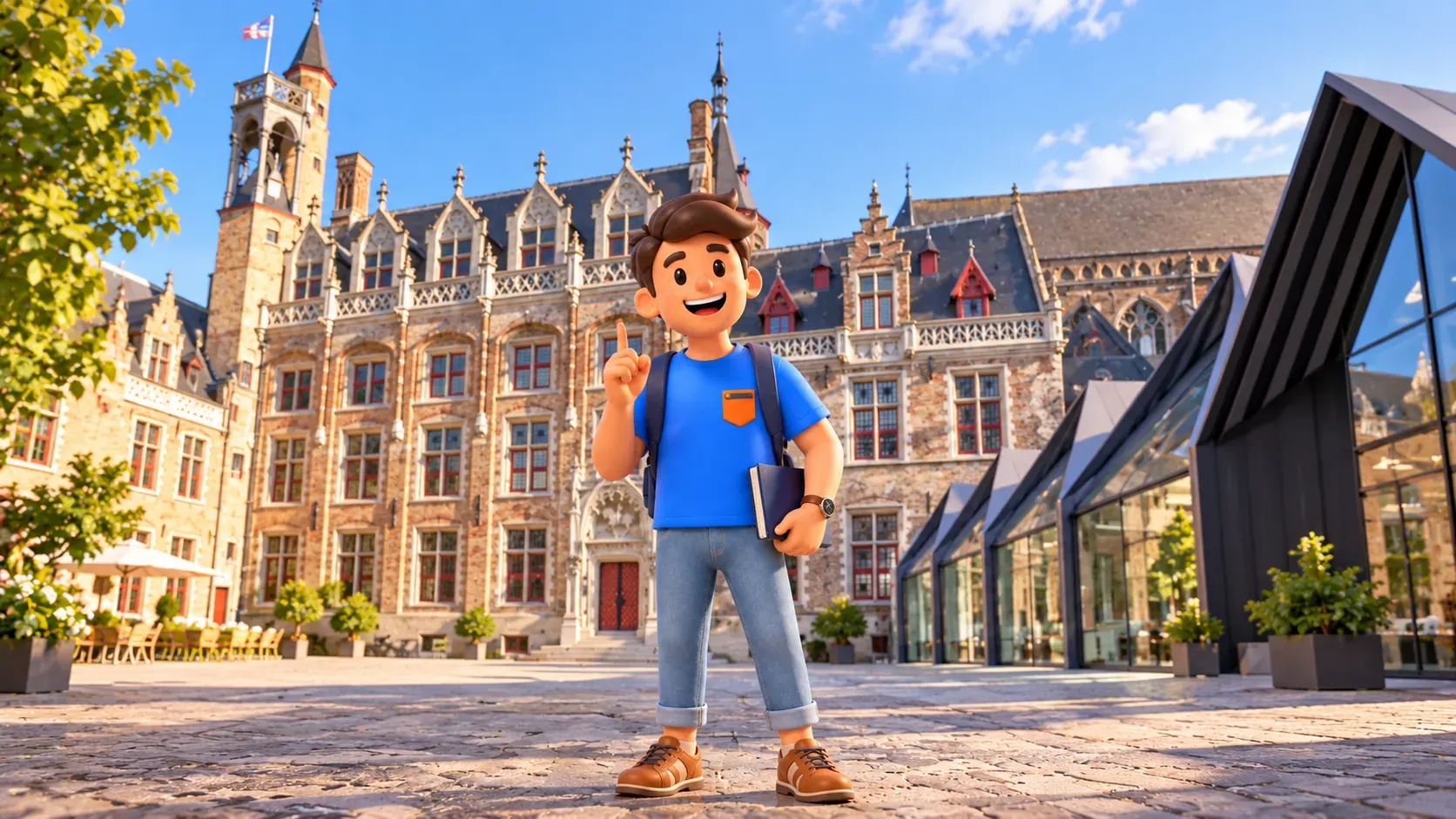
In the courtyard, palace architecture and a modern pavilion appear together. Do not seek an identical origin for each element. An old building, a restored detail and a new arrangement for receiving visitors can coexist, answering different needs. The useful question is how use continues, rather than why the ensemble failed to remain entirely unchanged.
Inside, avoid treating every colour and visible surface as untouched fifteenth-century material. Equally, later repair does not turn the whole palace into a new building. Between those extremes lies the real life of a historic structure. For this walk, the relationship matters more than a catalogue of replacement materials or a technical report on the restorers' work.
An interior visit needs its own time and calendar check: the museum's normal closing day is Wednesday. Approaching the courtyard and following the stair-based palace route also differ in access. Do not turn an enjoyable exterior view into a promise of easy passage through every room. If the interior does not fit, the courtyard comparison remains a worthwhile architectural observation.
A building and its displays have different dates
At the Folk Museum, restored seventeenth-century houses contain scenes largely concerned with later everyday life, including the nineteenth and early twentieth centuries. The age of the architectural shell does not automatically date the way of life represented. That is another layer easily missed on a hurried visit.
In any museum, ask separately about house, object and display method. A historic object may stand in a later room, while a modern case explains a very old skill. An exhibition need not conceal that difference to remain interesting. Understanding museum work helps select your focus instead of treating an entire interior as an untouched scene from one historical moment.
You do not need another compulsory admission for today's walk. The example simply extends the habit of asking beyond façades. If everyday life interests you more than construction, give it a separate visit. One subject can lead naturally to another without filling the whole day with tickets bought merely to complete a list of places.
Use the idea on a manageable walk
Choose one small subject: Historium on Markt, the museum quarter with bridge and palace, or a separate St Anne's outing. Around 60–90 minutes with pauses can suit a selected exterior introduction; this is an editorial estimate, with approach and return additional. All the mentioned places do not form one short route with guaranteed indoor access.
With RoadMe, developing a personalised itinerary for the whole trip is much more convenient, arranging architectural interests, walks and rest around your time and pace. Try the app so individual discoveries become part of a considered Bruges plan.
Keep one question for a stop: which age are we discussing, the site, building, façade, decoration or exhibition? You need not answer everything immediately. For another perspective, follow the modern-architecture walk in Bruges; for a smaller neighbourhood scale, explore the Sint-Anna quarter and its craft history. Both are independent continuations needing their own time.
Clarifying age does not take away Bruges' beauty. It reveals a city preserved, repaired, reinterpreted and used by successive generations. In the next attractive view, notice that ongoing work. A familiar medieval image becomes a starting point for curiosity, rather than a ready-made answer to every question about the buildings around you and the people who shaped them.


