
Contemporary Bruges: An Architecture Walk Beyond the Medieval Image
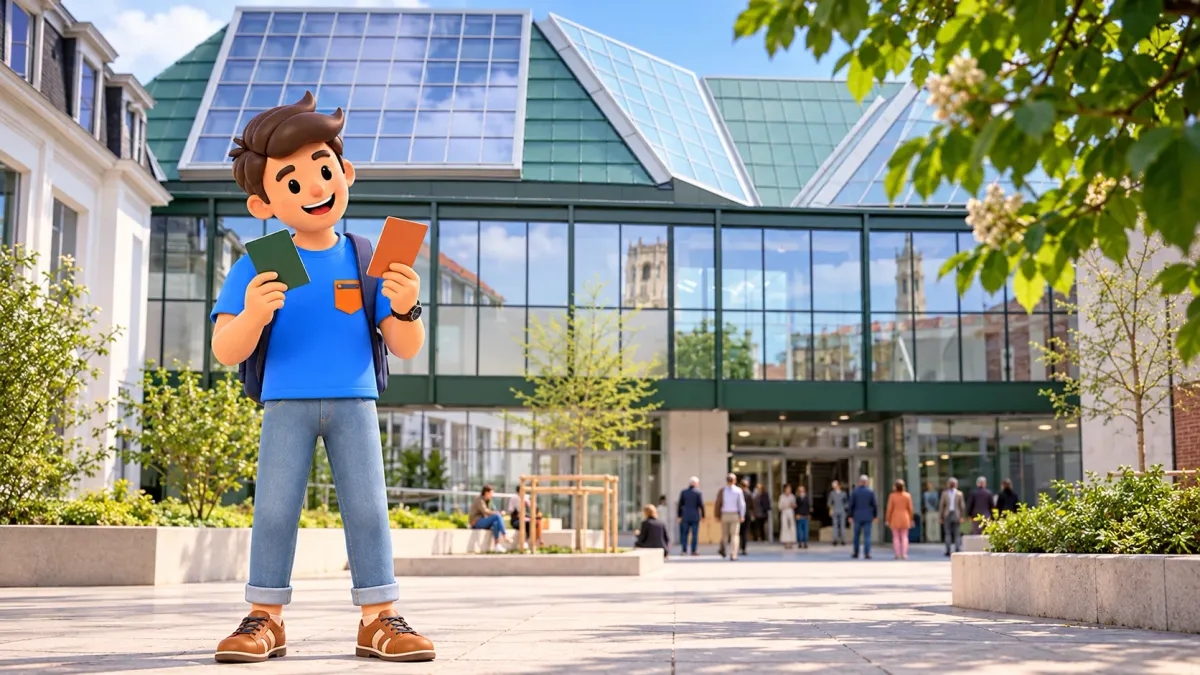
For a walk through contemporary Bruges, connect the Concertgebouw, BRUSK, the Conzett Bridge and the Barge Bridge. Start on ’t Zand and finish at Bargebrug beside the Minnewater area. Allow around two and a half to three hours for exterior stops, a short look at BRUSK’s public space when accessible and a break. Walking distance is roughly 3–3.8 kilometres, excluding your approach and return.
This is a different way of seeing the historic centre rather than an excursion to a separate district of towers. Old streets, brick facades and water connect the contemporary projects. Full exhibitions, the Concertgebouw Circuit and an evening performance are additional visits. If one becomes the main event of your day, shorten the walking programme and allow time for the visit itself.
Four contemporary responses to an old city
The route asks a simple question: how does a new building or bridge change the way people use Bruges? The Concertgebouw connects music with a large square; BRUSK combines exhibition space with public access. The Conzett Bridge makes engineering visible, while Bargebrug creates a gradual approach to the old town. You can compare them without knowing every architect or architectural movement in advance.
With RoadMe, it is much easier to turn an interest in contemporary architecture into a personalised plan for the whole trip, shaped around your interests, dates and pace. Try the app to connect new buildings with historic places, exhibitions and downtime without assembling the entire schedule yourself.
At each stop, ask what the project makes possible alongside whether you like its appearance. Where do people enter, how do they cross the water, what can they experience without an exhibition ticket? This approach brings everyday use into an architecture walk. It also shows that contemporary Bruges need not be enormous: a small pedestrian connection can change how a whole area feels.
Several stops relate to 2002, when Bruges was European Capital of Culture. BRUSK adds a 2026 chapter. The two moments share an interest in new architecture, without producing one uniform style. Red terracotta, dark green glazing, steel components and a bright red bridge respond to different tasks. Their differences give the walk its subject rather than a search for one repeated visual formula.
The Concertgebouw: a red presence on ’t Zand
Begin at Concertgebouw Brugge on ’t Zand. Look from a distance to understand the relationship between square, extended building and taller volume. The red terracotta registers immediately, but colour is only the start. Notice large planes and small rectangular windows. The facade does not reproduce the neighbouring historic houses, while its warm palette keeps a relationship with the city around it.
Designed by Paul Robbrecht and Hilde Daem, the building officially opened on 20 February 2002. Its arrival belonged to the cultural year and made a distinct statement about contemporary life in Bruges. That connection is enough for a short introduction. You do not need a technical guide to the auditorium: the exterior already raises questions about how a new cultural institution occupies space within an old city.
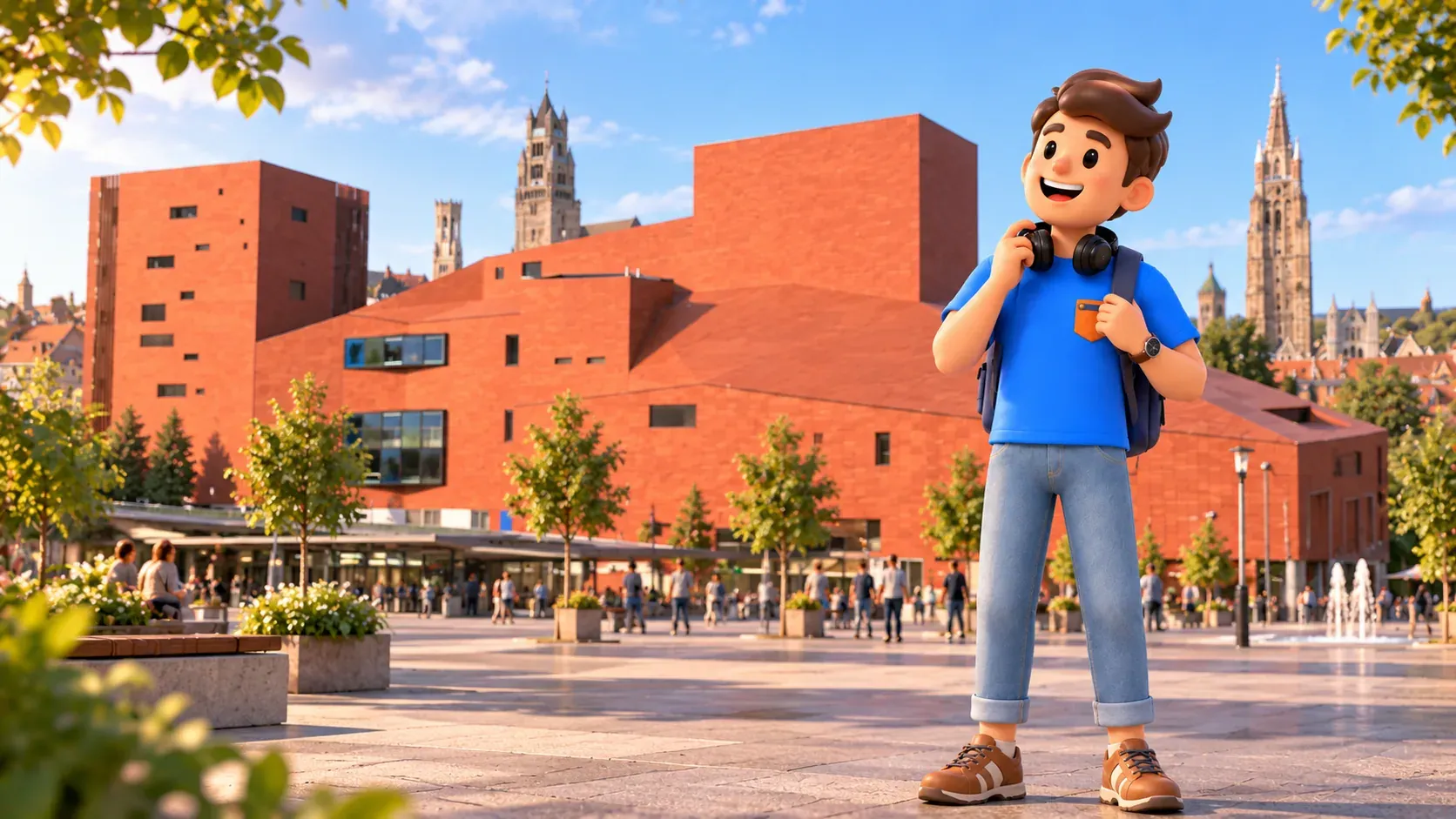
Try looking from two public viewpoints around the square. As the angle changes, one part rises while another becomes a long horizontal shape. Moving your own position helps you understand the building in three dimensions. In photographs, include some of its surroundings. The relationship with open space explains more than a tightly cropped red wall with every urban connection removed.
The Concertgebouw Circuit is a separate visitor trail involving architecture and art. Do not confuse it with a performance ticket or guaranteed free access to the auditorium. Check the calendar for the experience you want. If choosing the Circuit, extend the plan: adding it to a three-hour outing without revising the allowance makes the remaining stops unnecessarily hurried.
An evening performance can also follow naturally from interest in the building, with its own programme and admission arrangements. For today, notice that cultural architecture is intended for use as well as for looking at. Continue along Zuidzandstraat towards St Saviour’s, then by Heilige-Geeststraat and Mariastraat towards Dijver. Historic streets provide the connection between two contemporary cultural places.
BRUSK: contemporary architecture within the museum quarter
From Dijver, head towards Eekhoutstraat and the signed approach through Eekhoutpoort to BRUSK. Follow current visitor directions: the future museum park is not today’s through-route. Start by noticing the building’s relationship with its neighbours. It emerges within a city block rather than standing in an isolated monumental square. The approach is part of how you experience its scale.
BRUSK opened on 8 May 2026 and was designed by Robbrecht en Daem architecten with Olivier Salens architecten. One architectural practice connects it with the Concertgebouw, but the result is different. Dark green surfaces, glass and a distinctive roof replace the earlier building’s red mass. Comparing the two shows that working in one city does not require repeating the same solution.
Look at the green beside nearby red-brown brick. The colour relates both to canal water and to the patina of metal. You do not have to accept every architectural explanation to notice the effect yourself. Find a viewpoint that includes a contemporary surface and an older facade. Their relationship expresses the walk’s subject more clearly than an isolated picture of the new building.
Inside, the publicly accessible Scala is a light-filled central space with stairs that help reveal the building’s arrangement. Spend around 15–20 minutes there if access permits. Exhibition halls are a separate ticketed visit; public space does not imply permission to enter every room. If a particular exhibition is your priority, give it its own time and shorten the later walking section.
BRUSK normally opens Tuesday to Sunday, 10:00–18:00 from 1 April to 2 November and 09:30–17:00 from 3 November to 31 March. On Mondays, only the Scala opens, 10:00–17:00. Check your exact date and holiday exceptions. An exterior version still works, so the outing need not depend on reaching an exhibition entrance just before closing.
An open building and a future park are different things
BRUSK is already operating, while the large new museum park belongs to a later phase. Current plans place the start of park works in 2028 and its opening in 2031. Do not route your walk through a green area simply because it appears in a project illustration. Existing permitted access and the future arrangement of the district must remain separate in today’s plan.
The neighbouring Groeningemuseum is scheduled to close for renovation from 11 January 2027. Here, BRUSK matters as architecture, so there is no need for a lengthy account of the collection’s relocation. Use a separate museum itinerary if painting becomes the main subject. A contemporary building can be a complete stop without absorbing every neighbouring institution merely because it is close by.
Return to Eekhoutstraat and Garenmarkt, then continue by Gevangenisstraat and Schaarstraat towards Coupure. You are moving from places built for art towards a structure for everyday movement. Allow an ordinary walking pause on the transition. At the next stop, attention shifts from facades towards the elements that hold a pedestrian route above water.
The Conzett Bridge: engineering in plain sight
Conzettbrug crosses Coupure, connecting walking and cycling routes near the city’s green belt. Swiss engineer Jürg Conzett designed it for the cultural year of 2002. Four substantial stone supports carry two steel tubes associated with the lifting deck. Begin with the arrangement: heavy supports, horizontal members and fine vertical cables. The relationship between them is legible without specialist engineering knowledge.
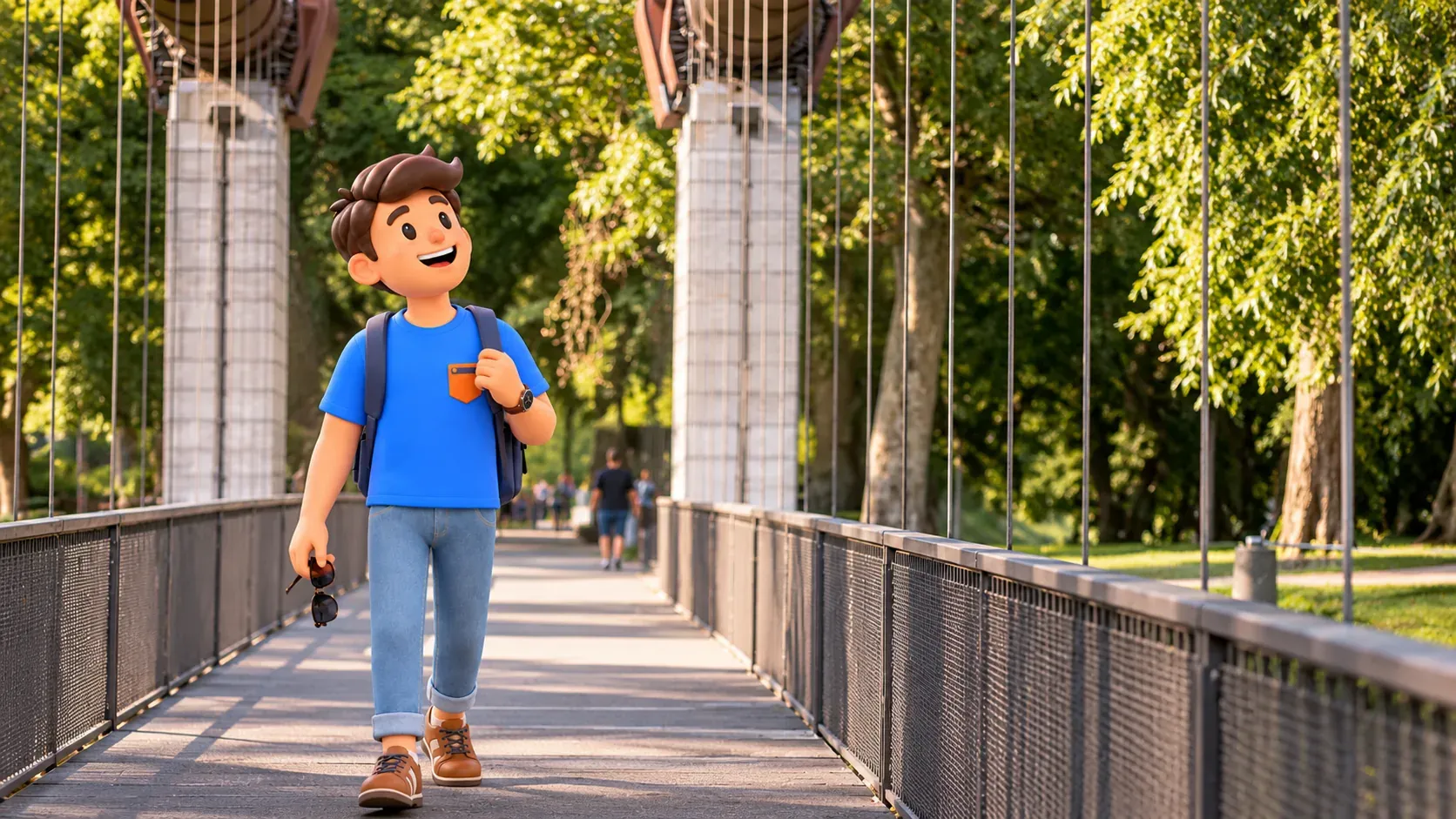
You do not need to see the mechanism moving to appreciate the structure. With the deck lowered, a relatively narrow route crosses the water without a lengthy detour. Look along the walkway and then from the bank. The bridge feels different from each position: a rhythm of fine lines when crossing, and a few larger components when viewed from outside.
If the deck is raised or access temporarily restricted, wait for permission or follow a signposted diversion. A scheduled demonstration is not part of the itinerary. Avoid crossing barriers for a photograph: navigation on the water does not organise itself around an architectural stop. A little spare time helps, but a longer restriction may change both the outing’s duration and its distance.
From Coupure to the red line of Bargebrug
Continue along available public links through Boninvest towards Gentpoort, then on the city side by Gentpoortvest and Katelijnevest towards Minnewaterpark and Bargebrug. This connects two contemporary bridges rather than completing a tour of every city gate. Works affect the Gentpoort junction in autumn 2026; follow current pedestrian markings. The route does not require crossing the outer ring road towards Assebroek.
Bargebrug stands out as a bright red curve against greenery. It belongs to the 2002 cultural programme and the idea of improving the approach from Bargeplein and Kanaaleiland for visitors arriving by coach. Look at the approaches as well as the span. The curve responds to the difference in level between the square and the city ramparts.
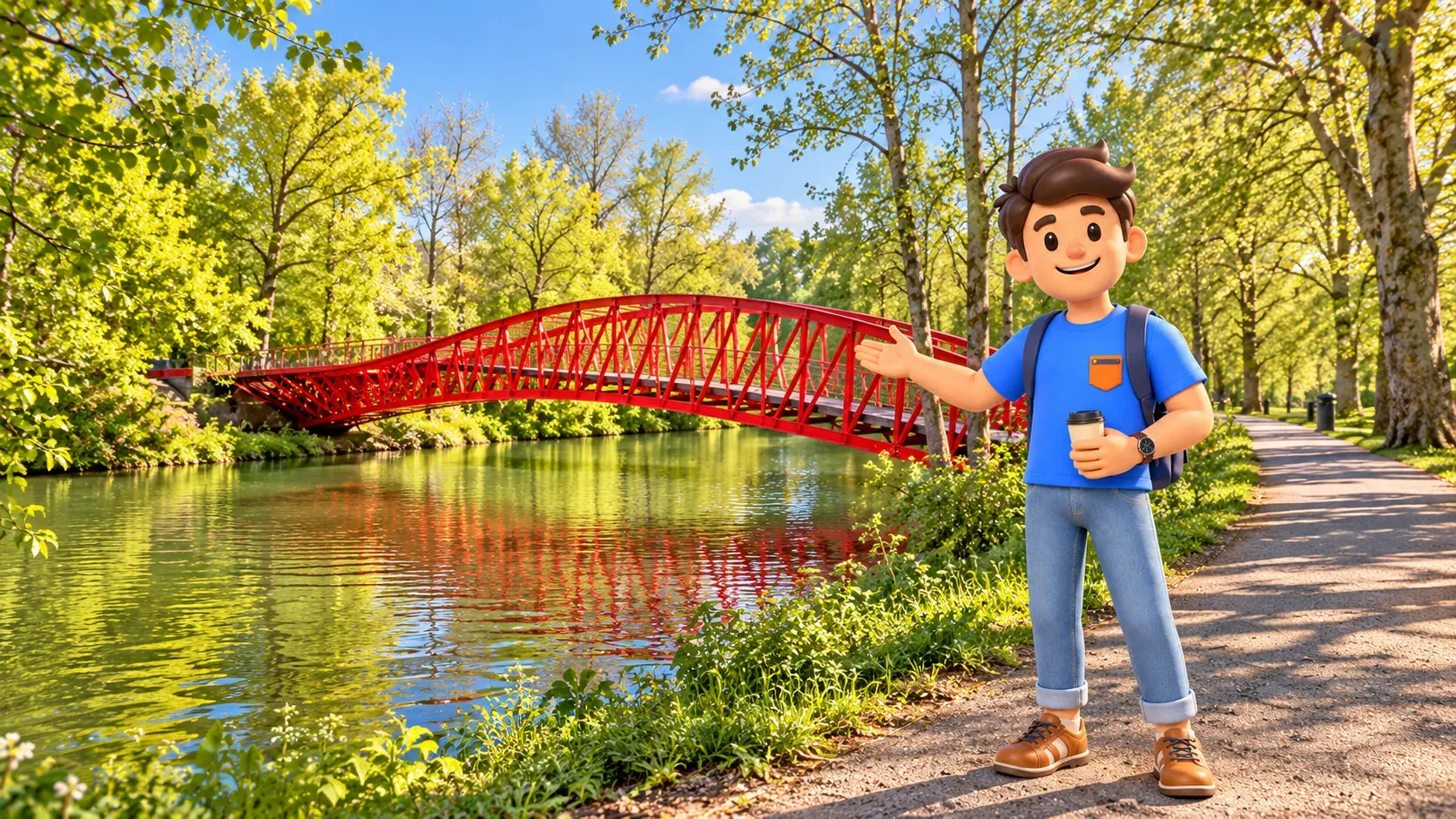
Compare it with Conzettbrug. There, the lifting structure attracts attention; here, curve, colour and the changing parapet shape the experience of movement. Both involve water but create different impressions. Cross if access permits, or finish at the city-side approach. Seeing the bridge’s relationship with path and park already gives this final stop a complete architectural subject.
Nearby Minnewater provides room to rest after the longer transition. The finish need not become a compulsory visit to the Beguinage and several more museums. Contemporary architecture has already made its own outing: a cultural square, a new public space and two different pedestrian connections. Choose what follows according to your remaining time and energy.
Choose the right version for your day
For a shorter version, keep the Concertgebouw and BRUSK, a substantial comparison between two cultural buildings. The bridges add another side of the experience: everyday movement and the green belt. If selecting a full exhibition or the Circuit, change the rest of the programme. Removing one longer transition can give the visit you most want the attention it deserves.
Try RoadMe to work out a personalised Bruges trip that distributes architecture, exhibitions and walks across your days according to your interests and pace. The app makes it easier to fit this outing into the whole stay without manually rebuilding your entire schedule around it.
Choose daylight for the exterior stops and footwear suited to paving. Contemporary buildings do not make the entire route automatically step-free: old streets, bridge approaches and possible diversions remain. A specific direct walk from Bargebrug to the station is not promised here. Works continue in the station area; follow current directions and allow for that journey separately.
For another day, consider the green ramparts and four city gates walk or the Gothic and Baroque churches route. They continue the conversation about different periods without mixing every subject into one outing. Contemporary Bruges becomes particularly interesting beside the old: the city appears as a place still making new spaces for people.


