
Bruges Sint-Anna Quarter: A Walk Through Craft and Everyday Life
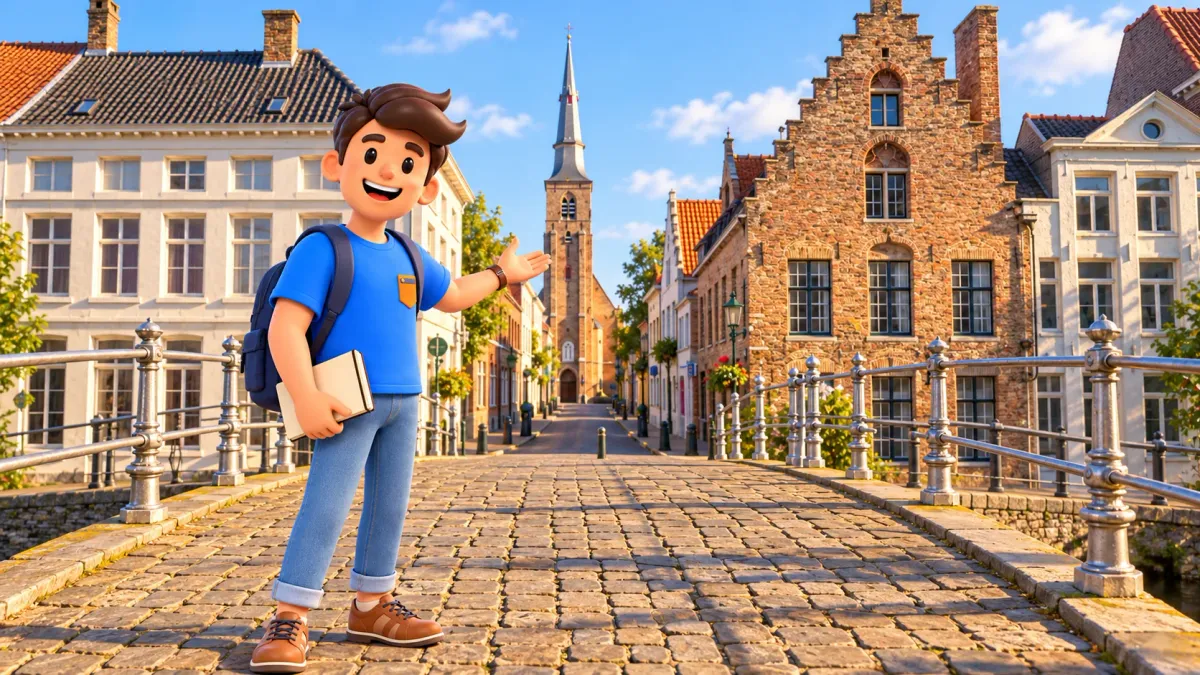
For a Bruges walk centred on craft and everyday life, explore the Sint-Anna quarter. Start at Jan van Eyckplein, follow the canal towards Sint-Annabrug, then continue to St Anne’s Church, Balstraat and Kantwerkstersplein. Allow around two to three hours with one museum: roughly 75–90 minutes outdoors, including pauses, plus 45–60 minutes for your chosen visit.
The walking element is approximately 1.2–1.8 kilometres with short local detours. These are planning estimates for an unhurried outing, rather than a measured walking track; going directly between the main places would be much quicker. Finish around Kantwerkstersplein and Peperstraat, beside the public approach to the Adornes Estate. Reaching the start and returning to the centre require extra time.
Choose Sint-Anna for a closer look at ordinary lives
This quarter suits a visit when the main squares are already familiar and you want a different scale. Attention shifts towards rooms, objects and skills. If textiles, domestic history or the way people worked interest you, there is a clear reason to spend time here. On a very short first trip, treat it as a possible addition to the centre, rather than something everyone must fit in.
Use RoadMe to develop a personal trip plan around your interests, available time and pace. Organising the whole visit in the app makes it much more convenient to give a craft neighbourhood the right place alongside the other experiences you want from Bruges.
Make one decision before setting off: the Lace Centre or the Folk Museum. They are close together, but offer different experiences. One concentrates on a particular craft; the other opens up a broader picture of daily life. Visiting both in detail turns this compact outing into a museum half-day. That can work well, provided you give it the time it deserves.
Do not expect people making lace in every window. This remains a residential neighbourhood with an ordinary present as well as a notable past. Its interest comes from the combination of homes, museums and religious buildings. Descriptions such as “secret” or “empty” are unreliable promises: visitor numbers, weather and groups can change the atmosphere on any particular day.
Follow the canal to St Anne’s Bridge
Jan van Eyckplein provides a recognisable meeting point beside the water. Continue along Spinolarei towards Verversdijk and Sint-Annabrug. This short approach lets the walk change pace naturally. You do not need a separate long tour of commercial history here; today’s theme lies in the smaller streets and museum rooms ahead.
From the bridge, look along Sint-Annakerkstraat towards the church tower. The view explains the next part of the walk without requiring a lengthy stop. Water, bridge and street form a useful composition together. A close photograph of one façade may miss that relationship, so take a moment to see the setting before reaching for individual details.
Keep the bridge passage clear when stopping. Then continue towards Sint-Annaplein, the church square. Distances are short, and looking around can take longer than moving between places. That is part of the point of this outing. If you are checking the clock constantly, reduce the number of stops instead of trying to squeeze a quick look through every open doorway.
St Anne’s Church: read beyond a medieval appearance
St Anne’s Church offers a useful reminder that a Gothic appearance does not automatically mean a medieval building. The present church dates from the early seventeenth century. Its restrained brick exterior contrasts with an elaborate Baroque interior supported by wealthy parishioners. For this walk, that difference matters more than a catalogue of everything inside.
Look at the building from the square first. Its scale among the surrounding houses makes it a worthwhile stop even without entering. This is a working Roman Catholic church, so access and services determine whether a visitor can look inside. If it is open for visiting, enter quietly and follow the notices. The main route should not rely on a guaranteed interior visit at a particular time.
A helpful question to carry onwards is how the people living around this church spent their days. It connects the square to the museums more naturally than a succession of unrelated highlights. Avoid assuming that neighbouring houses all share one date or history. In Bruges, a pleasingly old appearance is a reason to ask questions about a building, rather than an answer in itself.
The Lace Centre: choose a focused craft visit
Continue towards Jeruzalemstraat and Balstraat. Kantcentrum, the Lace Centre at Balstraat 16, occupies a former lace school of the Sisters of the Immaculate Conception. The setting connects the history of lace with the teaching and continuation of the craft. Choose it when you are curious about how a delicate pattern becomes an actual object.
The museum introduces different types of lace, their production, education and development. Rather than trying to memorise every term, look for the relationship between a pattern and the work needed to make it. You do not need specialist knowledge. A small piece can become much more interesting once you start noticing decisions, repeated movements and the time behind it.
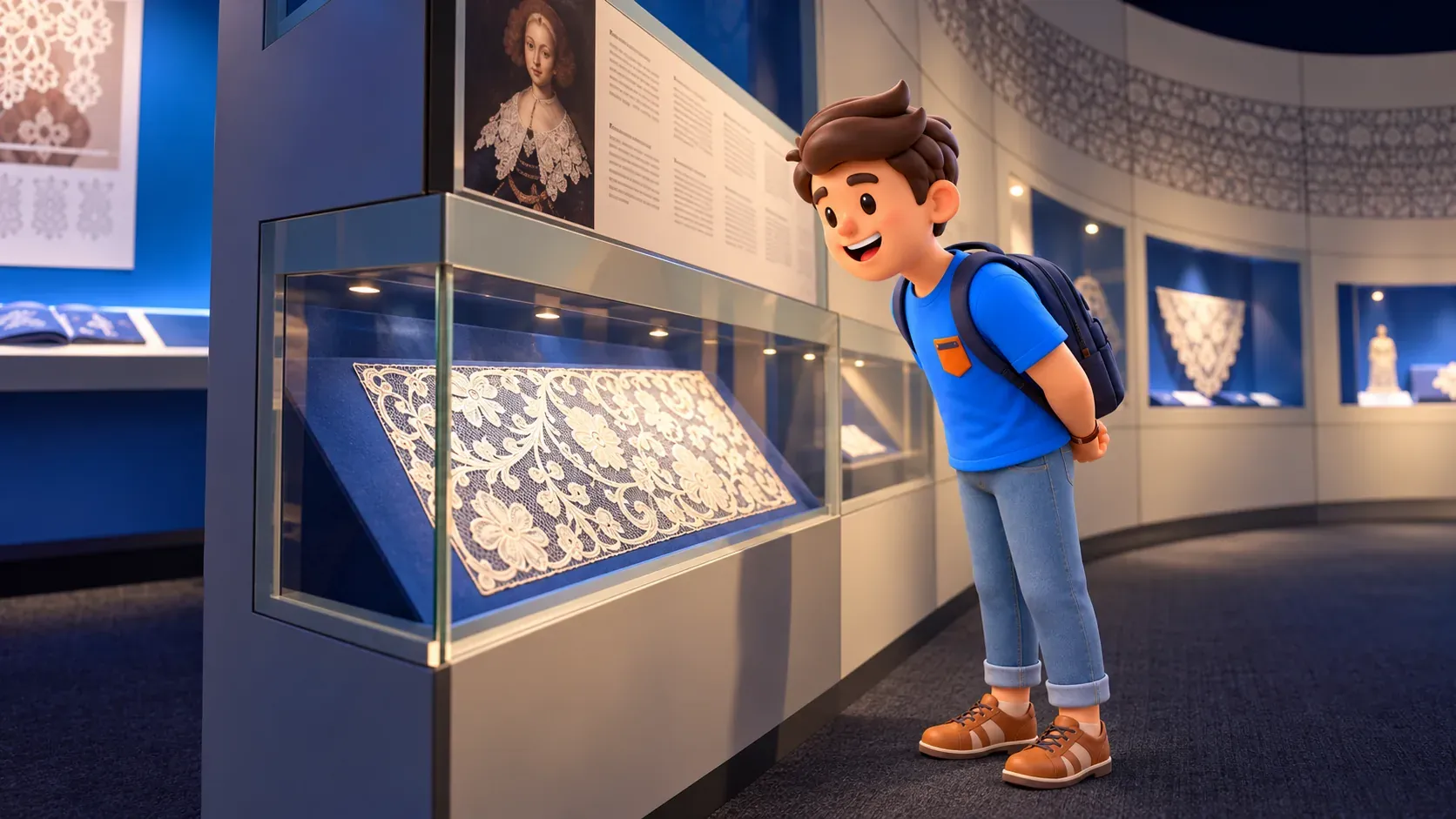
If watching lace being made is your priority, aim for the afternoon. The regular demonstration schedule is Monday to Saturday, 14:00–17:00, with public-holiday and special closure exceptions. The museum visit includes demonstrations, but a hands-on introductory workshop is a separate arranged activity. An admission ticket is not a promise that you will be taught to make lace yourself.
Check the exact date before leaving. A morning museum visit can still be worthwhile, but it is a different experience from seeing the craft demonstrated. If you also want to buy something, ask about the object and how it was made rather than assuming that every lace item in a shop window is locally handmade. The museum gives you a better starting point for that conversation.
The Folk Museum: choose rooms filled with everyday history
The Volkskundemuseum at Balstraat 43 offers the alternative. It occupies restored seventeenth-century workers’ houses, while much of its content explores life in the nineteenth and early twentieth centuries. The age of the buildings and the period represented by the displays are different. That distinction helps keep the whole city from blurring into one imagined medieval past.
A classroom, pharmacy, tailor’s workshop and shops give everyday history a recognisable shape. Select a few scenes and notice which objects seem familiar and which need an explanation. With a companion, this provides an easy conversation: each person is likely to notice something different. You do not need to see every room with equal intensity for the visit to feel worthwhile.
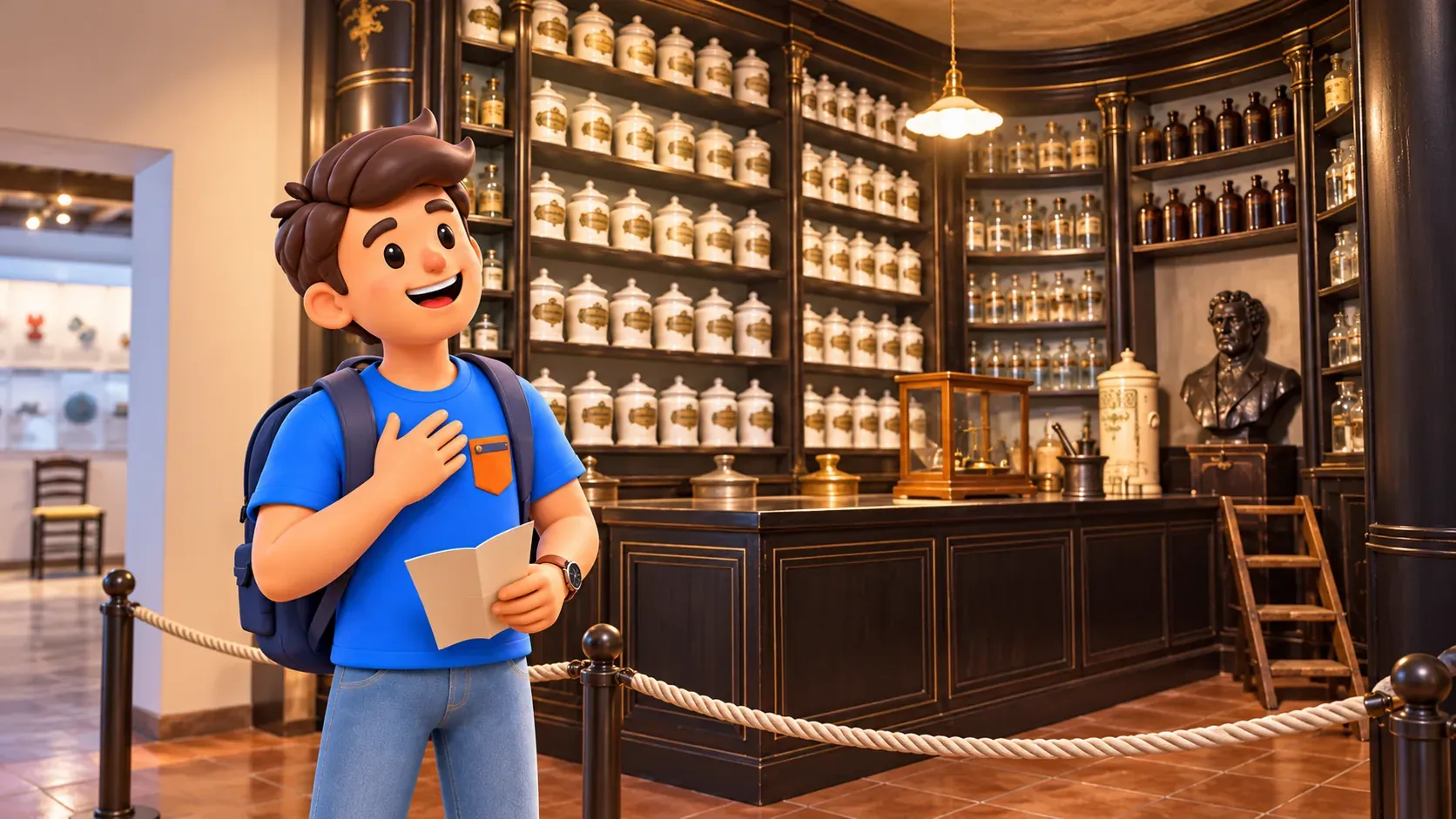
Choose this museum instead of the Lace Centre if you want a wider social picture. There are also displays about later periods, so describing the entire museum as a reconstruction of nineteenth-century life would be too narrow. Leave room for an unexpected interest rather than planning the whole visit around a single image of the old pharmacy.
Check the seasonal calendar carefully. In the summer period, 1 April–2 November, the museum normally closes on Mondays. In winter, 3 November–31 March, it closes on Mondays and Tuesdays. Public holidays bring additional exceptions. A winter Tuesday is an especially easy planning mistake: the museum being close to the rest of the walk cannot compensate for choosing a closed day.
Lace Makers’ Square and a separate family story
Kantwerkstersplein honours the lace makers associated with the neighbourhood. The nineteenth century was particularly important for its lace industry. After a museum visit, this small square has more meaning: the finished patterns connect to working lives, learning and repeated labour. It needs only a short pause, rather than another large block of sightseeing time.
Nearby, the Adornes Estate and Jerusalem Chapel introduce a different history. This private fifteenth-century estate was founded by the Genoese Adorno family; its chapel was consecrated in 1429. It is distinct from St Anne’s Church, rather than another part of the same religious complex. The unusual tower gives the streets another architectural reference point.
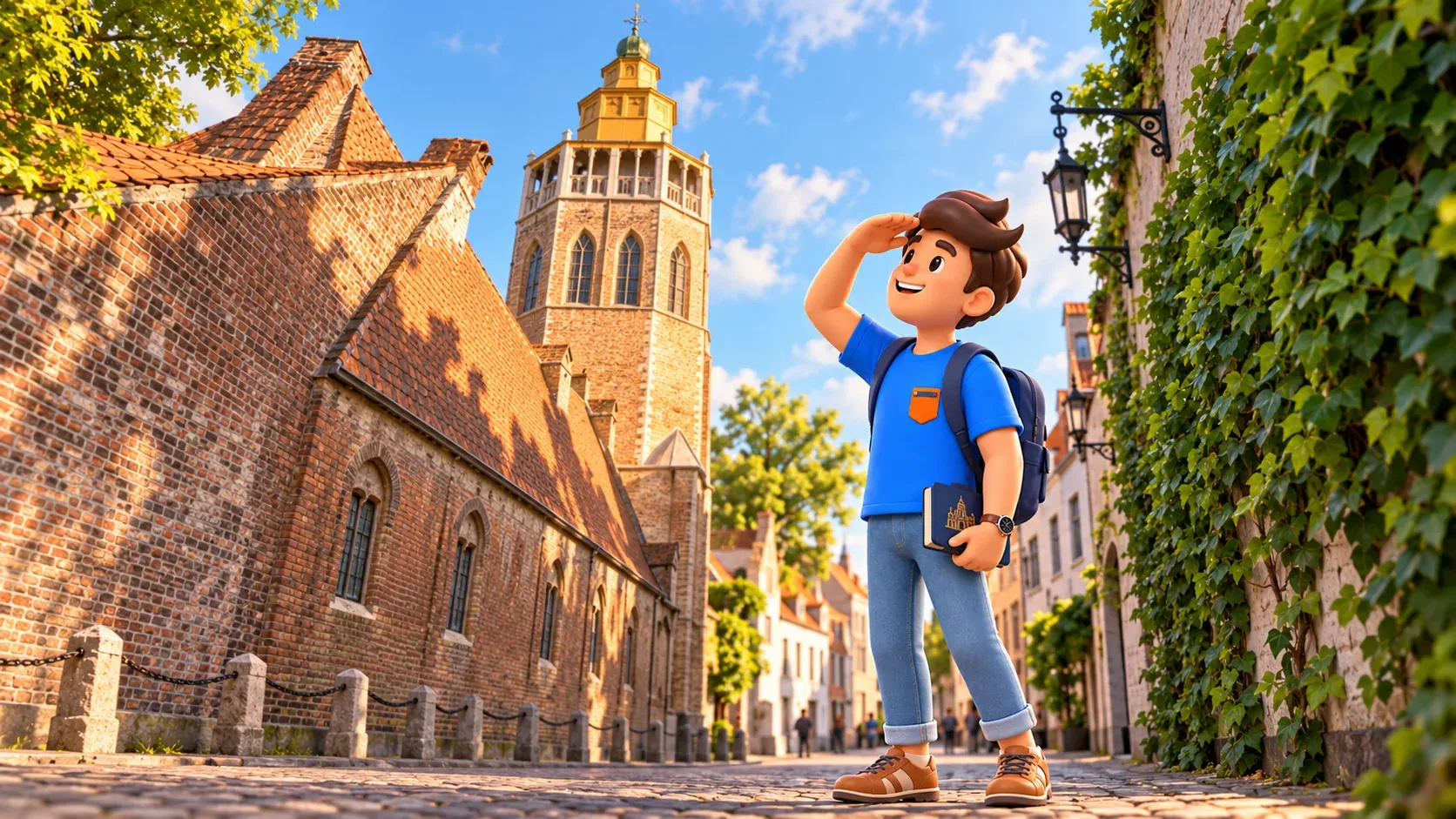
For the compact version of the outing, look from the public street near Peperstraat. A view from outside does not mean free entry to the courtyard or museum. A full Adornes visit needs its own time, ticket and check of current arrangements. Photography is prohibited inside under the estate’s current rules, and visitors leave backpacks and large items at reception.
If the family story interests you most, give it a separate visit. It is tempting to add a third interior simply because the distances are small. Geography allows that more easily than attention does. Finishing after one well-chosen museum can leave a stronger impression than ending the afternoon with several rushed visits and little sense of what connected them.
Build the outing around a real calendar
For a lace demonstration, the afternoon schedule sets the pace. For the Folk Museum, the right working day in the relevant season matters first. Kantcentrum closes on Sundays, while a winter Tuesday does not suit the Volkskundemuseum. There is no single museum timetable for the whole quarter. Check each place individually around public holidays and special closures.
Let RoadMe work your interests into a personal plan for the whole Bruges trip, with time for both walks and the visits you care about. Keeping those choices together in the app makes planning much more convenient and helps a favourite craft or small museum become part of a coherent holiday.
In rain, shorten the outdoor pauses and concentrate on the approach and your chosen museum. In good weather, give the bridge and squares more time. Cobbles, kerbs and individual entrances need attention if you use a wheelchair or travel with a pushchair. For example, the Folk Museum’s ground-floor access involves staff assistance via Rolweg 40; upper rooms are reached by stairs. Ask the venue about your own requirements in advance.
Respect residential doors and windows, and avoid blocking them for photographs. At the finish, decide whether to return to the centre or continue with a new theme. A two-day Bruges plan helps give the quarter room in a longer stay; the four-windmill walk works better as its own outing. This shorter neighbourhood visit already has a clear purpose: seeing Bruges through the people, skills and different periods that shaped daily life.


