
From tobacco factory to concert hall: Marseille’s reused buildings

A factory becomes a place where art is made. A grain silo becomes a place where people listen together. In Marseille, industrial heritage can be something you enter for a present-day experience, rather than a backdrop you photograph and leave behind. Friche la Belle de Mai and Le Silo offer two different ways to notice that change.
Their connection is a story, not a compulsory walking circuit. Choose one for the right reason: a Friche visit shaped by the spaces and exhibitions actually available, or a Silo performance you want to attend. Understanding the former use makes either encounter richer without turning your trip into an architectural examination.
Start with the building’s new purpose
The easiest question to bring is what happens here now. A preserved industrial shell matters, but a cultural building also needs people, work and reasons to return. Looking only for the old factory risks missing the place it has become. Looking only for an exhibition or an artist’s name can make its unusual setting disappear. Hold both questions together: what did this structure have to do, and what does its current life ask of it? You can explore that relationship without identifying every construction phase or memorising technical vocabulary.
These two places need different kinds of attention. Friche is a collection of working and public spaces within a former industrial site in Belle de Mai. Le Silo is a performance venue near the port in Arenc. One can invite an open-ended encounter with a cultural environment; the other may become the fixed evening around which you arrange the day. Neither has to be combined with the other to count as a worthwhile visit. Our Friche half-day guide considers that place more closely; here, the focus is why changing an old building’s purpose can change your impression of Marseille.
Let RoadMe build your complete personal Marseille trip around your interests, available days and preferred pace. The app makes it much more convenient and effective to fit architecture, exhibitions, neighbourhood walks and an evening performance into a plan that feels right for you.
At Friche, remember the factory before looking for art
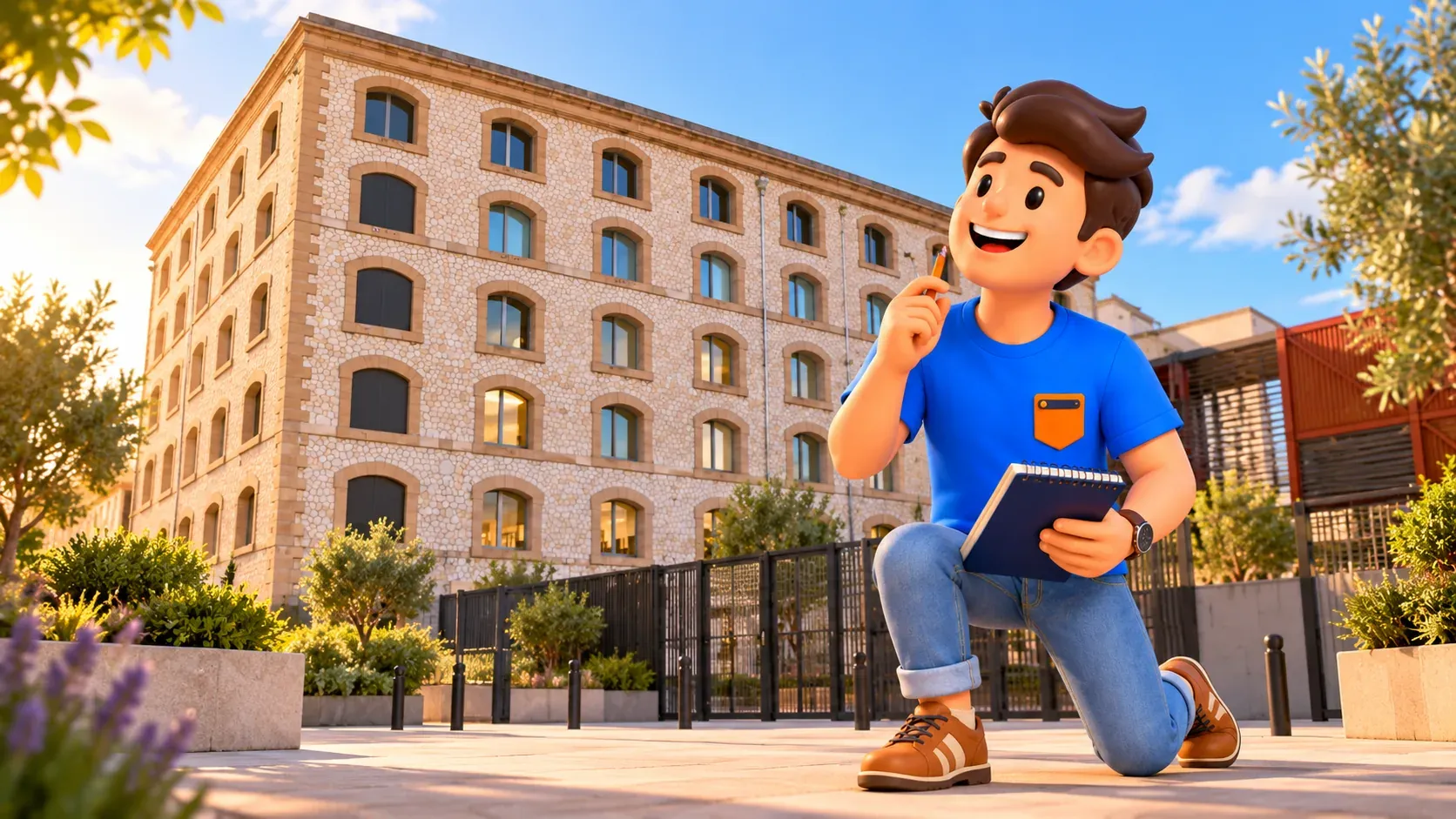
The former tobacco manufacture belongs to nineteenth-century Marseille. It closed in 1990, and the cultural project occupied this site in April 1992. That gap between production ending and a different form of activity beginning is the essential historical hinge. Tobacco is part of the site’s working history, not a souvenir theme to celebrate. The name Friche evokes disused industrial land, but the present place should not be approached as an abandoned ruin. People work here, public activities are organised here, and the old buildings have been adapted for those purposes.
From a permitted position, look at the repeated windows and the size of the industrial blocks. Their repetition is useful before you search for an exceptional decorative detail: a manufacture needed working space, not a single ceremonial front. Let the scale register. Imagine the difference between looking at one room and organising a whole place around production, without pretending you can reconstruct an exact working day from the facade. Our character illustrations take their architecture from photographs, with staged foregrounds. They introduce a way of looking, rather than establish an exact viewing spot, an entrance arrangement or the present appearance of every wall.
The interesting change is also in light and movement
Reusing a building requires more than changing a sign. At Friche, the Tour retains its industrial character while openings and floors were adapted for exhibition spaces. The white Panorama adds a visibly different contemporary form above the courtyard. These are useful contrasts to notice: repeated older windows beside a newer volume, an original building rhythm alongside a changed way of receiving the public. You do not need to decide that one period is better. The question is how the place continues to work when its occupants and activities have changed.
Try a small observation exercise in an available public area. Choose one older feature and one clearly contemporary intervention, then ask what each seems to make possible. A new opening might change a view; a circulation space might make a large complex easier to understand. Treat your interpretation as a question, not a technical diagnosis of structural work. The architects and builders had concerns that a visitor cannot establish from a glance. What you can notice is the experience: how a facade gives way to an entrance, how light draws attention, or how a large industrial scale becomes part of encountering art.
A cultural place can still be a workplace
Friche brings production and presentation together. Its resident organisations are part of its identity, and the cultural project includes more than the time a visitor spends in a gallery. That is a valuable change of perspective for a tourist. Not every interesting room exists to be entered by someone passing through. Some places are there so other people can create, rehearse, organise or carry out ordinary professional tasks. The Manufactures workspaces are closed to the public except for exceptional openings. Respecting that limit is compatible with understanding the project.
Choose the part that is actually offered to you: an open public space, an exhibition with its own admission conditions, or a programmed activity. If you enjoy the atmosphere, there is no need to search for a hidden workshop to make the visit more authentic. Equally, free access to parts of the grounds does not make every exhibition or event free. Start with the current programme and the welcome information, then let your interest set the depth. One thoughtful encounter is enough. Leave room for a pause instead of measuring the visit by the number of doors, staircases or rooms you have managed to cross.
The roof has its own conditions
Friche’s roof is a memorable part of its image, which makes it easy to build an entire expectation around it. Keep the current access distinction clear. At the check on 24 October 2026, the operator states that the roof terrace is not open to the public outside its programmed On Air evenings. The advertised 2026 season ran from 5 June to 5 September and is already past. Those summer dates are not a standing invitation for an October evening or a promise about next year’s programme.
The belvedere overlooking the terrace is a separate possibility through the exhibition route when an exhibition is open in the Panorama. Confirm that availability, rather than treating an exhibition ticket as unconditional access to the whole roof. If the elevated view is your main reason for coming, settle that point before committing the visit. Otherwise, build the experience around something available below. A photograph of a crowd on a roof describes a particular event and setting; it does not establish today’s admission. This distinction helps the architecture remain interesting even when the famous image and the visit you can actually make do not coincide.
Le Silo gives port infrastructure a different audience
The Silo d’Arenc was constructed in 1926–1927 for the Compagnie des Docks et Entrepôts de Marseille. Its purpose was handling and storing grain. Its forms belong to that practical industrial story: the building was part of the port’s movement of goods rather than a theatre designed from the beginning for an audience. Seeing that difference changes the meaning of a concert entrance. You are approaching a place where the function has changed, while the large structure still makes the earlier port city present in the surrounding streets.
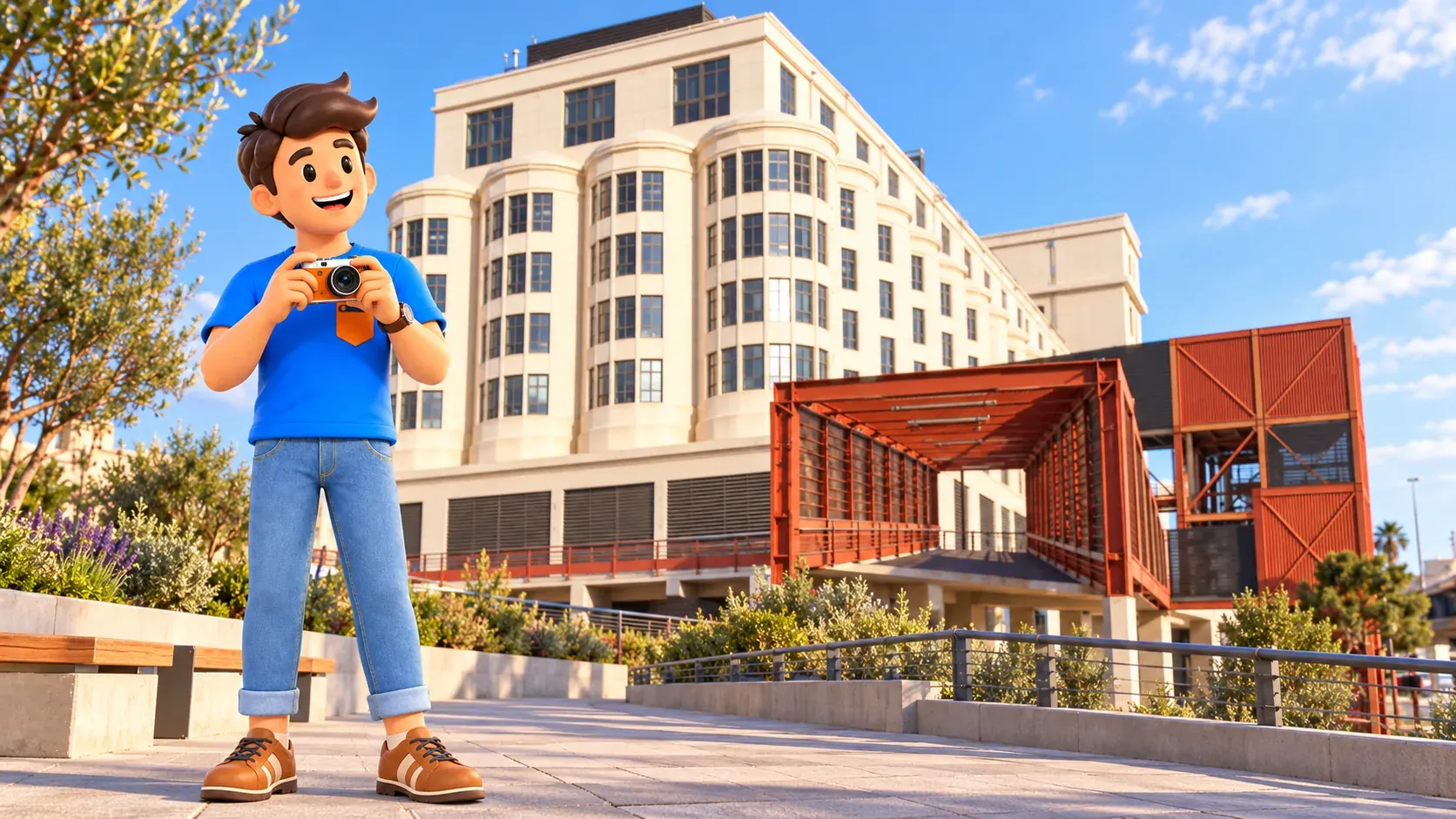
The conversion created two distinct uses: offices associated with architect Éric Castaldi and a performance space associated with Roland Carta. The venue opened in September 2011. The project did not simply put a stage in an untouched warehouse; it required significant adaptation. From outside, compare the tall cream volumes, rounded projecting bays and the red steel entrance structure seen in the reference photograph. Our illustrated approach is staged, not a survey of a usable path. Stay in permitted pedestrian areas; an interest in industrial heritage gives no access to working port areas, offices or backstage rooms.
Choose the performance before choosing the building
Le Silo makes most sense when the programme offers something you would enjoy. Concert, theatre, dance or another performance gives the adapted building a present purpose in your own trip. Do not buy an arbitrary event just to obtain a short interior look. You may spend much of the evening focused on the stage, which is precisely what a working performance venue is for. The architecture can deepen that experience without becoming a competing task. Keep a little attention for the setting on arrival, then allow yourself to follow the performance.
The venue’s current FAQ says it does not organise regular site visits; people with a show ticket can enter the hall. An exceptional guided event advertised for May 2026 is a past opportunity, not a daily architectural tour. Check the selected event’s entry instructions and ticket conditions, including any access arrangements you need. Reserved accessible seating requires direct contact with the venue. Leave time for arrival and the journey afterwards, and follow the actual rules for bags and photography. The listening-room illustration is fictional; it is not a reproduction of the auditorium, backstage access or a promise of a visitor workshop.
RoadMe turns the places and experiences you care about into a personal plan for the whole trip. Use the app to organise a richer Marseille stay with less planning effort, then confirm the chosen performance and venue access with the organisers.

Let one reused building shape a better Marseille day
For a Friche visit, start with the available cultural offer and leave enough attention for its setting. For Le Silo, choose an appealing event and give the evening space around it. Put them on separate days if that makes your stay calmer. A shared subject does not require an uninterrupted walk between Belle de Mai and Arenc. Our guide to Marseille without a car helps think about neighbourhood-based days; the useful principle is to keep the purpose of each outing clear, with connections that actually suit your dates and circumstances.
If you want a different architectural comparison, our Cité Radieuse and Magalone walk introduces a contrasting part of Marseille’s built environment. You do not need a complete survey to appreciate a city that keeps finding new uses for space. Leave Friche with one observation about a former factory becoming a cultural environment, or Le Silo with the memory of a performance inside a former grain store. That is a strong result for a traveller. The second life of a building becomes more than a phrase when it changes something you notice, choose or enjoy during your own time in Marseille.


