
Marseille without a car: which walks work well together?

Explore Marseille without a car by giving each part of the city its own walking block. The Old Port and Le Panier belong together; Longchamp works as another neighbourhood outing. Treat the Cité Radieuse in the south separately, and choose either L’Estaque or La Treille for a more distant visit. Trying to join all of them on foot makes travel consume the day.
The useful unit is a district with one main interest, a nearby meal and a confirmed way home. This is a framework for combining days rather than a complete stop-by-stop route. Allowances below are editorial planning estimates, not measured journeys. Check transport and venue conditions for your actual date before committing to a distant start.
Begin with the service that actually runs
An important dated exception comes first: at our check on 24 October 2026, RTM announces suspension across its Marseille public transport network from 05:00 on Saturday 24 October to 05:00 on Sunday 25 October. The normal connections discussed here apply only when the relevant service is actually operating. Confirm any resumption rather than treating the announced end as proof that your departure will run. Other operators need their own checks; an RTM notice alone does not establish the status of every regional train or airport connection.
For an ordinary operating day, choose the district before choosing a sequence of transport lines. Place your accommodation, the main visit and the return point in the same practical picture. A metro stop may make the broad journey straightforward while leaving a hill, stairs or an exposed approach at the end. Count those parts too. Without a car does not mean every journey should become a walk, especially when Marseille’s northern, southern and eastern neighbourhoods pull the day in different directions.
Set a simple limit: one main district per half-day, with a second only if the actual connection leaves useful time to enjoy it. A lunch break beside your first visit often helps more than another transfer for a supposedly essential restaurant. Put fixed bookings into the day first, then decide which surrounding walk still fits. If transport is suspended or unsuitable, choose a feasible local day under the actual conditions; do not replace a remote journey with an exhausting cross-city march.
Let RoadMe work out a complete personal Marseille itinerary around your interests, days and pace. The app makes organising neighbourhood walks, meaningful visits and time to rest much more convenient and effective.
Keep the Old Port, Le Panier and Vieille Charité together
The north side of the Old Port makes a natural starting area for a walk into Le Panier. The interest changes gradually from boats and waterfront space to narrower streets, small squares and stone architecture. Our two-hour Le Panier walk develops this particular outing; the point here is to keep these nearby interests in the same block.
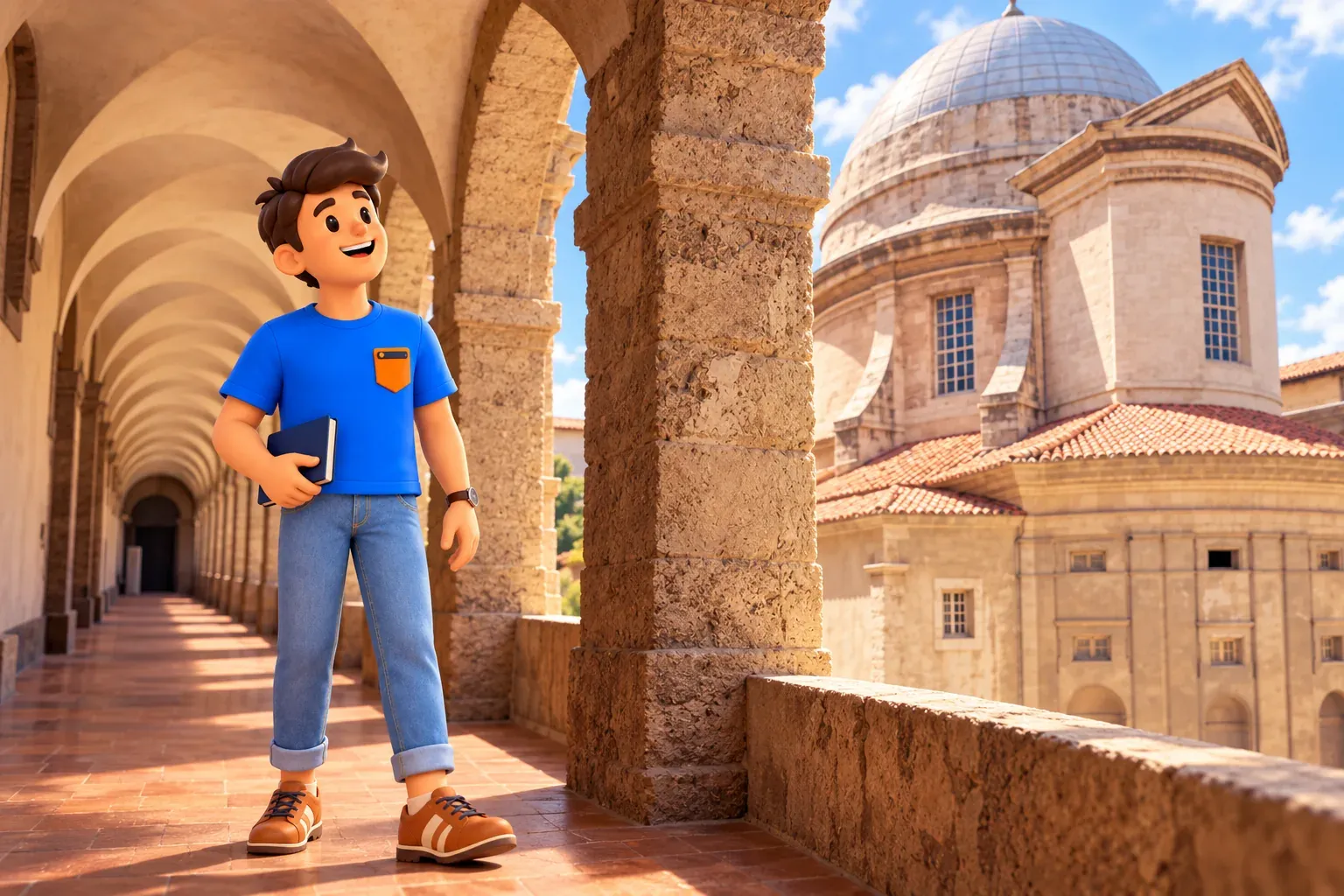
Vieille Charité gives the district a strong architectural focus. Its arcaded courtyard and central domed chapel belong to a former institution for poor people, designed by Pierre Puget. Actual access and any exhibition have their own conditions, so confirm the part you want. A courtyard visit is not an unrestricted passage available at every hour. Leave room to enjoy the surrounding quarter if the building cannot be visited.
Plan this as roughly two to three hours for selected streets and a short architectural visit, with a meal or substantial exhibition added separately. The estimate assumes modest ambitions rather than every lane and museum. Le Panier includes gradients and stairs; a compact district is not automatically an easy step-free route. For a pushchair or particular mobility needs, choose an actual suitable approach instead of copying the shortest pedestrian line. Finish with enough energy for the return, rather than adding the south of Marseille simply because the afternoon remains.
Give Longchamp its own neighbourhood block
Longchamp offers a different rhythm: a monumental palace setting and the possibility of a cultural visit when the relevant spaces are open. It sits inland from the Old Port rather than being the next corner of Le Panier. There is a useful distinction between walking within its surroundings and spending the day walking between districts. You can enjoy the local streets and ensemble while using operating public transport for the larger approach.
On a normal operating day, examine the current M1 connection around Cinq Avenues–Longchamp or T2 around Palais Longchamp, then confirm the approach to your chosen entrance. Use current operator information rather than an old tourist map: Marseille’s tram network changed with the T3 extensions in early 2026. The presence of a line on a map is not a promise of today’s service or a direct entrance to every attraction.
Allow an editorial half-day when you want both a local walk and an indoor visit, with time for food. Decide which institution or outdoor part you actually want; the palace does not represent one universal opening for every room and garden. Wind or an exceptional closure can change access. If the main visit is unavailable, reconsider the journey before leaving the centre. When it is available, staying in the area afterwards makes more sense than immediately chasing another museum across the city.
Treat the Cité Radieuse as a southern outing
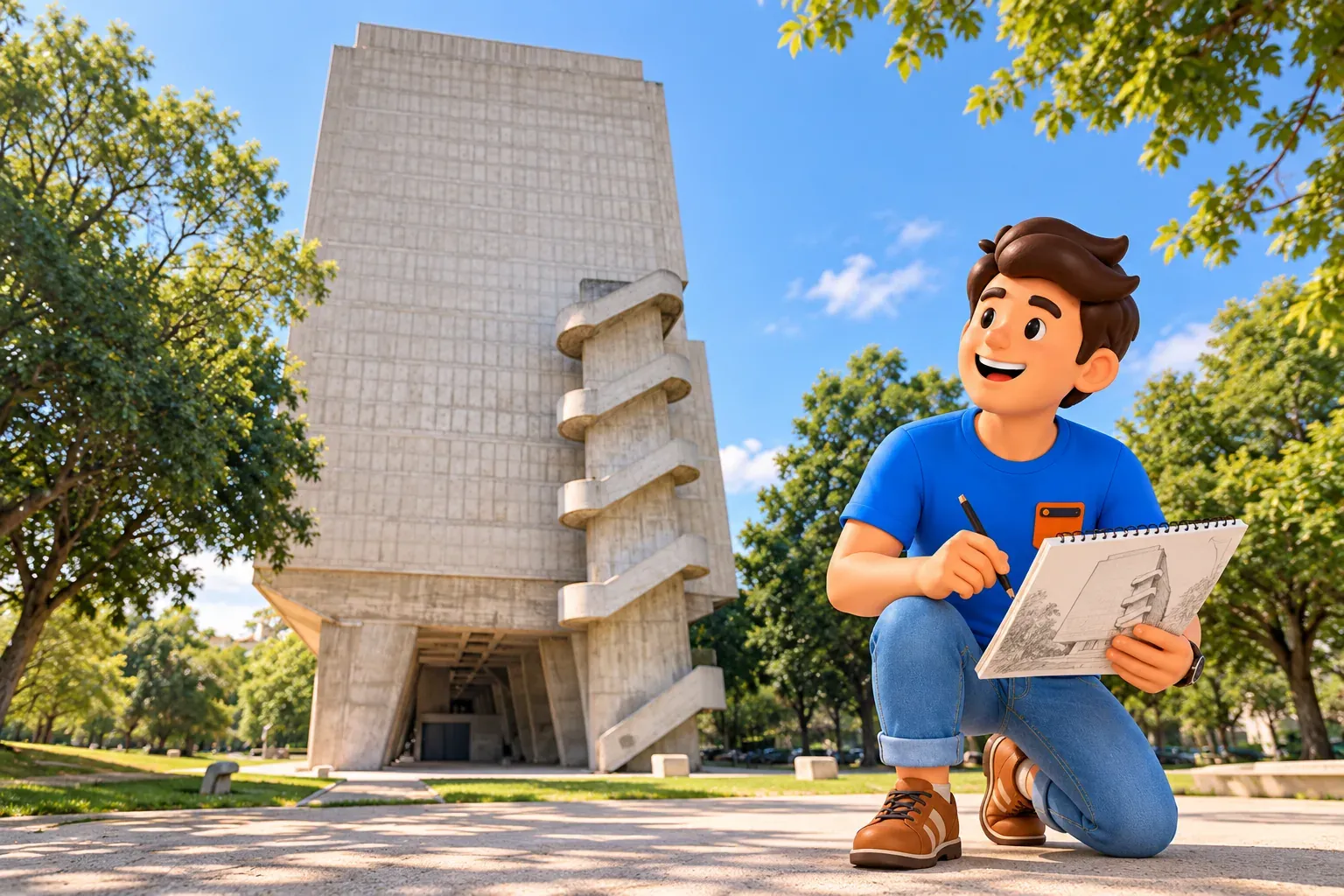
The Cité Radieuse on Boulevard Michelet rewards a clear architectural intention. Le Corbusier’s inhabited building brings a different question from the old centre: how can a large residential structure organise everyday life? Its concrete mass, supports and internal streets make the visit about more than a photograph of a famous name. Arrive with time to look carefully, but recognise that a working residence is not a museum with every door open. An exterior look and a booked guided visit are different plans.
Confirm the actual public transport approach to the building at 280 Boulevard Michelet and the last walking section. A metro station in the broader southern area does not put you at the entrance. For independent visits, register with security and remain within the permitted internal streets and northern roof area under the current rules. The residents’ garden and school are private. A guided visit with the tourism office requires booking and has a different scope. Do not turn an exterior architecture walk into assumed access to every residential space.
For selected exterior viewing and a limited permitted visit, keep a generous half-day framework including the real journey and a nearby meal. A guided appointment can become the fixed centre of that block. Our Le Corbusier and Magalone architecture walk explores a more focused southern combination when its parts are available. You do not need to follow it with L’Estaque at the other end of Marseille.
Choose one outer district: L’Estaque or La Treille
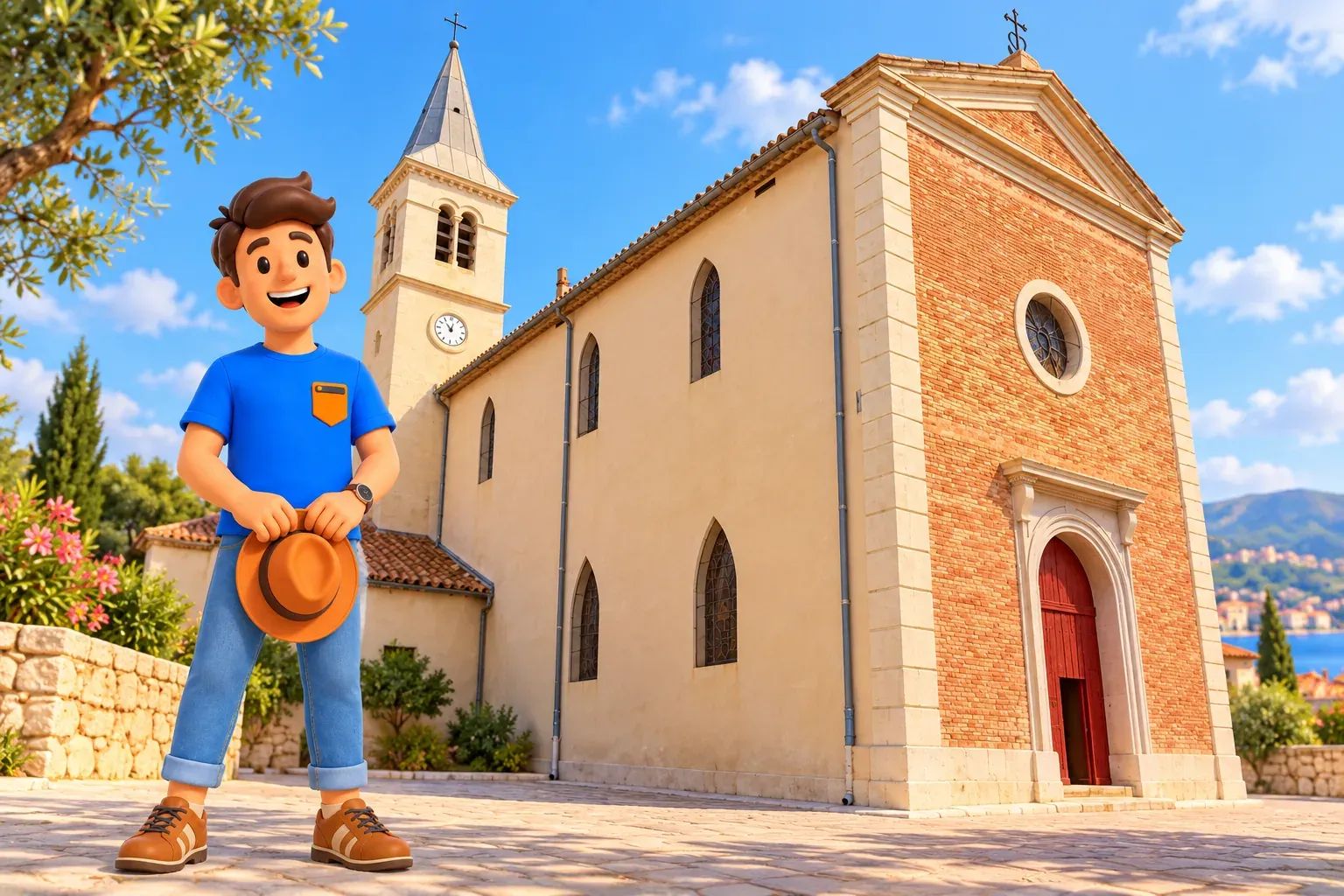
L’Estaque is the choice for a harbour atmosphere and a different view of Marseille’s working waterfront and painted landscapes. Keep the local port and the area around Saint-Pierre-ès-Liens church together, allowing for the climb between levels. The church’s pale tower and redbrick front make an architectural contrast with the water below. Interior access follows actual parish arrangements, not a guaranteed tourist timetable. Take the neighbourhood as a place to spend time rather than a quick photo stop before rushing back through the centre.
La Treille offers a different outing to the east: a village setting associated with Marcel Pagnol, with Saint-Dominique church helping define the local centre. Choose it for that atmosphere and literary interest. The normal bus connection is 12S from Métro La Timone to La Treille; check the actual day, direction and return before departure. Similar-looking route numbers do not necessarily reach the same terminus. Our Pagnol, La Buzine and La Treille day trip explains a broader combination, but a village visit does not oblige you to add a second venue.
Treat these as alternatives for a substantial outing, rather than two halves of one efficient district walk. For L’Estaque, check the actual outward and return services without relying on a seasonal sea shuttle: the published 2026 shuttle season ended in September, so it is not a default October connection. For La Treille, avoid letting a short village visit expand spontaneously into a hill hike. Choosing one outer district leaves room to understand it and makes the day easier to complete.
Plan the return before adding another stop
Before setting out, check both directions for the actual date, including any changed stops and the service suitable for your return. A timetable for a weekday is not evidence for Sunday, and an old screenshot is not a current disruption check. Build a little margin around a timed visit instead of assuming the shortest displayed connection will always work. On an exceptional suspension day, reconsider the whole distant outing. A route recommendation remains conditional on the service and access needed to use it.
Choose a ticket according to the operators and journeys you will actually use. Check validity, required validation, transfers and the conditions of any pass before buying; do not assume a city product includes every regional train or boat. This matters particularly when mixing urban and regional networks. Keep the immediate practical steps simple enough for everyone in the group to follow. A slightly longer direct journey can be preferable to several changes when walking, luggage or a late return already makes the day demanding.
The final local walk counts too. Leave room for food, a rest and the approach back to accommodation. If someone is tired, the useful decision may be to finish in the current district and keep the next one for another day. Avoid measuring success by the number of names crossed off a list; an outing that ends comfortably gives the following day a better start and leaves its main experience easier to remember.
RoadMe creates a personal plan for the whole trip, bringing your preferred discoveries into days that suit you. Use the app to give each part of Marseille a useful place in your journey while checking current operator and venue conditions separately.
Build two or three days from these blocks
For two days, start with the Old Port and Le Panier as a central discovery. On the other day, choose Longchamp for a cultural focus or the southern architecture outing for modern design, according to genuine interest and confirmed opening. This is deliberately a choice. Keep an uncommitted part of the day for a meal and the sort of street scene you enjoy noticing without an appointment.
For three days, retain that central day, give Longchamp or the Cité Radieuse its own main block, then choose one outer district. Alternatively, a strong interest in architecture can justify two southern and central cultural days while the distant village waits for another visit. Let the actual dates, weather and transport decide which day receives the remote outing. A day with a booking belongs earlier in the plan than a flexible walk, but the flexible walk can still become a highlight.
Before leaving each morning, reduce the plan to four useful decisions: where you are going, what you most want to experience, where a local pause fits and how you will return. Marseille becomes easier to explore without a car when nearby things remain together and distant things receive real travel time. The reward is time spent looking at the city, from stone galleries to concrete forms or a village square, with enough attention left to enjoy the difference.


